
 Marketing & Sales
  Blog
Blog  Business Communication
  Customer Experience
  Leadership
  Nextiva News
  Productivity
  VoIP
VoIP 
Social media is continually evolving with new social platforms, features, and usage trends. For small business owners, it can be challenging to keep up with the latest social media trends and successfully manage social media.
In this guide, we’ll go over the top marketing trends on social media to get you up to speed and help you optimize your content marketing and engagement on various social media channels.
Top Social Media Platforms
Before examining social media trends, small businesses need to understand which platforms attract the most users. This helps them focus their marketing on the right channels, reach their target audience, and use their resources more wisely.
For better results, businesses must focus on the networks that deliver genuine visibility, engagement, and growth. Based on average monthly active user data from 2025, Facebook, YouTube, and Instagram ranked as the top social media platforms. The table below shows the top 12 platforms overall.
| Platform | Monthly Active Users | Primary Focus for 2025/2026 |
|---|---|---|
| 3,070 Million | Best for building local community groups, retargeting older demographics, and low-cost marketplace listings. | |
| YouTube | 2,530 Million | Use Shorts for quick discovery and long-form video to build deep trust/authority (essential for service businesses). |
| 2,000 Million | The new homepage for brands. Focus on reels for reach and DM automation to close sales directly in chat. | |
| 2,000 Million | Perfect for personalized support, order updates, and broadcast channels to announce sales directly to loyal customers. | |
| TikTok | 1,590 Million | The primary search engine for Gen Z. Best for showing behind-the-scenes authenticity and reaching new audiences without ad spend. |
| 1,380 Million | Critical for businesses targeting the Chinese market or global travelers; handles everything from payments to messaging. | |
| Telegram | 950 Million | High-engagement broadcast channels for creators and brands to share newsletters/updates without algorithm interference. |
| Messenger | 947 Million | Essential for automating FAQs (hours, location, pricing) to save time and capture leads 24/7. |
| Snapchat | 850 Million | Use Snap Map for local foot traffic and AR filters to let young customers try on products virtually. |
| Douyin | 766 Million | The blueprint for TikTok shop; highly effective for brands selling directly via livestream to the Chinese market. |
| 600 Million | Users are here to plan purchases. Ideal for e-commerce brands (decor, fashion) as Pins have a lifespan of months, not minutes. | |
| 310 Million | The #1 platform for B2B services. Focus on founder-led thought leadership to build trust with decision-makers and generate high-ticket leads. |
While LinkedIn frequently cites a user base of 1 Billion+ members (total registered accounts), recent data indicates that only 310 million represent monthly active users. This distinction helps marketers balance broad reach with a focused and responsive audience.
Small business takeaway
Audit your current presence. Compare your performance against this table. If you run a B2B service and spend time on Pinterest, shift your focus to LinkedIn. If you own a local café, prioritize Instagram and Facebook. Instead of trying to be everywhere, choose the platforms where your audience is most active and build a strong presence there first.
Now let’s look at the most important social media marketing trends for small businesses.
AI Marketing Tools
Until recently, social marketers only tested ChatGPT and a few other AI tools. Today, marketers consider generative AI a major asset, moving it from experimental to essential. According to a Sprout Pulse Survey, 82% of marketers who have integrated AI and machine learning (ML) tools into their workflow have already achieved positive results.
For small businesses, AI is no longer about generating robotic text, but rather about making the best use of limited time.
How generative AI helps small businesses
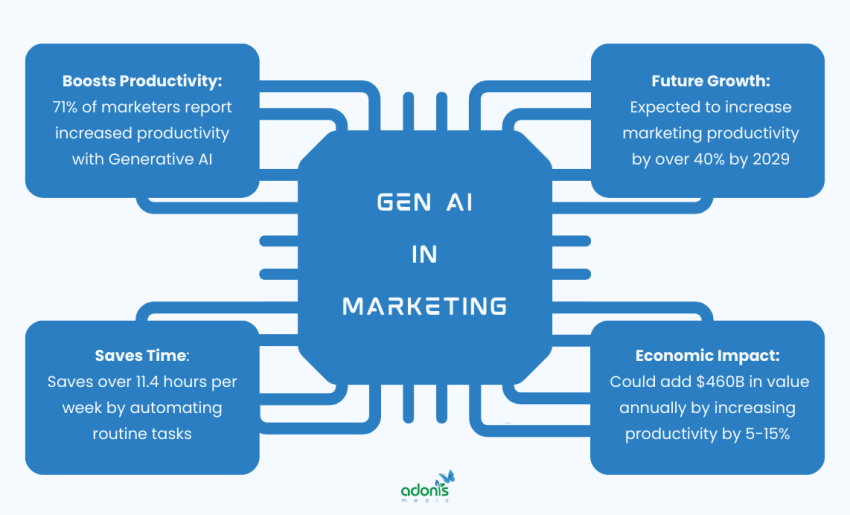
Generative AI serves as a collaborative partner, enhancing rather than replacing human creativity. According to the Adonis Media report, this technology drives massive efficiency gains, with 71% of marketers reporting increased productivity and saving over 11.4 hours per week on routine tasks.
This time saved allows small business owners to pivot from “busy work” to high-impact strategy. With productivity expected to rise by another 40% by 2029, early adoption is key to capturing the estimated $460 billion in annual value this technology will generate.
Small businesses with lean teams are using generative AI to ease the workload. AI handles time-consuming tasks like designing, creating, and analyzing, allowing employees to achieve results comparable to larger teams without feeling overwhelmed. With this trendy approach, small businesses work more productively and creatively.
Practical AI use-cases for small businesses
Instead of asking AI to write a post, try these daily workflows:
- Caption ideation: Use ChatGPT or Claude to generate 10 variations of a caption for one photo. Prompt: Write 5 Instagram captions for this coffee shop photo, ranging from witty/short to sentimental/storytelling.
- Visual content: Use Midjourney, Adobe Firefly, or Canva Magic Media to create stock-free background images for your quote posts or stories.
- Repurposing: Take your latest video transcript and ask AI to turn it into a LinkedIn carousel, a Twitter thread, and a blog outline.
- Reply drafting: Paste a customer’s message into AI to draft a calm, professional response. Prompt: Draft a polite, empathetic response to a customer complaining about shipping delays, and suggest offering a 10% discount for next time.
- Content calendar planning: Ask AI to map out a week of content for your niche. Prompt: Create a 5-day social media content calendar for a local bakery focusing on ‘gluten-free week,’ including post ideas for Instagram Reels and Stories.
Small business takeaway
Start small. Delegate one task today and don’t try to automate everything at once. Choose a repetitive task, such as generating hashtags or resizing images, and assign it to an AI tool this week. This instantly frees your team to focus on engaging with real people in the comments.
Short-Form Video
While AI powers the backend of marketing, short-form video remains the most powerful way to capture attention on the frontend.
TikTok: The king of short-form video
One of the top social media trends is short-form video.
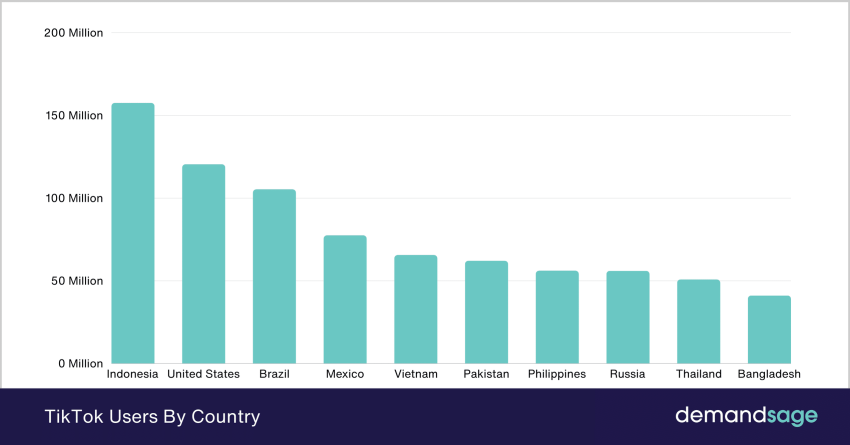
TikTok is a popular social platform for short-form videos, especially for younger generations. There are about 2.05 billion users as of this writing, of which 1.58 billion are monthly active users, and they spend an average of 58 minutes on the app every day.
Indonesia has the highest number of TikTok users, followed by the U.S., with Brazil, Mexico, and Vietnam making up the top five countries:
Small businesses should develop the habit of regularly posting on TikTok. Even businesses that are not a good fit for the app can find creative ways to use TikTok for marketing and brand awareness.
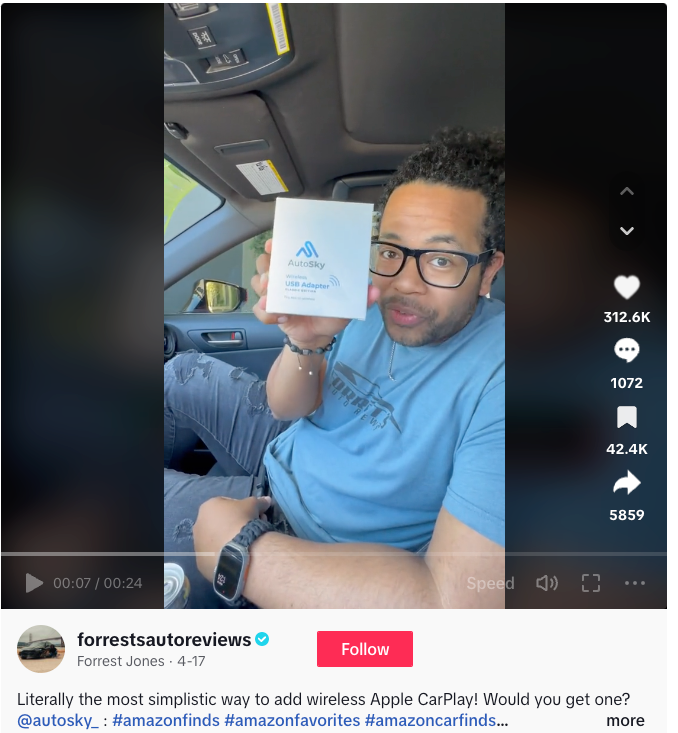
And it’s not all fun and play. Content creators earn their livings reviewing and sharing their hot takes on products and services. On the other side of the coin, brands reach a highly engaged audience to drive more product sales.
Social platforms continue to add more business capabilities. It’s common for utilities like clickable shopping links, integrated payment options, and ads integration to be included. These functions enable customers to do business without leaving the platform. Enabling them on your social media profiles enables your followers to find and purchase your products.
Small business takeaway
Set up your social storefront. The text highlights that customers want to buy without leaving the app. If you sell products, apply for a TikTok shop to enable one-click purchasing. If you sell services, pin a video to the top of your profile that clearly explains “How to Work With Us” in under 60 seconds.
Rise of vertical video
Vertical video that is optimized for mobile users continues to rise across social apps. On TikTok and Reels, the vertical format consumes the entire phone screen. Instagram even allows users to post vertical photos natively.
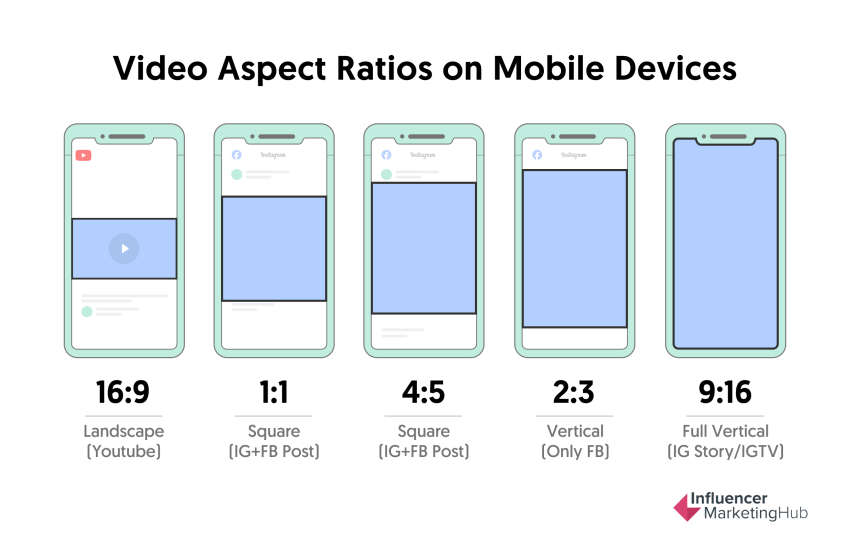
Small businesses need to adjust short-form video content for vertical formats because many people access social media from their smartphones. Shorter vertical videos feel more immersive and command greater attention. The TikTok style of quick cuts and text or graphic overlays works well.
But don’t completely abandon landscape formats. You should use both vertical and horizontal orientations for different contexts. Even so, new video content should focus on the mobile-first vertical.
Small business takeaway
Instead of resizing old wide videos, shoot natively in 9:16 to fill the full screen. Add a clear text overlay, such as a title or question, within the first three seconds to capture attention. This simple step helps stop the scroll and shows the algorithm that your content is designed for mobile viewing.
Live streaming and video content surge
Last year, most social media platforms experienced a surge in live and pre-recorded video content. Creators and brands alike engaged users with entertaining video content — fueled partly by algorithms that keep delivering content most likely to be consumed.
No doubt, video remains an effective way to showcase walk-through services and portray company culture. Live streaming gives a raw, unedited look into your brand. From product launches to behind-the-scenes, going live allows engagement with customers in real-time.
Videos that are less than one minute in length do well on TikTok and Instagram Reels. As video content continues to grow, brands must create engaging videos for social apps.
Small business takeaway
Since video is available almost everywhere, consider investing more in video where it makes sense for your brand and audience. While video may require a bigger investment, you can get the most out of your budget by repurposing. For instance, if you film a clip for TikTok, repost it immediately to YouTube Shorts and Instagram Reels to triple your reach with zero extra effort.
Trends in Online Search Behavior
People now search on TikTok as much as on Google. As visual content grows, users are discovering it in new ways, and their search habits are shifting.
Social media SEO
Data suggests that nearly 40% of Gen Z prefer searching on TikTok or Instagram over Google Maps or Search when looking for a place to eat. For small businesses, this means “Social SEO” is critical. You aren’t just optimizing for a feed; you are optimizing for a search bar.
- On-screen text: TikTok and Instagram read the text you put on your video. Make sure your main keyword appears on the screen within the first three seconds.
- Keywords in captions: Instead of just emojis, write captions that include phrases like Best Italian Food in [City Name] or Affordable Plumber in [Region].
Small business takeaway
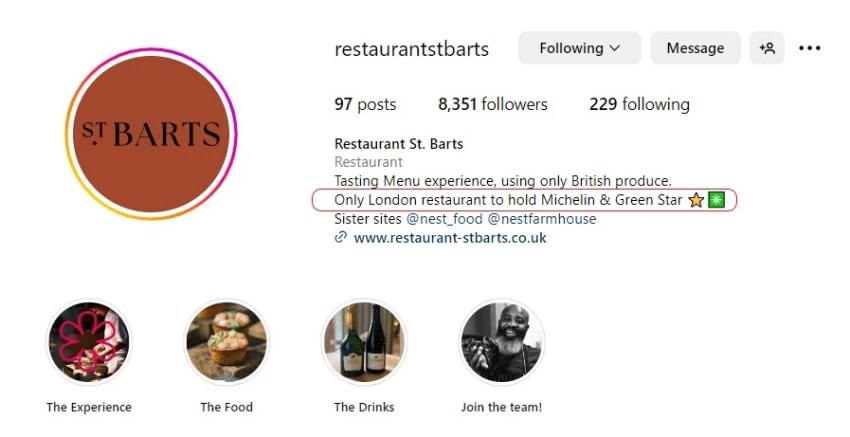
Audit your bio and last nine posts, then run a stranger test on your profile. Ask someone to review your bio for five seconds. If they cannot instantly identify your exact location and primary service, rewrite it immediately. Use specific, searchable phrases such as hotel in Chicago or Michelin star restaurants in London, instead of lines like baking with love.
Increasing importance of local searches
Even though visual content is rising, optimizing content for search engines remains crucial.
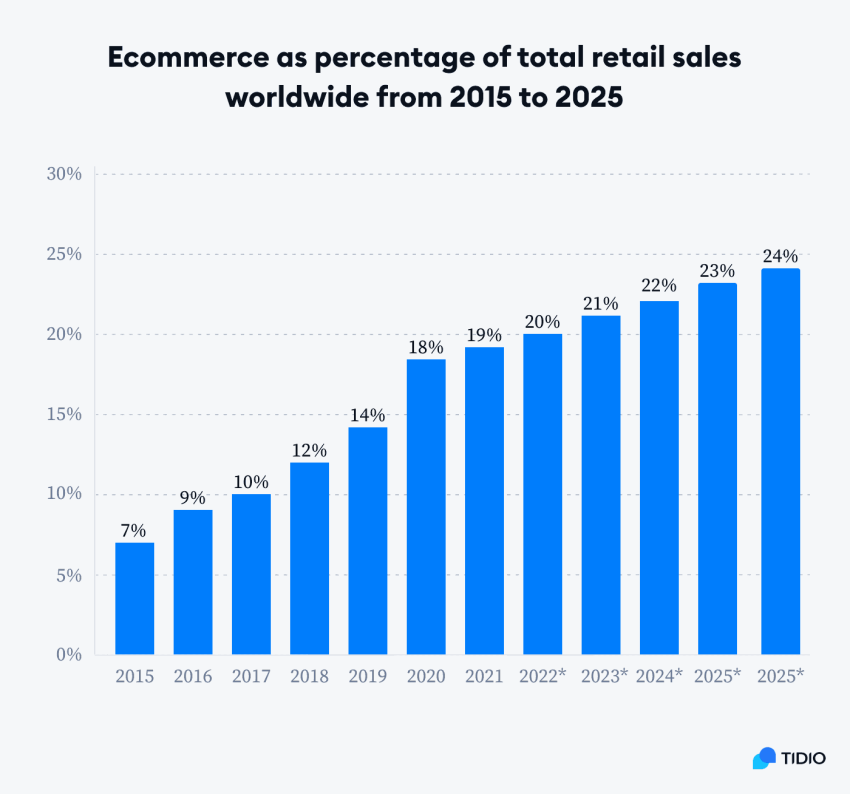
People on social media still use Google and other search engines to reach commerce sites. Over 20% of sales occur online, so ensuring that your business appears in relevant local searches is critical to driving traffic and conversions to your site.
Small businesses should begin by building local SEO staples like a Google Business Profile (formerly known as Google My Business). As they expand, more efforts can be directed toward writing blog posts and other engaging, informative content.

Google has been making rapid changes to search results lately. Local businesses should focus on making themselves appear within a “Local Pack” that features business profiles, online reviews, and location information. These are a big deal — they consume more “square footage” on the results page above the organic results. According to Semrush, they appear in 22% of searches.

Small business takeaway
In addition to your social media content creation efforts, incorporate relevant keywords that customers will use to find you. Adding videos and images helps earn more search traffic to your social media posts. While not directly related, social media strategies support content distribution.

Artificial intelligence fuels innovation in online searches
Beyond local searches, massive changes are coming to how people will search with Google or Bing with help from artificial intelligence (AI).
Search Generative Experience (SGE) aims to provide the most personalized results with conversational answers to people who are seeking recommendations. Succinctly, this means business owners need to rethink how they approach organic searches and produce the highest quality content that meets visitor intent, even if it’s particularly narrow.
If you haven’t already done so, ensure that you’ve verified your website on Google Search Console and Bing Webmaster Tools so you can monitor how well your site appears in organic searches.
Small business takeaway
Adopt an answer engine mindset. First, verify your site on Google Search Console if you haven’t already. Then, review your FAQ or service pages. Rewrite content to ask and answer specific questions directly (e.g., How much does X cost? followed immediately by a clear, concise answer). This structure makes it easier for AI search tools to pull your content into their summaries.

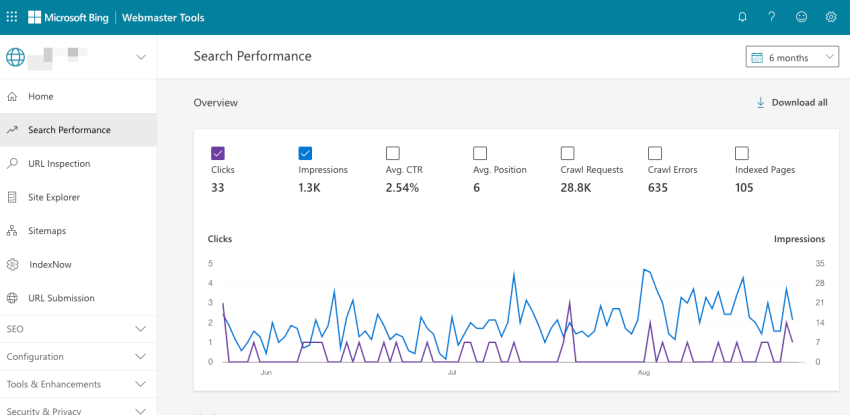
Screenshots of Google Search Console (left) and Bing Webmaster Tools (right)
Social Media Content Trends
Consumers increasingly demand authenticity from brands on social media. Strategies that only focus on sales messages seem to be the old-fashioned way to connect with target audiences.
Brand authenticity and humanization
The best way to humanize your brand is to stop hiding behind your logo. Focus on employee advocacy and founder-led content to show the people behind your business.
- Empower your team: Employees are your top influencers. Encourage them to share their expertise or work life. People trust people more than corporate handles.
- Behind the scenes (BTS): Audiences value the process over polished perfection. Show messy desks, packing stations, team lunches, or product prototyping failures.
- Founder-led content: A simple video of the business owner explaining why they started the company often outperforms polished, high-budget product ads.
- Weekly check-in: Post face-to-camera stories or reels each week. Introduce a staff member, answer a customer question personally, or show a product’s creation process. These small actions help bridge the gap between your business and your audience.
People like brands that support social issues and causes. So, showing values such as diversity and inclusion connect with customers’ beliefs.
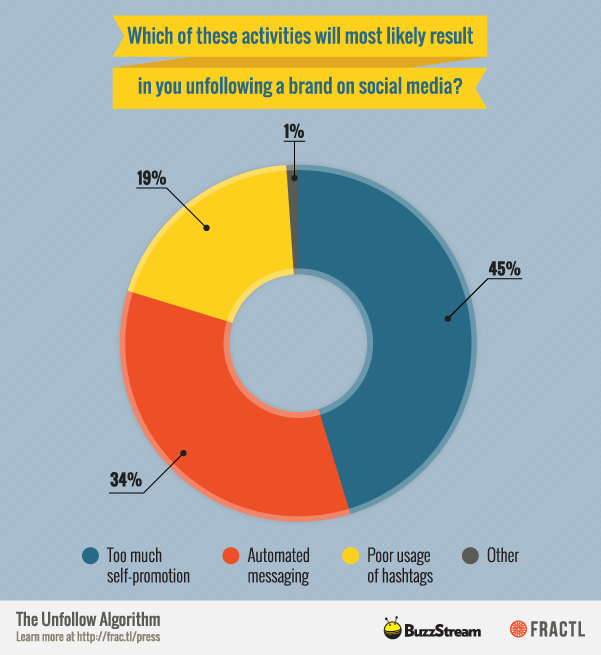
When humanizing your brand, be careful not to overdo it: 45% of customers unfollow a brand because of “too much self-promotion.” If you only promote your brand, customers will quietly ignore you.
Small business takeaway
Balancing selling with humanization is vital for small businesses on social media. Focus more on relationship-building than promotions alone. Switch to the 80/20 Rule: 80% of your content should serve the audience (tips, humor, team photos), and only 20% should ask for a sale. This builds trust with your audience, so when you do promote, people listen instead of scrolling past.
Influencer marketing takes center stage
Influencer marketing continues to be a powerful channel for brands. Partnering with your niche’s nano- and micro-influencers and experts can expand your reach, as nearly two-thirds of consumers trust influencer recommendations:
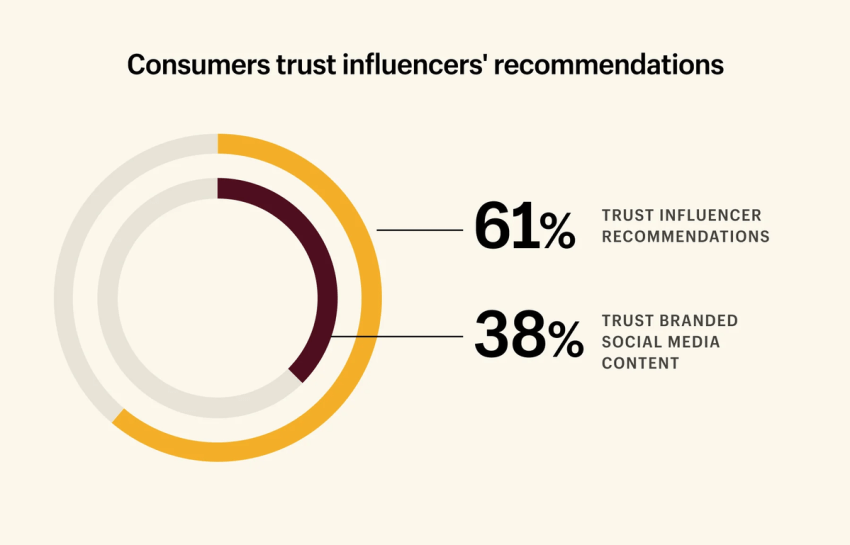
Due to high user trust in influencers, their organic recommendations convert well. Smaller influencers typically have greater engagement and more approachable pricing. Look for influencers who align well with your brand values for authentic co-marketing.
Quality content and hashtags in your social posts help tap into existing communities. An omnichannel strategy that balances your channels with influencer outreach is necessary, as it creates a multiplier effect for driving brand awareness.
Small business takeaway
Find your nano-influencers. Identify 5 local influencers with 1k–10k followers in your specific niche or city. Send them a DM offering a free product or service in exchange for an honest review. These smaller partnerships often yield higher engagement than expensive campaigns with massive celebrities.
Incorporating user-generated content
User-generated content (UGC) builds social proof and credibility for brands in an authentic manner. Your customers create the most interesting content about your business. This includes things like reviews and sharing on social media.
Making UGC an integrated part of your strategy can increase engagement and conversions. Your followers want to see real customers enjoying your brand in action. They resonate more than polished, stock-style images.
Ways to encourage UGC include running contests, creating branded hashtags, and leveraging reviews. Be sure to get the user’s permission before re-sharing their content. Also, proper crediting and attribution are a must. When featured appropriately, UGC shows tangible social proof.
Small business takeaway
Create a branded hashtag (e.g., #My[Brand]Style) and print it on your packaging or receipts. When a customer uses it, DM them to ask for permission to repost. Make customer spotlight a recurring Friday post to encourage others to share their photos.
The ‘Story’ content format works
As a social media trend, the Story feature, used across multiple platforms, is still a great way to share timely content and boost engagement. The format allows sharing things that are relevant at the moment versus permanent posts.
Stories expire quickly, making your promotions and events feel exclusive and urgent. Maintaining an active presence keeps your brand top of mind. Use creative templates and editing to make Stories better than basic phone videos. Quality wins over quantity in this area. And keep in mind the best time to post on Instagram:

Leverage Stories for deals, product launches, event updates, and employee takeovers. The casual format feels authentic for behind the scenes. Interactive options like polls and questions encourage viewers to respond actively.
Many social media platforms, including Facebook, have redesigned their apps to replicate Instagram’s Stories feature because of its ability to grab the attention of social media users.
Small business takeaway
Use interactive stickers in every Story. Add a Poll, Quiz, or Add Yours sticker to signal to the algorithm that your account generates engagement. This active participation boosts your visibility in the main feed for future posts.
The metaverse and augmented reality
On the horizon, the metaverse and augmented reality (AR) present new opportunities for social media marketing. As virtual worlds become mainstream, brands can establish their presence.
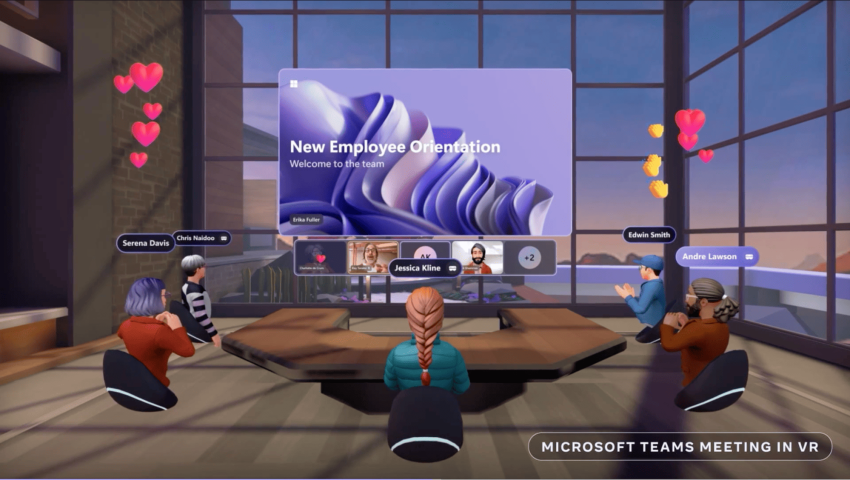
Early metaverse activations include virtual storefronts and meeting experiences like the one shown below of Microsoft and Meta. It’s still a bit too early, but with upcoming VR headsets from Apple and Meta, don’t completely write this off.
Larger businesses can use AR for social commerce by adopting it in showrooms and virtual stores. They can also create custom-branded filters on Snapchat and Instagram. Offering AR experiences allows customers to view products in their actual environments before they purchase.
For small businesses, the metaverse social media trend is less fruitful. Facebook and Apple are developing plans to bring a digital universe to everyday life—but we’re a long way from that today.
To future-proof your strategy, explore how emerging technologies position your brand as a leader, not a follower. Being an early adopter also lets you stay ahead as your company grows.
This social media trend is emerging but not yet mainstream. So, we don’t recommend making this the cornerstone of your social media strategy.
Small business takeaway
Focus on simple AR. Unless you are a major tech brand, don’t worry about the Metaverse yet. However, do consider using simple AR filters on Instagram or TikTok (like color presets or simple effects) that users can apply to their own content. It is a low-cost way to get brand visibility.
Aim for brevity in social media content
The content overload on social media has users scrolling past anything that doesn’t immediately grab their attention. This puts a premium on concise video content that delivers value quickly.
For businesses, this means that concise writing and editing are crucial. Here are some tips for writing something catchy for your audience:
- Blog-style, long paragraphs don’t translate: Save longer posts for blogs and IGTVs.
- Use bullet points: Lists make content more scannable.
- Ensure quality graphics: Images and videos should be eye-catching and high-quality on visual platforms like Instagram.
- Direct captions: Clear and clever captions reinforce your message.
- Well-designed, snappy quote cards: This works well for driving thought leadership.
Small business takeaway
Review your caption strategy. For the next month, place your hook or main value proposition in the very first sentence. Stop burying the lead. If you are sharing a tip, list the tip directly in the post or carousel; don’t force people to click a link in bio to get the value.
Noteworthy Platform Updates & Features
Beyond trends, specific platform updates also impact digital marketing tactics:
- Twitter rebrands as X. Twitter’s rebranding to X will likely require businesses to change their website Twitter bird logos. The impact on companies with a social media presence on the app has mainly been a need to adapt their advertising strategies due to the platform’s ongoing changes.
- Facebook Threads. Though built off Instagram, it presents an environment that is similar to Twitter. Instagram users on Threads usually like photos and videos, but the app is subject to experimentation. However, as Jack Appleby states in his newsletter, a winning brand strategy on Twitter should also work on Threads.
- Instagram ads: Ad placements in reels and Stories are gaining prominence. Recently, IG added more shoppable ad formats like carousels and longer videos.
- YouTube Shorts: Short-form vertical video views skyrocketed. YouTube made creating and optimizing Shorts easier for more content.
- LinkedIn videos: LinkedIn is embracing more video content with platform upgrades. Creators can reach business audiences with bite-sized videos.
- Pinterest Story Pins: Story Pins are a vital component of Pinterest. They combine many pages with mixes of text, images, and video for visual storytelling.
- Spotify podcast ads: You can reach podcast listeners with targeted ads using Spotify’s streaming ad platform.
Niche Community Building
Social media is a hub for culture, but it’s also the foundation for subcultures to thrive. Niche communities are growing in 2025 and will continue to grow in 2026 as well.
- Private spaces: Brands are leaning into private communities like Discord servers, Instagram Broadcast Channels, and private LinkedIn groups to share exclusive content.
- Reddit renaissance: Reddit is becoming a key place for honest product research. Participating in relevant subreddits (without being salesy) is a huge opportunity.
- From URL to irl: As Tameka Bazile mentioned in Sprout’s trends report, Brands and creators are taking to real-life events that are extensions of the communities they create online.
Small business takeaway
Focus on creating or joining niche spaces where your audience already gathers. Offer exclusive content, engage genuinely, and explore online eventsfor better connections. To strengthen these bonds, try a small offline activation, such as a VIP coffee hour or an in-store workshop. These face-to-face moments often build deeper loyalty than any viral post.
How Businesses Can Stay Ahead
With social media’s rapid pace of change, staying agile and adaptable is vital for brands. Here are tips for small businesses to effectively integrate the latest:
- Commit to learning: Continually browse social networks to understand users’ interactions and identify channels worth prioritizing. Use social listening and social media management tools to analyze conversations about your brand and target audience.
- Schedule flexibility: Build a buffer room to test new formats as they emerge. Don’t lock yourself into rigid plans, because the market is evolving.
- Focus on quality: Balance posting frequency with ensuring excellent content. Highly engaging, creative content will consistently outperform quantity alone.
- Understand the experience: Before going all-in with marketing content, take the time to appreciate the surroundings. Discover what people like about the social platform before subjecting it to sales and marketing campaigns.
- Partner strategically: Collaborate with savvy creators and partners to expand reach while ensuring that the brand values align. Seek out credible publishers and consider partnerships or, at a minimum, get inspired by what works to elicit engagement and trust.
… Social media trends will continue to evolve whether you like it or not.
The good news is that you don’t need to follow every trend. Consider your audience’s needs and desires and use data to adjust. Trends that flopped include Clubhouse for social audio, NFTs following the pandemic, and other overly ambitious blockchain-powered ideas.
The bottom line is that sharing your brand’s voice and story across social media in an authentic way helps you to rise above the rest, regardless of the format or platform.
You will see positive returns across today’s social media platforms with consistent effort. The algorithms reward the businesses whose posts make people stop, like, comment, and share. What will you publish that does that?
Social Media Management with Nextiva.
Stop switching between tools as you market, engage and support your customers on social media. Do it all from one, integrated customer experience platform.