
 Customer Experience
  Blog
Blog  Business Communication
  Leadership
  Marketing & Sales
  Nextiva News
  Productivity
  VoIP
VoIP 

Your choice between omnichannel and multichannel marketing determines how your brand connects with consumers. Both approaches involve interacting with customers across multiple channels, but each one creates a different customer experience.
Nextiva’s State of CX Report found that 88% of online shoppers, including 96% of Gen Z and 97% of Millennials, prefer personalized experiences. As expectations rise across every age group, you must choose the right approach to deliver a unified customer journey through strong omnichannel customer engagement.
This guide to omnichannel vs. multichannel marketing explains the key differences between the two approaches. It helps you decide which strategy best suits your business needs and supports a unified customer experience.
What Is Omnichannel Marketing?
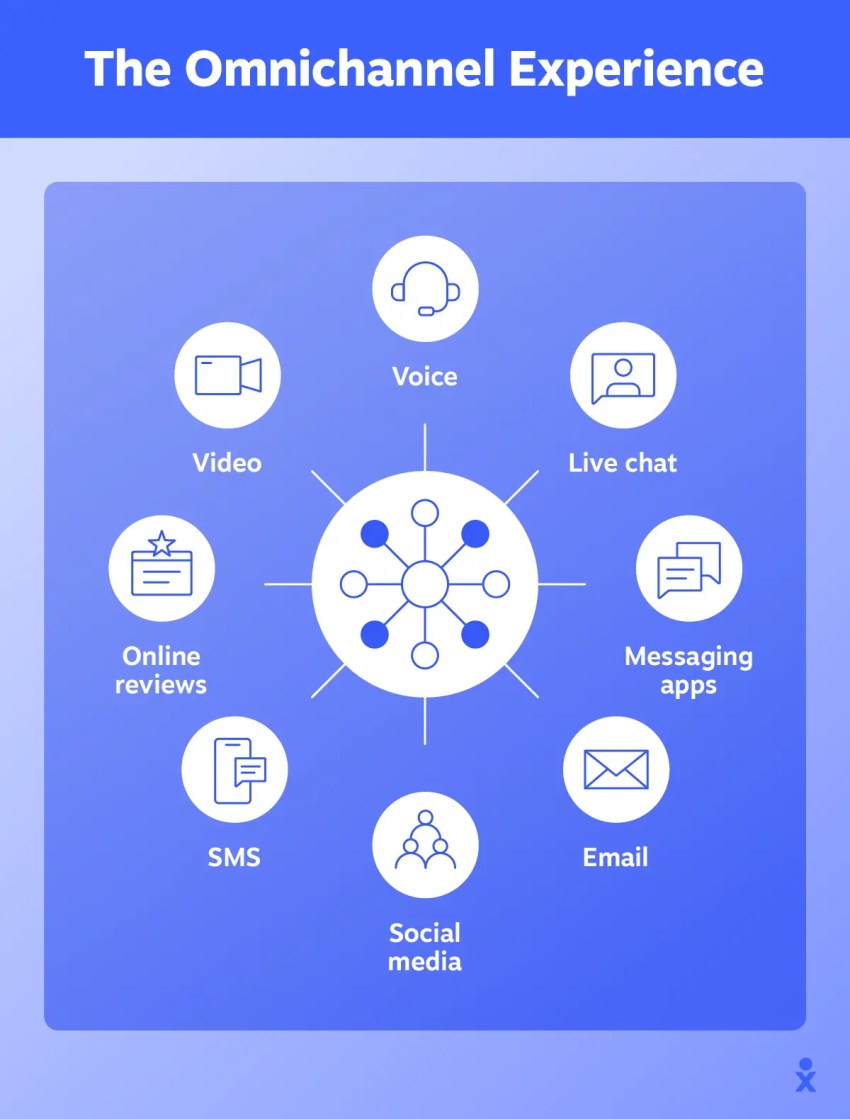
Omnichannel marketing is a customer-centric approach that uses multiple marketing channels and connects them to deliver a smooth and unified experience. It tracks how customers move between channels and ensures the conversation continues without restarting.
This strategy prioritizes continuity rather than scattered visibility across all your channels. Omnichannel marketing integrates data and communications and keeps every customer interaction connected across multiple touchpoints. It enables platforms to share information with one another in real time.
How Does Omnichannel Marketing Work?
Through omnichannel marketing, you create a marketing journey that aligns social media, email, paid ads, mobile apps, and physical stores to deliver one unified brand experience. This enables marketing teams to synchronize preferred channels, remove friction, and guide customers at the right time with targeted messaging.
For example, a customer browses for an item on a mobile app during a commute. They add the item to their shopping cart but do not complete the purchase.
Later, when they log in on a laptop, desktop or mobile device, the item already appears in their cart with a personalized messaging “Continue Shopping” prompt. If the consumer then visits a physical store, a sales associate scans the loyalty QR code in the app and instantly views the customer’s digital cart and style preferences.
What this looks like in practice:
This approach builds unified digital channels powered by a single data source. As customers move between channels, the brand retains their preferences and history across every interaction.
- Centralized data: All channels connect to one source of truth, such as a CRM system. Each touchpoint reflects the customer’s complete history, no matter where the interaction began.
- Journey continuity: It focuses on the transition between channels. If a customer starts a support request through web chat and then switches to a phone call, the agent can immediately view their previous messages.
- Personalized engagement: The system recognizes the customer across platforms and delivers relevant recommendations and offers based on recent actions and historical behavior, improving notifications for marketing campaigns and service.
- Real-time information exchange: Connected systems pass data instantly between platforms. When a customer updates preferences on one device, every other channel-specific platform reflects that update without delay.
- Unified brand experience: Marketing, sales, and support teams work from the same synchronized data. Teams provide consistent messages and informed service, so customers never repeat their history.
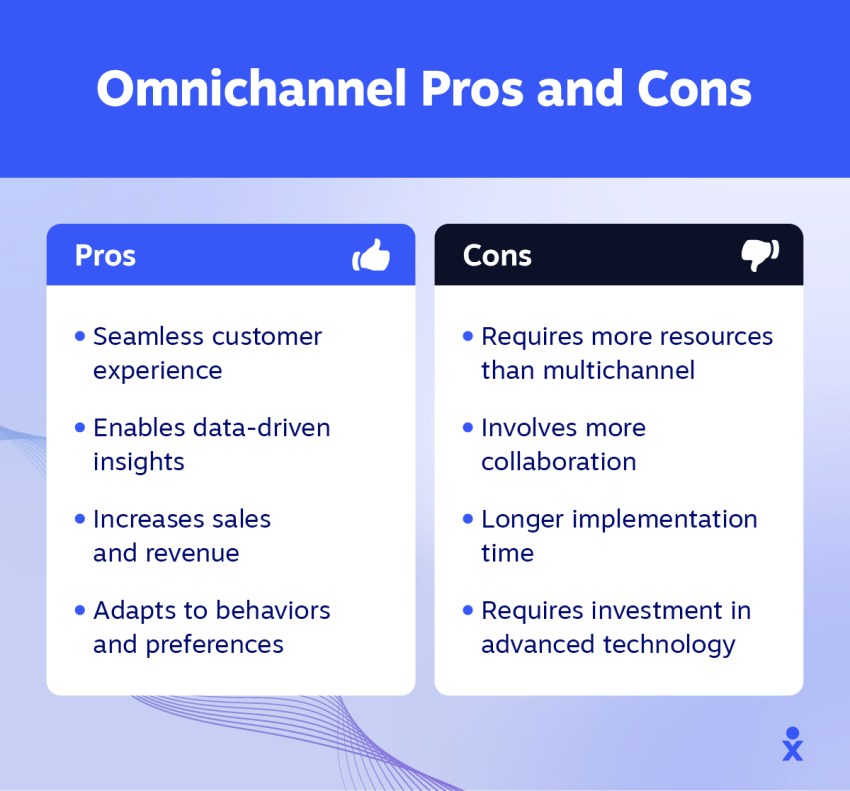
Omnichannel marketing connects all experiences by aligning operations, technology, and customer data into one coordinated system.
What Is Multichannel Marketing?
Multichannel marketing is a marketing approach that uses multiple channels to communicate with customers and increase brand awareness. These channels often include both digital and traditional media, such as search ads, social media profiles, text, email campaigns, and physical advertisements.
In this model, your business runs through multiple independent channels. Each channel functions as a separate destination where customers interact with your brand, without any technical link to the other channels.
How Does Multichannel Marketing Work?
Because each platform operates as a separate entry point to the business, this structure increases visibility, but it does not connect the channels. A social media campaign may promote one offer, while an email campaign sent to the same audience highlights different brand messaging or a discount code.
For example, a customer sees an Instagram ad promoting a 15% discount. When they click through to the online store, the discount does not apply automatically. If they later visit a physical store, the staff have no record of the promotion.
The brand maintains a presence across multiple platforms, but the consumer must manage the journey between them.
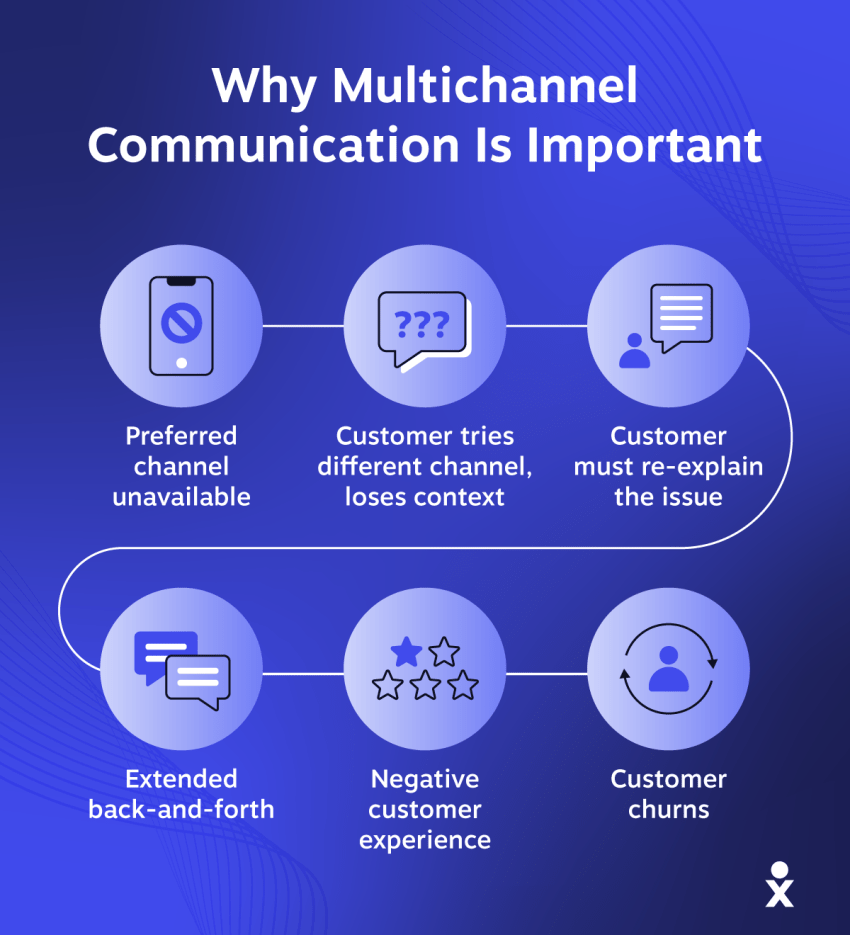
What this looks like in practice:
A multichannel strategy aims to expand a brand’s reach. When a business maintains a presence across several platforms, it allows customers to find and engage with the brand through more than one channel.
- Platform diversity: The business creates separate presences across channels such as social media, email, and its website. These multichannel marketing channels serve as an independent entry point for customer interaction.
- Specialized management: Teams optimize each channel based on its purpose. The social media team builds engagement and awareness, while the website team concentrates on conversions and sales.
- Ease of entry: Business owners can add new platforms, such as an emerging social media network or a third-party marketplace like Amazon, with lower upfront technical complexity than a fully integrated system.
- Broad market visibility: Some customers depend on email, while others prefer social media or online marketplaces. By maintaining visibility across platforms, the business increases its chances of reaching different customer segments.
- Data silos: Each channel operates independently, so systems rarely share information. A customer’s interaction on social media does not automatically update their email profile or support history across individual channels.
- Customer efforts: Customers handle the extra work. They repeat their information, reapply discount codes, and restate their history when they move from one channel to another.
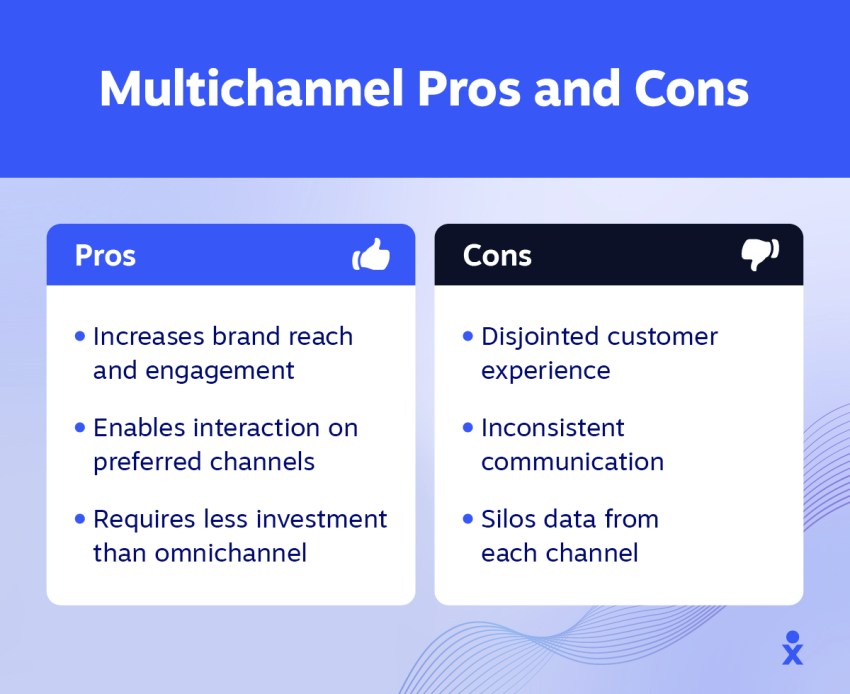
Multichannel marketing centers on availability. It increases brand visibility, but it creates a fragmented experience. Customers must connect the gaps between platforms on their own.
Omnichannel vs. Multichannel: How to know the difference?
While both strategies use multiple platforms, they handle data, technology, and the customer journey in fundamentally different ways.
| Feature/goal | Omnichannel marketing | Multichannel marketing |
|---|---|---|
| Primary focus | Unified customer journey | Expanding reach and visibility |
| Strategy type | Customer-focused: Connecting touchpoints | Brand-centric: Maximizing touchpoints |
| Data flow | Unified: Shared in real time. | Siloed: Information stays in one channel. |
| Customer effort | Lower: Context follows the customer | Higher: Customers repeat information |
| Personalization | Hyper-personalized: complete individual history. | Basic, platform-specific |
| Implementation | Integrated CX platform | Easier, faster setup |
| Key use case | Mass brand awareness, rapid market entry, and testing new markets | Mass brand awareness, rapid market entry, testing new markets |
To determine which strategy aligns with a brand’s goals, you must evaluate how each approach manages six primary areas:
1. Volume vs. loyalty
An omnichannel approach focuses on the customer journey and ease of interaction. Brands use customer data to personalize experiences, strengthen customer relationships, and build long-term loyalty.
The multichannel approach prioritizes reach and volume over deep personalization. Brands expand their presence across multiple platforms to attract a broad audience and increase awareness.
2. Independent channels vs. integrated channels
Omnichannel connects all touchpoints so customers transition between them without disruption. Usually, customers expect to start a conversation on social media, continue it through email, and complete a purchase on a website without inconsistencies.
While multichannel operates channels independently, this often creates a fragmented experience. Customers may receive a promotional email for a discount that store associates cannot verify.
3. Disjointed vs. personalized experience
Omnichannel combines channels, preferences, and data into one continuous journey. The brand recognizes individuals across platforms and eliminates the need for customers to repeat information.
On the other hand, multichannel depends on separate teams managing different channels. Systems do not automatically share data, so customer history remains limited to the active platform. Teams struggle to maintain a consistent brand voice.
4. Fragmented data vs. unified data
Omnichannel offers a 360-degree view and unifies customer data across all channels to create a complete view of the journey. This approach enables proactive engagement and helps brands anticipate customer needs.
In contrast, a multichannel strategy collects data separately for each channel. Metrics remain platform-specific, and representatives access only the history tied to the channel they manage.
5. Separate technology vs. integrated tools
Omnichannel uses integrated technology, including cloud communication systems, CRM platforms, APIs, and marketing automation software. These systems support real-time data flow and provide a centralized location to manage every interaction.
Meanwhile, multichannel depends on separate platforms for each channel, such as standalone email or social media tools. This setup requires less complexity but limits coordination.
6. Initial cost vs. long-term ROI
Omnichannel marketing is a strategic investment. Organizations invest more upfront in integrated technology, CRM software, marketing automation, and supporting data infrastructure. Over time, stronger satisfaction, loyalty, and conversion rates generate higher long-term returns.
In comparison, multichannel is budget-friendly, and many organizations deploy this approach quickly with lower upfront costs. The simpler setup requires less technology, which makes it practical in the short term.
Benefits of Omnichannel vs. Multichannel Marketing
Both omnichannel and multichannel marketing can help businesses reach customers and drive growth. However, they support different business objectives and create different customer experiences. Understanding the strengths of each approach can help you choose the right strategy for your organization.
| Omnichannel benefits | Multichannel benefits |
|---|---|
| Improves customer retention by creating a consistent experience across channels | Launches quickly with minimal setup |
| Delivers more personalized experiences through shared customer data | Requires lower upfront investment |
| Builds stronger customer loyalty through connected interactions and consistent messaging | Expands reach across multiple platforms |
| Increases customer lifetime value by maintaining engagement throughout the journey | Makes it easy to test and add new channels |
| Improves customer satisfaction by reducing friction and repetition | Simpler to manage for smaller teams |
| Provides a complete view of customer behavior across touchpoints | Supports faster market expansion |
The right choice depends on your goals. Omnichannel focuses on higher customer retention, loyalty, and personalization, while multichannel focuses on reach, visibility, and speed.
Challenges of Omnichannel and Multichannel Marketing
Both multichannel and omnichannel marketing strategies come with trade-offs. While omnichannel creates a more connected customer experience, it requires greater investment and coordination. Multichannel is easier to launch, but disconnected systems can create friction for both customers and teams.
Omnichannel challenges
- Requires integrated systems and centralized customer data.
- Demands higher upfront investment in technology and implementation.
- Takes more time to deploy and maintain.
- Requires strong data governance and security practices.
- Depends on close coordination between digital marketing, sales, and support teams.
Multichannel challenges
- Creates data silos across channels.
- Limits personalization because customer data remains disconnected.
- Can lead to inconsistent messaging across platforms.
- Makes it difficult to track the full customer journey.
- Often forces customers to repeat information when switching channels.
Understanding these challenges can help you choose the approach that best fits your budget, resources, and creates a consistent customer experience.
B2B vs. B2C: Omnichannel and Multichannel Approaches
The impact of omnichannel and multichannel marketing varies depending on whether a business serves other businesses or individual consumers.
B2B
B2B buyers often move through longer sales cycles that include website visits, webinars, email campaigns, and sales conversations.
- Multichannel in B2B: A prospect may attend a webinar, download a whitepaper, and engage with email or multichannel marketing campaigns, but those interactions remain disconnected. As a result, sales teams often lack context and must start conversations from scratch.
- Omnichannel in B2B: All customer interactions connect to a central system. Sales teams can see webinar attendance, content downloads, and previous engagement history, allowing them to personalize conversations, collect customer feedback, and move deals forward faster.
B2C
B2C customers often move quickly between websites, mobile apps, social media, SMS, and physical stores before making a purchase.
- Multichannel in B2C: Customers can interact with a brand across multiple channels, but promotions, loyalty rewards, and purchase history often remain separate. This can create friction when customers switch channels.
- Omnichannel in B2C: Customer data stays connected across every touchpoint. Shoppers can move between digital and physical channels while retaining their preferences, purchase history, and rewards, creating a more consistent experience.
Omnichannel vs. Multichannel Examples
Global giants like Nike, Starbucks, and Disney use omnichannel strategies to turn casual shoppers into lifelong customers.
Nike uses its brand’s mobile app to unlock in-store benefits. Starbucks processes 30% of its transactions through a gamified, unified rewards app. Disney uses MagicBand technology to create a friction-free 360-degree vacation experience.
Although these brands operate with billion-dollar budgets, the core strategy of using a single source of truth to recognize and reward customers is now available to businesses of all sizes.
By centralizing your data with a platform like Nextiva, you can use this big brand approach, provide hyper-personalization, and offer effortless customer experiences that allow your business to grow with confidence.
Check out these examples of multichannel vs. omnichannel in action.
Omnichannel vs. Multichannel retail
In a multichannel retail setup, a brand sells products through a physical store, its website, and a third-party marketplace. This may also include a brick and mortar store operating separately from e-commerce systems.
These inventory systems usually run separately and do not share updates in real time. As a result, a customer may see an in stock message online but find the item sold out when they arrive at the store.
An omnichannel retail strategy eliminates this disconnect. It connects e-commerce platforms with in-store inventory in real time, so every channel reflects the same data.
This seamless integration supports services like buy online, pick up in-store (BOPIS) and allows the brand to send a personalized SMS coupon when a customer’s digital profile shows they are near a physical location.
| Nothing Bundt Cakes implemented Nextiva’s VoIP solution across all locations, improving call quality and ensuring consistent customer service experiences. The user-friendly interface and centralized management of Nextiva’s platform provided the opportunity to add website click-to-call functionality and SMS marketing tools, enhancing their omnichannel capabilities for a seamless customer journey. |
Omnichannel vs. multichannel marketing and sales
A multichannel marketing strategy can produce strong, independent campaigns. For example, an Instagram ad might generate a high volume of qualified leads.
However, if the platform keeps that data siloed, the sales team cannot see which product or message captured the customer’s interest. When a representative follows up, they start the conversation without context.
An omnichannel marketing strategy records every touchpoint, from social media clicks to email opens, inside a unified CRM. When a prospect engages, the sales team can view the full interaction history. They can customize their pitch around the customer’s actual interests and behavior across every platform.
| The San Antonio Spurs utilize Nextiva’s cloud-based platform to offer fans omnichannel support, ensuring staff can manage calls and social media interactions from any location. This flexibility and scalability enable the Spurs to handle peak call volumes during events while potentially integrating with their ticketing system for personalized customer communications and smooth transitions between service channels. |
Omnichannel vs. multichannel support
In a multichannel support model, a customer might explain a complex issue through live chat and then get disconnected. When the customer calls the support line, the phone agent often cannot see the previous chat transcript. The customer has to repeat the entire issue, which creates frustration and slows down resolution.
An omnichannel support system prevents this problem by automatically carrying the full conversation history from one channel to another. The agent sees previous messages, notes, and sentiment from earlier digital interactions. With complete context, the agent continues the conversation smoothly and resolves the issue faster.
| Tricoci, a luxury salon, spa, and cosmetics company, uses Nextiva for flawless omnichannel experiences by integrating appointment scheduling across online, phone, and social media platforms into a centralized system. |
Omnichannel vs. Multichannel: Which One Should You Pick?
Choose a strategy based on your business size, budget, and the complexity of your typical customer journey. Both approaches expand your reach, but each serves different operational goals.
When to choose omnichannel marketing
Use a sophisticated omnichannel strategy if you want to build customer loyalty and retention. This approach works best when:
- You manage complex, multi-device journeys: Customers may browse on mobile, research on desktop, and buy in-store. A unified ecosystem prevents them from dropping off during transitions.
- You aim to maximize customer lifetime value (CLV): Omnichannel delivers a smooth experience that makes customers feel recognized and valued at every touchpoint, supporting long-term growth.
- You want to use AI and automation: Tools like AI-powered sentiment analysis and real-time dashboards require a centralized data source that only an omnichannel marketing platform provides.
When to choose multichannel marketing
Use a multichannel approach if you want rapid brand awareness and visibility with minimal setup. Consider this strategy when:
- You run a startup or small business: You can establish a presence on key platforms like Instagram, LinkedIn, and email without investing heavily in technical integration.
- Your customer journey is simple: If customers usually discover your brand on one platform and buy immediately, you do not need the cross-platform data syncing of an omnichannel system.
- You have limited technical resources: Independent channels operate as standalone streams, allowing you to manage them with simple tools. This approach is cost-effective and quick to deploy.
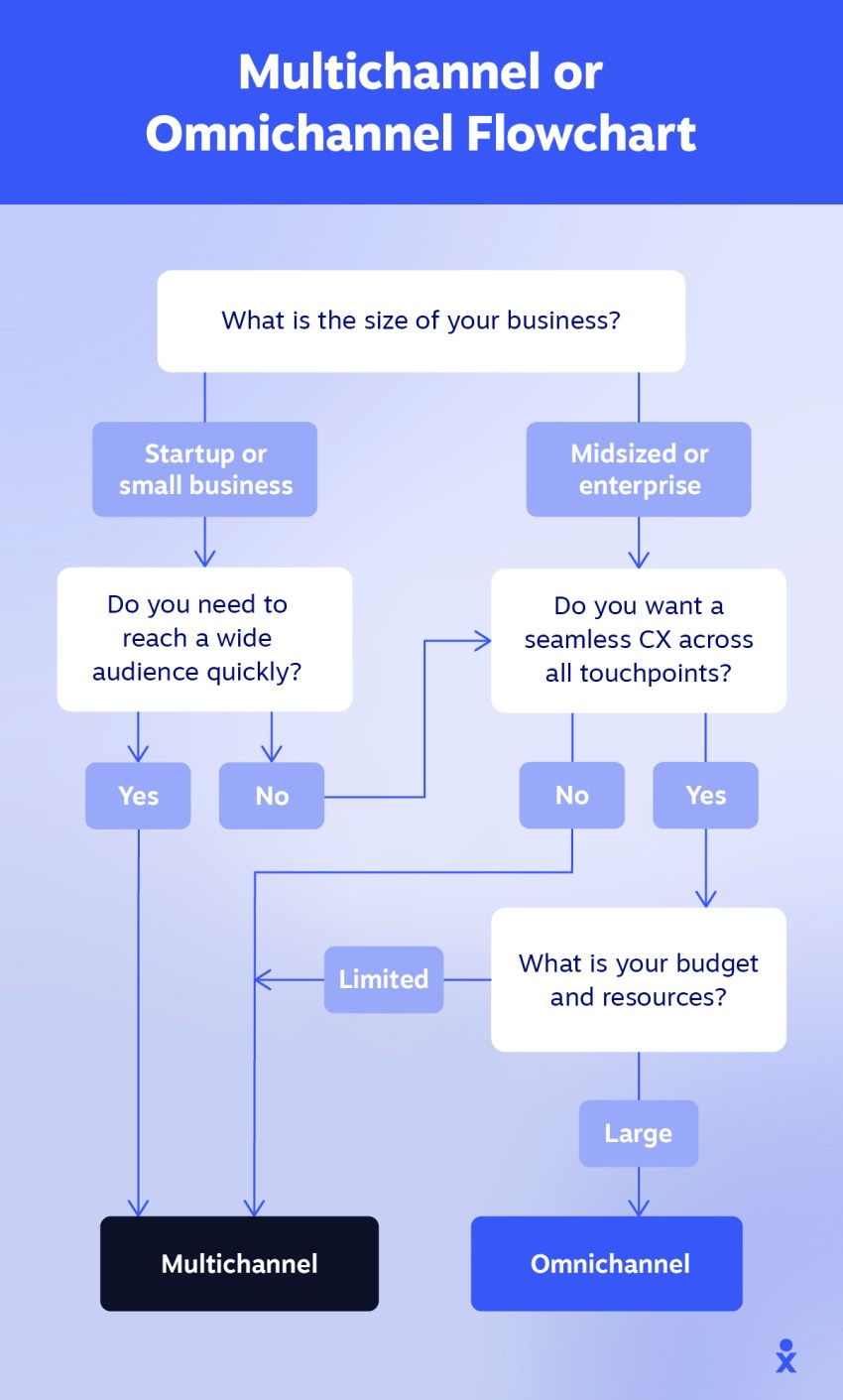
You do not need to stick with one approach forever. Many organizations start with a strong multichannel presence and then expand into a fully integrated omnichannel model as they grow. Platforms like Nextiva let you begin with core communication tools and add advanced integrations and AI capabilities as customer expectations evolve.
Nextiva: Omnichannel Experiences Made Easy
Nextiva delivers a complete omnichannel experience. It brings voice, video, SMS, and live chat into one synchronized platform. You centralize your data in a single source of truth, remove silos, and connect every interaction. When a conversation starts on a mobile app and ends in a physical store, your team sees the full history in one continuous thread.
Why choose Nextiva for your CX strategy?
- Omnichannel visibility: View complete customer history and real-time dashboards for voice and web chat in one place. Give agents full context before they respond.
- Intelligent personalization: Use AI-powered transcription and summarization to understand customer needs and respond with accuracy. Equip teams to act on insights instead of guesswork.
- Scalable integrations: Connect your CRM and marketing tools through a broad integration marketplace. Keep data moving across your tech stack in real time.
- Process automation: Guide customers through faster resolutions with advanced routing and automated options such as web and ACD callback.
- Educational resources: Offer webinars and training to help your marketing team and support staff get the most from your omnichannel platform.
- Flexible pricing: Nextiva provides scalable pricing options that support businesses of all sizes, ensuring your marketing efforts align with budget constraints.
Turn fragmented interactions into connected experiences. Build your seamless customer experience strategy on a strong foundation and scale with confidence. Get started with Nextiva today.
A true end-to-end omnichannel platform.
Connect with your customers where they are and when they want.
Omnichannel vs. Multichannel FAQs
Still have doubts? Review the frequently asked questions below to find clear answers about omnichannel vs multichannel marketing.
Choosing between multichannel vs. omnichannel marketing varies between businesses and depends on several factors. There are distinct differences to consider between omnichannel and multichannel strategies. An omnichannel approach is ideal if you have an established customer base with complex journey paths across multiple touchpoints and can invest in technology and personnel.
Multichannel may be better for small businesses with simpler customer journeys and limited resources, aiming for a fast, low-cost setup. Both approaches aim to improve customer experience and can adapt as your business grows.
Yes. Every omnichannel strategy is also a multichannel strategy because it uses multiple channels to engage customers. The difference is that omnichannel connects those channels through shared data and integrated technology, creating one continuous customer experience. Many businesses start with a multichannel approach and evolve into an omnichannel model as they grow.
Omnichannel marketing might have higher initial costs due to technology integration and hiring customer-centric data analysis experts. In contrast, multichannel strategies typically involve lower upfront costs to implement channels and basic analytics tools, although training may be necessary for existing teams.
Despite the higher initial costs, the long-term benefits of implementing an omnichannel contact center include improved customer satisfaction, loyalty, and sales, resulting in enhanced overall ROI.
Here’s a roadmap for creating both multichannel and omnichannel marketing strategies:
Define your goals and target audience: Clarify your objectives, like brand awareness, lead generation, sales, or customer support, and identify your target demographics and online behaviors.
Choose your channels: For multichannel, pick effective channels like websites and social media, and with omnichannel, consider all touchpoints, both digital and physical.
Tailor your strategies: Customize your content and messaging for each channel in a multichannel strategy. For omnichannel, ensure consistency and easy transitions between channels.
Implement and analyze: Track individual channel performance in multichannel and integrate data for a unified view in your omnichannel customer service software to analyze and optimize personalized customer experiences.
Remember that cloud-based contact centers with CRM integrations enable agents to access customer data and offer personalized support across various channels. This approach results in an improved, consistent customer experience, faster issue resolution, and more personalized support to help you meet customer service expectations and improve customer retention.
Yes. Many businesses begin with a multichannel setup to build awareness. As they grow, they shift to an omnichannel model by integrating their technology and connecting their customer data into one system.
Nextiva supports both approaches. You can start with core multichannel features like voice and SMS, then upgrade to advanced Power Suite CX plans for a fully integrated, AI-powered omnichannel experience as your business scales.