

 Customer Experience
  Blog
Blog  Business Communication
  Leadership
  Marketing & Sales
  Nextiva News
  Productivity
  VoIP
VoIP 


Are long wait times and missed calls hurting your customer experience? Unanswered calls and long queues increase customer frustration fast. Service level gives you a clear way to measure and fix this issue.
Maintaining an optimal service level requires balancing operational costs, staffing efficiency, and customer satisfaction.
This guide explains how service level works, how to calculate it correctly, what a good target looks like, and how to improve it with practical operational strategies.
What Is Call Center Service Level?
Service level (SL) measures the percentage of inbound calls agents answer within a specified time frame (defined time period). For example, an 80/20 service level means agents answer 80% of calls within 20 seconds.
It is the primary indicator of whether contact centers have enough staff to handle incoming call volume and to meet customer demand.
Service level works as a flexible benchmark, not a fixed pass/fail metric. Each business sets targets based on customer expectations, call volume, and service type.
- Standard performance: Most call centers use 80/20 as the baseline, which is a widely accepted benchmark.
- Flexible benchmarks: Teams may accept 70/30 during high demand periods, such as retail centers handling post-holiday returns.
- High-urgency benchmarks: Critical support lines, such as emergency services or VIP technical support, often target 90/10 or higher.
While 80/20 remains the standard for voice, each channel follows different expectations based on how most customers use it across digital channels, which impacts the call center’s performance. These vary by industry and customer expectations.
| Channel | Standard benchmark | Target threshold |
|---|---|---|
| Phone | 80/20 | 20 seconds |
| Live chat | 80/60 | 60 seconds |
| 95/24 | 24 hours | |
| SMS/messaging | 80/15 | 15 minutes |
| Social media | 80/20 | 20 minutes |

How to Measure Service Level
Some call centers have a service level agreement (SLA) that guarantees a certain threshold of service. You may choose to have an SLA for internal use to measure your call center’s overall performance.
Use this simple formula to calculate your call center’s service level:
Calls answered within the specified time ÷ total calls × 100 = service level percentage.
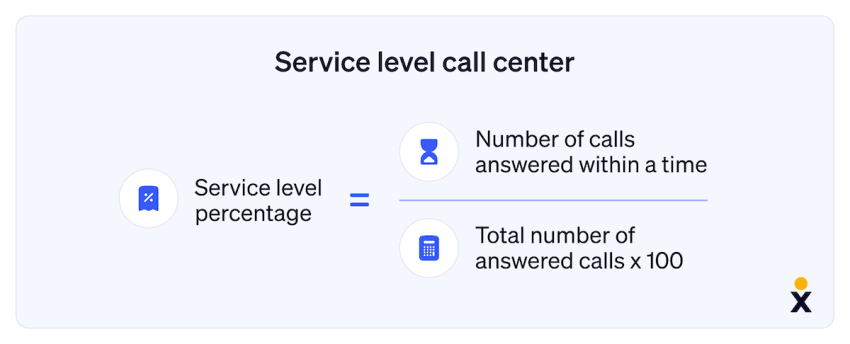
Example: If 800 out of 1,000 calls are answered in 30 seconds, the service level is 80%.
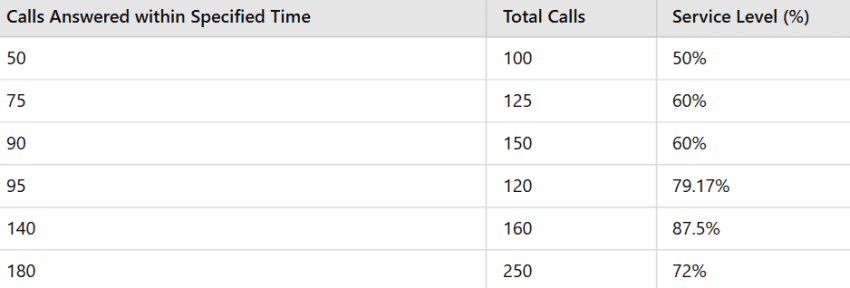
To achieve expert-level accuracy, consider these two variations using performance data:
- Service level including abandoned calls: Count all abandoned calls as failures. This method gives you a strict, customer-focused view of performance and helps you classify abandoned calls more accurately and monitor abandon rate. Calls answered within target time ÷ total incoming calls × 100
- Adjusted service level excluding short abandons: Ignore calls that disconnect within 3-10 seconds. These usually come from wrong numbers or accidental dials and should not impact your team’s performance metrics. Calls answered within target time ÷ (total calls – short abandons) × 100
Staffing levels and call volume directly influence service level. When there are too many calls in the call queue, delays increase. Many call centers also use models like Erlang C or Erlang A to plan contact center operations and maintain minimal wait times.
Why Service Level Matters to Your Customers
There is a clear correlation between service level and customer satisfaction scores, as measured by your CSAT score. If you fail to respond to callers promptly, they will become frustrated and turn into dissatisfied customers. That frustration leads to poor call center metrics related to customer loyalty and retention, and potentially to recurring revenue.
When your call center maintains high service levels, your customers experience shorter wait times, abandon fewer calls, and solve customer queries faster. In contrast, poor service levels lead to poor performance, lower retention, and more repeat contacts, which harm your overall performance.
Maintaining efficient call handling across services provided while enforcing your quality standards must be part of your customer service strategy. You must avoid rushing calls just to improve service level metrics.
In the not-so-distant past, some call center managers were guilty of prioritizing metrics like service level to the point where in-call experiences suffered. By rushing existing calls to unsatisfactory conclusions, agents were able to quickly answer the next inbound calls, thus improving their service level at the previous customers’ expense.
This table shows how service level directly impacts your customers’ perspective and your bottom line:
| Impact area | Customer perspective | Business benefit | Operational outcome |
|---|---|---|---|
| Customer retention | My time is respected, and I don’t have to wait. | Reduces abandonment | Prevents callers from hanging up due to long wait times and lowers lost contact rate |
| Revenue growth | I can get answers and buy exactly when I’m ready. | Protects sales leads | Faster response times increase conversions and reduce lost opportunity costs |
| Quality and agent well-being | I’m speaking with a calm, helpful expert, not a stressed agent. | Prevents agent burnout | Balanced workloads reduce back-to-back call pressure, stress, and attrition |
| Brand reputation/trust | This company is reliable and easy to reach. | Builds trust | Consistent accessibility strengthens brand image and increases customer lifetime value (LTV) |

Key Metrics You Should Track
Tracking the right performance benchmarks helps you measure and improve your contact center’s performance. Here are a few of the key metrics you should be tracking in your call center.
Average speed of answer
ASA helps you track performance by measuring wait time in the call queue. When you’re tracking service level, the average number of seconds it takes to answer a call is your hero metric. To calculate your average speed of answer (ASA), divide the total length of customer wait time by the total number of calls answered, then multiply the result by 100.

You may also choose to track average handle time in conjunction with ASA. This measures how long each call took once it was answered.
Average Handle Time (AHT)
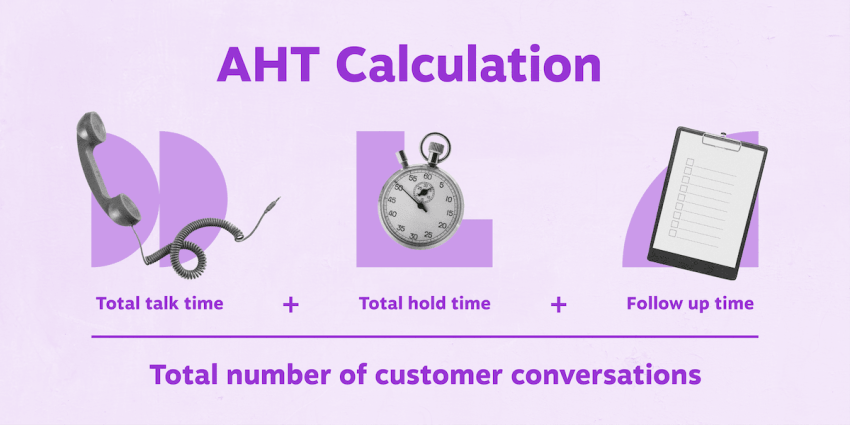
AHT measures the total duration of a customer interaction across its full lifecycle. It includes talk time, hold time, and the wrap-up phase known as after-call work. AHT directly impacts staffing requirements. As interaction complexity increases, reducing AHT by removing operational friction, such as slow legacy systems, helps maintain a stable service level.
Abandonment rate
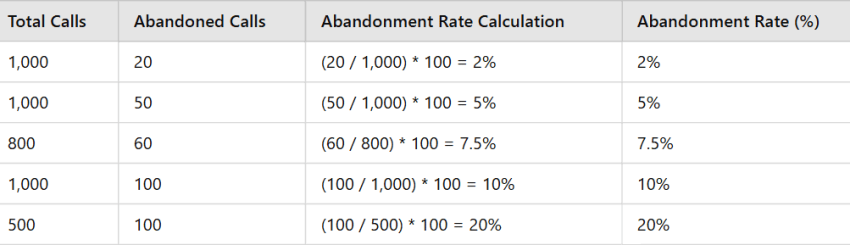
Abandonment rate is the percentage of calls abandoned before reaching an agent. For example, a customer lets the phone ring for 30 seconds, doesn’t receive an answer, hangs up, and plans to try again later.
To calculate the abandonment rate, divide your number of abandoned customer calls by your total number of calls, then multiply by 100 to get a percentage. If you miss 50 calls over the course of a week and receive a total of 500 calls, your call abandonment rate is 10%.
First call resolution
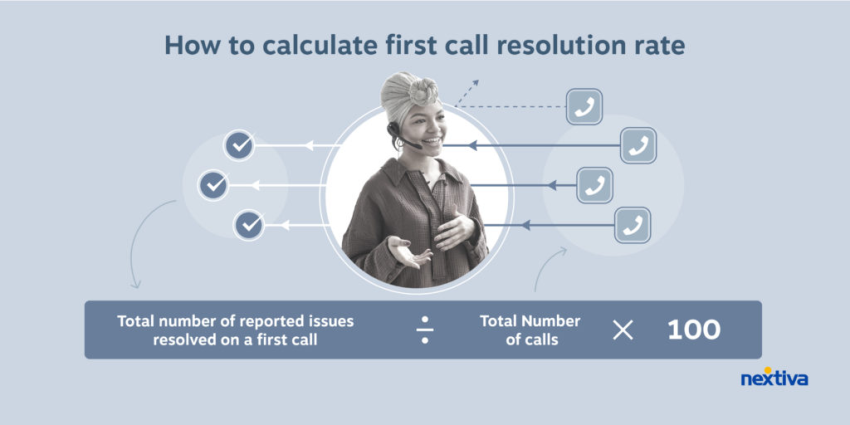
First call resolution (FCR) is the percentage of issues resolved during the customer’s initial call. You may refer to this as first contact resolution in omnichannel contact centers, where you’re managing various channels in addition to voice.
FCR is used to measure how many customer interactions get resolved on the very first contact, eliminating the need for any follow-up. This metric gives managers a way to gauge a call center’s efficiency in resolving customer issues.
A high FCR rate indicates a well-functioning customer service team that can adeptly handle customer inquiries.
Customer Satisfaction (CSAT)
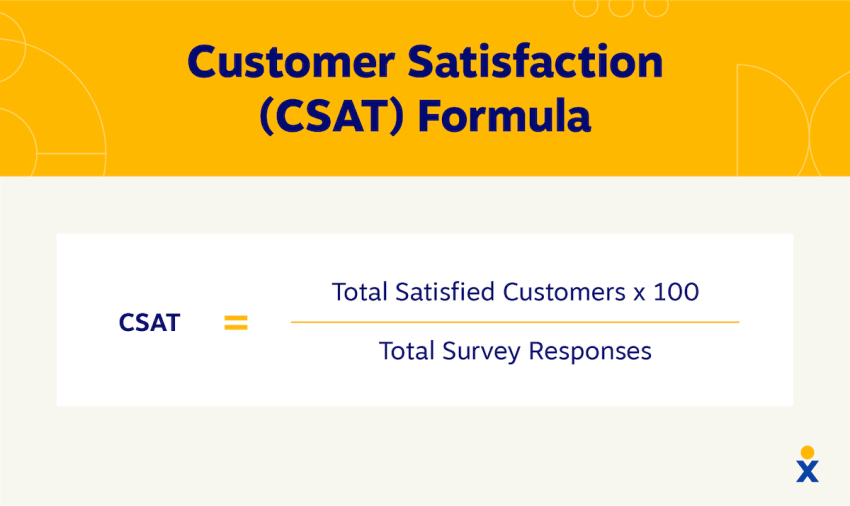
CSAT measures overall satisfaction based on direct customer feedback to show how satisfied customers are. It indicates the quality of the interaction, while service level reflects speed. A call center must track both metrics together to ensure faster response times do not lead to rushed, low-quality conversations.
Here is a breakdown of the standard targets for each of these metrics to help you assess your performance:
| Metric | Definition and purpose | Industry standard/target |
|---|---|---|
| Service level | Percentage of calls answered within a specific time goal. | 80/20 (80% in 20s) |
| Average speed of answer | The average number of seconds a caller waits in the queue. | Consistent with SL |
| Abandonment rate | Percentage of callers who hang up before reaching an agent. | Less than 5% |
| First call resolution | Percentage of issues resolved during the initial contact. | 80% or higher |
| Average handling time | Average duration of a call including talk time and wrap-up. | 4-6 Minutes |
| Customer satisfaction | Feedback-based score of the customer’s experience. | 85% or higher |
Factors That Can Impact Service Level
Managing service levels requires answering calls quickly and balancing four operational variables to maintain a sustainable, cost-effective contact center.
1. Industry requirements and service urgency
Customer patience depends directly on the nature of the inquiry. Healthcare and emergency services set service-level targets as high as 95/5 because delays can have life-altering consequences. General retail or utility billing teams often operate with a 70/30 target.
Different industries define different service level objectives based on urgency and customer expectations. You need to understand your industry’s tolerance for abandonment to set the right target. This approach helps you meet targets without overspending.
2. Customer segmentation and tiered support
Every caller does not require the same response time. Many businesses use skills-based routing to segment customers:
- VIP/Platinum queues: Route high-value accounts to specialized agents with a 90/10 target.
- General support: Manage standard inquiries at the 80/20 baseline.
Segmentation protects high-value revenue streams while helping you allocate resources properly across the broader customer base. Using more experienced agents for high-value customers improves resolution.
3. Call volume spikes and seasonality
Service level responds quickly to external demand patterns so that call center operations keep running smoothly. Predictable events such as Black Friday in retail or tax season in finance require proactive capacity planning.
You must depend on predictive forecasting to prepare for these spikes. Without it, sudden increases in call volume create queue creep, where wait times stack and service levels drop exponentially even if staffing levels remain unchanged.
4. Agent experience, attrition, and shrinkage
Staffing calculations must indicate real workforce conditions. Two factors directly impact service level:
- Shrinkage: Agents spend part of their time away from calls due to training, meetings, breaks, and absenteeism. In most contact centers, shrinkage accounts for 30-35% of total time. If you do not account for it in your staffing model, you will remain understaffed and struggle to meet service level targets.
- The learning curve: New agents usually handle calls more slowly, which increases average handle time (AHT). When a new hiring group starts taking calls, the service level often drops temporarily until they gain proficiency.
- Agent turnover: High attrition creates skill gaps and constant rehiring cycles, which makes it difficult to maintain consistent response times and affect agent performance.

How to Improve Your Service Level
Improving your service level does not require agents to rush calls. You need to remove the operational friction that delays their return to the queue. Combine precise workforce modeling with AI-driven deflection to meet your targets without increasing overhead.
Use predictive forecasting
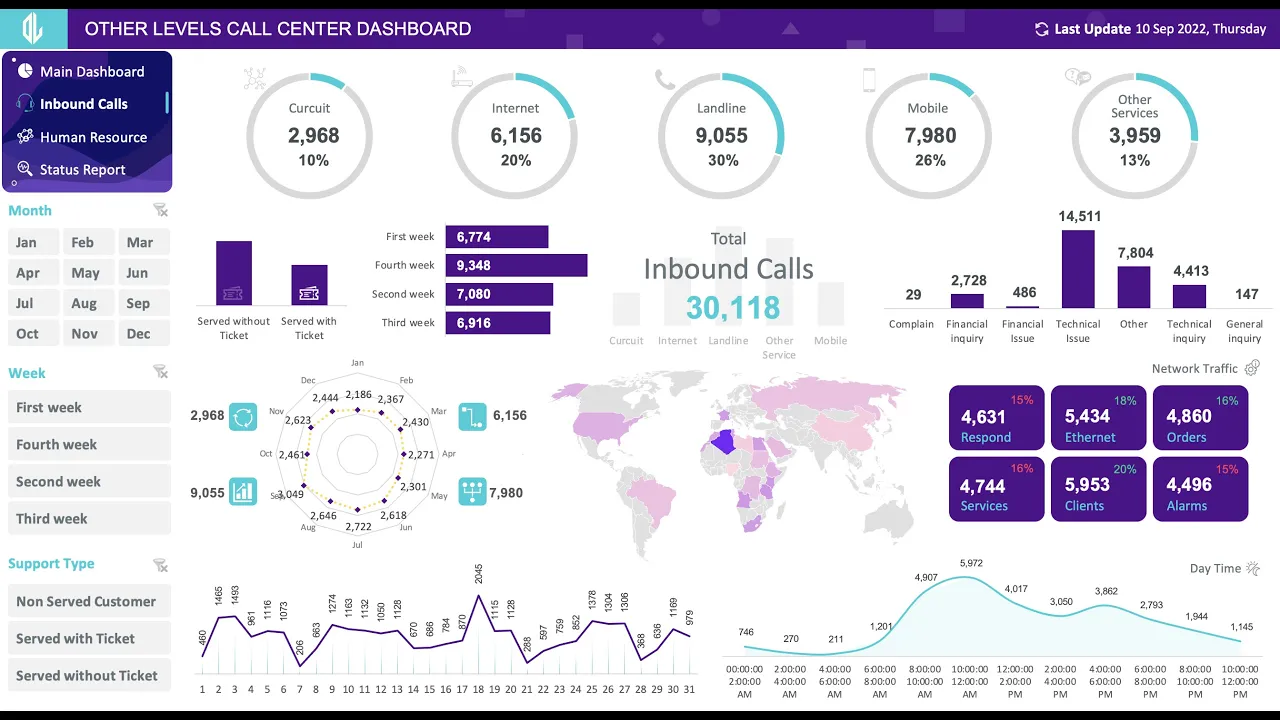
Analyze historical performance data and market trends to predict future call volumes and properly divide resources. Rather than going by your gut feelings or spending time manipulating data in an Excel spreadsheet, get instant insights based on real information from your call center and plan staffing during each business day accordingly.
Use workforce management solutions
Deploy workforce management (WFM) software to improve schedule adherence, create precise staffing plans, and to balance agent workloads with customer demand.
Implementing WFM strategies can help you:
- Reduce wait times: By ensuring the right number of agents is available at the right moments, you can minimize customer wait times and improve satisfaction.
- Improve resolution rates: By having the right agents handle the right interactions, you can improve first-call resolution rates and reduce the need for follow-ups.
- Boost operational efficiency: By forecasting and scheduling automation through call center software, you can save time and resources and enable your team to reduce queues and focus on serving customers.
Deploy call deflection
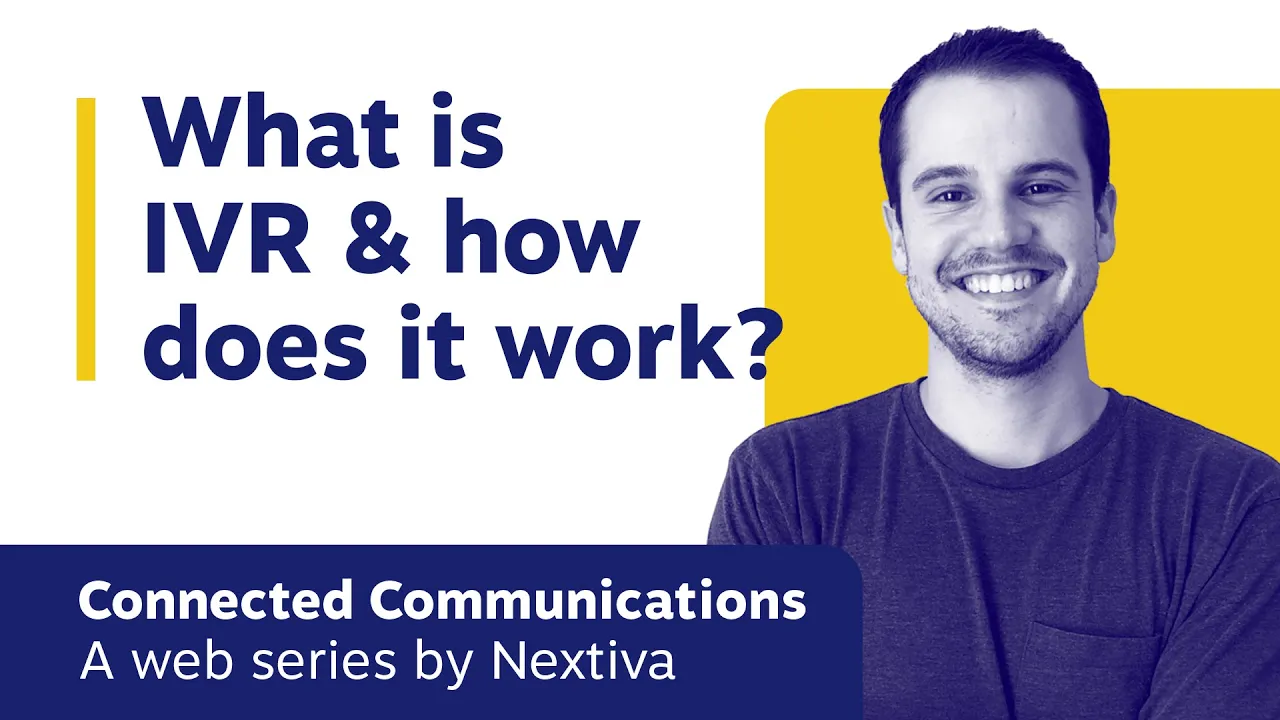
Adopting routing methods like interactive voice response (IVR) systems, automatic call distribution, or automated messaging ensures that simpler queries are resolved without involving agents. The introduction of self-service options often means customers no longer need to wait on hold to speak to call center personnel.
Providing digital messaging options via mobile channels while customers are in the queue is an effective call-deflection strategy that also lowers call volumes.
Have you tried this? Nextiva’s Omnichannel, Real-Time In-Queue Sidebar
Use AI to reduce after-call work (ACW)
Service level drops when agents stay stuck in wrap-up mode. AI-powered transcription and auto-summarization tools remove the 2–3 minutes agents spend writing post-call notes. This shifts agents back to available status faster and directly improves service level.
Invest in self-help solutions
Reducing the number of calls to your business is a surefire strategy to improve your call center service level. By building robust self-service portals or mobile app features, you enable customers to resolve common issues on their own. If they can find the information they’re seeking with a few clicks, you’re providing the support they need without their having to call you.
When choosing a call center provider, make sure you ask what technology the company offers that can help customers before they contact you.
Use intelligent virtual assistants
Deploy intelligent virtual assistants (IVAs) for routine inquiries to help lower your incoming call volume and improve efficiency. These assistants are software programs that use AI, natural language processing, and machine learning to give your customers automated and personalized assistance.
Like chatbots, these virtual agents can understand and respond to user requests, perform tasks, and make recommendations, simulating human interactions.
Offer omnichannel customer support
When you implement an omnichannel contact center, you open the door to a variety of communication channels (chat, email, SMS, and social media) for customers to choose from, reducing their reliance on phone support.
If calls are being most affected by high volumes and poor service levels, the introduction of other customer-favorite channels can quickly ease the burden.
Improve Your Service Level With Nextiva
You can’t skimp on service level when dealing with customers with high expectations. There must be no compromise between fast responses and superior service.
By introducing features like IVAs, call deflection, and omnichannel communication options, you take important first steps to improve your service level and delight your customers.
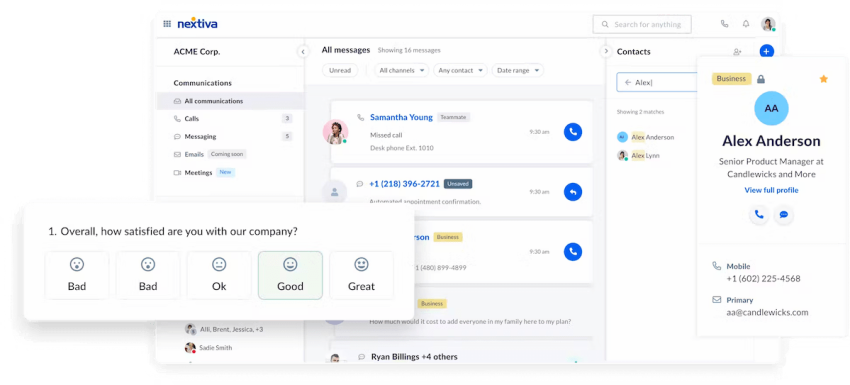
However, bolting on new tools one by one is rarely the most efficient or cost-effective solution. What you need is Nextiva’s robust contact center platform to ensure you’re showing up for your customers on every channel.
You get all the channels, self-help tools, and analytics you need to enable you to plan for a customer-first, high-performance contact center. Agents get a single, easy-to-use app for all customer communications and tasks.
Want to improve your call center service level? Check out Nextiva’s AI-powered contact center solutions.
Top AI-Powered Contact Center Solution
Transform your customer interactions with a contact center platform that saves you time and money, reduces agent and supervisor stress, and flexibly adapts to fit your needs.
Frequently Asked Questions (FAQs)
A service level agreement is a formal agreement or contract between a business and its service provider (internal team or BPO). It defines the minimum acceptable performance standards.
A modern call center SLA goes beyond a target number. It acts as a governance framework to keep the provider accountable, especially during high-volume spikes. It also serves as a roadmap that ensures outsourcing partners or internal teams meet customer experience goals.
Companies manage service levels with BPO providers by maintaining open communication channels. This ensures BPO partners meet service level agreement (SLA) expectations. Many companies include incentives and financial penalties in contracts to drive performance. These terms push providers to meet service standards during high-volume periods and specialized marketing campaigns.
Call center service level standards define the benchmarks used to evaluate agent productivity and workforce planning effectiveness. These standards directly drive staffing decisions. They determine how many agents must be scheduled at specific intervals to handle random call arrivals.
Maintaining these standards requires accounting for real-world variables like agent shrinkage (breaks and meetings) and redials, ensuring the right number of agents remain available at the right time.
Context discontinuity occurs when a customer switches from one channel, such as a chatbot or SMS, to a live phone call, and the agent does not have access to the previous interaction history.
Even when the call meets the 80/20 standard, this gap reduces the true service experience. The agent spends the first 60-90 seconds re-verifying details instead of resolving the issue. To address this, modern standards now focus on contextual service levels. These measure total time to resolution across all touchpoints, not just the speed of answering the final call.