

 Customer Experience
  Blog
Blog  Business Communication
  Leadership
  Marketing & Sales
  Nextiva News
  Productivity
  VoIP
VoIP 
What Is Enterprise Digital Transformation?
Enterprise digital transformation is a company-wide strategic initiative aimed at fundamentally changing how large businesses operate and create value. It’s not just about going digital, but it’s a continuous and profound shift in culture, processes, and technology to adapt to a digital-first world.
Market pressures and customer expectations have changed, and enterprises using outdated processes and siloed data cannot keep up with the speed and agility of digital-native businesses.
Enterprise digital transformation is the strategic answer to this challenge. If successfully implemented, it unlocks many business outcomes and benefits, like increased company agility, operational efficiency gains, and a highly personalized customer experience.
It’s important to distinguish digital transformation from two similar but significantly smaller concepts:
- Digitization: The process of converting analog information into a digital format (e.g., scanning paper documents).
- Digitalization: The process of using digital technologies to improve existing operating models and business processes (e.g., implementing a cloud-based CRM system instead of spreadsheets).
Enterprise digital transformation is the third and highest stage. It uses technology to reinvent business models, create new forms of value, and support digital innovation, rather than merely optimizing old methods.
Key Components of Enterprise Digital Transformation
To be successful, companies undergoing digital transformation need to align four key components:
Strategy
This is the overarching why and what. A successful digital transformation strategy provides a clear roadmap that directly links concrete digital transformation initiatives (such as improving the customer experience or increasing operational efficiency) to the company’s core business strategy. It defines the vision, establishes measurable key performance indicators (KPIs), and secures buy-in from stakeholders, from executives down to employees.
Technology, data, and AI
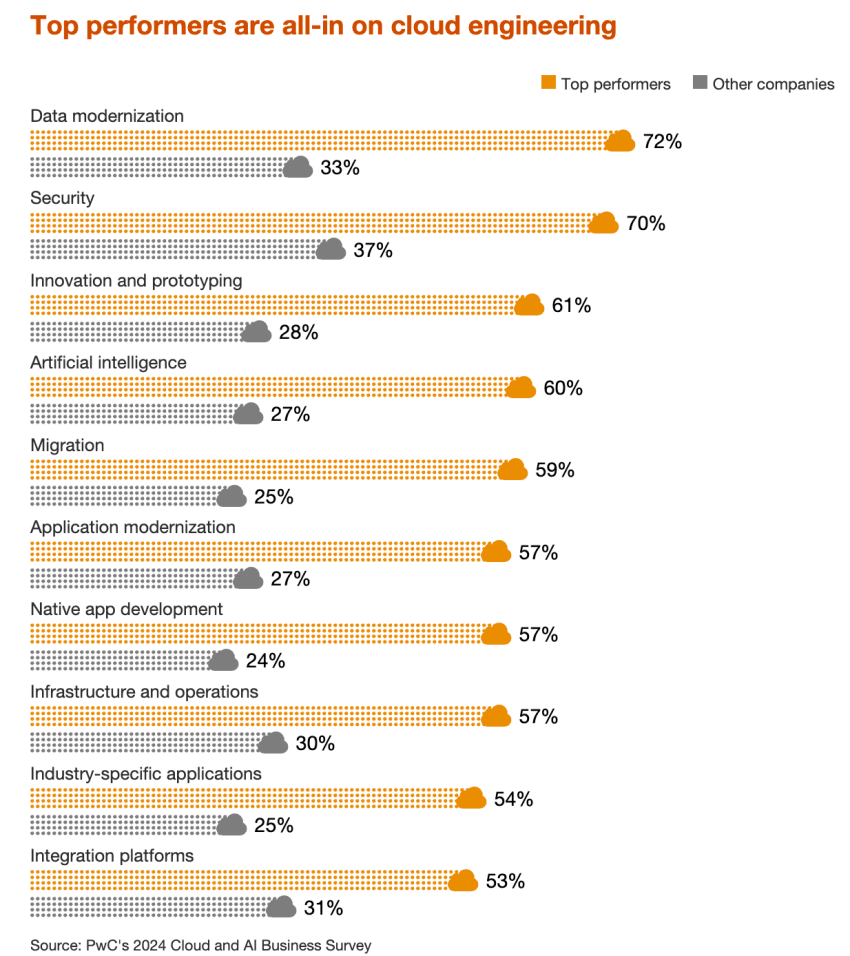
True digital transformation begins with building a modern, scalable, and secure technology infrastructure, almost always cloud computing-based, that enables the collection and processing of massive amounts of data.
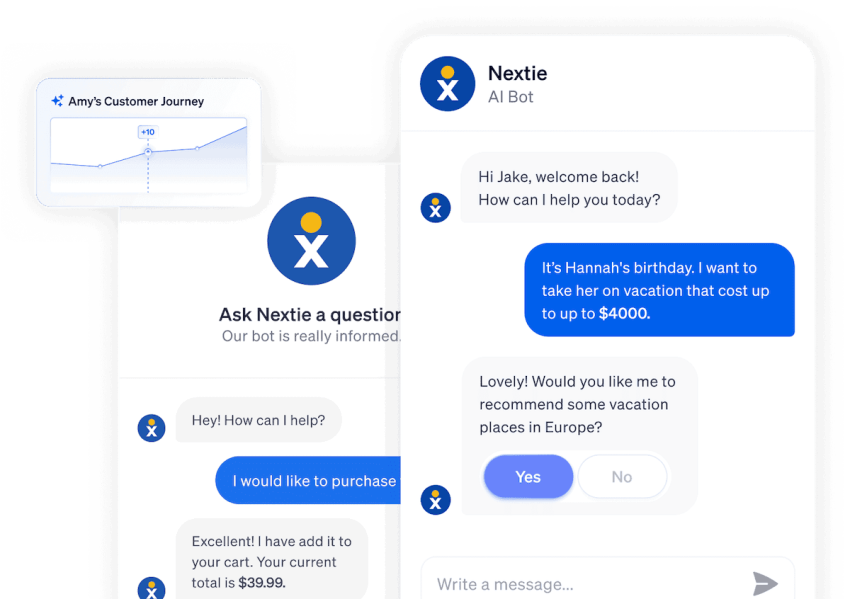
Building upon this foundation, artificial intelligence (AI), IoT, blockchain, and automation are used to analyze this data for predictive insights, automate complex workflows, and support intelligent digital tools — such as virtual agents or recommendation systems — that create new value and support data-driven decision making.
Processes
This component involves a complete redesign of core processes. Instead of simply digitizing old workflows, they’re being overhauled (from customer service and supply chain management to finance and human resources) to optimally use the new digital tools. The goal is to break down internal silos and create seamless, streamlined processes for customers and employees through automation.
People and skills
Technology is only effective if it’s adopted by people. This is arguably the crucial factor: effective change management that builds a culture of agility and learning. This includes investing in the education and retraining of employees, so they can use new digital solutions, and developing a data-driven mindset where decisions are based on actionable insights, not just intuition.
In short, enterprise digital transformation means reshaping the entire organization to become more agile, intelligent, and customer-centric. The drivers of this inevitable change are as powerful as the transformation process itself.
The Main Drivers of Enterprise Digital Transformation
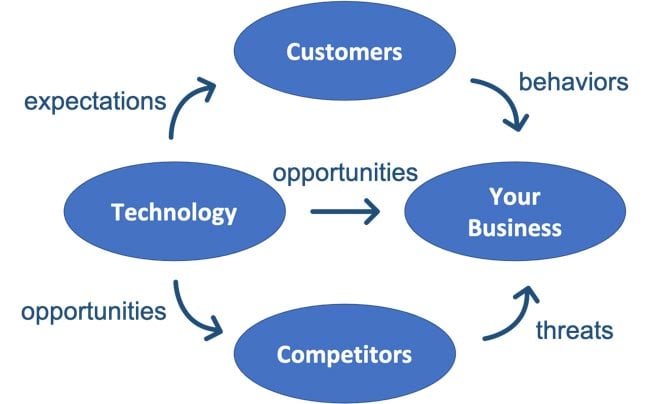
Digital transformation doesn’t happen in a vacuum. It’s a direct response to strong, unavoidable market pressures that force companies to evolve to avoid falling behind. The key drivers are:
1. Changing customer expectations
Today’s customers are in complete control. Shaped by the hyper-personalization offered by services like Netflix and Amazon, they now expect the following from every brand:
- Personalization: Customers demand experiences tailored to individual customer preferences and past usage.
- Speed: They expect instant responses and 24/7 on-demand service, and show an intolerance for friction and inconvenience.
- Omnichannel access: They want to start a conversation via web chat, continue via email, and conclude it by phone without having to repeat context. This underscores the urgent need for AI-powered, unified customer experience (CX) platforms.

2. Intense competitive pressure
Digital-native startups and agile competitors have set new examples for traditional business models. They can develop and launch new digital services within weeks instead of years, without relying on outdated technologies.
For established enterprises, transformation has gone from a growth strategy to a necessary survival strategy. Competitors are already using AI as a catalyst for competitive advantages to automate processes and create better customer experiences.
3. The proliferation of AI
Initially, AI was a tool to support change. By 2026, AI (especially generative AI) will be one of the strongest drivers of change (and research shows that it already is).
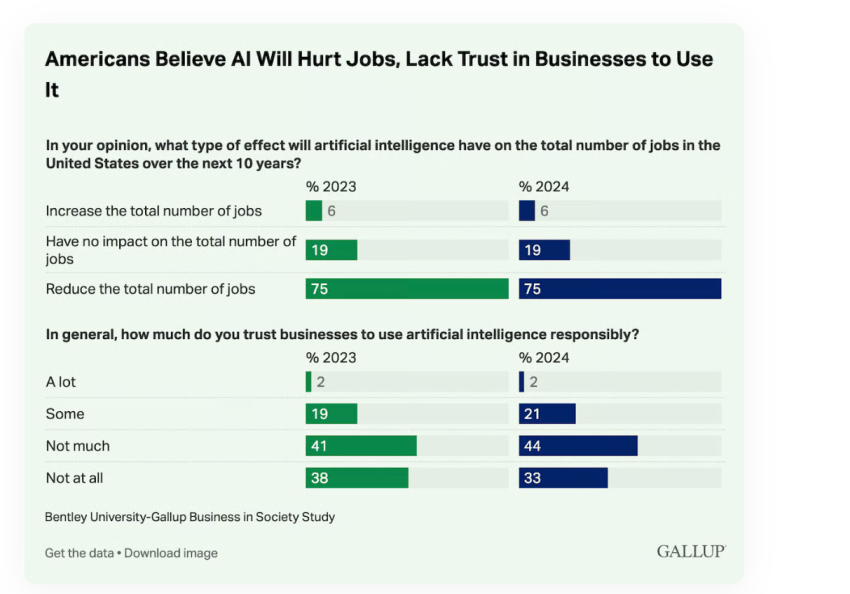
The potential of AI to transform core business processes and unlock new opportunities for productivity is so enormous that it requires strategic responses from all levels of management. The realization that AI can automate complex tasks, extract new data-driven insights, and control intelligent agents has made its adoption an indispensable component of any digital transformation journey.
4. The demand for operational and economic efficiency
In a volatile economic environment, the focus on efficiency and return on investment (ROI) is stronger than ever. Enterprises must find new ways to achieve more with fewer resources. This pressure is driving digital transformation and automation of routine tasks. This not only reduces costs and human error but also frees up valuable employee capacity for impactful, innovative activities.
5. The permanent shift to cloud and hybrid work
The pandemic-driven shift toward location-independent and distributed work models is permanent. This change has exposed the limitations of old, local, and isolated communication systems.
As a result, the need for cloud-native tools and unified communication platforms has become urgent. These platforms are essential for optimally aligning distributed teams regardless of their location, supporting collaboration, increasing productivity, and ensuring organizational security.
How AI Supports Enterprise Digital Transformation
Artificial intelligence (AI) is one of the most important areas that most businesses need to focus on as part of their digital transformation efforts. But a significant disconnect exists between AI spending and AI integration.
While a large 92% of companies, as per McKinsey, will boost their AI investments in the next three years, only 1% of leaders classify their organizations as mature in AI deployment. This highlights the central question for CIOs and business leaders: How can they strategically allocate capital to move beyond simple investment and achieve genuine AI maturity?

Bridging this maturity gap means focusing investment on the three key areas where AI delivers the most profound value:
1. AI for business operations and efficiency
Business growth is where AI delivers its most immediate and measurable impact by creating intelligent, self-optimizing workflows. This is precisely what AI for Operations (AIOps) is all about, which includes:
- Hyperautomation of workflows: AI combined with Robotic Process Automation (RPA) can automate complex, multi-step tasks that previously required human judgment. This includes everything from invoice processing and data entry to employee onboarding and IT helpdesk requests.
- Supply chain and logistics optimization: AI can analyze massive amounts of data (transportation routes, weather, fuel costs, delivery delays) to predict and respond to disruptions in real time. It optimizes delivery routes, manages inventory, and forecasts demand with the highest accuracy.
- Predictive maintenance: In manufacturing and IT, AI monitors operational data from machines or software to predict failures before they occur. This shifts maintenance from a reactive to a proactive model, saving millions in downtime and repair costs.

2. AI for customer experience
AI personalization means instant and seamless customer experiences that customers expect, using:
- Intelligent virtual agents & chatbots: AI-powered virtual agents understand customer needs and intent (sentiment analysis), access backend systems (such as a CRM system), handle complex requests (like changing flight and updating billing address), and route them to a human agent, including the full context of the conversation.
- Hyperpersonalization at scale: AI analyzes the entire customer history — browsing behavior, past purchases, support tickets — to personalize every interaction based on customer preferences. This enables everything from Netflix’s recommendation engine to dynamic, real-time product suggestions on e-commerce websites.
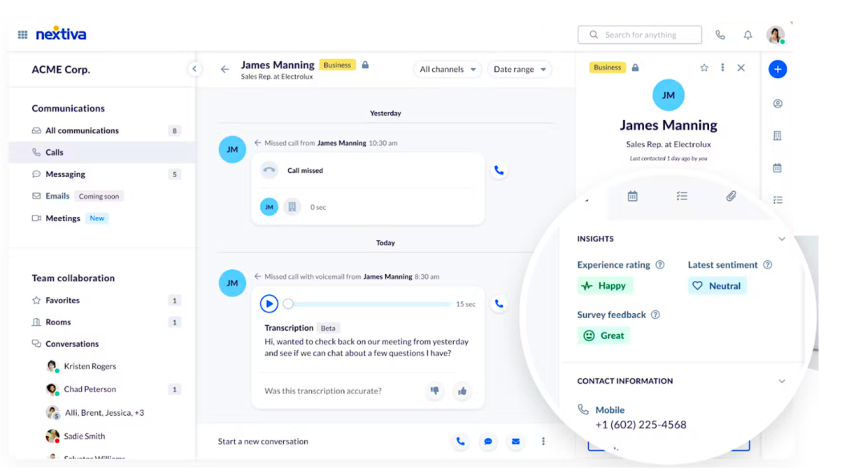
- Real-time agent assistance: During a live call or chat, AI can assist the human agent. It transcribes the conversation, analyzes the customer’s mood, and automatically provides the appropriate answers or articles from the knowledge database, significantly improving the solution rate on the first contact.
3. AI for data-backed decision-making
AI and data analytics enable companies to move from simply collecting data (data silos) to using data-backed insights to make large-scale, strategic decisions. Here’s how:
- From big data to intelligent insights: AI and machine learning are the only tools capable of processing the massive, unstructured datasets (big data) that companies collect and identifying patterns within them.
- Predictive analytics: This is a key use case for businesses. AI analyzes historical data to predict future trends. This allows companies to move from reacting to the market to anticipating it — predicting customer churn, forecasting revenue growth, and discovering new market opportunities, leading to holistic business transformation.
- Discovering new business models: Through data analytics, AI can identify entirely new revenue streams or customer segments that were previously invisible and transform your business models.

The Benefits of Digital Transformation for Enterprises
When a company successfully navigates change, the benefits are not just theoretical. They lead to tangible, measurable, and impactful business results that create a sustainable competitive edge.
- Improved customer experience and increased customer loyalty: Using AI and integrated data, enterprises can move from reactive, standardized service to proactive, highly personalized interactions. This intelligent experience drives high customer satisfaction (CSAT), net promoter scores (NPS), and long-term customer loyalty.
- Operational efficiency: AI-powered automation and streamlined processes reduce manual work, minimize errors, internal data silos, and deliver cost savings. Digital transformation tools reduce operational overhead, minimize errors, break down internal data silos, and deliver cost savings.
- Increased agility and innovation: Cloud-based technology enables faster adaptation to market trends, supporting digital innovation and new business goals. It includes rapid testing, introduction, and scaling of new business models, applications, and revenue streams, helping enterprises outmaneuver their competitors.
- Improved employee experience and productivity: Giving your employees access to unified, intelligent tools eliminates the daily strain of constantly switching between different applications. This reduces burnout, increases employee satisfaction, and allows them to work more productively and focus on valuable, strategic tasks.
Common Challenges of Enterprise Digital Transformation
Despite its advantages, enterprise digital transformation is a complex and risky process. Most failures aren’t due to the technology itself, but rather to inadequate planning for the following associated challenges:
Cultural resistance to change
This is the primary reason for failure. Employees, and sometimes middle management, are stuck in their ways and fearful of change or unsure about using new technologies. A top-down measure without employee consent encounters low acceptance, friction, and resistance.
Outdated systems
Many enterprises still use outdated systems for their important business functions. These locally installed platforms are inflexible, maintenance-intensive, and incompatible with advanced technologies. They’re a technological anchor, creating data silos and hindering the integration of new AI and cloud tools.
Lack of a clear, coordinated strategy
Many enterprises fall into the trap of adopting technology for its own sake. Without a clear, precise strategy that directly links technology decisions to business objectives, efforts become fragmented, unfocused, and fail to deliver a clear ROI.
Cybersecurity risks and compliance
A more interconnected, cloud-based infrastructure exposes enterprises to potential vulnerabilities and cyberattack opportunities. Data flow between systems and AI models increases the attack surface. Businesses must manage this risk while navigating a complex and evolving web of data privacy regulations (such as the GDPR) and AI ethics.
How To Successfully Implement an Enterprise Digital Transformation Strategy
Enterprise digital transformation is driven by a robust, dynamic strategy. An effective roadmap not only helps you select the right technology but also focuses on the following key areas to ensure alignment and implementation.
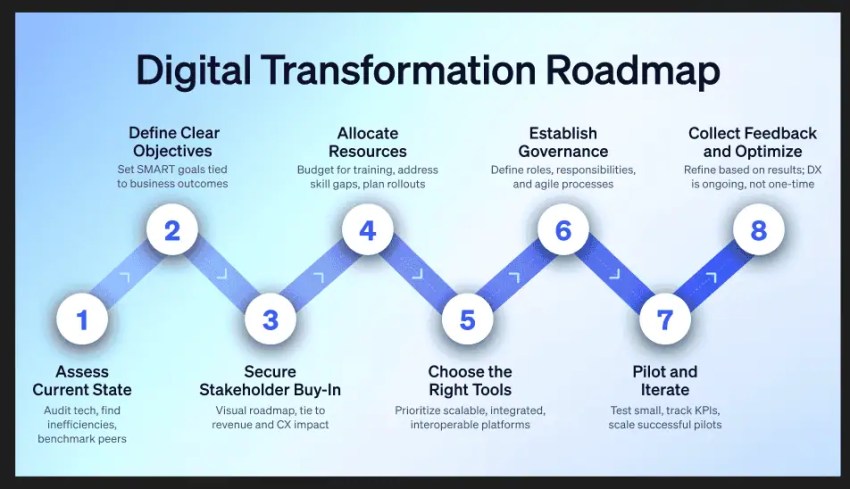
- Define a clear vision and business objectives: Answer the why? What specific, measurable business results do we need to achieve? (e.g., increase customer retention by 20% or reduce operating costs by 30%). This vision must have the full support of senior management and be clearly communicated throughout the enterprise.
- Audit existing technology and identify gaps: Analyze your current technology stack. Which legacy systems are business-critical? What data silos exist? What quick wins can be achieved by upgrading or replacing specific tools? Determine what to retain, what to modernize, and what to replace with a unified platform.
- Prioritize people and change management: Put people at the center and develop a change management plan to overcome resistance in the company culture. Invest in educating and retraining employees, appointing “AI Champions” who champion new tools, and establishing clear feedback channels to involve employees in the process.
- Develop a phased, iterative roadmap: Enterprises cannot transform overnight. The best strategies are phased. Prioritize key initiatives and focus on a few high-impact projects first to build momentum and demonstrate value. This agile, iterative approach allows for learning and adjustment, preventing you from getting stuck in a multi-year, all-or-nothing project that fails to deliver.
Measuring Digital Transformation Success: KPIs and Metrics
An enterprise digital transformation strategy is only effective if its impact is measurable. Businesses must move away from superficial metrics and capture specific KPIs to quantify progress, validate investments, and guide future decisions.
Capturing the right KPIs provides a clear, data-driven answer to whether your strategy is working.
Here are some of the most important metrics, broken down by business area:
| Category | KPIs | What they measure |
|---|---|---|
| Customer experience | Customer Satisfaction (CSAT), Net Promoter Score (NPS), Customer Effort Score (CES) | The direct impact of new processes and tools on customer happiness and loyalty. |
| Operational efficiency | Cost-per-interaction, Average Handle Time (AHT), First Call Resolution (FCR), Process cycle time | The speed, cost, and effectiveness of re-engineered workflows. |
| Business & financial | Revenue from digital channels, Time-to-market (for new features), Customer lifetime value (CLV) | The top-line and bottom-line financial impact of transformation initiatives. |
| Employee adoption | Tool adoption rates, Employee satisfaction scores (eNPS), Time to new-hire productivity | Whether employees are embracing new tools and the impact on their own experience. |
Enterprise Digital Transformation Examples in Practice
The best way to understand digital transformation is to see how it reshapes a business to better serve customers and stay competitive. Here are a few examples:
Retail (Amazon)
Amazon shows what ongoing transformation looks like. The company uses artificial intelligence throughout its business in almost every part of its operations, from managing warehouses to predicting what customers will buy next.
In fulfillment centers, AI-powered robots move products and speed up packaging and order processing. Its predictive logistics help forecast demand in specific areas, so Amazon can store items closer to customers and deliver them faster. Amazon saves time, reduces costs, and keeps customers happy with a better shopping experience.
Logistics (UPS)
UPS transformed its delivery network by using data and AI to make smarter decisions. Its ORION system (On-Road Integrated Optimization and Navigation) analyzes billions of data points to find the most efficient delivery routes. The system updates routes in real time, helping drivers save miles, reduce fuel use, and deliver packages faster. This shift has improved operational efficiency, increased profits, and supported UPS’s sustainability goals.
Healthcare (Mayo Clinic)
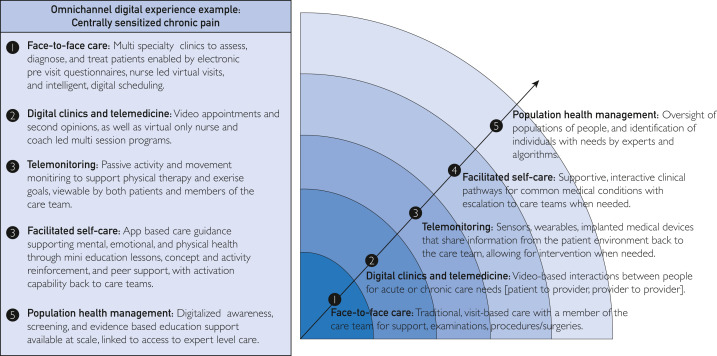
Mayo Clinic focused its transformation on improving how doctors care for patients. The company connected its electronic health records with AI and cloud technology, so doctors can detect diseases earlier and design more accurate treatment plans.
Predictive analytics help identify patients at risk of complications, giving care teams a chance to act before issues become critical. This data-driven approach makes healthcare more personalized, proactive, and effective.

Tackle Digital Transformation With Nextiva
Successfully navigating an enterprise digital transformation is one of the most complex challenges a large business can face. The journey requires a clear digital strategy, a willingness to break down old silos, and a powerful, unified technology partner.
Many of the hurdles — from legacy systems to cultural resistance — are felt most acutely at the point of customer contact. A fragmented tech stack for your agents and employees is a direct barrier to a seamless customer experience.
Nextiva’s unified CXM platform is built to solve this. The platform brings together all your communication channels (voice, chat, email, SMS), customer data (CRM), and intelligent automation onto a single platform. You can accelerate your transformation and empower your teams with AI-powered tools like automated workflows and real-time transcription, all while giving your customers the effortless, personalized experience they demand.
Learn more about Nextiva’s AI and automation tools for enterprise businesses.👇
Your AI-powered contact center.
Say goodbye to siloed solutions and hello to frictionless omnichannel conversations with Nextiva.