

 Customer Experience
  Blog
Blog  Business Communication
  Leadership
  Marketing & Sales
  Nextiva News
  Productivity
  VoIP
VoIP 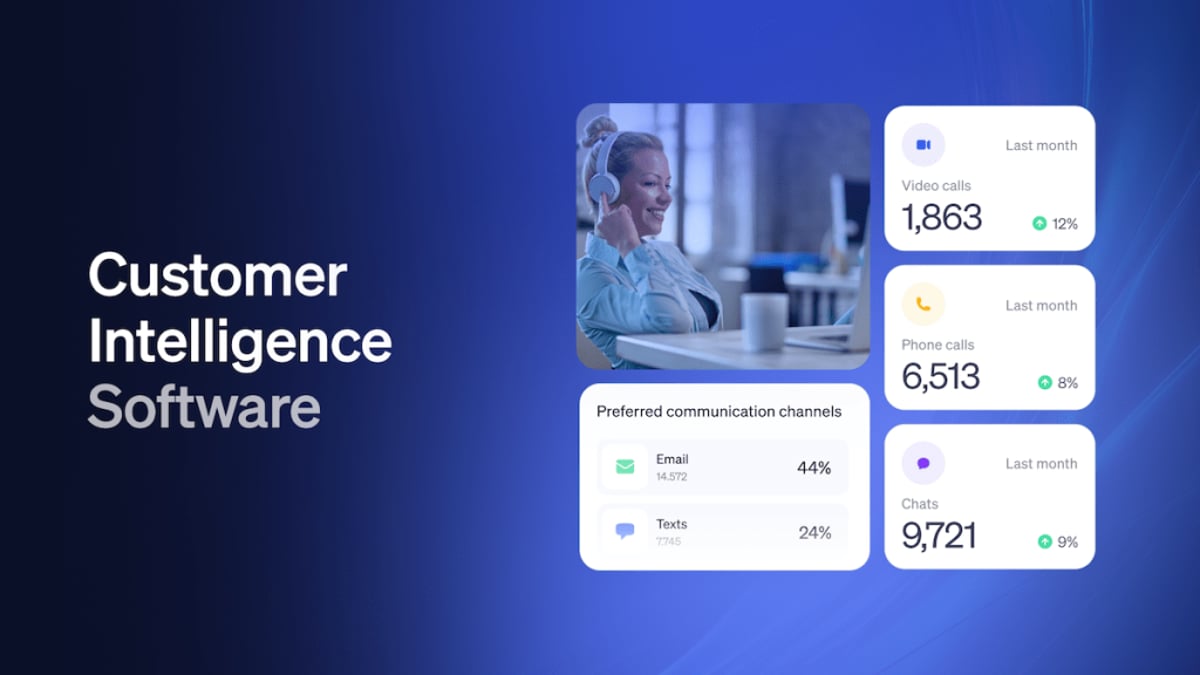
What exactly is customer intelligence software?
With customer service team expectations rising and customers expecting a more personalized service, getting a 360-degree view of your customers’ needs, behaviors, and preferences is mission-critical.
If a customer calls complaining about an incorrect order for a second time, you want your agent to know the full details about both orders, including the original attempted resolution and the customer’s previous concerns. You don’t want multiple agents to inquire about each order or for the customer to repeat the entire situation, which will undoubtedly lead to frustration.
Customer intelligence (CI) software can help businesses close knowledge gaps, and it is often a crucial part of many brands’ customer experience strategies.
Where Do You Rank on the AI Maturity Curve?
Take the 5-minute assessment and get a personalized score and recommended next steps.
What Is Customer Intelligence Software?
Customer intelligence (CI) software is an AI-powered system that turns raw customer data into a predictive roadmap for customer interactions. It links past customer activities with anticipated future needs, providing insights into customer behavior, intentions, preferences, and buying patterns. Customer intelligence systems fill knowledge gaps, giving your team a complete history of customer satisfaction, intentions, and loyalty.
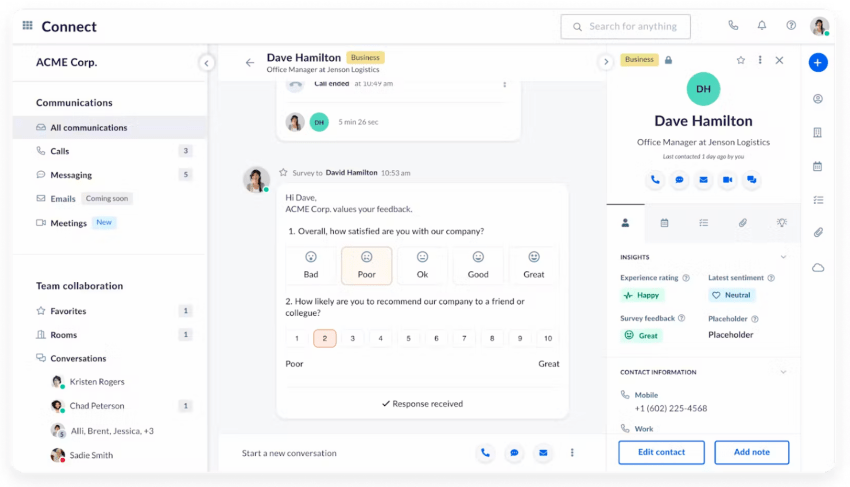
Key capabilities
- Advanced Data Integration: Connects with CRMs, e-commerce platforms, support channels, and third-party data sources via APIs to centralize customer data.
- Behavioral and Intent Analysis: Goes beyond demographics to identify purchasing behavior, browsing patterns, and motivation triggers.
- Customer Journey Mapping: Visualizes the full customer lifecycle to uncover friction points and optimize interactions at every stage.
- AI-Driven Insights: Uses machine learning and automation to detect trends, forecast churn risk, and recommend targeted actions.
- Real-Time Intelligence: Delivers immediate customer context across voice, chat, email, and more to improve support and engagement.
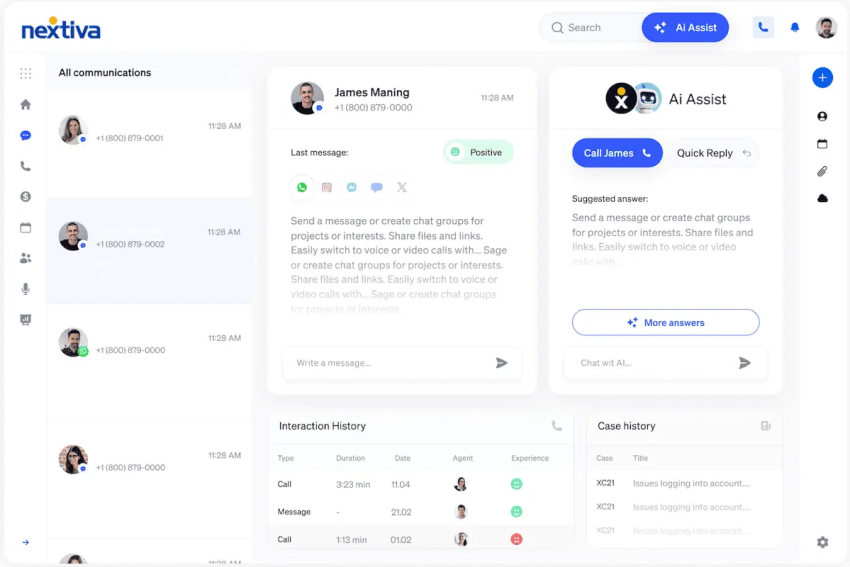
- Sentiment and Tone Analysis: Uses AI to detect the emotional state of a caller in real-time. For example, Nextiva’s CX software can flag a call where a customer’s sentiment is trending downward, allowing for immediate supervisor intervention.
- Generative AI Summarization: Instead of agents reading through pages of old notes, CI tools now provide automated summaries of the entire customer relationship across SMS, email, and voice.
- Predictive Churn Forecasting: Machine learning algorithms analyze patterns — like a sudden drop in usage or a specific “key phrase” used in a chat — to alert your team before the customer cancels.
How customer intelligence is used
- Improves Personalization: Tailors messaging, offers, and experiences based on individual behavior and preferences.
- Boosts Retention and Loyalty: Anticipates customer needs and proactively addresses concerns before they escalate.
- Enhances Revenue Opportunities: Informs cross-sell and upsell strategies through deeper behavioral insights.
Some of these technologies may leverage artificial intelligence, machine learning, or automation to streamline data syncing, provide insights, and improve data management.
For instance, Nextiva displays essential customer intel when responding to an inbound request (e.g., phone call, email, SMS, etc.).
Customer intelligence tools may, for example, consolidate the following data:
- Customer intent behavior, like purchase history and online viewing activity.
- Customer support interactions, including tickets filed through help desk software.
- Customer feedback, which may include feedback directly pulled from customer surveys.
These in-depth customer analytics and insights empower customer experience (CX) leaders to make more informed decisions that can boost customer loyalty, engagement, and business growth.
Best Customer Intelligence Software Solutions
To provide a better overview of the current market, this table compares 10 leading customer intelligence platforms. The solutions range from communication-oriented suites to enterprise data platforms, each offering different pricing models and specialized features.
| Software | Key features | Pricing |
|---|---|---|
| Nextiva | Sentiment analysis, AI-powered summaries, and omnichannel visibility across voice, SMS, and email. | Tiered plans: Core (standard features), Engage (voice analytics), and Power Suite CX (advanced AI/automation). Contact for custom quotes. |
| Salesforce Data Cloud | Massive-scale data unification, real-time identity resolution, and deep integration with Salesforce CRM. | Starts around $10,000/month per org (billed annually), dependent on data volume. |
| Adobe Real-Time CDP | B2B and B2C data profiles, journey orchestration, and real-time behavioral triggers for marketing. | Custom enterprise pricing based on profile volume and feature requirements. |
| Zendesk Explore | Omnichannel support analytics, agent performance tracking, and customer friction identification. | Included in Zendesk Suite plans, which can range from $55 to $169+ per agent/month. |
| HubSpot Operations Hub | Data quality automation, programmable data sync, and advanced reporting within the HubSpot CRM. | Free version available; Professional starts at around $720/month; Enterprise starts at around $2,000/month. |
| Gainsight | Customer success focus with health scoring, churn forecasting, and journey mapping. | Custom pricing: ranges from $10k to $50k+ annually, depending on user count and data complexity. |
| Twilio Segment | Premier Customer Data Platform (CDP) for collecting, cleaning, and routing customer data. | Free tier available (up to 1,000 MTUs); Team starts at $120/month; Business is custom. |
| Mixpanel | Deep behavioral analytics for products, focusing on conversion, retention, and user flows. | Free version available; Growth plan starts at around $20/month; Enterprise is custom. |
| Amplitude | Digital analytics for product and marketing teams to understand user intent and behavior. | Free Starter plan; Plus starts at $49/month; Growth and Enterprise are custom quotes. |
| Qualtrics XM | Predictive intelligence for experience management, integrating survey data with behavioral metrics. | Custom enterprise pricing based on the volume of responses and specific modules used. |
Note: Pricing is subject to change and varies based on business size, data volume, and specific integration needs. Many of these providers offer customized quotes following a demo or discovery call.
Tip: Choose the platform that aligns with your existing technology stack and your customer experience goals, such as reducing churn or increasing upsell opportunities.
Benefits of CI Software
CI software can help businesses create outstanding customer experiences by providing essential customer data that allows brands to better anticipate their customers’ needs, address concerns, and improve their buyer’s journey in many ways.
Improved customer success
Customer intelligence technology provides a complete overview of customers’ needs to your team members. This means your customer support agents, account executives, and sales team can all deliver more personalized experiences based on individual customer preferences at every stage of the buyer’s journey.
Your customer support team, for example, can offer better solutions when resolving customer complaints. Account executives can check in regularly with customers with well-timed questions, product education, and suggestions, potentially including upsells and cross-sells to increase overall conversion rates.
Improved customer success allows your company to develop strong customer loyalty, which is a clear competitive advantage in today’s market.
Reduced customer churn
When you have a smarter customer experience, you’ll increase customer satisfaction (CSAT) and, as a result, retain more customers. By more easily identifying and proactively addressing customer pain points throughout the journey, companies can anticipate customer behaviors, needs, and potential problems.
Businesses can identify trends and weak spots in the customer journey by establishing resolutions using intelligent customer experience measures and automated, streamlined, or AI-driven support.
Enhanced brand reputation
Creating a positive CX can fuel word-of-mouth recommendations like almost nothing else, and CI tools empower businesses to deliver exactly that. Better data means that brands can discover new ways to establish customer loyalty and support throughout the customer journey. A better customer journey means happier customers and increased profitability.
Data-backed decisions
CI software can help you transform customer data into actionable insights, which can be used to inform strategic decisions across all departments. This can include product development, marketing, and customer support. Some platforms offer real-time analytics or AI-driven suggestions that can be used to optimize business processes and improve customer relationships. You can sell more, through upsells and cross-sells, with more data at your fingertips.
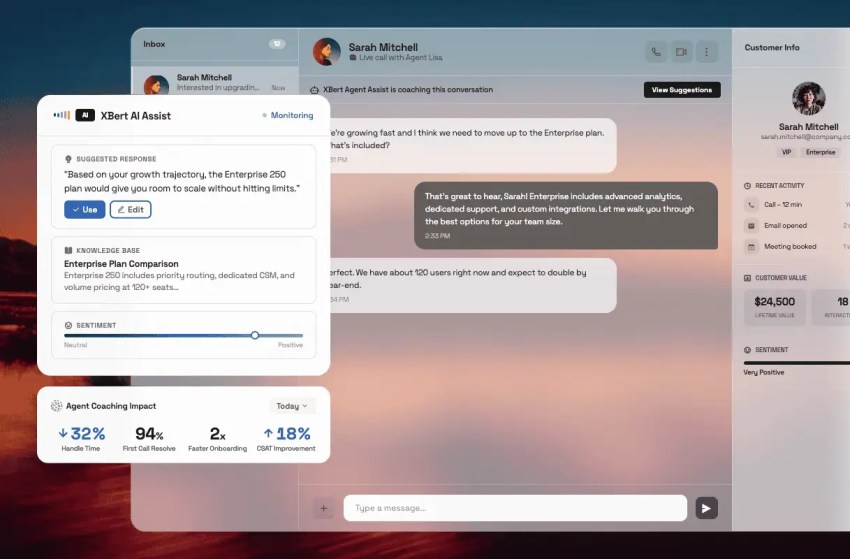
Context-aware support
Customer intelligence technology provides a complete view of the customer across all touchpoints. For example, if a customer switches from web chat to a phone call, your team always maintains an overview, regardless of the channel used (phone, web chat, or SMS). At the same time, managers can use real-time dashboards to monitor fluctuations in sentiment and response times and flexibly adjust their customer experience strategies.

Key Features of Customer Intelligence Tools
When researching customer management solutions, knowing which key features to focus on is important. Let’s review some of the most common and important functionality to look for in CI software.
Data aggregation
CI software gathers customer data from various touchpoints, including customer surveys, customer data platforms, CRM systems, call center analytics, social media interactions, website analytics, phone calls, and support tickets. You’ll get data from individual customer profiles to better spot trends across the customer journey.
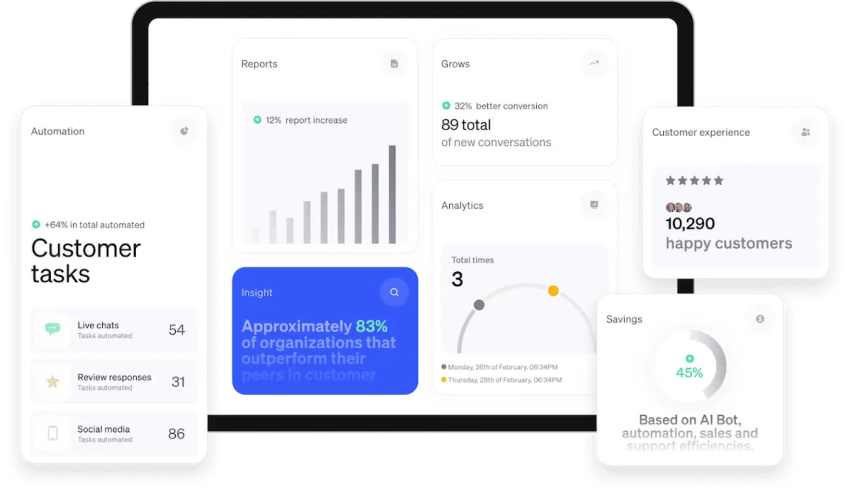
Omnichannel unification
Data silos are detrimental to an excellent customer experience. A powerful CI tool must break them down by consolidating data from e-commerce platforms, CRMs, and support tickets into a single, unified view.
Customer experience software like Nextiva goes a step further: it not only intelligently visualizes data, but also automates the response to it. For example, the system can use intelligent routing to direct priority customers to their personal account manager based on their past interactions.
You can also use CI data for intelligent IVR systems and web bots. For instance, if the data shows that 40% of your calls are for order follow-up, your CI software can automate this task, freeing up your employees to resolve more complex issues.
Customer segmentation
CI software allows businesses to segment their customer base according to specific characteristics. Customers who were acquired through referrals, for example, may be found to retain longer, and those who purchase software for certain use cases may submit more support ticket requests.
Businesses can use this information to tailor their approach accordingly, optimizing the CX and ideally eliminating or reducing potential pain points with product and policy changes or customer success programs.
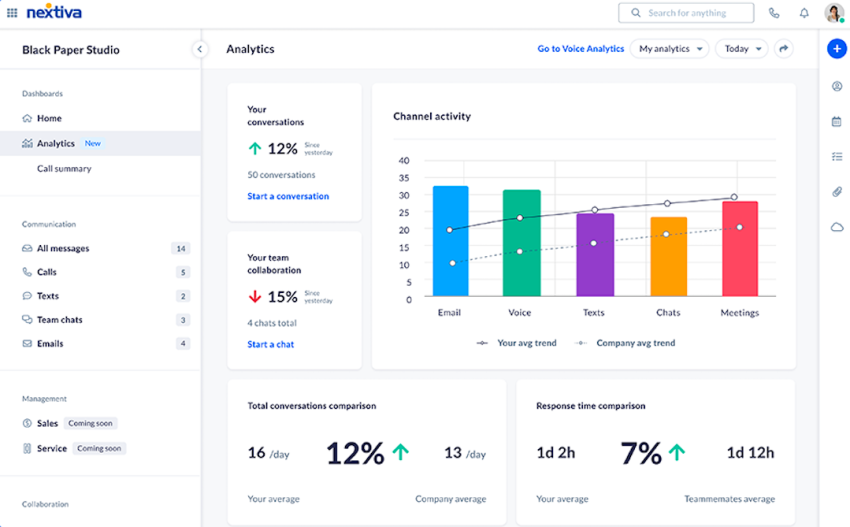
Advanced analytics and actionable reporting
Powerful analytic tools, aided by detailed metrics tracking, can help you identify trends and patterns in customer interactions, revealing hidden insights into customer data.
As a result, CI tools often translate complex data into clear and actionable reports that guide improvement efforts.
Signs You Need to Invest in Customer Intelligence
If you’re wondering whether or not you need a customer intelligence solution, there’s a good chance you could benefit from it. Here are several clear signs that you may have a more urgent need for these tools:
- You’re struggling to make sense of scattered customer data.
- You’re getting inconsistent customer feedback and believe segmentation data could help explain why.
- Your decision-making is based on gut feelings, not data-driven insights.
- Your CX is inconsistent across touchpoints.
- You’re facing a high customer churn rate.
- You’re ready to scale your business and need a deeper understanding of your customer base.
- You’re struggling with CX data collection.
- You’re overwhelmed or don’t know how to make sense of data from multiple platforms.
- You’re offering omnichannel support but are trying to determine how customers interact with each touchpoint.
- You’re struggling to retain customers drawn in through marketing campaigns.
If you’re experiencing low CSAT rates (or think you might be), you can leverage real-time data analytics to identify accurate trends and improve your CX.
Best Practices for Implementing CI Software
Simply buying the software isn’t enough; you need a strategy for better business outcomes. Follow these simple tips:
- Prioritize data quality: Your insights are only as good as your data. Regularly update your CRM and support tools and remove duplicate records so your CI tool can create an accurate 360° view.
- Start with a specific use case: Don’t analyze everything at once. Focus on one goal first, such as reducing churn among power users or increasing upselling on inbound calls, and build your customer intelligence dashboards around those metrics.
- Empower your agents: Insights shouldn’t be relegated to management reports. Use tools that provide agents with real-time insights and capabilities so they can use the data while the customer is still on the line.
- Close the feedback loop: If your CI software detects a trend — for example, a particular product feature generating negative feedback — keep a process in place to report this back to the product or marketing teams.
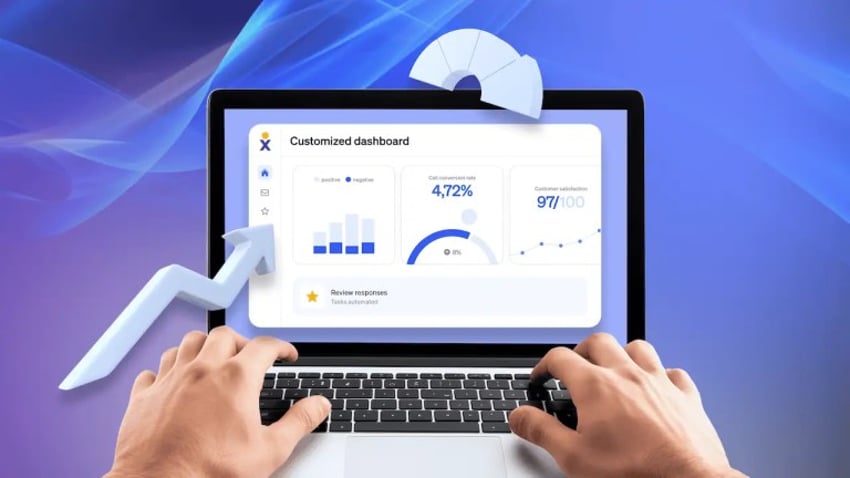
See Your Customers More Clearly With Nextiva
In a market where 360-degree visibility is essential, the right customer intelligence platform makes all the difference. Nextiva delivers the detailed, real-time analytics you need to track sentiment, keywords, and employee performance.
The Nextiva difference:
- Omnichannel reach: In-depth analytics across phone, SMS, email, and live chat.
- Process automation: AI-powered suggestions to streamline business processes and drive more upselling.
- Convenient features: Web and ACD callbacks based on real-time traffic data.
Keep your customer data updated in real time with Nextiva’s AI-Powered Customer Experience Suite. 👇
Create an amazing sales & service CX.
Engage on every channel with Nextiva’s intelligent platform for the best customer experience.
Customer Intelligence Software FAQs
A CRM system is a database for storing contact information and interaction history (a record system). CI software is an insights system that builds upon your CRM system to analyze this data, predict future behavior, and provide real-time recommendations.
Yes. Many small-business solutions, like Nextiva, offer scalable features like call forwarding and business SMS without requiring a huge corporate budget.
Most leading CI platforms use APIs to connect with popular tools such as Google Contacts, Outlook, and various e-commerce platforms. You get automated data synchronization without manual input.
AI takes over the tedious work by sifting through customer interactions to identify patterns that humans might miss. It enables features such as sentiment analysis (detecting whether a caller is upset), predicting customer churn, and generating AI summaries that save employees from reading through lengthy interaction histories.