
 Customer Experience
  Blog
Blog  Business Communication
  Leadership
  Marketing & Sales
  Nextiva News
  Productivity
  VoIP
VoIP 

Conversation intelligence isn’t just about learning what happens in your customer interactions. It’s about applying that logic, those patterns, and your learnings to real life.
If you can turn a good experience into a repeatable, positive outcome, you’ve got a solid template for success. Likewise, if you can identify and remove the negatives, you stand a higher chance of retaining customers, upselling, and increasing awareness of your brand.
96% of customer experience (CX) leaders say their leadership believes CX is a key driver of business outcomes. A further 79% view CX as a revenue driver. All you need to make this a reality is to use conversation intelligence software to take those interactions and put them to work for you.
With 81% of organizations increasing AI spending from 2025 (and 92% having already adopted AI for customer interactions to some degree), the potential for automated functionality inside your contact center could be just a few clicks away. You’ve got all the data (call recordings, dashboards, etc.). Now it’s time to turn it into actionable insights. If you’ve been striving to shift from cost center to revenue driver, there’s never been a better time.
How Conversation Intelligence Works for Your Business
Conversation intelligence comes in different forms: proactive, real time, and retrospective. At different stages of customer interactions, an AI-powered contact center can assist with personalization, de-escalation, and dynamic workforce management forecasting.
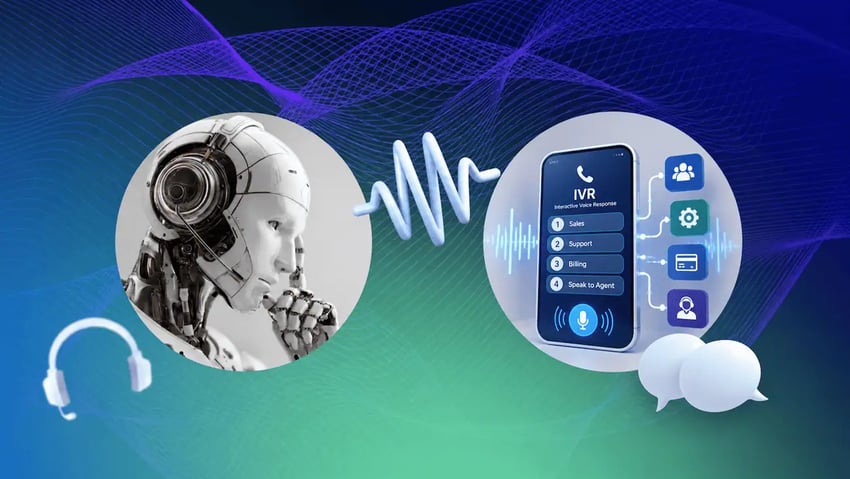
Automatic speech recognition basics
When you speak with a customer, Nextiva Contact Center uses real-time transcription and summarization to process and understand what’s being said. Not only do you get a transcript to review for quality assurance after the conversation, but you also get in-flight insights, the potential to serve customers without hand-off to a human, and a transcript that opens the door to a wealth of data potential.
This speech-to-text technology helps break down language barriers with real-time translation and introduces self-service for routine inquiries. This, in turn, frees up skilled live agents to handle more complex or sensitive phone calls. By recognizing inputs (speech) and processing them into actionable outputs (pay an invoice, schedule an appointment, etc.), it takes the burden off your contact center agents.
💡 Did you know? AI transcription reduces wrap-up time by up to 50%.

Natural language processing and intent detection
Natural language processing (NLP) is a branch of AI that enables computers to understand, interpret, and respond to human language in a way that feels natural — not robotic. In the world of CX, especially in call centers, NLP plays a pivotal role in streamlining operations and enhancing the CX.
By understanding the intent of a customer call, self-service interactive voice response systems can:
- Route calls based on numeric, keypad input: Press 1 for sales. Press 2 for support.
- Route calls based on spoken input: I need help with my latest invoice.
- Respond to basic queries: Automatically send the latest invoice.
- Help troubleshoot first-line inquiries: Reset router, confirm lights on boiler, etc.

The role of sentiment analysis in CX
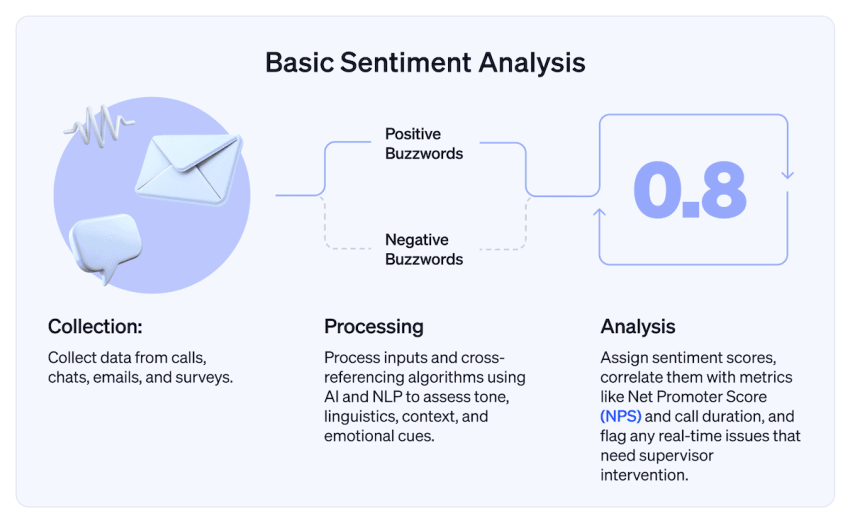
Sentiment analysis is the process of interpreting how the call is going rather than the actual content of the call. Here, AI listens to and evaluates the call in real time.
Sophisticated algorithms baked into your contact center software listen for signs of happiness, frustration, and urgency to highlight next steps. This is usually in the form of audible, email, or on-screen alerts to senior call center agents or supervisors.
While you can review your total number of good/bad sentiment calls over time, the real value is in the proactive steps you take during a call before tempers flare and situations get out of control.
Strategy: Turning Voice Data Into Business Growth
56.3% of customers switch channels when a brand responds too slowly. This mostly applies to your time-to-answer metric, but it also extends to when your call center doesn’t understand the intent quickly. Customers may try your chatbot or email (or another company).
To win the battle when objection handling (and help gather product feedback and marketing insights about customer pain points at the same time), there are some easy strategic changes you can make when you have the right technology in place.
Identifying common customer friction points
Over time, conversation intelligence software surfaces repeat queries that could be outsourced to self-service or fed back to product teams.
This might be constant inquiries about your returns policy, for example. Here, you can add a simple one-stage menu in your call routing system. If a customer says “returns,” choose to route them through to a message about your 14-day policy, then hand them off to a website link where they can process their return easily. If they get stuck, give them the option to check in with a human agent.
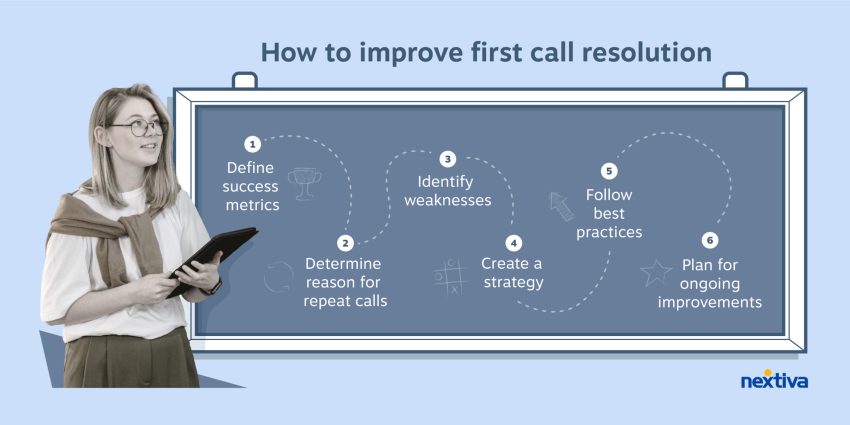
The goal here isn’t customer avoidance. It’s about giving callers what they need as quickly as possible and improving your first contact resolution (FCR) at the same time.
Mapping successful objection handling in sales conversations
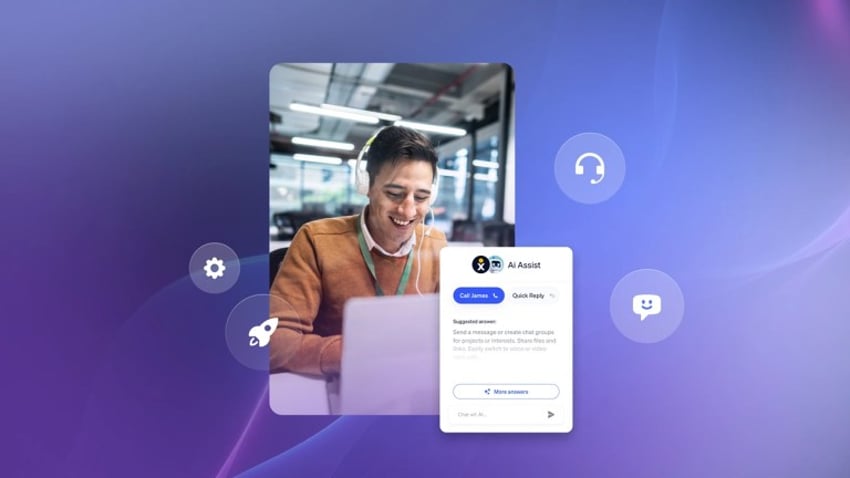
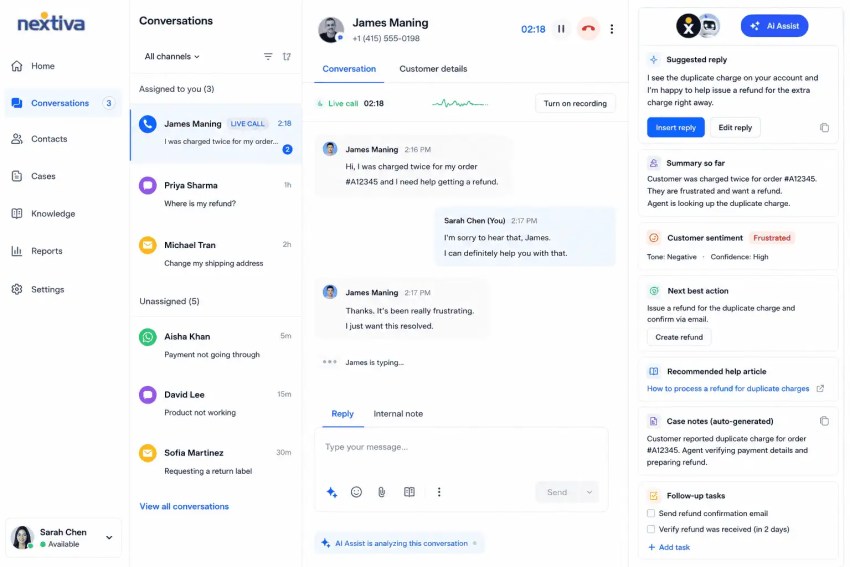
Nextiva’s AI Agent Assist tool, built into the contact center software, provides real-time prompts to help agents handle complex calls. This means agents get suggested replies and links to helpful documentation as soon as the system processes them (in real time).
If a prospect says they don’t need a certain product anymore, Agent Assist might flag an instance where a similar customer used it to save four hours’ worth of productivity. Or it might be the case that someone else from that business called to add it for a specific reason.
Without this detail, a human agent might buckle and remove the feature from the plan. Not only does that result in lost revenue, but you may also upset other people within that customer’s business.
Using feedback to influence product roadmaps
If the same issue keeps getting reported with your product, it’s not your agents who need to hear about it. It’s the people in charge of fixing it.
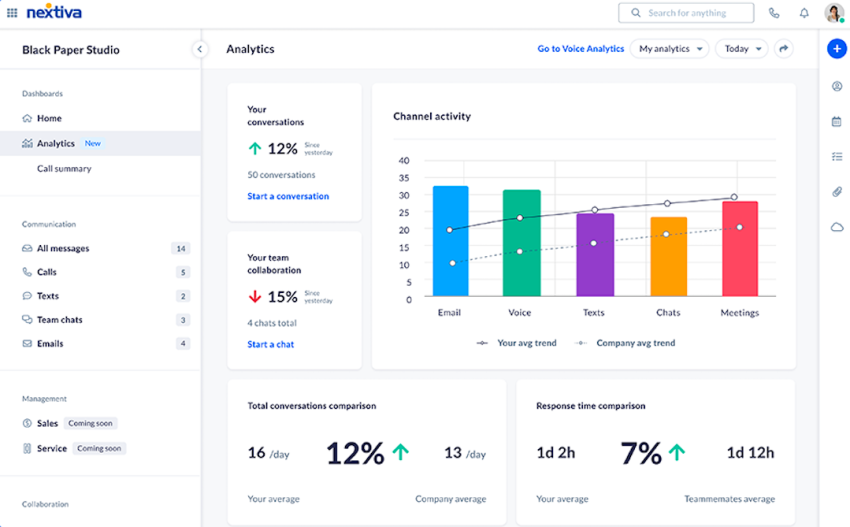
Sure, you could rely on agents collating all that info or supervisors trawling through hundreds of recorded calls when conducting quality checks. But doesn’t it sound easier for your conversation intelligence software to automatically detect those patterns and package them up for product managers to review?
Refining marketing messages based on real talk
It’s not only product teams that love this sort of feedback. If your marketing team knows what’s resonating or what customer pain points are being reported, they can adjust their materials to attract more of those types of customers.
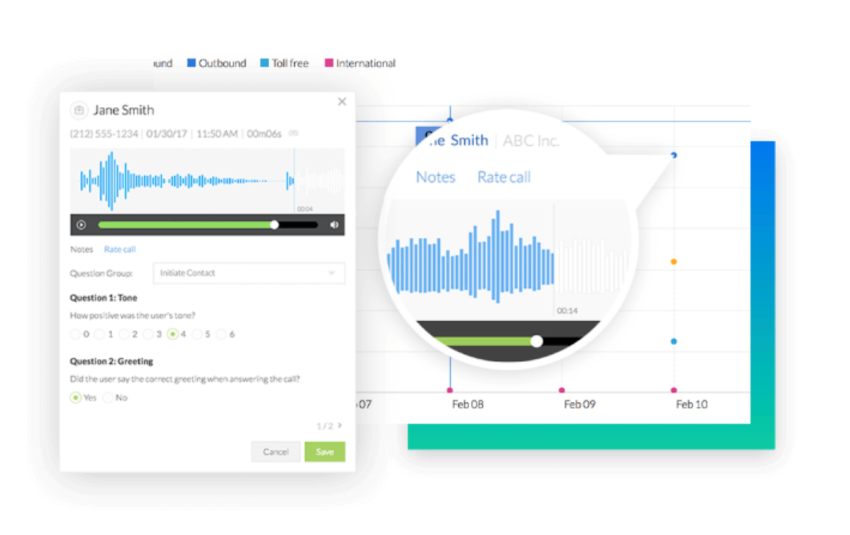
For the longest time, marketing and sales teams have worked in silos. Conversation intelligence automatically scrapes sales calls for golden nuggets and testimonials so marketing has more firepower to help hit next quarter’s targets.
High-impact Examples of Conversation Intelligence in Action
1. Sales: Scaling “A-player” objection handling in real time
- The application: Analyze transcripts from top-performing sales managers to isolate the exact phrasing, timing, and sequences that successfully neutralize price or competitor objections.
- The outcome: Program those winning patterns into a playbook of live agent guidance cues, allowing middle-tier reps to receive real-time behavioral prompts and scripts during live calls.
- Real-world example: A SaaS company discovers its highest-converting sales reps consistently overcome pricing objections by shifting the conversation away from subscription costs and toward long-term ROI. Conversation intelligence software identifies the pattern and surfaces it as a real-time prompt whenever another rep encounters a similar objection, helping the wider sales team replicate the behavior of top performers.
2. Marketing: Optimizing ad copy with authentic voice-of-customer data
- The application: Mine chat and call summaries for the specific phrasing and emotional triggers customers use when describing their pain points.
- The outcome: Replace agency jargon in Google Ads, landing pages, and email campaigns with actual user terminology, driving down cost-per-click (CPC) and improving message resonance.
- Real-world example: A contact center software provider notices that prospects rarely talk about omnichannel customer engagement but frequently mention wanting to stop switching between apps and see every customer conversation in one place. The marketing team updates its campaigns to reflect this language, creating messaging that more closely matches customer intent and improves conversion performance.
3. Customer success: Proactive churn intervention via sentiment scoring
- The application: Monitor account conversations across voice, email, and chat for a drop in sentiment index or repeated clusters of frustration keywords, even if the customer hasn’t filed a formal complaint yet.
- The outcome: Trigger automated high-priority alerts to customer success managers to initiate a proactive retention sequence before the account reaches a renewal bottleneck.
- Real-world example: A subscription software company notices that a high-value customer has repeatedly mentioned implementation delays and unresolved support issues across several calls and email threads. Although the customer hasn’t submitted a formal complaint, your conversation intelligence software flags the account as high risk, prompting a customer success manager to intervene before renewal discussions begin.
4. Innovation and R&D: Crowdsourcing net-new revenue ideas from customer inquiries
- The application: Isolate interactions in which prospects or current clients ask follow-up questions, such as “Do you support X capability?” or “Can your tool also do Y?”
- The outcome: Aggregate these unprompted feature requests into an idea generation pipeline to uncover hidden market demands, validate new product extensions, and design high-intent upsell packages.
- Real-world example: A CRM vendor identifies a growing number of customer inquiries about AI-powered meeting summaries and automated follow-up emails. While neither feature was originally on the product roadmap, the volume and consistency of requests provide strong evidence of market demand, helping product leaders prioritize development and create new revenue opportunities.
Conversational Insights Across Different Industries and Use Cases
Healthcare: Improving patient outcomes with clinical data flows
- The challenge: Patient interactions now happen across calls, messages, virtual appointments, and in-person visits.
- The opportunity: With 71.4% of physicians already using telehealth services, healthcare providers need better visibility into patient conversations.
- How conversation intelligence helps: Conversation intelligence automatically transcribes and summarizes consultations, identifies recurring patient concerns, flags follow-up actions, and improves continuity of care across teams.
Real estate: Scaling fast lead response for brokerages
- The challenge: Every missed call could mean a lost commission.
- The opportunity: 88% of home buyers use an agent, and the median existing-home price is nearly $398,000, making every lead highly valuable.
- How conversation intelligence helps: Conversation intelligence identifies high-intent buyers, routes leads faster, analyzes top-performing agent conversations, and improves conversion rates across the brokerage.
Legal: Secure intake and client communication security
- The challenge: Law firms must balance growing client demand with strict confidentiality requirements.
- The opportunity: Law firm demand grew 3.9% in Q3 2025, while firms with AI and machine learning strategies are 3.9x more likely to achieve ROI from their technology investments.
- How conversation intelligence helps: Conversation intelligence automates intake summaries, identifies urgent matters, tracks client concerns, and creates searchable records of client interactions while supporting compliance requirements.
Key Features to Look for in Intelligence Platforms
81% of leaders say CX would improve if data were consolidated into one system of record. So while there’s a tendency to search through feature lists of XYZ capability, the focus must be on integration and consolidation for genuine transformation.
Note: Nextiva integrates with Salesforce, Epic, and Zoho. The network has eight U.S. data centers for redundancy and is trusted by 100,000+ businesses. As a single platform for voice, video, chat, email, and social, you get all your channels looked after, with conversation intelligence applied across every layer.
Seamless CRM mapping and synchronization
Conversation intelligence is only valuable when you can connect insights to customer records. Nextiva automatically synchronizes conversation data with your CRM, ensuring call transcripts, sentiment scores, interaction summaries, and customer history are tied to the right contact.
This eliminates manual data entry and gives sales leaders, customer support, and customer success teams a complete picture of every customer relationship. Instead of jumping between systems, teams can access actionable insights directly from the tools they already use.

Compliance: HIPAA, SOC 2, and PCI-DSS requirements
If you handle sensitive customer information, you need more than just powerful analytics. You need security and compliance built into the platform.
Nextiva helps businesses meet stringent compliance requirements, including HIPAA, SOC 2, and PCI-DSS standards. This allows healthcare providers, financial institutions, legal firms, and enterprise contact centers to analyze conversations confidently while maintaining data security, privacy, and regulatory compliance.
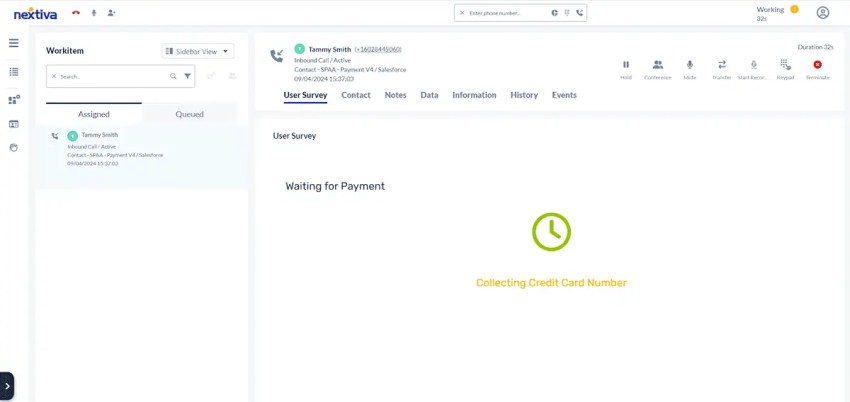
Unified view of voice, chat, and social history
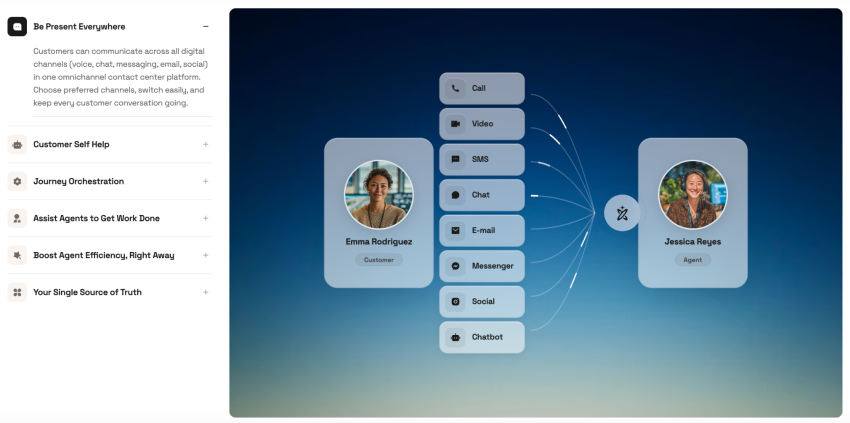
Customers rarely stick to a single channel. A support issue may start in chat, continue over the phone, and end with a social media message.
Nextiva brings these interactions together in a single customer timeline. Agents can instantly view previous conversations across voice, chat, SMS, email, and social channels, eliminating repetitive questions and helping teams deliver faster, more personalized service.
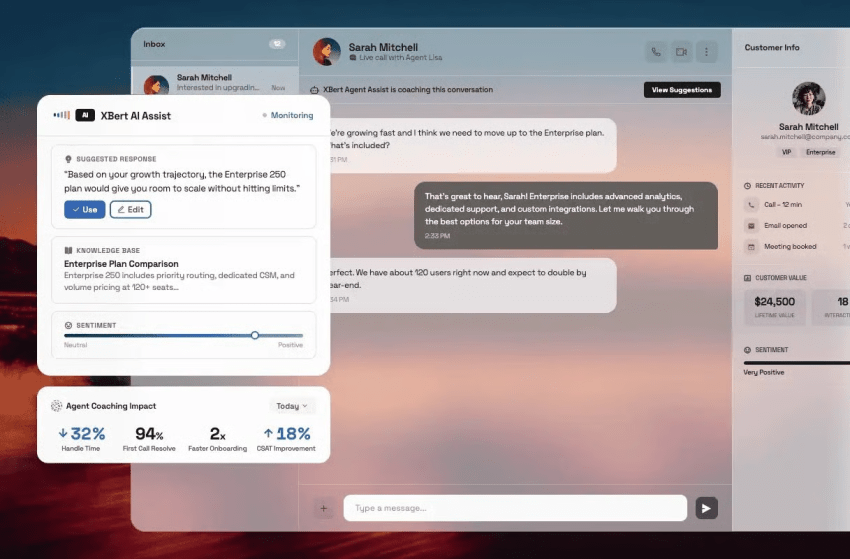
Real-time agent assistance and guidance cues
The best conversation intelligence platforms don’t just analyze conversations after they happen. They help improve outcomes while conversations are still in progress.
Nextiva provides real-time agent assistance by monitoring conversations as they occur and surfacing relevant guidance, knowledge base articles, action items, and coaching prompts. This helps agents handle objections more effectively, resolve issues faster, and consistently deliver better customer experiences.
The Future of Conversation Intelligence and Agentic AI
As we move to a world where there’s more self-service and more AI-to-human conversations, we must first introduce the technologies our customers are expecting (and perhaps that competitors have already deployed).
Once implemented and governed, it’s what we do with that data that becomes critical to ongoing success. If your business can move from reacting after the matter to proactively intervening, you’re many steps into providing an excellent customer journey.
Moving from reactive analysis to proactive agents
Traditional analytics tell you what happened after a customer interaction ends. Agentic AI goes a step further by helping businesses take action while they can still influence outcomes.
Instead of waiting for churn signals, negative feedback, or missed sales targets to appear in reports, AI agents can monitor conversations in real time and trigger proactive interventions. This could mean escalating a frustrated customer to a specialist, recommending the next-best action to an agent, or automatically launching a retention workflow before a renewal is at risk.
The rise of AI-powered receptionist workflows
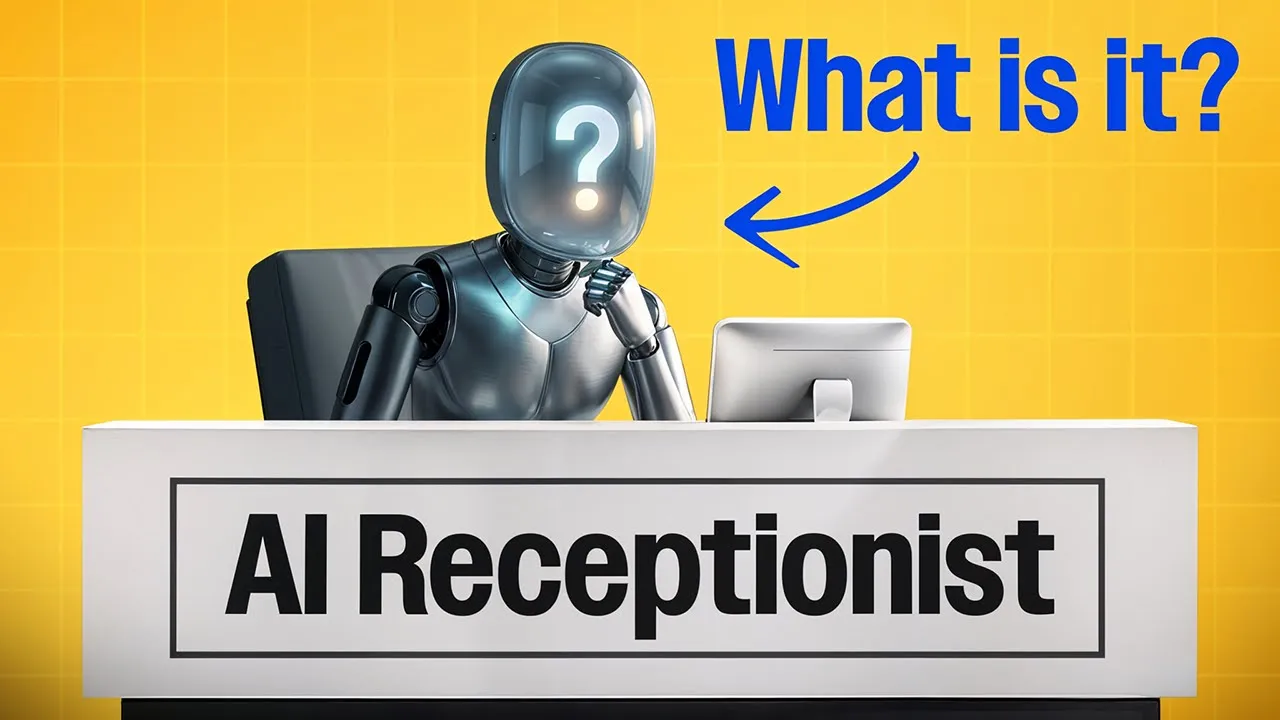
For many businesses, the first customer interaction happens long before an agent picks up the phone. AI receptionists are increasingly becoming the front door to customer service, handling inquiries, routing calls, answering questions, and collecting information around the clock.
Solutions like Nextiva XBert AI Receptionist allow you to manage high call volumes without increasing headcount. Starting at $99 per month, XBert can answer calls 24/7, handle multiple conversations simultaneously, and route customers to the right destination based on their needs.
Integrating generative AI into every touchpoint
From automated summaries and real-time coaching to personalized responses and knowledge retrieval, generative AI is helping teams work faster and make data-driven decisions.
The next evolution of conversation intelligence will see these capabilities connected across voice, chat, email, SMS, and social channels. Instead of isolated AI tools, businesses will have a unified intelligence layer that understands customer context and delivers relevant insights wherever interactions occur.
As these technologies mature, the distinction between conversation intelligence and CX platforms will continue to blur. The goal is no longer just to understand customers. It’s to anticipate their needs and deliver the right response at exactly the right moment.
Getting Started With Intelligence in Your Contact Center
Handling over one billion customer conversations per year, Nextiva knows a thing or two about turning data into insights.
The most successful conversation intelligence programs don’t begin with a complete contact center transformation. Instead, they start with a single objective, a small pilot group, and a commitment to learning from customer conversations.
A practical first step is implementing AI-powered transcription and QA automation. This allows you to analyze every interaction instead of manually reviewing a small sample of calls. From there, you can establish clear goals around average handle time, customer sentiment, first-contact resolution, and agent performance.
As insights accumulate, conversation intelligence becomes a powerful tool for agent coaching and CX strategy. AI-generated summaries help you identify trends, uncover customer pain points, and continuously refine workflows based on real-world conversations rather than assumptions.
Whether you’re exploring conversation intelligence for the first time or looking to expand your AI capabilities with tools like AI receptionists and conversational agents, the best time to start is now.
See how Nextiva Contact Center can help you automate QA, coach agents more effectively, and build a smarter CX strategy. Schedule a demo today.
Your AI-Powered Contact Center
Create amazing customer experiences with AI-powered contact center software. Scalable contact center platform built for omnichannel customer conversations.
Conversation Intelligence FAQs
Conversation intelligence solutions use AI to analyze and optimize customer conversations across voice, chat, email, SMS, and social media. They identify patterns, sentiment, intent, and key topics to help businesses improve CX and team performance. Nextiva automatically analyzes conversations across every channel from a single platform.
Look for a platform with accurate transcription, sentiment analysis, CRM integration, and strong security controls. It should turn conversation data into valuable insights without adding complexity. Nextiva supports HIPAA and SOC 2 compliance while delivering conversation analytics across all customer touchpoints.
It helps by identifying successful objection-handling techniques and common customer pain points. For example, it could use Nextiva analytics to see which sales scripts close more deals.
No. Call recording stores conversations, while conversation intelligence analyzes them. Using conversational AI, NLP, and intent detection, conversation intelligence uncovers trends, customer needs, and coaching opportunities that basic recordings can’t provide.
Conversation intelligence automates quality assurance, tracks customer sentiment, and highlights coaching opportunities across every interaction. Nextiva gives managers a unified view of the customer journey, helping them improve agent performance and customer satisfaction at scale.