

 VoIP
VoIP  Blog
Blog  Business Communication
  Customer Experience
  Leadership
  Marketing & Sales
  Nextiva News
  Productivity
Imagine yourself running a small business and setting up your communications system. You sign up for AT&T Phone for Business, thinking the cost will match the advertised $15 per month for a phone line. Then, you realize the real monthly expense can climb to around $175 because the phone line has to be bundled with an AT&T Business Fiber plan.
For many small teams, such a pricing structure can come as an unpleasant surprise, especially when the communications budget is already tight. In my years leading sales and customer experience teams, I’ve evaluated countless legacy telecom and cloud VoIP systems in real operating environments.
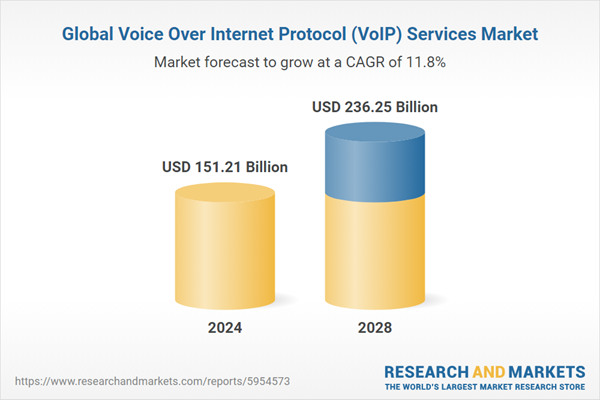
I’ve seen firsthand how the communications market is moving quickly toward flexible, internet-based platforms, leaving traditional bundled systems behind.
In the next section, I’ll break down AT&T Phone for Business pricing so you can see what the service costs and what’s included. I’ll also compare it with modern cloud VoIP platforms, such as Nextiva, to help you decide which option works better for your business.
What Is AT&T Phone for Business?
AT&T Phone for Business is a VoIP service that uses AT&T’s managed IP network. It’s designed to replace traditional landline phones while still supporting legacy analog equipment, including fax machines, alarm panels, and existing analog desk phones. The technology routes calls over AT&T Business Fiber or AT&T Business Internet, which are typically bundled.
AT&T’s main selling points are pretty straightforward. It offers:
- Clear voice quality over fiber
- Over 30 calling features included
- Month-to-month engagement, meaning no contract required
- Free installation and setup
- Automated 5G internet service backup on eligible plans
- Compatible with existing analog phones
AT&T Phone for Business is best understood as a traditional business phone system, not a full unified communications platform. It focuses on voice calling and legacy line replacement rather than modern collaboration.
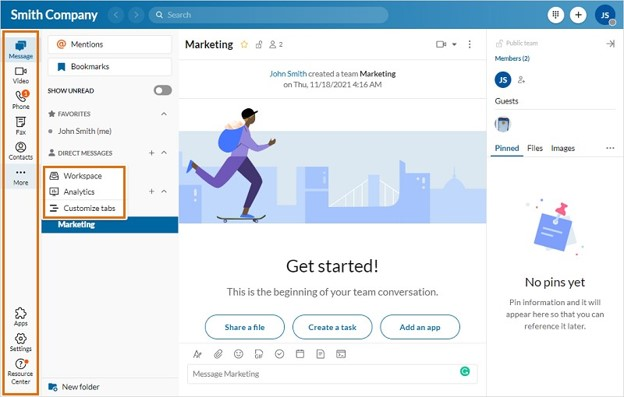
You won’t find any native video conferencing, built-in team messaging, business SMS, CRM integration, or AI-powered features included in the core product. AT&T itself separates this offer from products like AT&T Office@Hand, which is the company’s broader voice, video, and messaging platform.
It’s also important to separate AT&T Phone for Business from AT&T Business wireless products, since features tied to a business wireless plan (like hotspot data, smartphone usage, or an iPhone line) aren’t part of this voice product, nor are typical cell phone plans. Businesses comparing AT&T Business Unlimited plans, the Business Unlimited Starter, or Business Unlimited Premium 2.0 options should know that these are different wireless service categories, not substitutes for a hosted business phone system.
AT&T Business Phone Pricing: The Full Breakdown
This is the part most buyers miss when getting new lines. AT&T advertises Phone for Business at $15 per month per line, but that is not the true entry price for the service in the way most small businesses will actually buy it.
The promotional line rate is tied to an AT&T Business Fiber bundle, and the bundle is what sets the real monthly floor. In practice, you aren’t shopping for a standalone cloud phone system. You’re shopping for a fiber internet and phone package that starts much higher than the headline per-line number suggests.
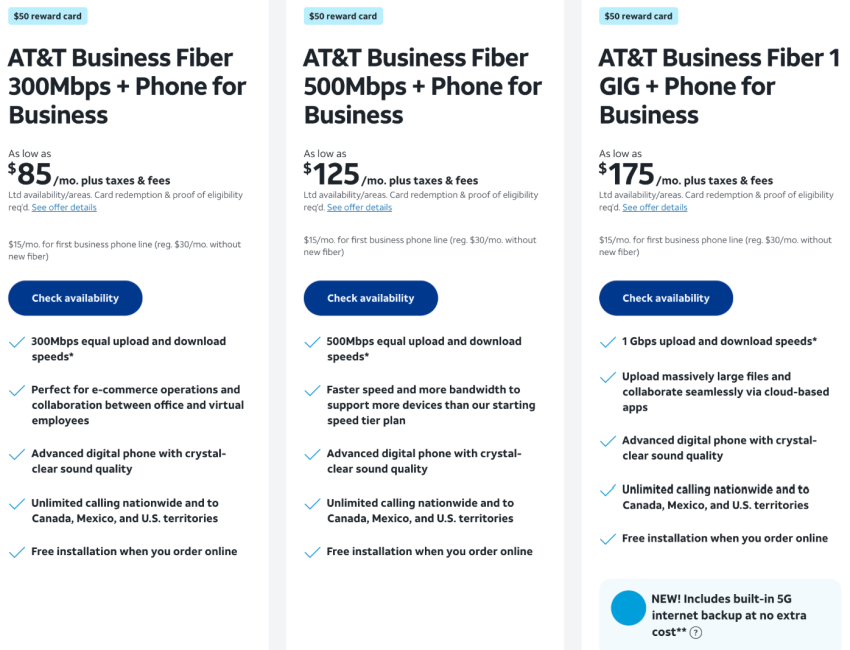
Here’s the current bundled pricing AT&T shows for Phone for Business with one included phone line:
- AT&T Business Fiber 300 Mbps + one phone line: $85 per month
- AT&T Business Fiber 500 Mbps + one phone line: $125 per month
- AT&T Business Fiber 1 GB + one phone line: $175 per month
AT&T also offers higher-speed bundles, but for most small-business comparisons, these are the three pricing tiers that matter most. Each advertised bundle price is shown before taxes and fees.
To make this clearer, I’ll briefly walk through the numbers the way a buyer would.
Suppose a business needs three phone lines and selects the 300 Mbps fiber plan. The total cost would break down as follows:
- 300 Mbps fiber bundle with the first line: $85 per month
- Two additional lines at $15 each: $30 per month
- Total before taxes and fees: $115 per month
That is the real AT&T Business Phone pricing entry point for a three-line setup, not just the advertised $15 per line. That gap between the advertised line rate and the actual monthly bill is exactly why AT&T’s pricing can feel cheaper at a glance than it really is once you build the package you need.
To add, fiber availability determines whether you can get the service at all. AT&T’s business internet pages repeatedly note that AT&T Business Fiber may not be available in all locations and direct buyers to check their address first. This means the hidden cost is geographic.
If fiber isn’t available at your business address, the promoted bundle pricing is effectively irrelevant because you can’t actually order that version of AT&T Phone for Business in the first place.
AT&T’s scale as a telecom provider helps explain this infrastructure-first approach. The company serves tens of millions of wireless customers, with subscriber counts steadily increasing over the past decade, according to Statista data.
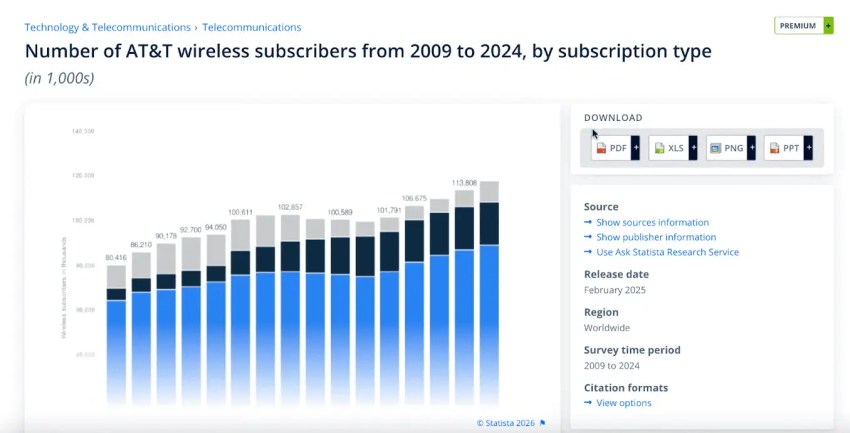
Because AT&T’s services are tied closely to its network footprint, access to products like Phone for Business often depends on whether the company’s fiber infrastructure is available at your specific address.
AT&T does sweeten the offer a bit with a $50 reward card for eligible online orders, but even that comes with conditions. The company states that the reward card is for the purchase of Phone for Business Online only, and card redemption is required, with additional proof-of-eligibility language in the fine print. That is a nice short-term perk, but it does not materially change the long-term monthly cost of the service. On a practical level, it is a signup incentive, not a reduction in ongoing operating expense.
Buyers should read the offer details closely because promos may depend on qualifying service, enrollment, activation, or whether you are a new customer rather than one of AT&T’s existing customers. In some AT&T offers, discounts may also be tied to autopay, paperless billing, or limited-time bill credits, so it is worth confirming the exact terms with an AT&T representative before you commit.
What Features Are Included With an AT&T Phone for Business?
When I look at AT&T Phone for Business strictly as a voice product, the included feature set is decent for a traditional landline replacement. AT&T says the service includes more than 25 calling features on its bundles page, while its main product page describes over 30 popular and advanced calling features.
The features AT&T highlights most often are:
- Voicemail-to-Text transcription
- Caller ID
- Call Waiting
- Call Forwarding
- Three-Way Calling
- Locate Me routing
- Flexible Caller ID
AT&T also promotes unlimited calling in the United States, Canada, Mexico, and U.S. territories, plus automated 5G internet backup on eligible fiber plans or as an add-on on lower fiber tiers. For a small business that mainly wants a reliable dial tone, simple call handling, and compatibility with existing analog phones, these features cover the basics pretty well.
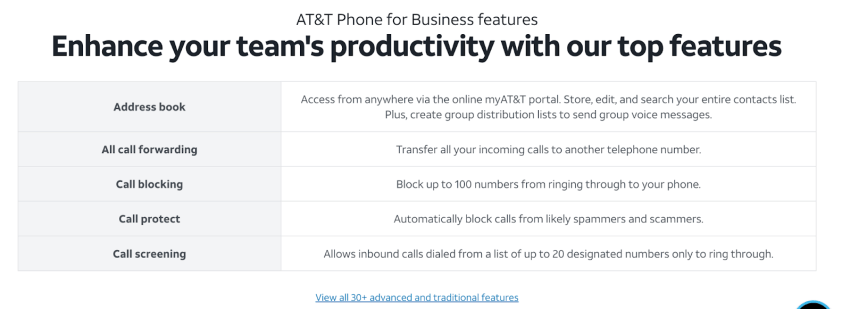
Where the product starts to feel dated is everything it does not include. AT&T does not position Phone for Business as a unified communications platform. There is no native video conferencing, no built-in team messaging, no business SMS or MMS, no chatbot or web chat, and no published AI layer for call routing, call analytics, or advanced transcription.
AT&T’s own site points buyers who want those capabilities to AT&T Office@Hand, a separate RingCentral-powered product that bundles video, SMS messaging, file sharing, CRM integration, mobile app calling, and AI features. If your business is in need of a modern collaboration platform, AT&T Office@Hand is a better choice.
Hidden Costs and Limitations to Watch For
The first thing I would flag for a buyer is that AT&T Phone for Business is much more restricted than the headline pricing suggests. The product is tied to AT&T Business Fiber or AT&T Internet for Business, and AT&T repeatedly notes that service is subject to limited availability by area. If AT&T Fiber is not at your location, you’re out of luck. No fiber, no phone service.
The second surprise is pricing, because the $15 per line only makes sense inside a bundle, while bundle pricing typically starts at $85 per month. AT&T also makes clear that taxes, administrative charges, regulatory recovery fees, and other surcharges are extra. These hidden fees aren’t disclosed upfront and can easily add an extra $5 to $15 per month, per line, depending on your location.
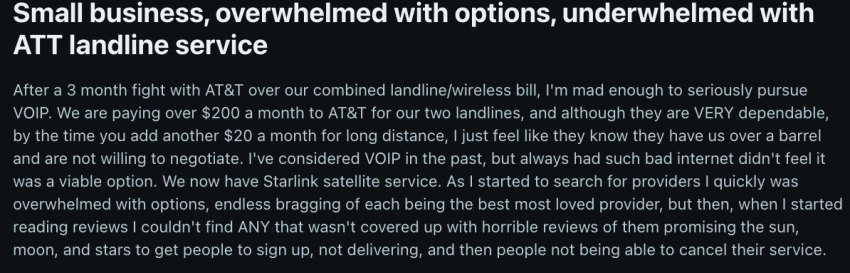
The softer costs matter too. AT&T Phone for Business supports up to six lines, which means there’s no smooth scalability path for a company that outgrows a very small setup.
Buyers also have to navigate product overlap and complex billing. Reviews, like those from TechRadar, consistently cite billing complexity as a top frustration, and navigating customer support for those billing issues is a documented pain point across review sites. AT&T Phone for Business and AT&T Office@Hand are separate offers with different feature sets, apps, and pricing, which can create serious confusion for teams trying to build a cohesive communications stack.
AT&T’s business ecosystem mixes voice, internet, and mobile offers together. Terms like AT&T 5G, 5G network, ActiveArmor, Wi-Fi, and video streaming may appear elsewhere in the broader lineup without actually improving what AT&T Phone for Business does.
AT&T Phone for Business vs. Nextiva: Side-By-Side Comparison
AT&T Phone for Business can be a solid choice for businesses that are starting out, especially if they already live within the AT&T ecosystem. However, there are other stronger options, especially if your business needs a VoIP phone system that can scale as it grows. Here’s how AT&T Phone for Business fares against Nextiva.
| Feature | AT&T Phone for Business | Nextiva |
|---|---|---|
| Starting Price | $85 per month (bundled with fiber) | $15 per user per month |
| Per-Line Cost | $15–$30 per line (fiber required) | $15 per user (standalone) |
| Contract Required | No (month-to-month) | No (month-to-month available) |
| Unlimited Calling | U.S., Canada, Mexico | U.S. and Canada |
| Video Conferencing | Not included | Included (all plans) |
| Team Messaging | Not included | Included (all plans) |
| Business SMS | Not included | Included (100+ messages per user per month) |
| CRM Integrations | Not specified | Outlook, Google, Salesforce, HubSpot (add-on) |
| AI Features | None | AI voicemail transcription, smart routing, XBert AI ($99 per month) |
| Mobile App (VoIP) | Separate product (Office@Hand) | Included (NextivaONE) |
| Uptime SLA | Not published | Strives for 99.999% |
| Line/User Limit | Up to six lines | Unlimited users |
| 24/7 Support | 24/7 technical repair | 24/7 phone, chat, email |
AT&T and Nextiva solve very different problems, and this distinction matters more than the sticker price. AT&T Phone for Business is essentially a phone line replacement, built for companies that want basic voice service over AT&T’s network. Nextiva, in contrast, is a full communications platform. Its Core plan includes voice, video meetings, business SMS, team chat, call routing, and a mobile app in one subscription.
There’s also the question of growth. Nextiva is built as a scalable cloud platform for small businesses through larger organizations, while AT&T’s own materials position Phone for Business as a service for up to six lines. For a very small office, that may be enough. For a business planning to grow, it is a real ceiling.
Why Nextiva Is the Stronger Choice for Growing Businesses
Having evaluated both options side by side, Nextiva is the stronger long-term investment for most growing businesses. This is largely because AT&T gives you a phone line, while Nextiva gives you a full communications platform. Nextiva’s pricing begins at $15 per user per month and includes voice, video meetings, team chat, call routing, and a mobile app.
AT&T’s Phone for Business starts at a much higher entry point because it is tied to a fiber bundle, and even then, the product centers on voice calling rather than a modern unified workspace.
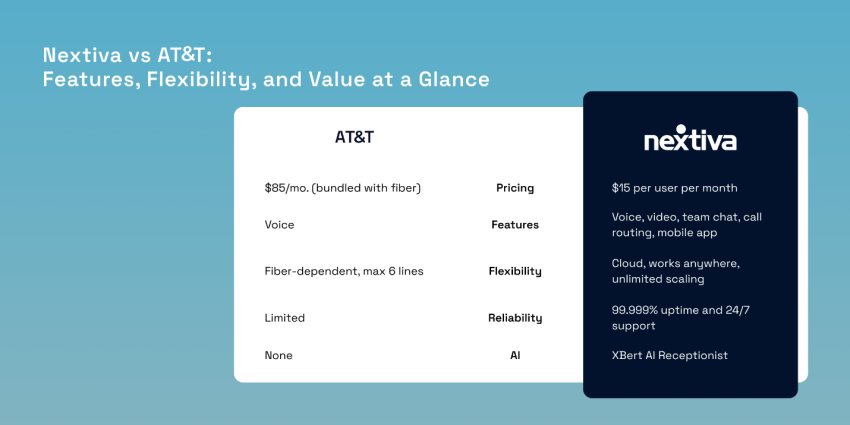
I also look at flexibility and room for growth. Nextiva is cloud-based, so it works anywhere you have a solid internet connection. There’s no fiber dependency and no service-area gatekeeping. AT&T, by contrast, ties availability to its own business internet footprint and limits Phone for Business to up to six lines. That may work for a tiny office, but it is not a serious growth path.
Nextiva also backs its platform with a proven uptime commitment and promotes 24/7 support via phone, chat, and email. For teams that want more automation, Nextiva’s XBert AI receptionist starts at $99 per month and can answer calls around the clock, qualify leads, route inquiries, and book appointments. For me, from a value-per-dollar standpoint, it seems to be a more future-ready investment.

When AT&T Phone for Business Might Still Make Sense
To be fair, I think there are still scenarios where AT&T Phone for Business can make sense. If your company already runs on AT&T Business Fiber at a physical location and only needs to add a simple business phone line, the service can work as a natural add-on without requiring you to bring in an entirely new communications platform.
It may also be suitable for organizations that still rely on legacy analog equipment. The service can replace traditional copper lines and notes compatibility with devices such as fax machines, alarms, and analog phones.
AT&T may also fit very small operations within its fiber service areas that need only one or two lines and have no need for features such as video meetings, team messaging, SMS, CRM integrations, or mobile softphone calling. Businesses that prioritize AT&T’s automated 5G backup on eligible plans may also find value in this setup.
In these limited cases, the service can meet basic communication needs. However, for most growing organizations, a cloud platform like Nextiva may be more ideal.
Choose Nextiva’s Feature-Rich, Scalable Solution for Your Business
Having evaluated both options side by side, Nextiva is the stronger long-term investment for most growing businesses. This is largely because AT&T gives you a phone line, while Nextiva gives you a unified communications platform. Nextiva’s Core plan begins at $15 per user per month and includes inbound and outbound voice, video meetings, business SMS, team chat, and call routing with integrations for Outlook and Google Contacts.
AT&T’s Phone for Business starts at a much higher true entry point because it’s tied to a fiber bundle, and even then, the product is still centered on voice calling rather than a unified workspace.
I also look at flexibility and room for growth. Nextiva is cloud-based, so it works anywhere you have a solid internet connection. There’s no fiber dependency and no service-area gatekeeping. AT&T, by contrast, ties availability to its own business internet footprint and limits Phone for Business to up to six lines. That may work for a tiny office, but it is not a serious growth path.
Nextiva also backs its platform with proven uptime and offers 24/7 support via phone, chat, and email. For teams that want more automation, upgrading to the Power Suite CX plan unlocks advanced omnichannel engagement, CRM integrations, and AI-powered transcription.
Nextiva’s XBert AI Receptionist starts at $99 per month and can answer calls around the clock, qualify leads, and book appointments. From a value-per-dollar standpoint, it’s a vastly more future-ready investment.
Your AI receptionist that never misses a call.
XBert AI greets customers, books appointments, and captures leads via call, text, or chat while you focus on growing your business.
Frequently Asked Questions About AT&T Business Phone Pricing
AT&T Phone for Business starts at $85 per month as part of an AT&T Business Fiber bundle, while AT&T also advertises up to six lines at $15 per month each when bundled, plus taxes and fees.
No. AT&T says Phone for Business runs over AT&T Internet for Business or AT&T Business Fiber.
AT&T says you can get up to six lines with Phone for Business.
No. AT&T Phone for Business is a voice service, while app-based calling and broader collaboration tools are part of separate AT&T offerings such as Office@Hand.
AT&T Phone for Business is a basic VoIP landline replacement, while AT&T Office@Hand is AT&T’s separate unified communications product for video, messaging, and more advanced collaboration.
Usually not, because Nextiva’s Core plan starts at $15 per user per month with voice, video, SMS, team chat, and a mobile app, while AT&T starts with an $85 per month bundle for voice-focused service.
AT&T Phone for Business is centered on voice calling, while video and broader digital channels are part of other AT&T products, not this one.