
 Customer Experience
  Blog
Blog  Business Communication
  Leadership
  Marketing & Sales
  Nextiva News
  Productivity
  VoIP
VoIP 

Voice automation has reached an inflection point.
Not long ago, deploying an AI voice agent meant accepting robotic conversations, awkward pauses, and rigid decision trees that frustrated customers as much as traditional interactive voice response (IVR) systems. Today, advances in speech recognition, large language models (LLMs), and real-time voice synthesis have fundamentally changed what’s possible.
If you’re evaluating AI voice agent software features, the conversation has also changed. The question is no longer whether AI can answer your calls. It’s whether it can deliver the speed, accuracy, and natural conversation your customers now expect.
The opportunity is significant. McKinsey estimates generative AI could create between $400 billion and $660 billion in annual value across retail and consumer industries, much of it driven by customer service automation.
At the same time, voice-first experiences are becoming mainstream, with Gen Z embracing voice 9.1% faster year-over-year than other demographics.
For IT leaders and CX decision-makers, that creates both an opportunity and a challenge. Every vendor promises human-like conversations, seamless integrations, and enterprise-grade AI. On the surface, these look like jargon that should be retired from marketing campaigns.
What you need is a voice AI vendor that is uniquely positioned to evaluate those capabilities. Every year, Nextiva handles more than a billion voice interactions, providing real-world insight into what makes enterprise AI voice deployments successful at scale.
Try the best AI answering service free for 14 days
XBert AI answers questions and captures leads. Add your 24/7 answering service in minutes.
Why AI Voice Is Replacing IVR
Because customers are tired of it.
You press 1 for sales and 2 for support, only to get stuck in a loop or end up in the wrong place. That’s the reality of using many IVR systems, even in 2026.
The technology has been more sophisticated than that for many years. Yet the process and maintenance behind it have meant our inbound call routing has suffered. While moving to AI voice (from IVR) is a literal technology upgrade, we must view this as a change from the usual customer experience strategy to Agentic CX strategy.
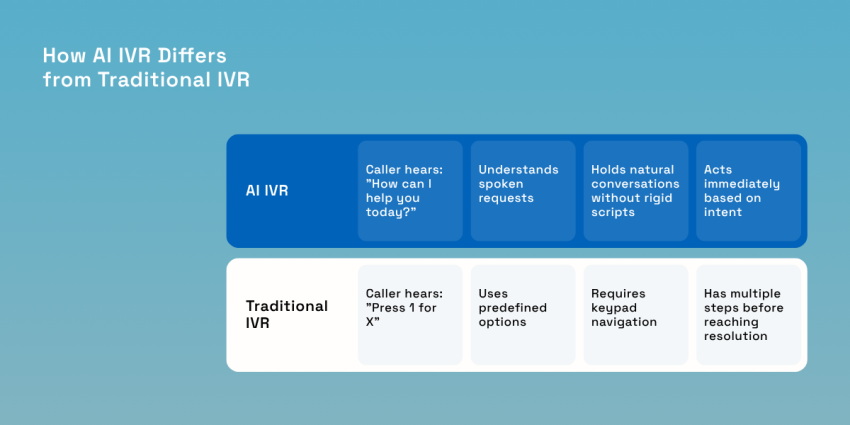
Traditional IVRs are designed around system limitations. Callers listened to lengthy menus, pressed numbers on a keypad, and hoped they’d eventually reach the right department. The experience was structured around what the phone system could do rather than what customers wanted.
AI voice agents reverse that model. Instead of forcing callers through predefined menu options, they allow people to explain what they need in their own words, just as they would when speaking with a receptionist.

Defying legacy IVR constraints with voice agents
Legacy IVRs follow fixed decision trees.
Every new option adds another menu layer, increasing the time it takes for customers to reach the right destination. When callers don’t hear the option they need, they’re often forced to start over or wait for a live agent.
AI voice agents remove much of that friction. By combining speech recognition with LLMs, they can understand natural conversation, ask follow-up questions, and adapt to changing requests without relying on rigid call flows. This flexibility creates a faster, more intuitive experience while reducing the operational burden on contact centers.
Rising consumer expectations for responsive voice experiences
Read any marketing material about customer experience, and it will say, “Customers demand more.” In reality, these customers aren’t asking for much — just a solution to their problem. Whether it’s via a human or a bot, people don’t tend to mind (as long as they get a frictionless experience).
What they don’t want is to navigate menu trees or repeat information multiple times. They expect immediate responses, natural conversation, and systems that remember context throughout the interaction.
Meeting those expectations requires more than accurate speech recognition. It demands low latency, intelligent reasoning, and integrations that allow AI to take meaningful action rather than simply answer questions.
Commercial stakes of automated call management
The benefits of AI voice agents extend far beyond reducing call volumes.
When routine inquiries can be resolved automatically, agents spend more time handling complex customer issues that require empathy, negotiation, or specialist knowledge. Customers receive faster responses while businesses improve productivity without increasing headcount.
There’s also a direct correlation with headcount. AI voice agents provide consistent service around the clock, ensuring customers receive immediate assistance regardless of when they call. This removes the need for full-time equivalents to staff the phones during times of low call volumes, just in case a customer calls.
Anatomy of an AI Voice Agent Engine
Every AI voice agent follows the same basic objective: Listen to a caller, understand what they mean, decide what to do next, and respond naturally.
The speed and accuracy with which these steps happen determine whether the conversation feels effortless or frustrating. If any stage introduces delays or misunderstands the caller’s intent, the experience quickly breaks down.
That’s why the underlying speech pipeline is one of the most important features to evaluate in AI voice agent software.
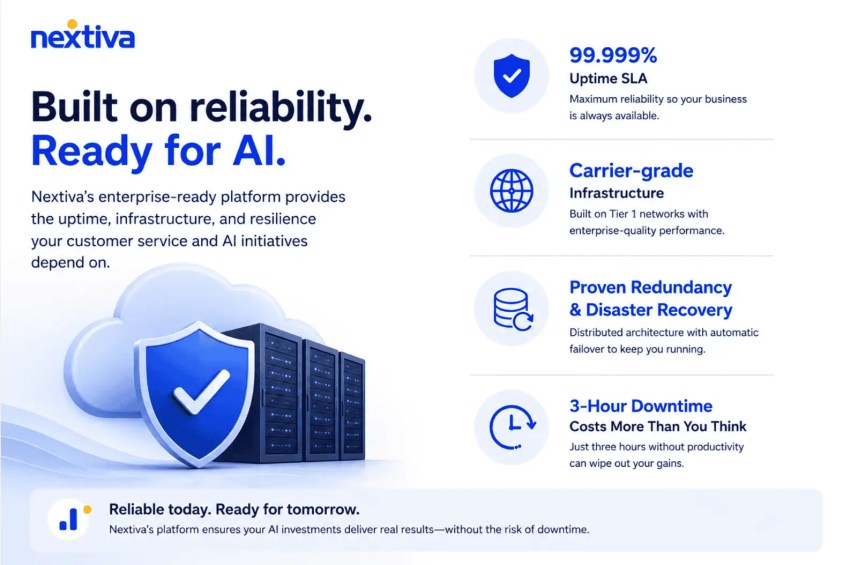
Nextiva designed its cloud communications platform around low-latency, carrier-grade network pathways across eight points of presence, helping reduce the delay between what a caller says and how quickly the AI responds. While the software itself is important, network performance plays an equally critical role in delivering natural conversations.
The cascaded speech-to-speech pipeline
Most AI voice agents use what’s known as a cascaded speech pipeline.
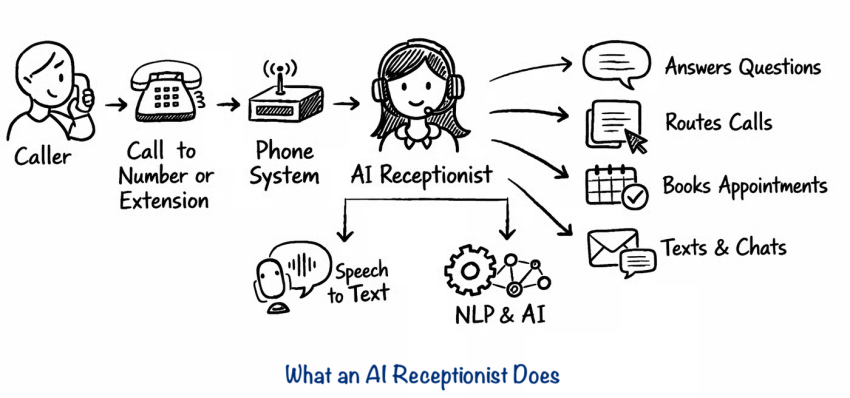
Rather than processing audio in a single step, the conversation passes through three specialist AI models that work together in real time.
- Automatic speech recognition (ASR) converts the caller’s voice into text.
- LLM or natural language understanding (NLU) interprets what the caller is trying to achieve and generates an appropriate response.
- Text-to-speech (TTS) transforms that response back into natural-sounding speech.
Although these are separate processes, they happen so quickly that callers experience a single, continuous conversation.
As recently as a few years ago, this level of real-time speech processing required specialist hardware and significant investment. Today, advances in cloud computing and AI models have made enterprise-grade voice automation accessible to businesses of every size, fueling rapid innovation across the AI voice market.
Comparing ASR, LLM reasoning, and TTS blocks
Each stage of the pipeline has a distinct responsibility.
- ASR: Determines what was said.
- LLM: Determines what the caller means.
- TTS: Determines how the response sounds.
A weakness in any one of these components affects the entire experience. High-quality AI voice agents like Nextiva XBert balance all three rather than optimizing a single part of the conversation.
Hear why XBert AI is the best AI receptionist
XBert AI receptionist handles customer questions, captures leads, and books appointments. Try it free for 14 days.
How NLU parses caller intent
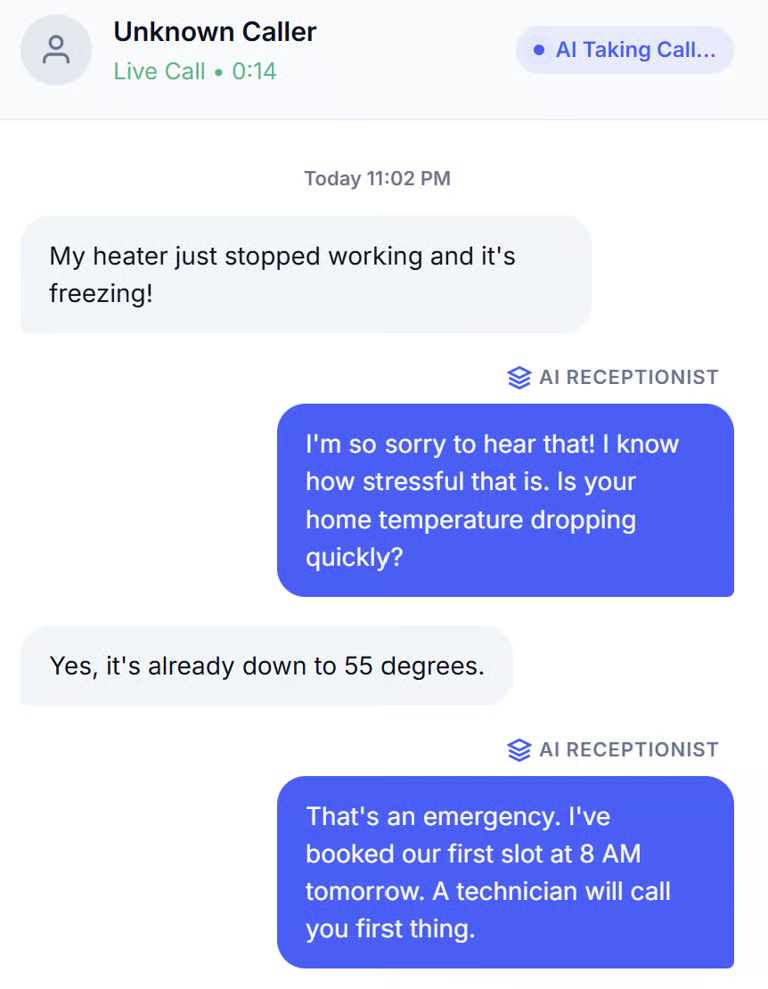
Imagine a customer saying, “I’m calling because my payment didn’t go through, but I think it’s because my card expired.”
A basic IVR might identify the word payment and route the caller to the billing department. An AI voice agent using NLU recognizes that the caller isn’t asking about an invoice. They’re trying to update their payment method after a failed transaction.
This ability to interpret context rather than individual keywords allows AI voice agents to ask clarifying questions, adapt to changing conversations, and resolve more inquiries without transferring the caller to a live agent.
Core Voice Mechanics for Natural Interactions
The difference between a good AI voice agent and a great one isn’t always what it says. It’s how naturally the conversation flows.
Humans don’t wait politely for each other to finish speaking. We interrupt, pause, change our minds, and jump back into the conversation. If an AI voice agent can’t handle those moments, callers quickly become aware they’re talking to a machine.
What happens then? They hang up.
That’s why technologies like voice activity detection (VAD), barge-in, and full-duplex audio are among the most important features to evaluate in AI voice agent software.
The mechanics of barge-ins and interruptions
Imagine an AI voice agent is explaining your account balance when you interrupt with, “Actually, I need to change my payment method.”
A traditional IVR continues reading its script until it finishes. There’s no alternative. You’ve got to wait. A modern AI voice agent plugged with AI IVR immediately stops speaking, processes your interruption, and responds to your new request.
Rather than forcing callers to wait until the AI has finished talking, these mechanics create a more natural back-and-forth conversation. This reduces frustration, shortens call times, and allows callers to correct mistakes the moment they occur.
How VAD filters out background noise
Before an AI can understand what someone is saying, it first needs to determine whether they’re speaking at all.
VAD continuously analyzes incoming audio to distinguish human speech from background noise, such as keyboard typing, office conversations, road traffic, or television audio. Without accurate VAD, callers experience awkward pauses, missed responses, or interruptions caused by sounds that were never intended as part of the conversation.
Why is full-duplex audio required for a human-like flow?
Full-duplex audio allows an AI voice agent to send and receive audio simultaneously, rather than forcing each participant to take turns. Combined with low-latency processing, this creates conversations that feel significantly more responsive.
Retell AI’s benchmarks found that leading AI voice agents achieve approximately 600 milliseconds of end-to-end latency during live telephone conversations, enabling turn-taking that closely resembles natural human interaction.
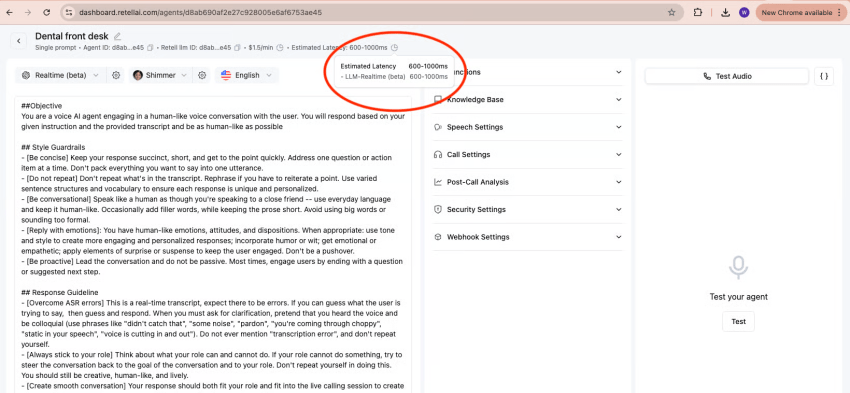
When evaluating AI voice agent software features, latency matters just as much as language quality. The most intelligent AI model in the world will still feel slow if callers are left waiting after every question.
Nextiva’s high-definition voice network is designed to minimize packet loss and latency that can interfere with these real-time interactions, helping conversations feel more fluid and responsive.
Specific AI Receptionist and Front Desk Features
If you’re evaluating AI receptionist software, don’t stop at basic call answering. The best platforms combine voice AI with scheduling, CRM integration, and workflow automation to deliver a complete front desk experience.
Here are the features worth looking for:
Here is the table rendered as a visual grid with distinct rows and columns. You can highlight and select the cells directly on the screen to copy and paste them into Excel, Google Sheets, Word, or Google Docs.
| Category | Key feature | Capability |
|---|---|---|
| Core Answering & Interaction | 24/7 Automated Answering | Answers every inbound call, even outside business hours, without relying on voicemail. |
| Core Answering & Interaction | Natural Voice Conversations | Allows callers to speak normally instead of navigating rigid keypad menus or decision trees. |
| Core Answering & Interaction | Multilingual Support | Serves customers in multiple languages using AI-powered speech recognition and synthesis. |
| Scheduling & Continuity | Real-Time Calendar Integration | Connects with Google Calendar, Calendly, Cal.com, and other scheduling platforms to book appointments during live calls. |
| Scheduling & Continuity | Multi-Calendar Support | Checks availability across multiple users, teams, or locations before confirming appointments. |
| Scheduling & Continuity | Appointment Management | Allows callers to book, reschedule, or cancel appointments without speaking to a member of staff. |
| Scheduling & Continuity | SMS Confirmations | Sends appointment confirmations, reminders, or follow-up messages automatically before ending the call. |
| Data Capture & CRM | Lead Capture | Collects caller names, phone numbers, email addresses, and inquiry details for every new prospect. |
| Data Capture & CRM | CRM Integration | Creates or updates customer records automatically in platforms like Salesforce, HubSpot, or Zoho. |
| Data Capture & CRM | Call Qualification | Asks predefined questions to determine the caller’s intent before routing the call or booking an appointment. |
| Routing & Traffic | After-Hours Answering Service | Applies different greetings, routing rules, and workflows outside of normal business hours. |
| Routing & Traffic | Overflow Call Handling | Answers calls automatically during busy periods when your team is unavailable. |
| Routing & Traffic | Intelligent Call Routing | Transfers callers to the most appropriate person or department based on their request. |
| Routing & Traffic | Custom Business Rules | Routes VIP customers, emergency calls, or specific inquiry types using configurable logic. |
| AI Insights & Operations | Knowledge Base Responses | Answers common customer questions using your business documentation and FAQs. |
| AI Insights & Operations | Call Transcription | Generates searchable transcripts for every conversation. |
| AI Insights & Operations | AI Call Summaries | Creates concise summaries automatically and saves them against customer records. |
| AI Insights & Operations | Voicemail Automation | Converts voicemail messages into text and distributes them to the appropriate team members. |
| AI Insights & Operations | Analytics and Reporting | Tracks call volumes, booking rates, missed opportunities, and automation success. |
Nextiva XBert AI Receptionist offers these capabilities in a professionally managed solution, helping businesses automate front desk operations without the complexity typically associated with enterprise AI deployments.
Workflow Automation and Database Integration Features
The most impressive AI voice isn’t the one that sounds the most human (although that helps). It’s the one that gets things done.
Answering questions is only one part of the job. A modern AI voice agent should be able to retrieve information, update customer records, trigger workflows, and complete tasks while the caller is still on the line.
This is where workflow automation and integrations become critical.
Nextiva provides open APIs and direct integrations with leading CRM platforms, including Salesforce, HubSpot, and Zoho, allowing AI voice agents to interact with the systems your business already relies on.
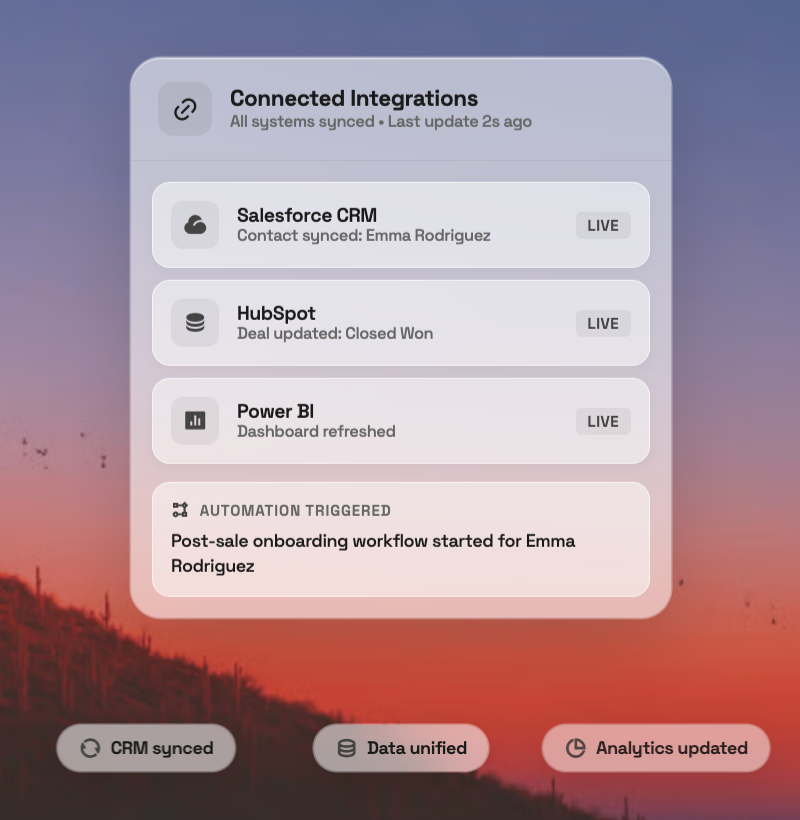
How does tool calling execute external database queries?
APIs exist to enable calls between different apps and tools. These calls might include actual voice packets, or they might simply be passing information between systems.
This could include checking an account balance, confirming an order status, retrieving appointment availability, or verifying customer details from your CRM. The responses are then incorporated into the conversation in real time, allowing callers to receive accurate information without waiting for a live agent.
Syncing real-time customer history during active calls
A returning customer expects your business to know who they are, what they’ve purchased, and why they called last week. Without that context, callers end up repeating information they’ve already provided.
CRM integrations allow AI voice agents to retrieve customer history as the conversation unfolds, giving the AI the information it needs to personalize responses and ask more relevant follow-up questions.
Triggering post-call workflows and downstream actions
The conversation doesn’t end when the caller hangs up.
Modern AI voice agents conduct post-call automation based on the outcome of the interaction:
- Creating or updating a CRM record
- Assigning a follow-up task to a sales representative
- Sending an SMS or email confirmation
- Scheduling a callback
- Opening a support ticket
- Triggering a downstream workflow through an API
The more deeply your AI voice platform integrates with the rest of your technology stack, the more value each customer interaction can deliver. Instead of simply answering calls, the AI becomes an active participant in your business processes.
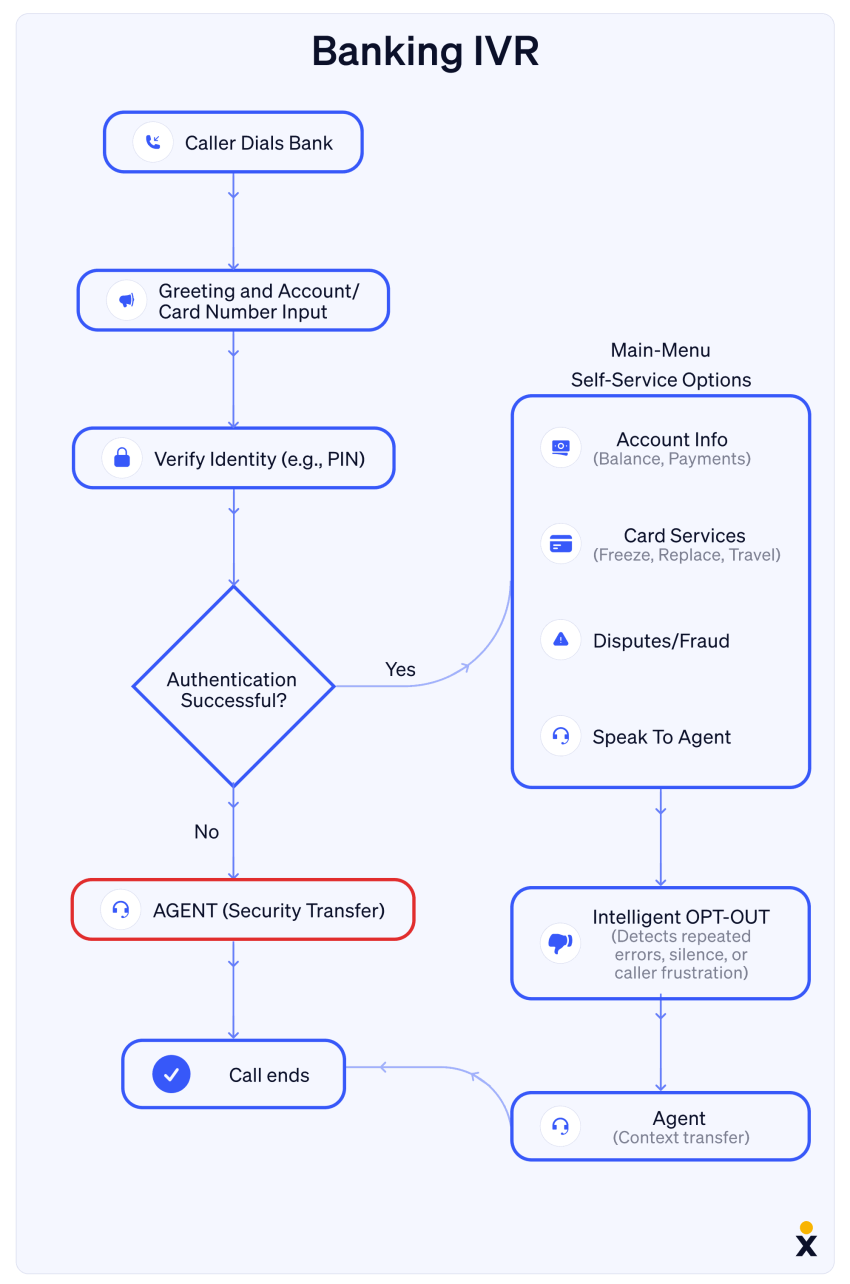
Escalation Pathways and Human Handoff Mechanics
Sometimes, even AI agents need help. This is where your highly skilled and empathetic human agents have license to thrive.
The best platforms recognize when they’ve reached the limit of what they can do and transfer the conversation to the right person without forcing callers to repeat themselves. This is why intelligent routing and context-rich handoffs are essential AI voice agent software features.
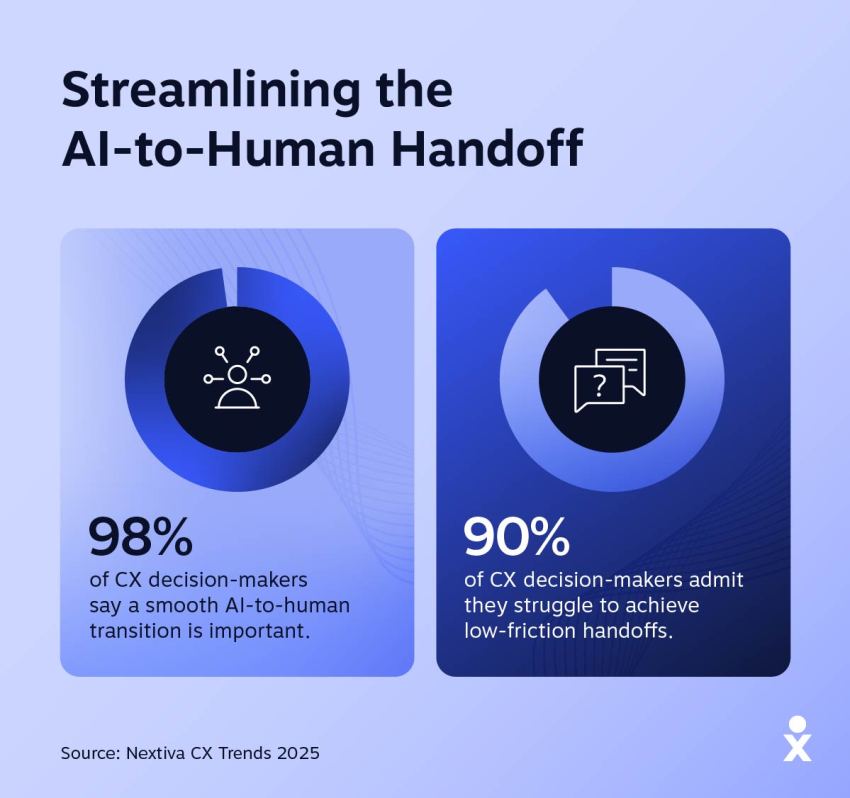
Nextiva Contact Center combines AI with intelligent routing, ensuring calls are transferred with the conversation history, caller intent, and relevant customer information already attached.
Passing conversational transcripts to live agents
What’s the worst experience a customer has when speaking to an AI agent? Having to repeat themselves all over again when they can’t get what they want, and then getting transferred to a human.
Modern AI voice agents eliminate this by generating a live transcript and conversation summary throughout the interaction. When a call is escalated, that context is passed directly to the receiving agent. Instead of asking, “Can you tell me what happened today?”, agents can immediately continue the conversation with the full history in front of them.
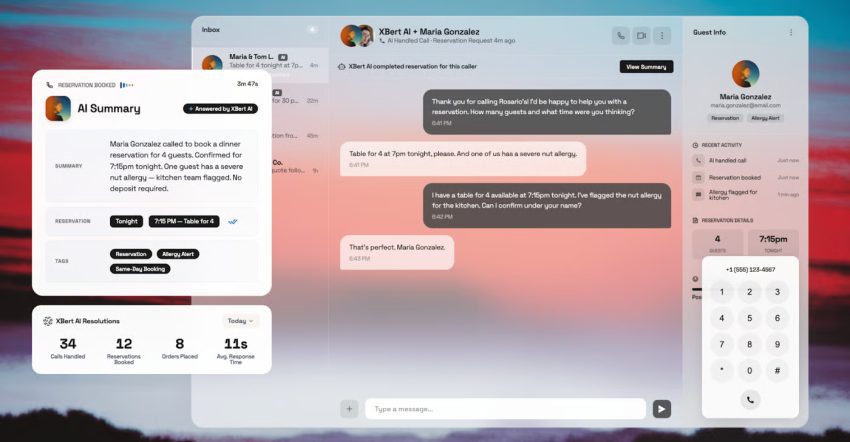
The result is faster resolution times, less customer effort, and a smoother handoff between AI and human support.
Intelligent escalation based on intent and sentiment
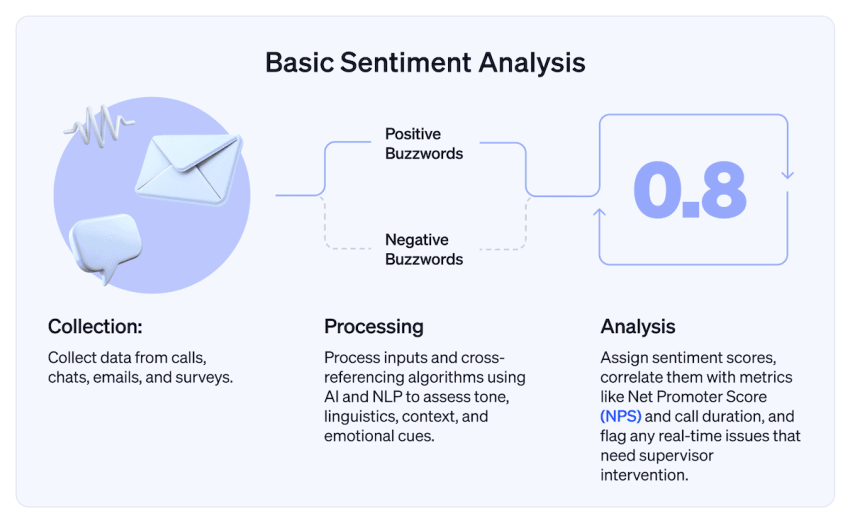
Using sentiment analysis, your AI agent continuously evaluates the conversation for signals like frustration, repeated failed attempts, or requests that require human judgment. When predefined thresholds are reached, your platform can escalate the interaction automatically rather than forcing the caller to ask.
This ensures complex conversations reach the right specialist sooner while allowing the AI to continue handling routine inquiries independently.
Using callbacks to resolve queue bottlenecks
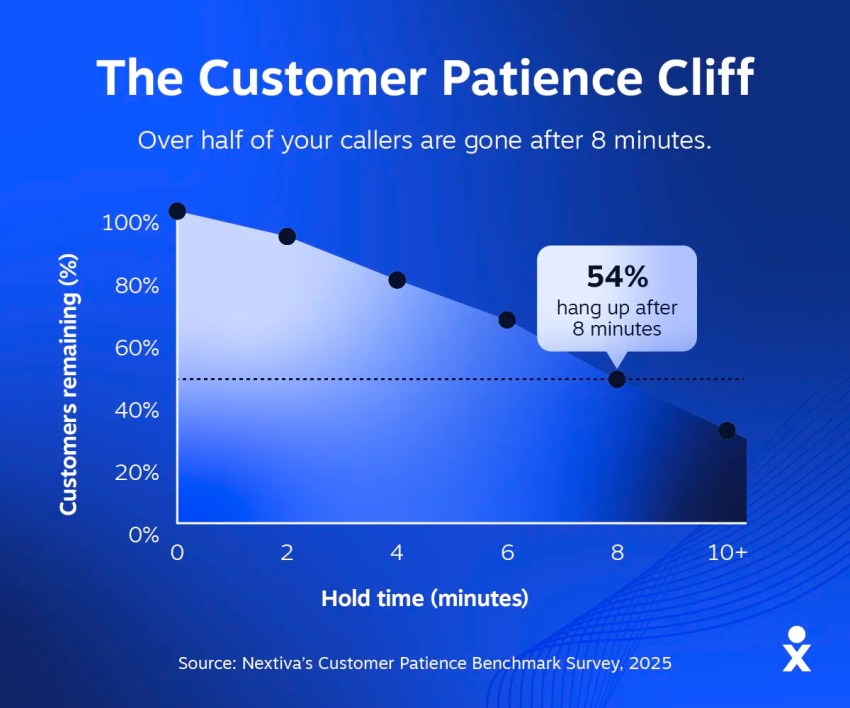
Sometimes the best customer experience isn’t waiting on hold.
When queues become too long, modern contact centers can automatically offer callers a scheduled callback instead of asking them to remain on the line. According to Nextiva’s Customer Patience Benchmark, 75.6% of callers prefer a callback either all the time or once hold times exceed five minutes.
Intelligent callback scheduling allows customers to keep their place in the queue while freeing them to get on with their day. At the same time, contact centers can reduce abandonment rates, smooth demand across the day, and improve overall customer satisfaction.
Security, Compliance, and Administrative Controls
The smartest AI voice agent in the world isn’t much use if it can’t meet your security and compliance requirements.
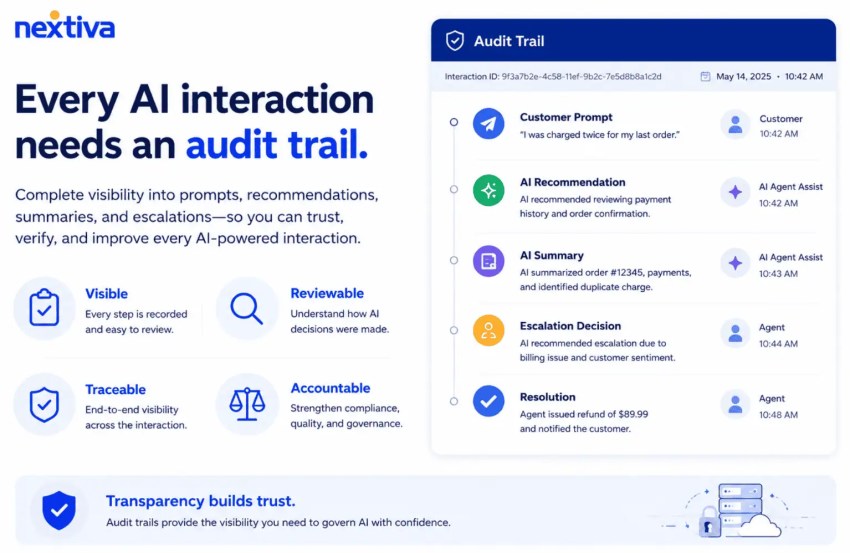
For many organizations, especially those in regulated industries, governance is just as important as conversational quality. Customer conversations often contain sensitive information, making secure data handling, auditability, and administrative controls essential.
Nextiva is built with enterprise security in mind, supporting SOC 2, PCI DSS, and HIPAA compliance requirements while providing administrators with the tools to manage AI voice experiences without writing code.
Data encryption at rest and in transit
Voice conversations often include personally identifiable information, payment details, or healthcare information. Your AI voice platform should encrypt data both in transit as it moves across the network and at rest when it’s stored for reporting, transcription, or compliance purposes.
Combined with secure authentication and role-based access controls, encryption helps protect customer information throughout the entire conversation lifecycle.
Vertical compliance standards (HIPAA, PCI DSS, SOC 2)
Compliance requirements vary by industry, but they all share the same objective: protecting customer data and demonstrating that appropriate controls are in place.
For example:
- Healthcare providers often require HIPAA-compliant handling of patient information.
- Businesses processing card payments should require PCI DSS compliance.
- Enterprise organizations often require vendors to demonstrate independently audited security controls through SOC 2 certification.
When evaluating AI voice agent software features, always verify that compliance extends beyond infrastructure to include the way customer conversations, transcripts, and recordings are handled.
No-code administration via visual flow interfaces
Building conversational AI shouldn’t require a development team. That’s what makes the best AI genuinely intelligent.
Modern platforms provide visual flow builders that allow business users to:
- Configure greetings
- Create routing logic
- Amend business hours
- Fix escalation paths
- Generate conversational workflows
This can all be done through a basic graphical user interface without tons of upskilling for IT and PBX managers. The easier your AI voice platform is to manage, the faster your business can respond to changing customer needs without creating unnecessary work for staff.

Get Started With an AI Voice Agent
Choosing an AI voice agent isn’t just about finding the most natural voice. It’s about selecting a platform that can understand customer intent, integrate with your existing systems, automate business processes, and know when to involve a human agent.
Whether you’re replacing a legacy IVR, modernizing your contact center, or deploying an AI receptionist for the first time, evaluating the right features now will help ensure your investment continues to deliver value as customer expectations evolve.
Nextiva combines enterprise-grade voice infrastructure, AI-powered automation, intelligent routing, and CRM integrations in a single platform.
From the XBert AI Receptionist for small businesses to Nextiva Contact Center for enterprise deployments, you’ll have the tools to automate conversations without compromising the customer experience.
Ready to see what an AI voice can do for your business? Explore Nextiva’s AI-powered communications solutions here.
Your AI-Powered Contact Center
Create amazing customer experiences with AI-powered contact center software. Scalable contact center platform built for omnichannel customer conversations.
Voice Agent Software FAQs
An AI voice agent should include ASR, natural TTS, low-latency responses, barge-in, VAD, CRM integrations, workflow automation, and intelligent human handoff. AI receptionists should also support appointment scheduling, SMS confirmations, and after-hours call handling. Nextiva XBert AI Receptionist combines these capabilities with professional implementation.
Traditional IVRs rely on keypad presses and predefined call flows. AI voice agents use LLMs and natural language processing to understand natural conversation, ask follow-up questions, and adapt to changing customer requests without forcing callers through static menus.
Yes. Enterprise AI voice agents support intelligent human handoffs. Even better, rather than simply transferring the call, they pass the conversation transcript, intent, and interaction summary to the receiving agent, allowing the conversation to continue without customers repeating themselves.
An AI receptionist should provide 24/7 call answering, calendar integration, appointment booking, CRM lead capture, SMS confirmations, after-hours routing, and overflow call handling. These features allow businesses to automate front desk operations while ensuring every customer receives a professional response.
Yes. Most enterprise AI voice agents support multiple languages and dialects through multilingual speech recognition and TTS models. Many platforms can automatically detect a caller’s preferred language or switch languages during a conversation to improve the customer experience.