
 Customer Experience
  Blog
Blog  Business Communication
  Leadership
  Marketing & Sales
  Nextiva News
  Productivity
  VoIP
VoIP 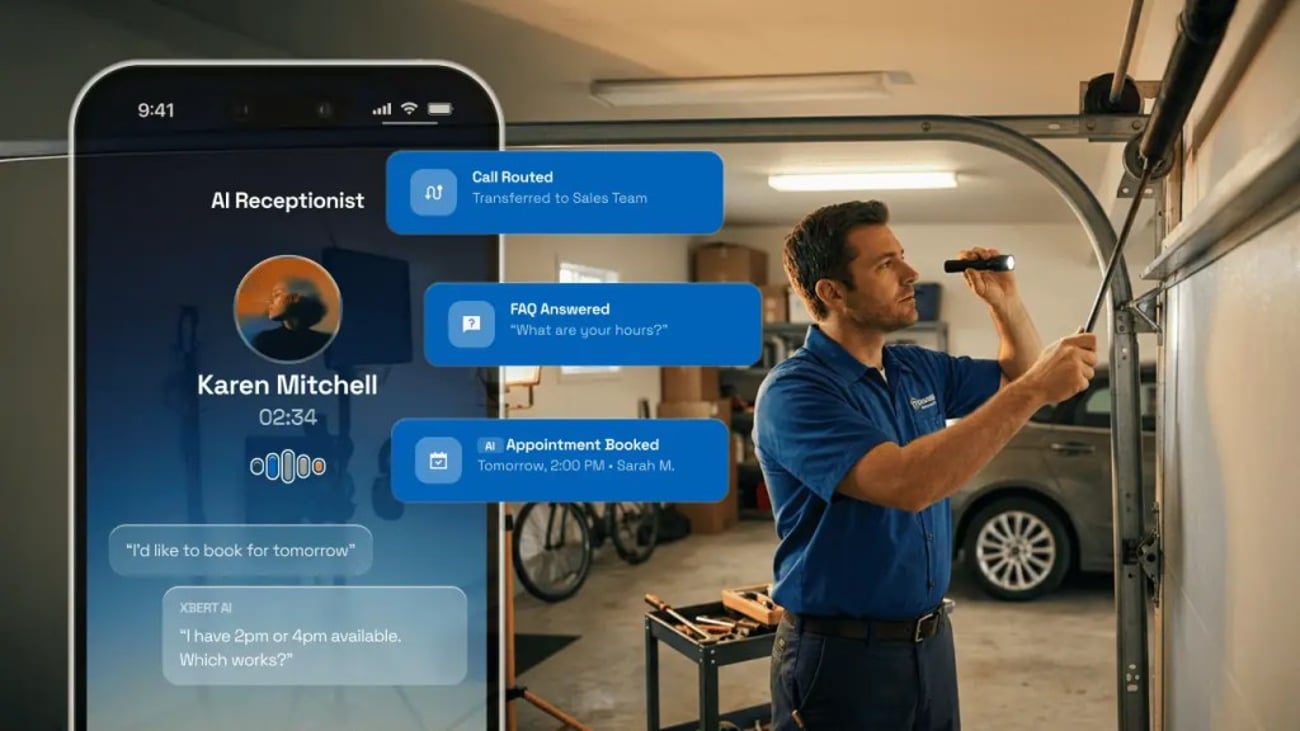

When your AC dies in the middle of summer on a 95-degree day, or your furnace completely gives up when it’s 30 degrees outside, you probably aren’t going to be too choosy about who comes to your rescue. The first reputable person who can resolve the situation is the one you’ll likely hire.
This is true for plenty of home service businesses. Even a relatively non-urgent home service, such as lawn care, can feel like a right-now problem when someone spots a snake in the too-high grass and wants an immediate solution. In cases like this, whoever answers the phone first is the one who gets the job.
This boils down to one simple fact: for plumbers, HVAC technicians, electricians, and landscapers, every unanswered call is a missed opportunity. The good news is that an AI receptionist answers those calls 24/7, books appointments directly onto your calendar, and routes emergencies to your on-call technician with full context.
In this post, we’ll explain how AI receptionists can help home service businesses to continue capturing leads even when they’re on the job.
Try the best AI answering service free for 14 days
XBert AI answers questions and captures leads. Add your 24/7 answering service in minutes.
The High Cost of Unanswered Calls for Local Home Services
Home service businesses operate in one of the most competitive local markets in the country. Understanding why calls get missed and what it costs you is the first step toward fixing it.
Why home service leads are highly time-sensitive
When a pipe bursts or a furnace dies, homeowners don’t compare shops. They choose whoever can come now. If you don’t answer, they move on to the next person on the list. Forbes that 85% of callers who hit voicemail won’t leave a message.
The direct link between fast call response and winning the job
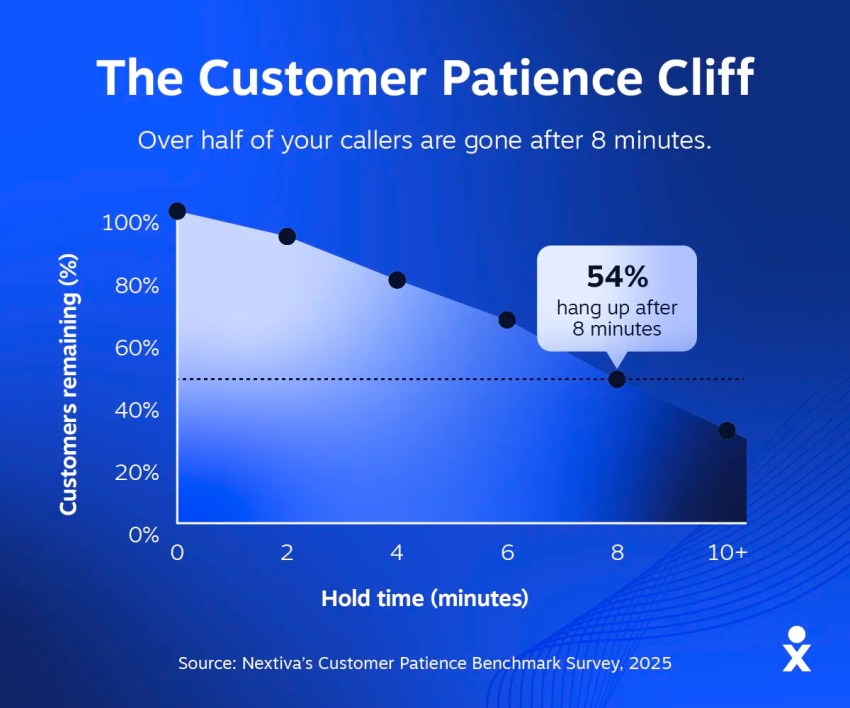
The Nextiva Customer Patience Benchmark found that nearly three out of four phone callers expect a response within five minutes. When responses are too slow, 56.3% of customers try another provider and 28% stop using the service entirely.
In home services, “trying another provider” usually means calling the next result on Google. Every call that goes to voicemail instead of a live answer is a job you’re handing to a competitor at what could be a 50/50 conversion rate.
How missed calls damage a local service brand and search engine visibility
The consequences and costs of missed calls extend beyond the immediate lost job. They can actually trigger negative reviews. For a home service business that depends on Google reviews for local search ranking, a pattern of missed calls can erode both your reputation and your visibility over time.
Curious how much missed calls are costing your business? Use our Missed Call Calculator to do the math.
What Is an AI Receptionist for Home Services?
An AI receptionist is a virtual front desk that uses conversational AI to answer calls, respond to texts, and chat with website visitors the same way a trained receptionist would. It listens to what callers say in plain language, understands what they need, and takes action. These tools are capable of booking appointments, answering questions about your service area, or routing emergencies to your on-call technician.

Unlike a human receptionist, an AI receptionist like Nextiva’s Xbert handles multiple conversations at the same time. During a heat wave or a cold snap, when your call volume triples, there’s no busy signal, no hold queue, and no missed calls. Every customer gets an immediate response, regardless of how many people are calling at once.
Nextiva’s XBert runs $99 per month and manages calls, texts, and website chats from a single platform around the clock. It books appointments directly onto your calendar, sends text confirmations, and transfers complex or emergency calls to your team with a full transcript attached.
Hear why XBert AI is the best AI receptionist
XBert AI receptionist handles customer questions, captures leads, and books appointments. Try it free for 14 days.
How AI receptionists differ from traditional auto-attendants
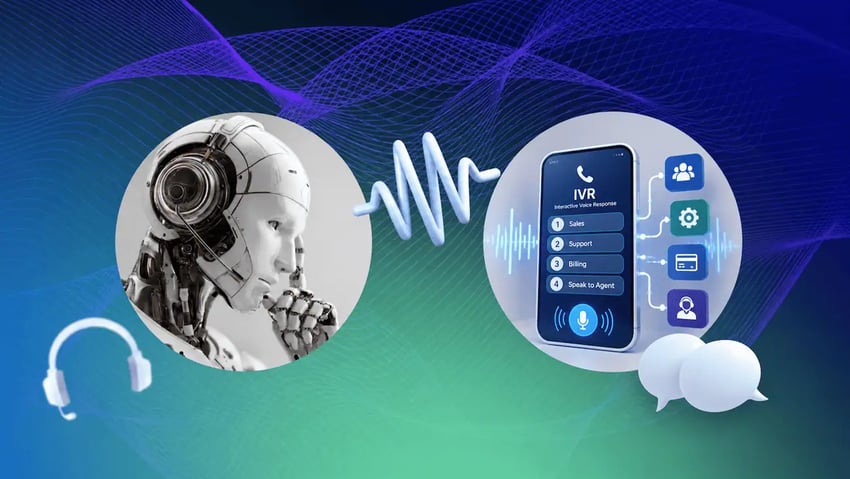
If you’ve used a phone system that says, “Press 1 for scheduling, press 2 for billing,” that’s a legacy auto-attendant. It can route calls, but it can’t have a conversation, answer questions, or book an appointment.
Here’s a quick breakdown of how AI receptionists differ from auto-attendants:
| Capability | Legacy Auto-Attendant (traditional IVR) | AI Receptionist (XBert) |
|---|---|---|
| Call handling | Routes via keypad menus | Understands natural speech |
| Appointment booking | Not available | Books directly on your calendar |
| After-hours coverage | Sends to voicemail | Full 24/7 service |
| Text and chat | Not available | Handles SMS and web chat |
| Emergency triage | Basic forwarding | Routes with full context and transcript |
| Customer experience | “Press 1 for…” | Natural conversation |
| FAQ handling | Pre-recorded messages only | Answers from your custom knowledge base |

Core Features That Keep Home Service Operations Running
AI answering services work with your tech stack. They should integrate directly with the tools your business already uses and include key features that will help you better serve your customers.
Here are the key features that matter most for home service operations.
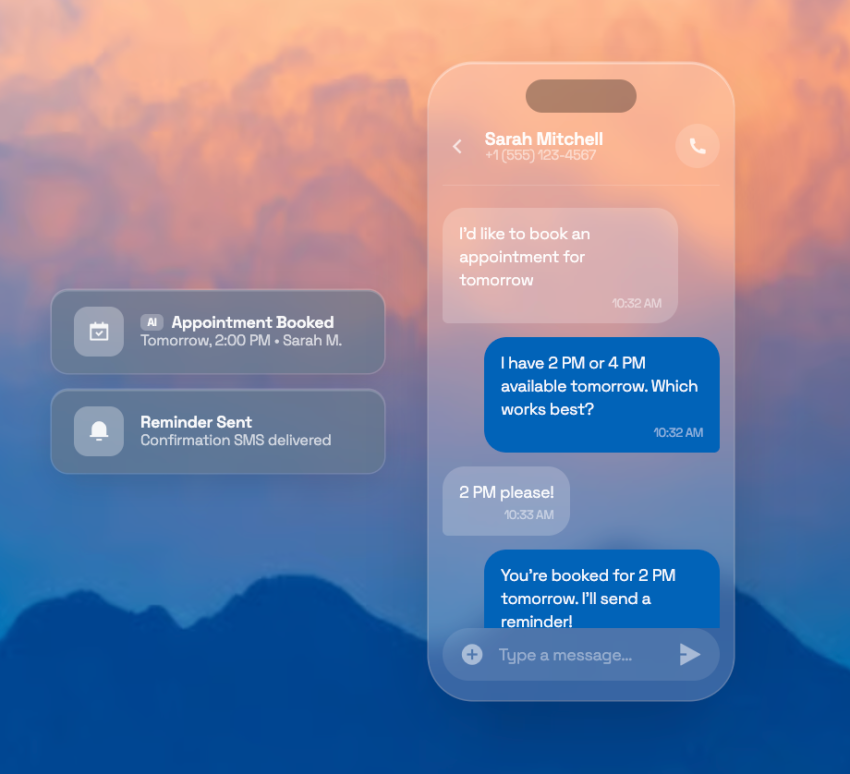
Automated scheduling directly into your dispatch or calendar tools
Most home service leads are lost because the booking doesn’t happen during the first call. If a customer has to wait for a callback to schedule their service, there’s a good chance they will move on and book with someone else.
XBert writes directly to your business calendar when it books an appointment. It connects with Google Calendar, Calendly, Cal.com, and Zoho, as well as field service platforms like Housecall Pro, Jobber, and ServiceTitan. For example, when a customer calls to schedule a drain cleaning, the AI sees your next open slot, locks it in, and logs the job details — all without anyone in your office touching a screen.
Smart emergency filtering that routes urgent calls to live technicians
Some calls for a quote for faucet replacement can likely be helped entirely by an AI voice agent, but a homeowner calling about a gas leak needs a human on the line now. An AI agent that tries to book them a slot for next Thursday is grounds for a one-star Google review.
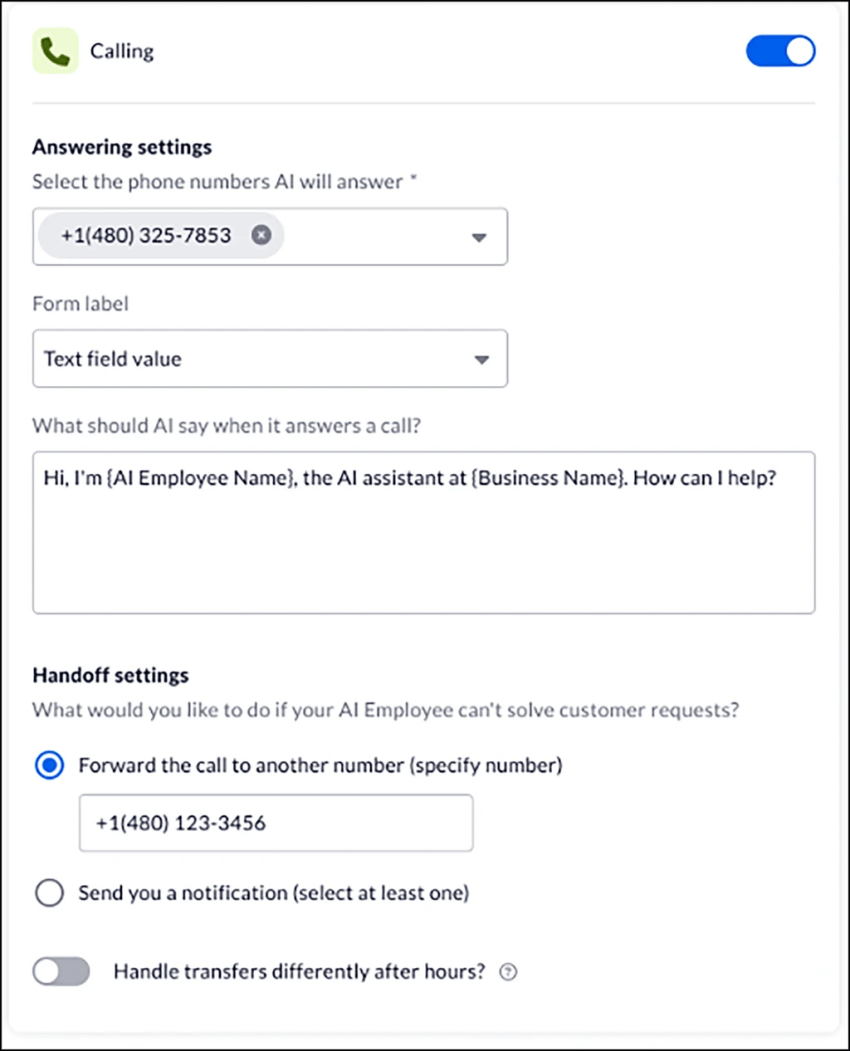
As an electrician answering service, XBert can triage calls by urgency. Standard service requests get booked automatically, while emergency calls get routed straight to your on-call technician along with the customer’s address, the nature of the problem, and a transcript of the conversation (through instant call summaries), so your tech knows what they’re walking into.
Instant text confirmations and follow-ups to secure bookings
Booking the job is only half the battle. No-shows and last-minute cancellations cost technicians drive time and leave gaps in your schedule that could have gone to paying customers.
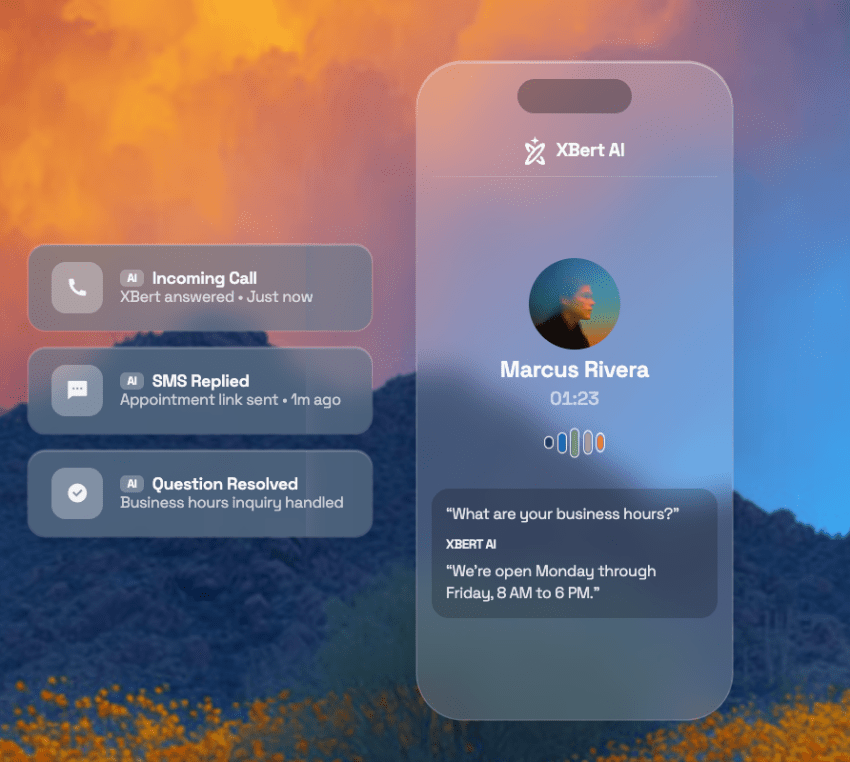
After booking, XBert sends an automatic text confirmation to the customer and follows up with a reminder before the appointment. This reduces no-shows and keeps your schedule locked in. For seasonal businesses that see spikes in cancellations and rescheduling, automated follow-ups prevent jobs from falling off the board.
Real-time conversation logs and dashboard tracking for business owners
If you can’t see what’s happening on the phones, you can’t improve it. Most home service owners have no visibility into how many calls come in, how many convert, or what customers are asking about most.
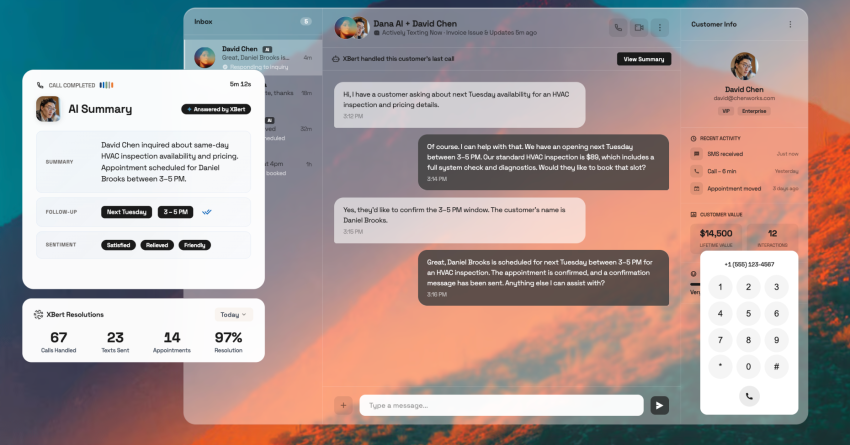
With an AI receptionist, every call, text, and chat is recorded, transcribed, and logged in a dashboard you can review from your phone. You can see what customers asked, what the AI handled, and what got escalated. For owners managing multiple crews, this visibility helps identify patterns in call volume, common service requests, and booking conversion rates.
Staffing Costs: Human Receptionist vs. AI Answering Service
For most home service businesses, hiring a dedicated office person to answer phones isn’t financially practical. Here’s how the numbers compare.
The Bureau of Labor Statistics puts the median receptionist wage at $17.90 per hour, or about $37,230 per year. But that’sbefore you add benefits, payroll taxes, and training for an employee who covers business hours only, takes one call at a time, and needs vacation days.
Traditional live answering services bill by the minute, with rates usually landing between $1.50 and $3.00 for each minute on the line. During a busy season, a plumbing company fielding 200 calls per month at an average of three minutes per call could pay $900 to $1,800 per month for basic message-taking, with no ability to schedule appointments.
At $99 per month, XBert answers calls, books jobs, sends confirmations, and routes emergencies around the clock. For a business losing an estimated $125,000 or more per year to missed calls and slow responses, the return is hard to ignore.
| Factor | AI Receptionist (XBert) | Live Answering Service | In-House Receptionist |
|---|---|---|---|
| Monthly cost | $99/month | $500-$1,800+/month | $3,000+/month |
| Billing model | Flat monthly rate | Per-minute rate ($1.50-$3.00/min) | Salary plus benefits |
| Availability | 24/7/365 | Varies by plan | Business hours only |
| Appointment booking | Direct calendar integration | Message-taking only | Manual entry |
| Emergency triage | Automatic routing with context | Basic message relay | Depends on training |
| Simultaneous calls | Unlimited; can handle multiple calls at once | Limited by staffing | One call at a time |

Setting Up Your Home Service AI Receptionist
Home service business owners don’t have hours to spend configuring software. The setup process is designed to be fast and hands-off so you can get back to running jobs. Here’s how it works.
- Map out your common call flows: List the questions your office fields most often (such as inquiries about service area, pricing, hours, and emergency protocols), so XBert can answer them accurately from day one.
- Connect your scheduling tools: XBert works with Google Calendar, Calendly, Cal.com, Zoho, and field service platforms like Housecall Pro, Jobber, and ServiceTitan to book directly onto your dispatch board.
- Set your escalation rules: Define which calls the AI handles on its own (including routine bookings, frequently asked questions, and scheduling changes) and which get transferred to a live person with a conversation summary attached.
- Test and launch: Nextiva includes free professional setup, custom greetings, and live test calls before you go live. A 30-day money-back guarantee means you can evaluate without risk.
- Review and refine: After launch, use your call logs and transcripts to see what the AI is handling well and where it needs adjustment based on call patterns across customer interactions. Then update your knowledge base or routing rules accordingly.
Stop Losing Jobs to Voicemail With Nextiva’s XBert AI
Many home service businesses don’t have a lead generation problem — the phone is already ringing. The issue is what happens when nobody picks up. Every missed incoming call and voicemail is a job that’s likely going to the competitor who answers first.
An AI phone answering service makes sure that doesn’t happen. It answers every call, books appointments directly on your calendar, sends text confirmations, filters emergencies to your on-call technician, and captures every lead, whether the call comes in at 2 pm or 2 am.
With a long history of helping home service businesses, Nextiva understands how important this is. Stanley Steemer, a carpet and floor cleaning franchise serving 25,000 customers across two locations, switched to Nextiva after years of dropped calls and outages on its legacy PBX. Their Director of Operations now uses Nextiva’s call analytics to track how many inbound calls convert to booked jobs, giving him visibility into close rates across his team.
Nextiva’s XBert starts at $99 per month, includes free setup, and can go live within days. For a home service business losing $125,000 or more per year to missed calls, the return is almost immediate.
Miss fewer calls. Book more jobs.
Plumbers, HVAC technicians, and electricians manage every customer conversation in one platform, so jobs stay booked, dispatchers stay organized, and no call goes to a competitor.
Frequently Asked Questions about AI receptionists for home service businesses
Here are the questions we hear most from home service business owners evaluating an AI receptionist.
Most AI receptionists use voice recognition and natural language processing to understand what a caller needs, respond to frequently asked questions, collect customer details, and schedule appointments directly on your business calendar. Platforms like Nextiva XBert operate 24/7 across calls, texts, and web chats.
No, an AI agent receptionist (sometimes called a “virtual assistant”) will not replace your dispatcher. It handles standard scheduling, intake of customer data, and answering of routine questions, while routing emergency calls and complex questions to a live technician or manager with full context.
As a result, your human staff can focus on high-priority field operations instead of answering routine calls, while still ensuring that the AI tool can transfer calls to the right person.
Nextiva’s AI receptionist XBert starts at $99 per month and includes 24/7 call, text, and chat coverage. This is a fraction of the cost of hiring a full-time receptionist ($36,590+ per year) or using a legacy answering service that charges $1.50 to $3.00 per minute.
Yes, the AI receptionist makes scheduling easy since it can integrate with your current scheduling software. XBert connects directly with Google Calendar, Calendly, Cal.com, and Zoho. It can also connect with field service platforms like Housecall Pro, Jobber, and ServiceTitan to keep your calendar updated in real time. It will book the appointments and then confirm them via SMS.
When setting up an AI phone system, most small business owners go live within a few days. Nextiva includes free professional setup, calendar integration, custom greeting configuration, and testing, so you can get up and running quickly.