
 Customer Experience
  Blog
Blog  Business Communication
  Leadership
  Marketing & Sales
  Nextiva News
  Productivity
  VoIP
VoIP 

When your staff is busy, the last thing they want to do is stop and answer the phone.
Imagine you’re in your flow — restocking a warehouse, finalizing a design, or closing a high-commission sale. Then, the phone rings. It’s an interruption. It might be a routine inquiry, a wrong number, or a navigational question that costs you focus.
An automated phone receptionist solves this. It allows specialists and high-value agents to stop fielding routine calls and spend more time on what matters:
- Empathetic scenarios
- Emergency troubleshooting
- Complex technical solutions
- High-touch sensitive orders
- VIP callers
Try the best AI answering service free for 14 days
XBert AI answers questions and captures leads. Add your 24/7 answering service in minutes.
What an Automated Phone Receptionist Really Is
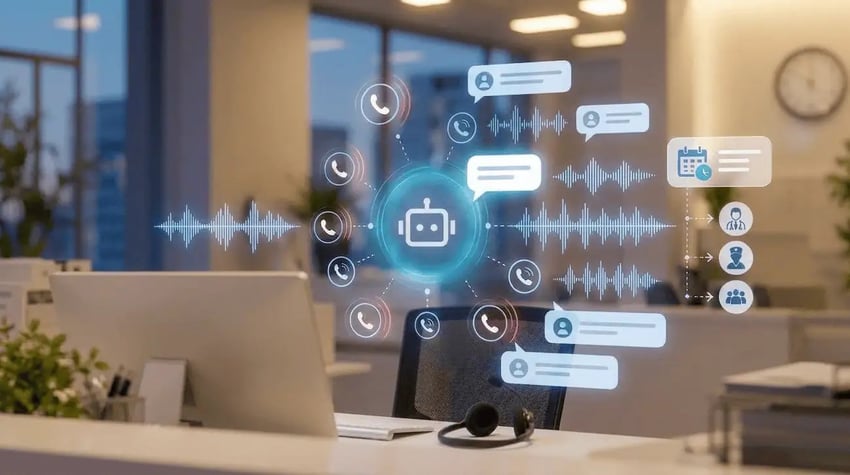
An automated phone receptionist is an AI-powered technology that answers, greets, routes, and resolves calls without human intervention.
While it may be called by different names — virtual receptionist, AI receptionist, or auto attendant — the core function is the same: it’s an always-on system that handles every call the moment it connects. There’s no upper limit to the number of calls it can handle simultaneously, meaning your customers never hear a busy signal.
Unlike old-school interactive voice response (IVR) systems with limited customizability, modern automated receptionists employ AI and machine learning to understand natural speech, using:
- Input: Uses speech recognition to understand intent (“I need to reschedule my appointment”).
- Process: Determines the best action based on sentiment and urgency.
- Output: Generates a response or routes the call to the best available human, passing along the context so the agent knows exactly why the customer is calling.

How Automated Phone Receptionists Have Evolved
Automated receptionists are no longer just basic navigational aids. Today, you get a full conversation — customer to bot — without frustration.
| Capability | Traditional Auto Attendant | Automated Phone Receptionist |
|---|---|---|
| Interaction style | Rigid, menu-based prompts | Natural, conversational dialogue |
| Input method | Keypad only | Spoken language (NLP) |
| Call management | Routes calls but cannot answer questions | Answers FAQs using your knowledge base |
| Scheduling | Cannot schedule | Books, confirms, and reschedules automatically |
| Availability | Always on but with limited utility | 24/7 resolution of complex tasks |
| Scalability | Queues callers, resulting in wait times | Handles unlimited simultaneous calls |
The hybrid model
Most businesses now use a hybrid approach. The automated receptionists handle the front line — answering FAQs and routing calls — while live agents step in only for complex, sensitive, or high-value conversations.
What an Automated Phone Receptionist Does Day to Day
Here’s why you need automated reception services as an extension of your team to handle the repetitive tasks that usually clog up your day.
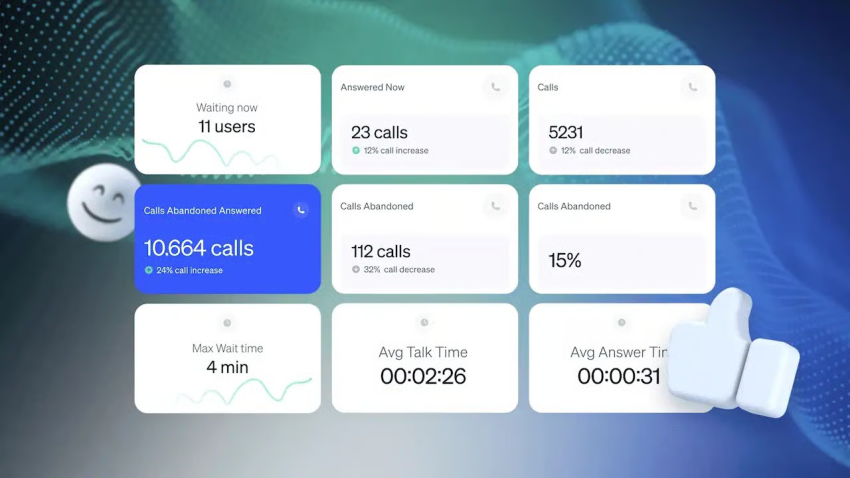
Answers every call
Virtual receptionists are ready to answer any call at any time of the day. This means that your callers get an immediate greeting with no dead air, voicemail, or call forwarding. There are no call queues involved, and you can always add an option to escape the automation and escalate to a live agent.
You get a consistent brand experience, regardless of time or call volume. Automated receptionists don’t get tired or frustrated, and they don’t carry the burden or pressure of trying to turn around the numbers on your call center wallboards. Instead, every call gets answered professionally and can be personalized based on the data you feed it.
Routes calls intelligently
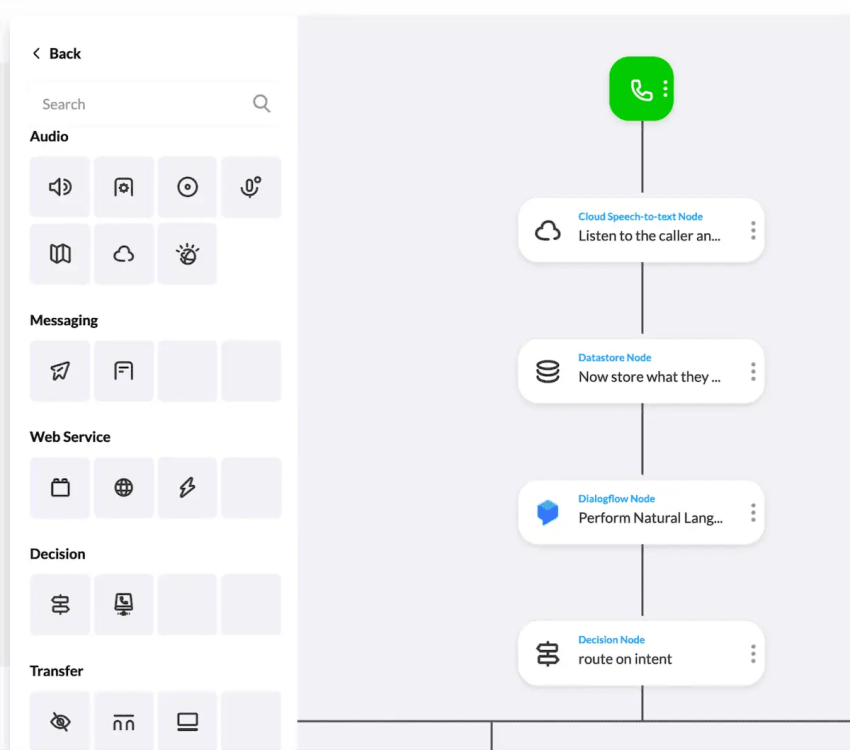
When a new call enters your business, intelligent call routing gets applied based on spoken intent, menu selection, time of day, or caller history. For example, if this is the fifth call to your technical support line in two days, the AI receptionist deduces that it’s best for the customer to get routed to a senior manager straight away. After all, it’s unlikely they’re calling to say thanks.
You can also implement priority handling for important or repeat callers. Say you have a gold-tier customer who pays extra for white-glove assistance. Here, you wouldn’t want them to explain their issue to a bot if their expectation is Rita, your senior third-line engineer.
Handles routine questions
If you ask your staff their least favorite query, it’s going to be the repeat questions like confirming your business hours, directions to stores, what services you offer, and basic pricing.
If you can reduce the repetitive interruptions for your team and the mundane inquiries, they’ll be more enthusiastic when it comes to helping a customer with a complex query. When you look after employee experience, it has a positive impact on customer satisfaction. Let your automated receptionist handle the boring, repetitive queries and free up staff to close deals and help vulnerable clients.
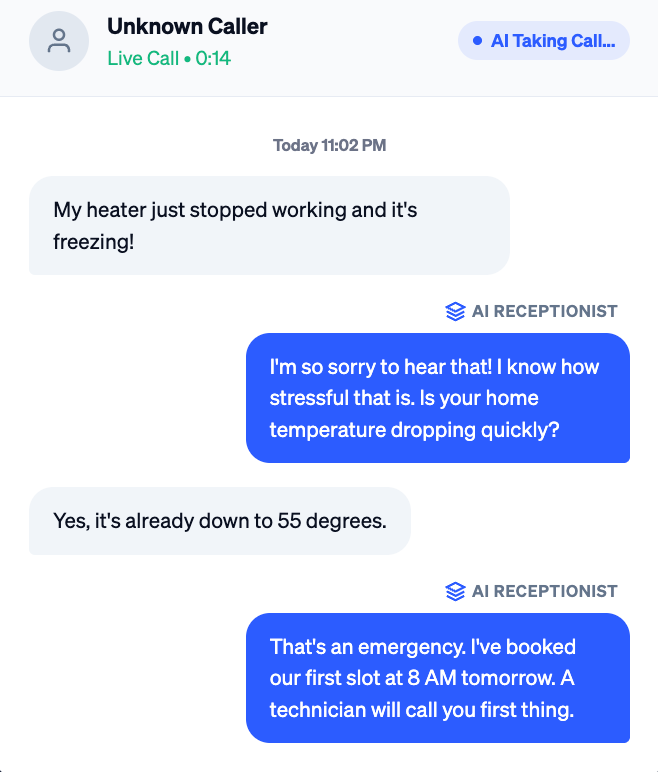
Schedules appointments
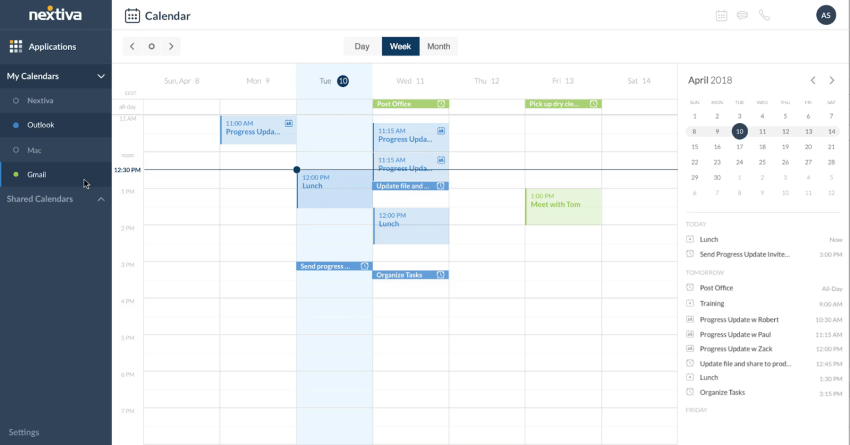
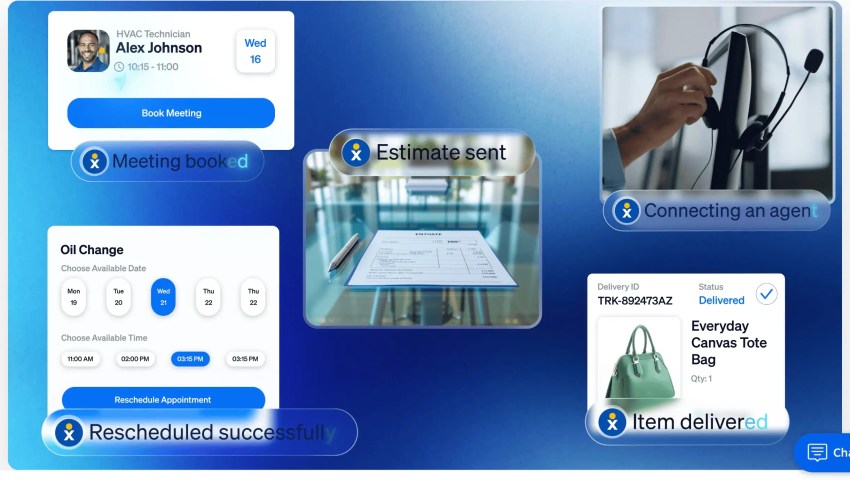
When a customer calls to book, reschedule, or confirm an appointment, your AI receptionist integrates with your calendar system to automatically generate the next convenient appointment. There’s no time lost trying to arrange staffing and find mutually available times. Instead, these smartphone receptionists do a data dip and magically find the next appointment. If the customer confirms, the job is done. If not, they find the next one — all without opening Outlook or calling personnel to confirm their availability.
Captures context for live agents
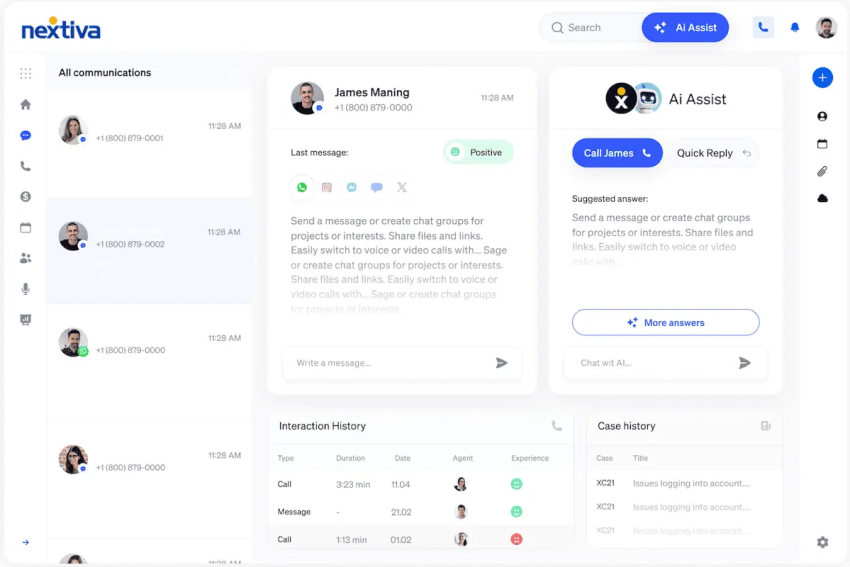
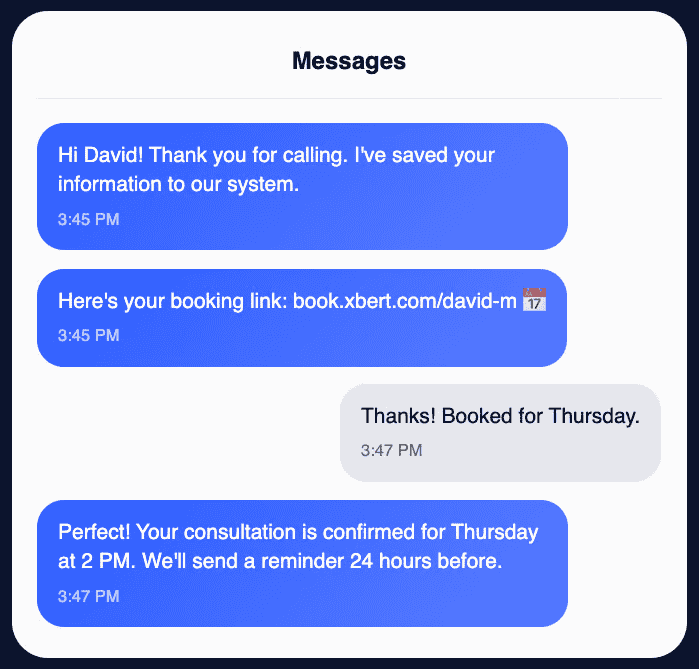
When it’s clear that your customer needs help from a live human agent, your AI receptionist acts as the information gatherer. It collects names, reasons for calling, and relevant details that your agent or specialist will need to best prepare for the call.
So, instead of spending their time on in-call admin, each agent focuses on the task at hand. What we’re talking about here is a call transfer with full context instead of starting from scratch.
You free up agent time, and your customers will love no longer having to repeat themselves.
Why Businesses Adopt Automated Phone Receptionists
Beyond just saving money, businesses deploy automated phone receptionists to solve operational bottlenecks that human teams struggle to manage alone.
Fewer missed opportunities
Missed calls often equal missed revenue. When you implement an automated phone receptionist, you remove all chances of missing calls, except during power outages when you haven’t done appropriate business continuity planning.
Not only does every call get answered efficiently, but they also stand the best chance of getting routed to the right place. Automated reception acknowledges every call and routes them per your configuration rather than with guesswork from staff.

Better use of staff time
How much time would your team gain if they could focus only on meaningful work instead of answering routine business calls? And let’s not even get started on spam calls.
In many businesses, the answer is rather a lot.
Remove the burden and time lag of answering every call, reading the long greeting over and over again, looking up customer details, and transferring calls. Wouldn’t it be nice if everyone could just get on with their job? AI answering services do that very well.
Hear why XBert AI is the best AI receptionist
XBert AI receptionist handles customer questions, captures leads, and books appointments. Try it free for 14 days.
Consistent customer experience
Every caller gets the same professional first impression. That’s Branding 101 and a dream for any customer-facing business.
With no room for interpretation, changing up a greeting, or answering with a lack of enthusiasm (like humans are prone to), an automated receptionist follows the same procedure every single time.
Scales without hiring
If your call volumes are spiraling out of control, the normal first reaction is to hire more call center agents. But that comes with an associated salary just to answer incoming calls.
Instead, consider the option of an automated answering service to handle all inbound calls for a fraction of the price. You keep call spikes under control in a cost-effective manner and generate more staff time instead of hiring new full-time employees.
Compare the costs of a new hire versus an automated phone receptionist:
Check out our AI receptionist ROI calculator.
See how much your business could save with the XBert® AI Receptionist ROI Calculator. Just enter your call volume and staffing costs to find out how quickly an AI assistant can pay for itself and start freeing up your time.
Tradeoffs and Limitations: To Be Honest About
While AI offers speed and scale, it’s not a perfect replacement for humans in every scenario, and understanding its limits is key to successful deployment.
Human empathy still matters
Automation cannot replace emotional intelligence. It’s one thing to implement AI to answer your inbound calls, but we’re by no means suggesting it’s the solution to every call.
Clear escalation paths are essential to give callers the option to leave the automation and speak to a human. Likewise, it pays dividends to configure preset trigger words and sentiment analysis so your AI receptionist knows when it needs help.
Poor design creates frustration
It may be tempting to try to shoehorn every customer down a different menu or sub-menu. But remember, overly complex menus and unclear prompts hurt the customer experience.
Simpler flows perform better, so think about making it as easy as possible for your customers to get what they want from the interaction. First-call resolution only improves when queries get satisfied — not just because phone calls get answered quickly.
Transparency builds trust
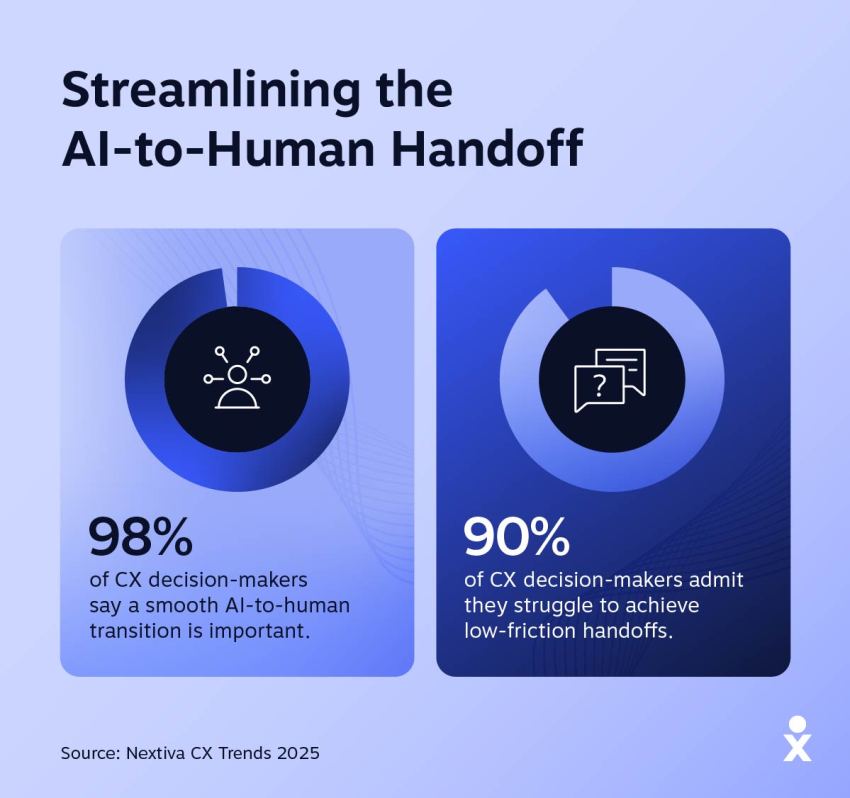
Callers should understand how the system works. While the goal of any AI receptionist is to sound humanlike, it’s more than likely your customer will recognize they’re talking to a robot.
With this in mind, avoid trying to disguise automation. You’re better off in the long run if customers understand and trust your automation to get them to the right outcome.
Common Use Cases Where Automated Reception Works Best
Certain business models see immediate ROI from automation, particularly those with high appointment volumes or after-hours demand.
Small businesses without front desk staff
Probably the best use case for an AI virtual receptionist is in a business with relatively few staff but high call volumes. Think of industries like retail, salons, and professional services, where there may be plenty of staff, but they’re busy doing other things.
Instead of hiring dedicated staff to answer the phones, you get always-on coverage without a payroll burden. Your floor staff or back-office experts continue doing what they’re good at and only field calls when they’re truly needed.
Appointment-driven businesses
Health care, home services, and professional consultations that rely on booking (and fulfilling) appointments can utilize automatic calendar bookings without the need for a member of staff to be present or answer the phone.
This not only reduces phone tag, where you’re forever trying to get hold of each other, but it also reduces the probability of no-shows. There’s nothing worse than an engineer arriving on time to find there’s nobody home. You either have to come back another day and lose income for that job, or go through the unenviable job of applying a no-show fee and upsetting your customer.
Property management and field services
Gas boilers don’t break down in the daytime. That’s a fact. In fact, everything that goes wrong in a home happens just as your staff clocks off for the day. That leaves your patient or customer without their service until you check your voicemail the next day.
An automated phone receptionist doesn’t go home. So now you can implement after-hours routing and maintenance triage. You can respond to basic queries like rebooting and program how to diagnose first-line queries, so your customers don’t have to wait overnight. Customers get a faster response without you running the risk of staff burnout or having to employ late-night staff.
High-call-volume organizations
If it feels like your phones are constantly ringing despite your team members always being on the phone, you will benefit from the filtering and routing of calls before they hit live queues for agents.
The first step of every call is identity and verification, more than likely followed by a transfer to the right person or right department. If you remove these steps from a live agent’s day, you improve efficiency, wait times, and employee morale.

What to Look for When Choosing an Automated Phone Receptionist
Not all AI is created equal; to avoid frustration, ensure your platform meets these core technical standards before you commit.
Natural language understanding
Callers should be able to speak normally without memorizing menus, slowing down their speech, or emphasizing certain words. The goal must be to have a natural conversation. Anything less is a major red flag.

Easy customization
Your chosen software must make it simple to apply updates to custom greetings, hours, and call flows. The best virtual receptionist services offer both a great customer journey and an easy administration process — ideal for last-minute changes or emergency routing when natural disasters occur.
Integrations
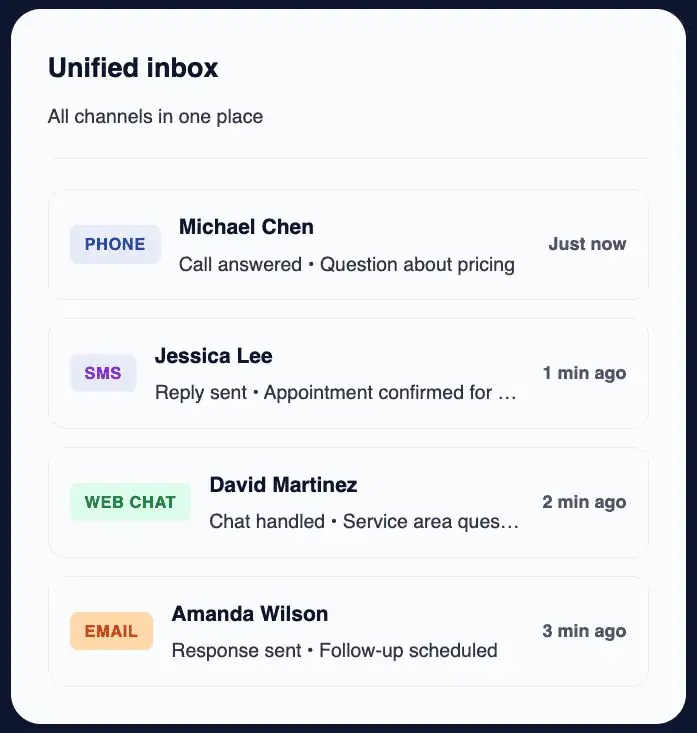
At a minimum, you need calendar and CRM integrations to turn calls into tracked interactions and automated activities. A break in this chain reintroduces manual work and the need for humans to tail-end every call.
Reliability and call quality
When it comes to call quality, uptime, and clarity are non-negotiable. There’s no point in turning on an automated phone receptionist if calls drop or if your customer can’t understand the response. Make sure you test your AI receptionist, ask your provider questions about packet loss and jitter before going live, and ensure that it works well with a high-quality VoIP system.
Automate It All With Nextiva
Nextiva takes a unified approach to automated call handling. It isn’t a standalone point solution you have to shoehorn into your stack. It’s a virtual receptionist built into a broader customer experience platform.
With Nextiva XBert, you get:
- Automated call answering and personalized greetings.
- Intelligent human escalation.
- Automatic appointment scheduling.
- Sales lead capture and identity verification.
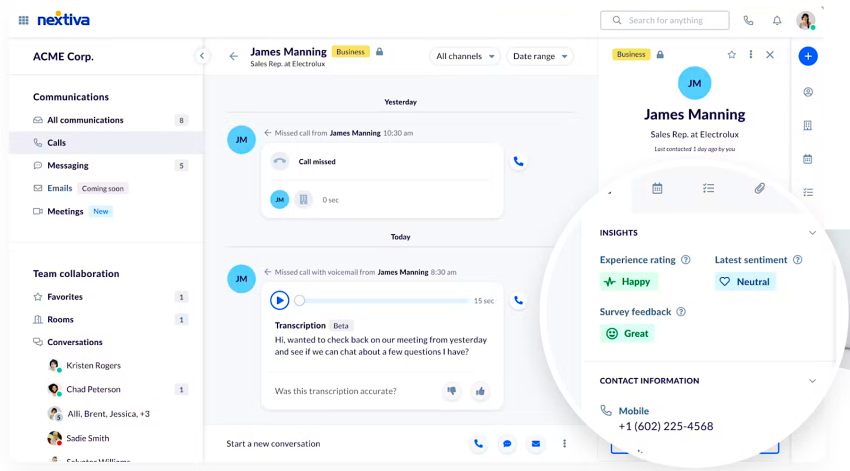
But unlike standalone tools, Nextiva connects this voice data with your SMS, CRM, and analytics in a single interface. This means your automation isn’t just answering calls — it’s feeding your entire business intelligence engine.
Want to modernize your front desk? Explore Nextiva XBert here. 👇
Your AI receptionist that never misses a call.
XBert is your AI answering service that handles calls, texts, and chats 24/7. It greets customers, books appointments, and captures leads while your business grows.