
 VoIP
VoIP  Blog
Blog  Business Communication
  Customer Experience
  Leadership
  Marketing & Sales
  Nextiva News
  Productivity

Retell AI is a strong option for developer teams building voice agents as a product. However, friction often appears after the demo. Production voice AI requires plumbing or stitching together speech-to-text (STT), a model, text-to-speech (TTS), telephony, routing, monitoring, and fallbacks. Every additional hop can add latency, increase cost, and introduce new failure points.
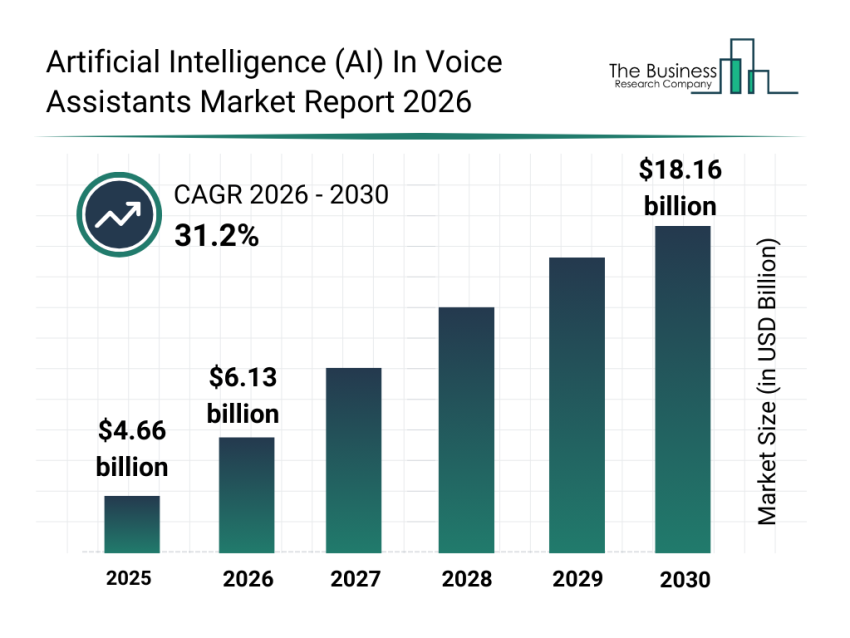
Voice AI (and adjacent chatbots) also isn’t a side experiment anymore. Gartner found that 85% of customer service leaders will explore or pilot customer-facing conversational GenAI, raising the bar for reliability and operational readiness for AI answering services. With the AI voice assistant market growing YOY, it’s smart for businesses to gauge the best tool for their teams.
Teams usually look for Retell AI alternatives for these four reasons:
- Latency: Small delays feel obvious on the phone, especially when callers interrupt.
- Cost: Usage-based enterprise pricing scales quickly once you’re handling real-world volume.
- Compliance: Security reviews focus on data flow, logging, access controls, and auditability (meaning it’s not just how human the voice quality sounds).
- Operational ownership: You still need a plan for outages, edge cases, and escalations when the AI can’t complete the call.
This guide covers the full spectrum of AI alternatives for Retell AI, from developer-first voice APIs to turnkey platforms. Throughout, you’ll see how Nextiva fits as a unified customer experience (CX) platform that helps you bridge the gap between raw voice infrastructure and a business-ready CX.
Retell AI Alternatives: The Top Contenders for 2026
If you like what Retell can do, you’re probably after one of two outcomes. The first is a finished AI receptionist that can answer real customer phone calls. The second is a developer platform where you can design voice logic like software and accept the engineering overhead. The four contenders below map cleanly to those intents so that you can pick a conversational AI platform based on your business needs.
Nextiva XBert
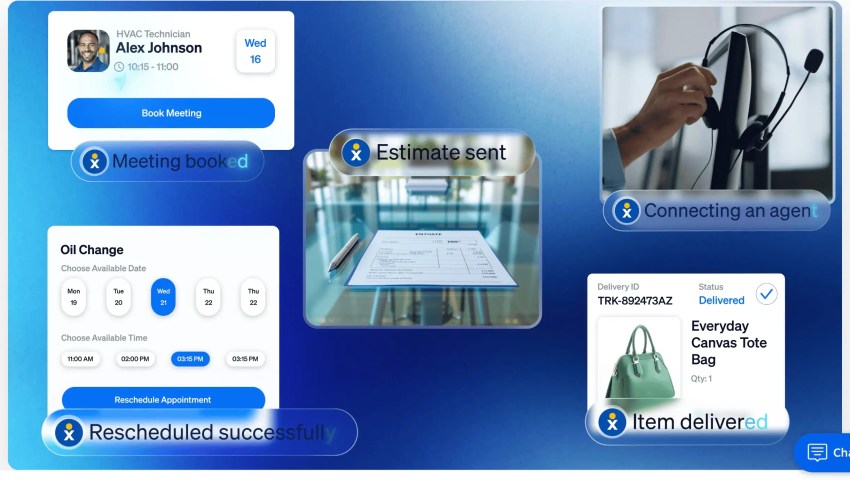
If you want a Retell-like human voice without dev-heavy lifting, XBert is the most straightforward replacement because it’s packaged as more of a business tool than an integration for your tech stack. XBert is built to answer phone calls, texts, and chats, capture lead details, and route issues without you building telephony orchestration from scratch.
Listen to XBert on a patient intake call:
Nextiva XBert is recommended because:
- The system answers every call, text, and chat instantly with a natural voice.
- Pricing is public at $99 per month.
- XBert is 10 to 20 times cheaper than a human receptionist who has a $50K to $70K annual salary.
Best-fit use cases:
- Service businesses that need a 24/7 front desk (e.g., appointments, FAQs, triage, and transfers)
- Small to mid-sized teams that want call handling and routing without building an agent stack
- Teams replacing missed-call chaos with one consistent workflow across voice and messaging
Vapi
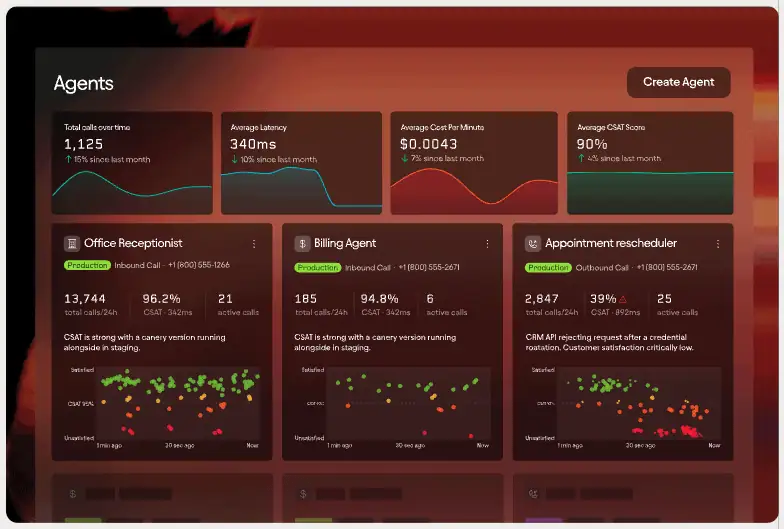
Vapi is the most developer-native option on this list. This AI voice platform is built for technical teams that want to program voice behavior (e.g., prompting, tool calling, integrations, and routing) and treat voice as a product surface. Its pricing is pay-as-you-go, usage-based, with call minutes included, plus concurrent call add-ons.
With a 4.2 rating on G2, it’s a strong contender as an alternative provider. However, G2 reviews include a complaint about latency variability (citing 800 to 1000ms at times, but four to five seconds at other times). Teams looking for more consistent latency may consider Vapi alternatives. Other G2 review snippets call out its easy setup and integration as a plus.
Best-fit use cases:
- Product teams building a voice agent experience with custom logic
- Engineering-led orgs that can own reliability, monitoring, and escalation paths
- Teams that want full control over STT/large language model (LLM)/TTS choices and tool calling
Bland AI
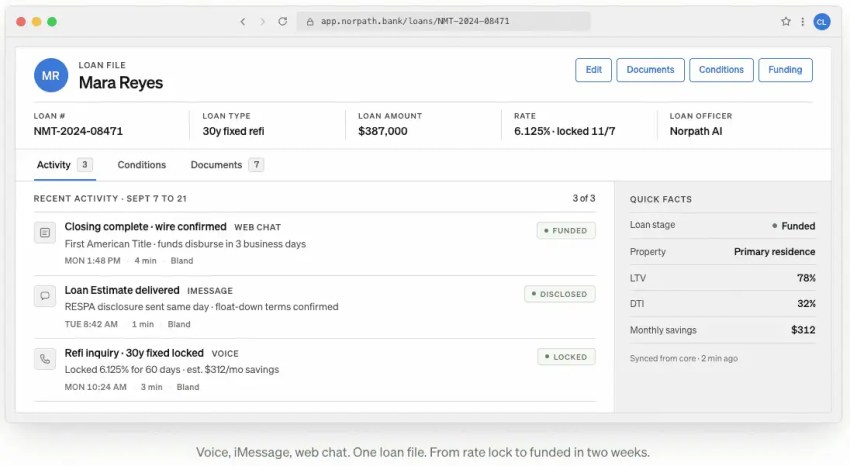
When it comes to Bland AI vs Retell, the former is built for teams that want voice agents and want to run large-scale operations (including outbound), with a strong emphasis on natural pacing and human-like delivery. Bland has a tiered pricing model with talk time rates (e.g., $0.14/min on Start, $0.12/min on Build, $0.11/min on Scale) and explicit caps and concurrency limits per tier.
Best-fit use cases:
- Outbound-heavy operations (e.g., lead follow-up, qualification, and appointment-setting at scale)
- Teams that need volume and concurrency and want transparent rate limits
- Organizations with strong governance around disclosure and compliance (since outbound voice AI increases brand and ethics risk)
Desible.ai
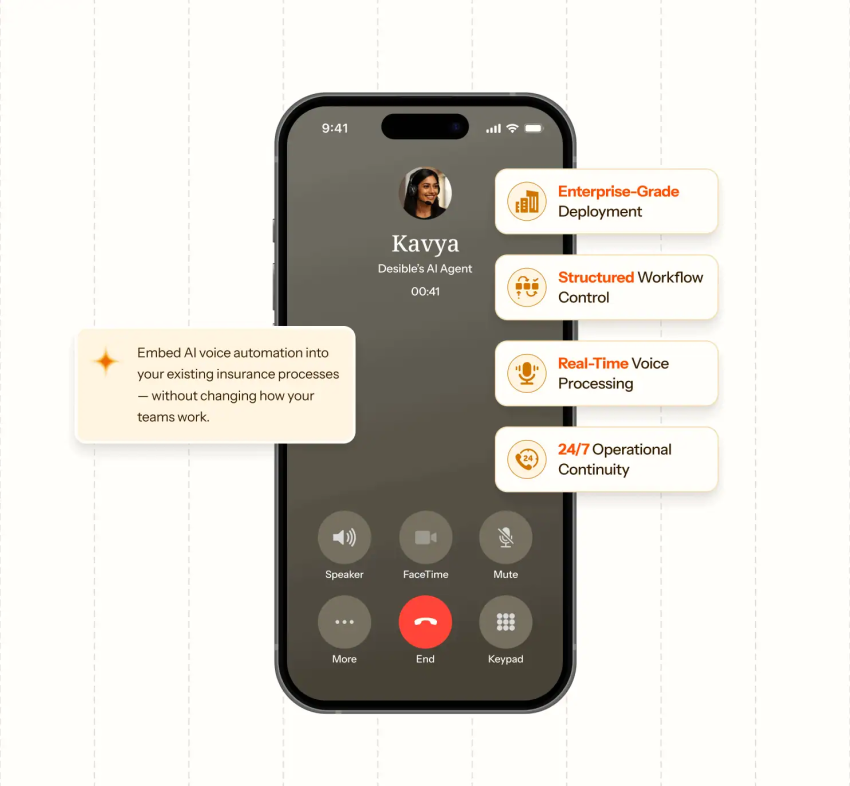
Desible.ai is positioned as an enterprise voice AI platform focused on low latency, multichannel handling, and high-scale throughput. The company claims to handle over 1,000,000 calls every day and supports channels like WhatsApp, SMS, email, and voice.
Best-fit use cases:
- Enterprises that need voice agents across multiple channels
- High-volume environments where low-latency performance is a stated requirement
- Industries with strict workflow needs (e.g., they highlight AI solutions for industries like insurance and finance)
Quick comparison table
| Platform | Best for | What it replaces | Main trade-off |
|---|---|---|---|
| Nextiva XBert | Turnkey AI receptionist for inbound calls and messages | Human receptionist, basic intake, basic routing | Less developer-level customization than pure APIs |
| Vapi | Developer teams building custom voice logic | Retell-like builder and orchestration | You own the plumbing and production reliability |
| Bland AI | High-volume outbound and concurrency | Outbound calling teams, AI call scaling | There’s a risk to governance and ethics |
| Desible | Enterprise-grade multichannel, low-latency posture | Enterprise AI voice agents, Multichannel handling | Likely sales-led procurement with less self-serve clarity |
Key Evaluation Criteria for Voice AI APIs
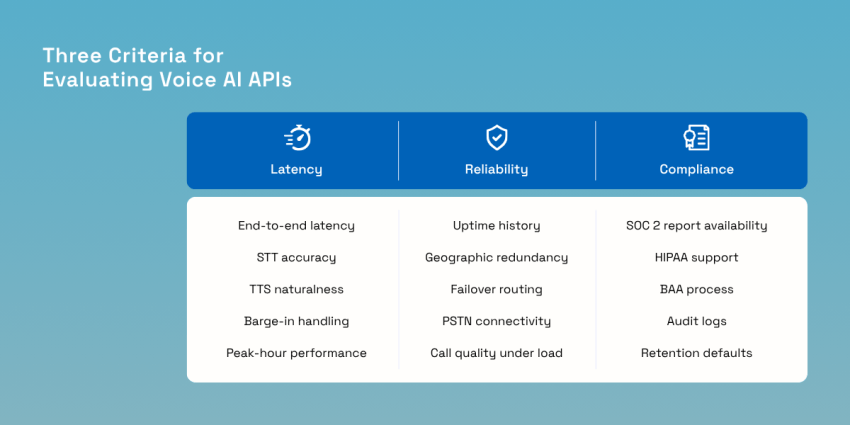
Voice AI works when it feels instant. When choosing the right fit for your team, grade the whole pipeline. That means analyzing speed, uptime, and compliance.
Latency: Bridging the human-AI gap
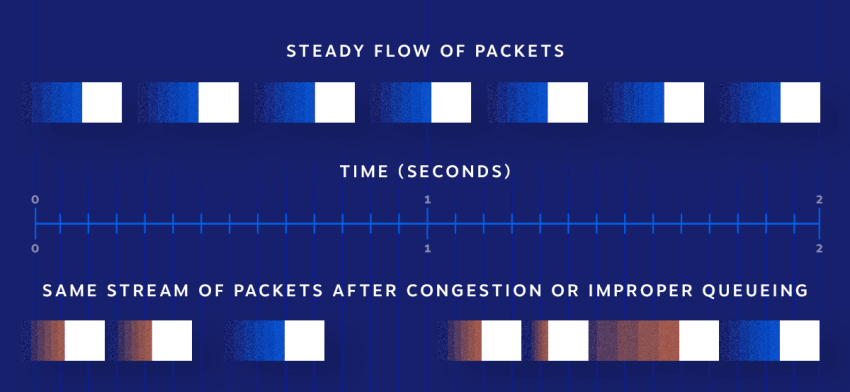
A live call has a chain reaction. Audio hits STT, then the LLM, and then TTS. Each hop between voice interactions adds a delay. If your agent also calls tools (e.g., scheduling), network jitter latency stacks even faster. Voice AI latency matters because human callers interrupt. They can also change direction mid-sentence. If your agent lags, it instantly feels robotic.
What to test:
- End-to-end latency, not component latency
- STT accuracy scores and TTS naturalness
- Barge-in and rapid back-and-forth talk
- Peak-hour performance vs off-peak
- Noisy conditions (e.g., kitchen, street, or retail floor)
Accuracy and naturalness sit inside latency. STT needs to handle accents and noise. Meanwhile, TTS needs voice AI agents to sound human at speed.
Reliability: Is the network business-ready?
API-only stacks can sound great in a demo. However, they can still fail in production. Calls depend on the network path into the public switched telephone network (PSTN). Reliability also depends on failover design and how your vendor handles load.
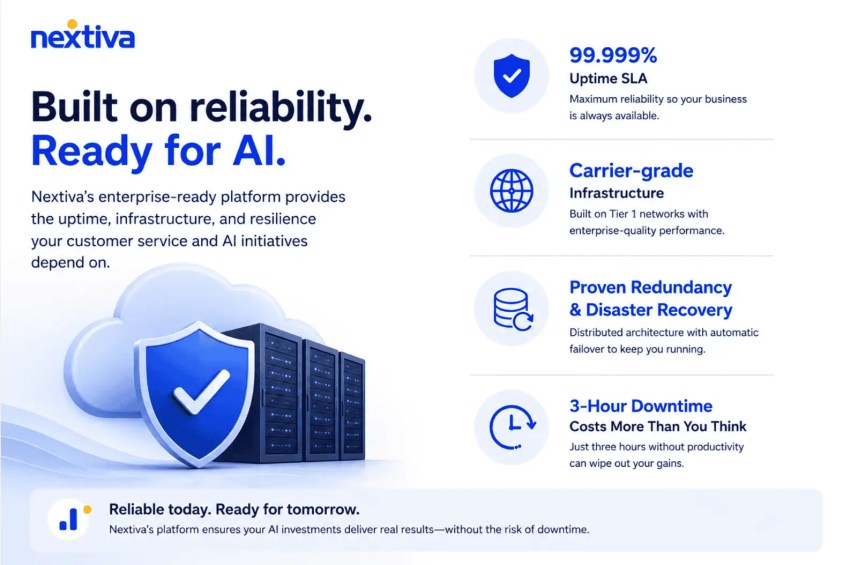
Nextiva leans into infrastructure here. It strives for 99.999% uptime and lists eight points of presence. This matters when your call volume spikes or a region degrades; it reduces the one-weak-link problem in routing.
Check:
- Uptime history and status transparency
- Geographic redundancy and failover routing
- Call quality under load, not one test call
- Carrier-grade PSTN connectivity for jitter control
Compliance: SOC 2 and Health Insurance Portability and Accountability Act (HIPAA) requirements
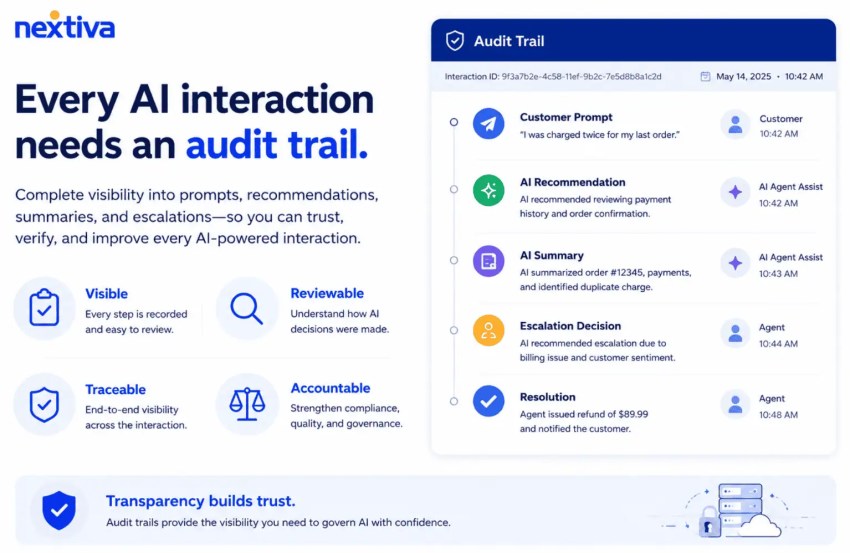
Compliance is where voice AI gets real. Audio, transcripts, and call metadata are sensitive. Enterprise buyers will ask where data flows. They’ll also ask who can access it and how long it’s retained.
When it comes to enterprise AI governance and compliance, start with SOC 2. It’s the baseline signal for security controls and vendor maturity. Do you handle health data? Then you’ll also need HIPAA readiness and often a Business Associate Agreement (BAA).
Verify:
- SOC 2 report availability and scope
- HIPAA support and BAA process, if relevant
- Access controls, metrics, audit logs, and retention defaults
- Exportability for legal and compliance reviews
Nextiva’s network and data centers are SOC 2 audited.
Solving the Tool Sprawl Problem in Voice AI
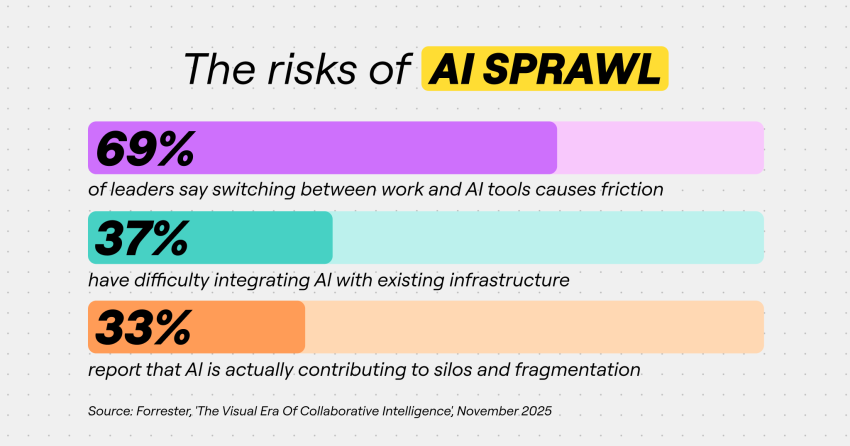
If you build on raw voice APIs, you usually end up with a patchwork stack with one vendor for telephony, one for STT, one for an LLM, one for TTS, plus monitoring, logging, and fallbacks.
That stack can work, but you’ll spend time keeping it working and testing out different apps, so the most practical choice is to stick to one. This is particularly important when choosing your platform, given that Zapier reports that tool sprawl is a major challenge for businesses trying to integrate AI.
The true cost of building on raw APIs
Every extra vendor adds latency and extra failure points. It also adds a security review scope because customer audio and transcripts touch more systems. You don’t notice the cost until you hit call volume.
Consolidating voice, SMS, and AI into one system
When voice, SMS, and routing live on one platform, you reduce handoffs. You also get one place to manage policies, logging, and escalation paths. This matters once you add omnichannel AI engagement.
Using a shared knowledge base also keeps answers consistent across voice and messaging.
Nextiva’s 7-to-1 fewer apps advantage
Most teams want fewer tools that cover more ground, and that’s where Nextiva Contact Center fits as an all-in-one option. It’s the unified alternative for conversational flows on conversational intelligence platforms without a DIY stack.
Building vs Buying: Which Alternative Fits Your Team?
This choice is less about features and more about ownership. If you build on a voice API, you own the system. That includes the good parts (e.g., custom behavior and full control) and the messy parts (e.g., latency tuning, failure handling, monitoring, compliance reviews, and weekend incidents). If you buy a managed platform, you trade some flexibility for speed, stability, and a clearer path to production.
The fastest way to decide is to ask: Is voice AI a product you’re building or a capability you’re operating? If your team earns revenue by shipping voice AI itself, building makes sense. If your team earns revenue by serving customers and voice AI is a lever, buying usually wins.
When to stick with Retell AI or Vapi
Choose an AI voice developer kit approach when you need the agent to behave like software, rather than a receptionist.
You should lean toward Retell AI or Vapi if:
- You need custom toolchains with customer relationship management (CRM) integrations, backend lookups, scheduling systems, and quoting engines tailored to your product.
- You want fine-grained control over prompts, memory, call flows, and interruptions.
- You have engineers who own the full stack, including reliability and observability.
What you’re really signing up for:
- Pipeline ownership: STT to LLM to TTS and everything that glues those pieces together.
- Latency work: Streaming, barge-in, retries, and response timing across vendors.
- Failure design: What happens when the model times out, the tool call fails, the transcript is wrong, or the caller goes off-script?
- Monitoring and QA: Dashboards, logs, call review loops, prompt regression testing, and escalation logic.
- Security review scope: More vendors mean more data paths and more questions during procurement.
This trade is worth it for teams building a differentiated voice product. It can be challenging for teams trying to run day-to-day operations.
When to choose Nextiva or Bland AI
Choose managed AI services for businesses when your priority is real calls, real customer interactions, customer support, and minimal operational drama.
You should choose Nextiva or Bland AI if:
- You want quicker voice AI in production with fewer moving parts.
- You need predictable call handling and support ownership.
- You care about automation, reliability, escalation paths, and a consistent CX.
- You want one system that can handle voice, plus routing, plus context, instead of stitching tools together.
Where the value shows up:
- Speed to production: You spend time on scripts and routing, not infrastructure.
- Fewer vendors: Less integration fragility and fewer points of failure.
- Clear accountability: When something breaks, you know who owns it.
- Operational consistency: Better fit for teams that care about outcomes, not tooling.
This is how most operations leaders deploy voice AI. They buy a system that works, then they optimize it to fit their needs.
Deployment timelines: Days vs months
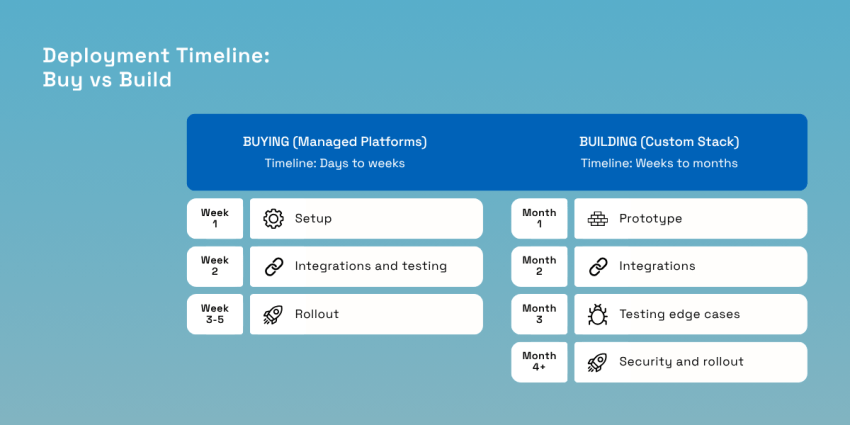
With buying, the timeline can be days or weeks once your scripts and routing rules are clear. Custom API builds often take months because you have to wire systems, test failure modes, and pass a security review. That gap is why teams pick Nextiva when they need expert setup and support teams, plus production readiness. Buying can be fast because the plumbing is done. Building takes longer because you’re designing for failure, scalability, and compliance.
Buying (days to weeks)
- Week 1: Scripts, routing rules, escalation paths, and success criteria
- Week 2: Configuration, integrations, call testing, and staff training
- Weeks 3-5: Limited rollout, QA, tuning, then full deployment
Buying goes faster when your requirements are clear, and your team can make decisions quickly.
Building (weeks to months)
- Month 1: Vendor selection, architecture, and initial prototype
- Month 2: Integrations, tool calling, monitoring, and fallbacks
- Month 3: Load testing, barge-in tuning, and edge-case handling
- Month 4+: Security review, compliance gates, and rollout planning
The timeline stretches because a voice agent is a live system that must perform under pressure.
You’re dealing with real-time audio, unpredictable callers, and failure modes you don’t see in a demo. You need guardrails and templates for when the transcript is wrong, when the model hesitates, when the tool call fails, or when the caller goes off-script.
On top of that, you’re designing an experience. How fast should the agent respond? When should it interrupt? When should voice automation transfer to a human? Those decisions shape whether the call feels smooth or frustrating, and they take time to get right.
The End of Busywork Starts Here
XBert answers calls, handles chats, books appointments, and resolves issues — all on its own. An AI employee trained on your business, so your team can focus on what actually moves the needle.
Retell AI Alternatives FAQs
Retell AI is a developer API, and you need engineering to productionize it. Nextiva is a comprehensive communications stack that includes a private branch exchange, AI receptionist workflows, and CRM integration. For most small teams, this lowers the total cost and shortens the time to launch.
Nextiva runs a carrier-grade architecture with eight data centers and strives to ensure 99.999% uptime. This reduces the risk of single-vendor outages and regional failures. It also gives you one support path when something breaks.
Healthcare teams should prioritize vendors with SOC 2 controls and HIPAA readiness. Enterprise options like Nextiva and Bland AI are more likely to support formal security reviews, audit logs, and retention controls. Always confirm the scope and BAAs before deployment.
A voice API gives you the building blocks for STT, TTS, and agent logic. You still need telephony integration, routing, logging, and failover. An AI receptionist is a packaged system that integrates the phone layer and call-handling logic into a single workflow.