

 Customer Experience
  Blog
Blog  Business Communication
  Leadership
  Marketing & Sales
  Nextiva News
  Productivity
  VoIP
VoIP 

If you want to close more deals, re-engage customers, and prevent churn, digital customer engagement data can be a valuable tool, but only if you know how to access it and what to look for.
The right insights can help you shape everything, including your marketing campaign, user experience, and sales pitches. They can be critical for strategic decision-making, allowing you to prioritize changes that will improve the customer experience and your bottom line.
Reliably tracking each customer interaction and interpreting them is critical and requires the right customer engagement analytics platforms and strategies. That’s what we’ll discuss today.
What Is Customer Engagement Analytics?
Customer engagement analytics is the collection and analysis of interaction data across all your channels (website, product usage, email, SMS messaging, support tickets, and phone calls) to understand customer behavior, track how actively customers interact with your business, and fix sources of friction.
Unlike one-off surveys, customer engagement analytics looks at behavioral patterns and journey signals over time. It helps you see where customers get stuck and which interactions are linked to conversion, retention, churn, or expansion.
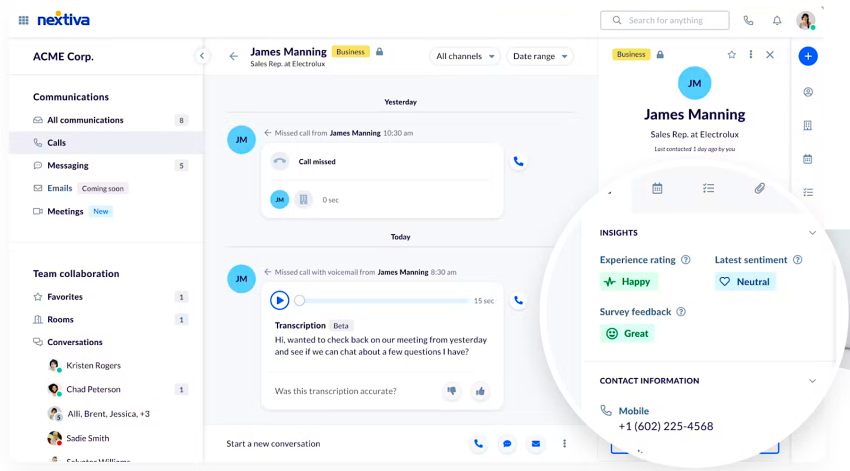
For example, say your SaaS company sees higher churn among small-business customers. Exit surveys might show that these customers “aren’t getting enough value” from the product. But engagement analytics could reveal a more specific pattern: unlike enterprise users, small-business customers rarely use a key feature tied to long-term retention.
Further analysis might show why. Enterprise customers receive dedicated onboarding that introduces this feature, while small-business customers are left to find it on their own. That insight gives you a practical path forward: improve onboarding, adjust in-product messaging, simplify navigation, or trigger targeted follow-ups when customers miss important activation steps.
The goal is to turn customer data into specific actions. With the right analytics tools, teams can improve customer journeys, personalize outreach, reduce friction, and build a stronger customer engagement strategy.
Customer Engagement Analytics vs. Customer Service Analytics
The terms customer engagement analytics and customer service analytics are sometimes used interchangeably, and they can include overlapping metrics. But they serve different purposes.
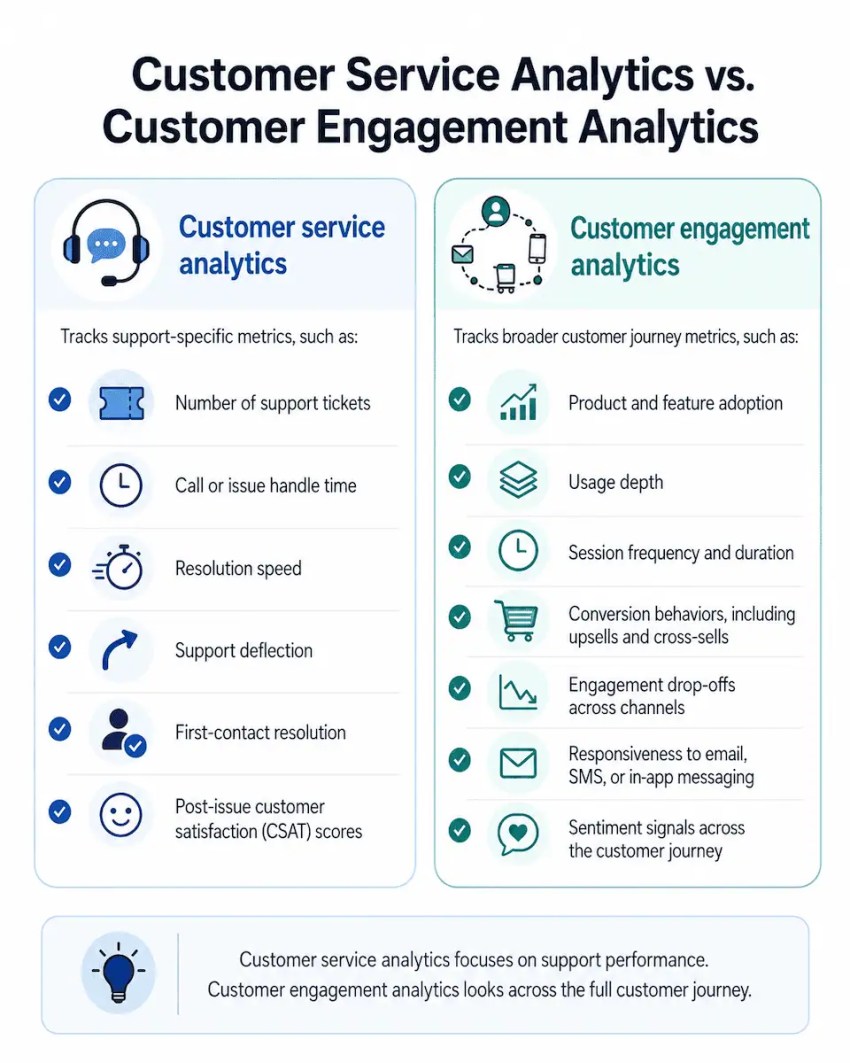
Customer service analytics focuses on how well your team handles support interactions. Customer engagement metrics looks at how customers interact with your business across the full journey, including before and after they need support.
What customer service analytics typically measure
Customer service analytics tracks support-specific metrics, such as:
- Number of support tickets
- Call or issue handle time
- Resolution speed
- Support deflection
- First-contact resolution
- Post-issue customer satisfaction (CSAT) scores
These metrics help teams understand the quality, speed, and efficiency of customer service across channels like phone, email, live chat, social media, and messaging.
What customer engagement analytics measure
Customer engagement analytics focuses on the broader customer journey. It tracks behavioral and interaction signals that show how customers use your product, respond to outreach, move through the buying journey, and stay connected to your business.
Common customer engagement metrics include:
- Product and feature adoption
- Usage depth
- Session frequency and duration
- Conversion behaviors, including upsells and cross-sells
- Engagement drop-offs across channels
- Responsiveness to email, SMS, or in-app messaging
- Sentiment signals across the customer journey
These metrics help teams understand where customers are engaged, where they lose momentum, and which interactions are connected to retention, loyalty, or churn.
| Category | Customer service analytics | Customer engagement analytics |
|---|---|---|
| Main focus | Support interactions | Full customer journey |
| Primary question | How well did we handle the issue? | How actively are customers interacting with us? |
| Common teams | Support, CX, contact center | Marketing, sales, product, CX, customer success |
| Typical metrics | Tickets, handle time, resolution speed, CSAT | Adoption, usage, conversions, responsiveness, churn signals |
| Best used for | Improving service quality | Improving engagement, retention, and growth |
Why the difference matters
The difference matters because customer service analytics usually tells you how well you handled a problem after it happened. Customer engagement analytics helps you spot patterns that may prevent problems from happening in the first place.
For example, a SaaS company might use customer service analytics to understand how satisfied customers are after technical support interactions. But it might use customer engagement analytics to see whether customers are adopting key features, responding to onboarding messages, or showing early signs of churn.
Both types of data analytics are valuable. Customer service analytics helps improve support performance, while customer engagement analytics helps teams make better decisions across marketing, sales, product, customer success, and support.
Why Customer Engagement Analytics Matters to Businesses
Engagement analytics matters because it shows you how customers behave before they buy, renew, churn, or expand. By turning interaction data into actionable insights, businesses can improve customer experiences.
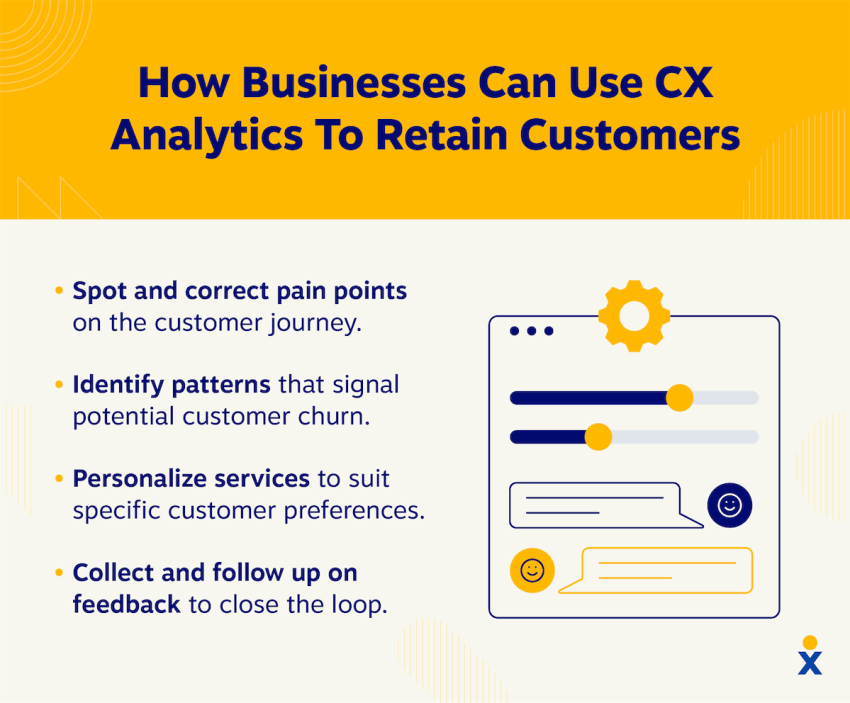
Here are five strong benefits to using customer engagement analytics platforms.
1. Spot early signs of churn or disengagement
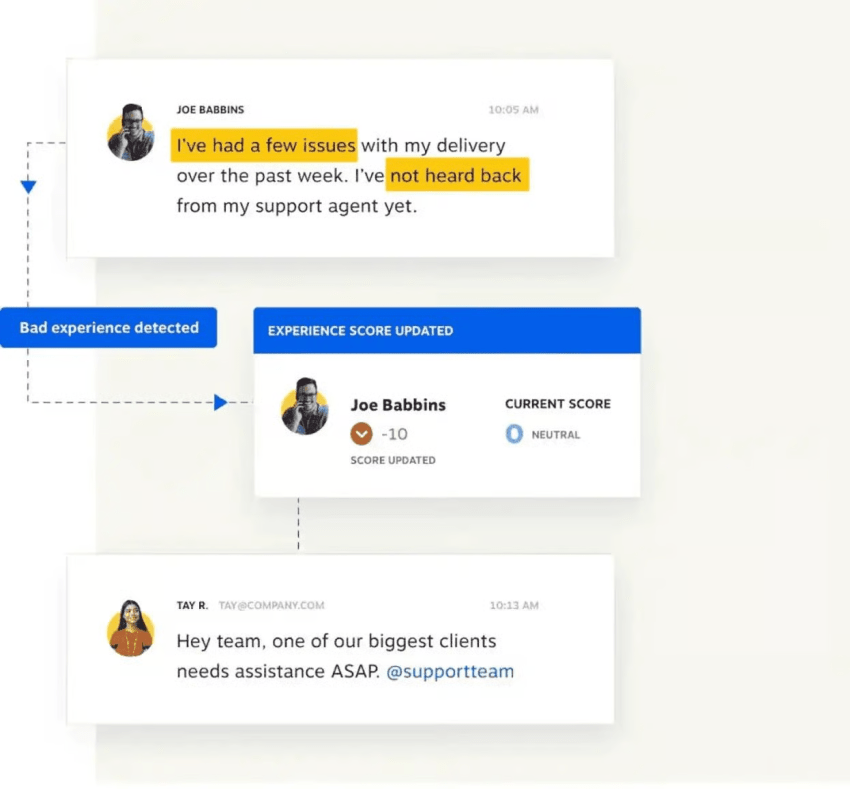
Engagement is your earliest warning system. By the time a customer files a cancellation request, your window to salvage the relationship has already narrowed. Engagement metrics help you identify customer churn risk before it becomes a renewal conversation or a complaint.
In practice, you might discover that a client’s usage dropped sharply after a support interaction, which is a strong signal that something went wrong. That’s the moment for their customer success manager to reach out proactively, offer a walkthrough, or address unresolved friction.
You can also use engagement data to pinpoint the exact drop-off moments in the customer journey, giving your team the lead time to intervene before the relationship deteriorates.
2. Improve conversion, retention, and lifetime value
Better engagement drives better unit economics (the revenues and costs associated with a single unit of your business, i.e. one customer). Higher retention and deeper product adoption increase customer lifetime value while reducing pressure to recoup acquisition costs quickly. When great customers stay longer, you can afford to invest more in acquiring them, giving your team more flexibility to target the right audience without sacrificing margin.
Engagement analytics also strengthen your forecasting capabilities. With the right behavioral data, you can predict which customers are likely to convert, expand, or churn and then act accordingly rather than waiting for the outcome.
3. Personalize customer experiences
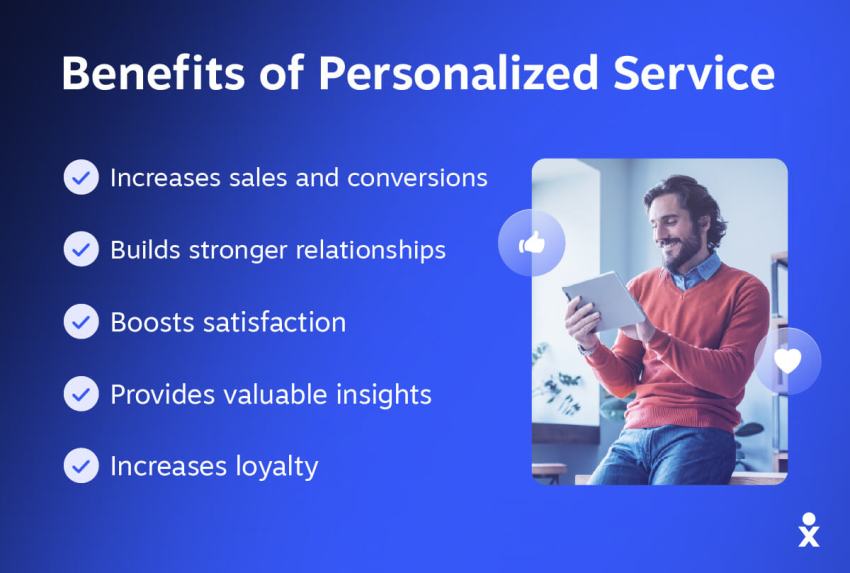
Personalization built on assumptions rarely holds up. A good customer engagement metric let you design experiences based on what customers actually do: which features they adopt, where they get stuck, and how their behavior evolves over time. That foundation makes it possible to send the right nudge to the right person at the right moment, increasing adoption and retention without relying on guesswork.
4. Make faster decisions with less guesswork
Too many teams operate without clarity on which features customers care about and which friction points actually matter. Engagement analytics changes that. You can assess which parts of the customer journey help or hurt the user experience, then prioritize what to fix, scale, or develop based on real behavioral trends, not assumptions.
5. Connect engagement to revenue and unit economics
Engagement data becomes most powerful when it’s tied directly to business outcomes. Rather than treating engagement as a vanity metric, use it to inform product improvements, guide lifecycle and journey orchestration, and drive smarter resource allocation.
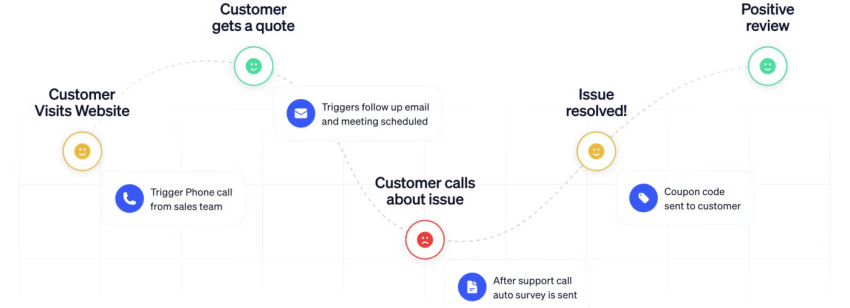
When you know which behaviors correlate with expansion and which predict churn, every decision—from feature investment to CSM outreach—is grounded in evidence.
Common Use Cases Across the Customer Journey
There are plenty of ways your team can benefit from customer engagement analytics. Let’s look at some of the most powerful use cases throughout the entire user experience.
Acquisition and conversion
During the acquisition and initial conversion stage, you can identify which traffic sources, web pages, and calls to action lead to high-intent behaviors. You can use this to fix high drop-off rates in sign-ups or checkouts to improve conversion rates.
For example, you might discover that a disproportionately high number of users clicked on a paid ad but then dropped off at your landing page and never returned. After running several tests to assess the high bounce rate, you discover that the landing page doesn’t provide enough information to drive demo bookings. So, you add a video demo to the landing page, which solves the problem.
Onboarding and activation
During the initial onboarding stage, use engagement analytics to detect where new users stall. When you do, you can automatically trigger CSM outreach, guides, or in-product assistance with tutorials.
You also want to track the time-to-first value and look for potential blockers. If onboarding multiple end users is time-consuming, you might offer a streamlined onboarding experience. If there are significant blockers while clients build custom APIs, you might determine whether you are able to develop integrations for the most popular tools.
Finding ways to increase time-to-value and help customers quickly get the most out of your platform is a promising sign for long-term retention.
Product adoption and expansion
As customers start actually using the product, it’s critical to ensure that you’re watching for critical engagement markers. Carefully measure feature adoption, and route users to the next best action. Let’s say that you sell invoicing software. Once customers start sending their invoices, you can show them how to automate late payment reminders or how to sync their invoices with their accounting software. This increases the value they get from your software.
It is also important to identify accounts with high usage depth. If customers keep hitting the upper levels of their plans, your CSM should reach out with an upsell.
Support and experience improvement
Ongoing experience and support improvements can directly impact the overall customer perception and usage of your brand.
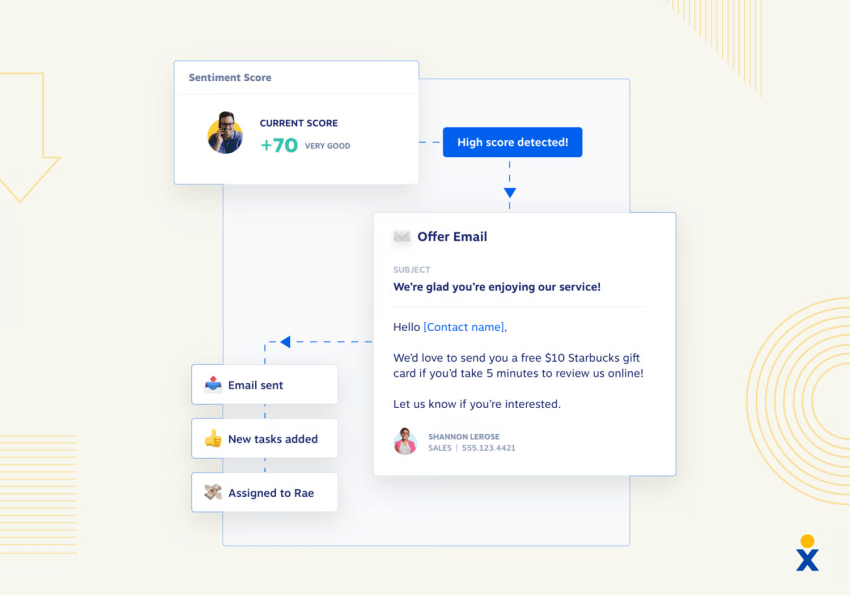
Use customer engagement analytics to connect engagement drops to rising issues, such as confusing feature changes, service outages, or poor handoffs from sales to CSMs or account managers.
Retention and winback
Reducing churn and improving renewal rates are priorities for many businesses, and customer engagement strategies can help achieve those goals. Use analytics to build churn-risk segments based on declines in usage recency or frequency. Customers starting to use your product less often or not using your product at all before renewal are red flags to watch for.
These actions should trigger winback campaigns to re-engage customers or notify your customer success team that outreach is needed. When you have the right interventions in place, you can catch inactivity before it becomes a cancellation.
Top Customer Engagement Metrics to Monitor and Why
Having the right analytics tool is only the first step. You also need to know which key metrics to track. Let’s take a look at the customer engagement KPIs you’ll want to monitor.
1. Net promoter score
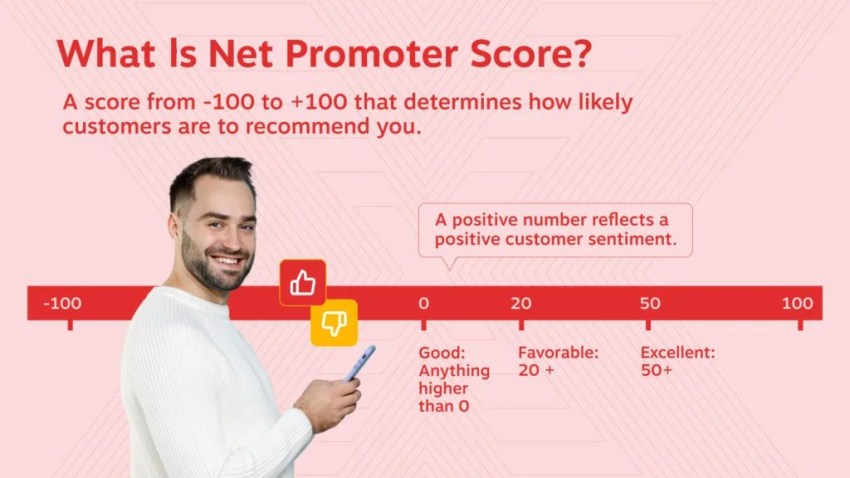
Net Promoter Score (NPS) measures long-term brand advocacy and is an important loyalty signal. It’s a survey-based metric that tells you how likely customers are to refer others to your company through word-of-mouth marketing.
Use NPS to segment promoters versus detractors, and then compare their actual behavior, including adoption, churn, and referrals.
2. Customer satisfaction score
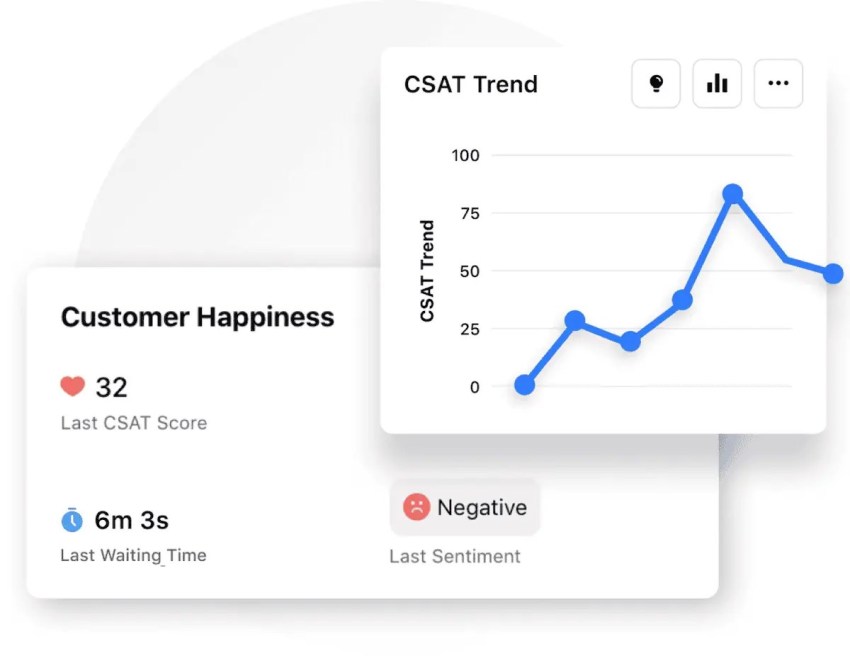
Your CSAT score is another customer feedback metric that measures satisfaction with a specific moment or interaction.
Use this metric to validate whether support changes actually improved customers’ experience as well as usage.
3. Customer effort score
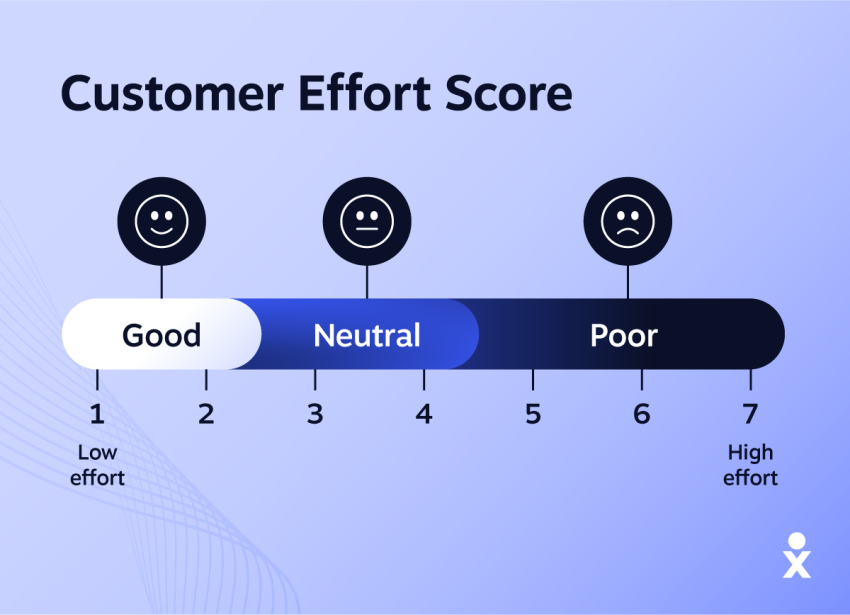
Your CES measures the amount of effort required of customers to complete a single task, such as finding information they need, signing up for a demo, or resolving an issue. For example, it is not ideal if customers have to place six phone calls and send three emails to resolve a single issue.
Use this metric to pinpoint friction-heavy journeys that silently drive churn and to adjust those experiences according to your customers’ needs.
4. Churn rate
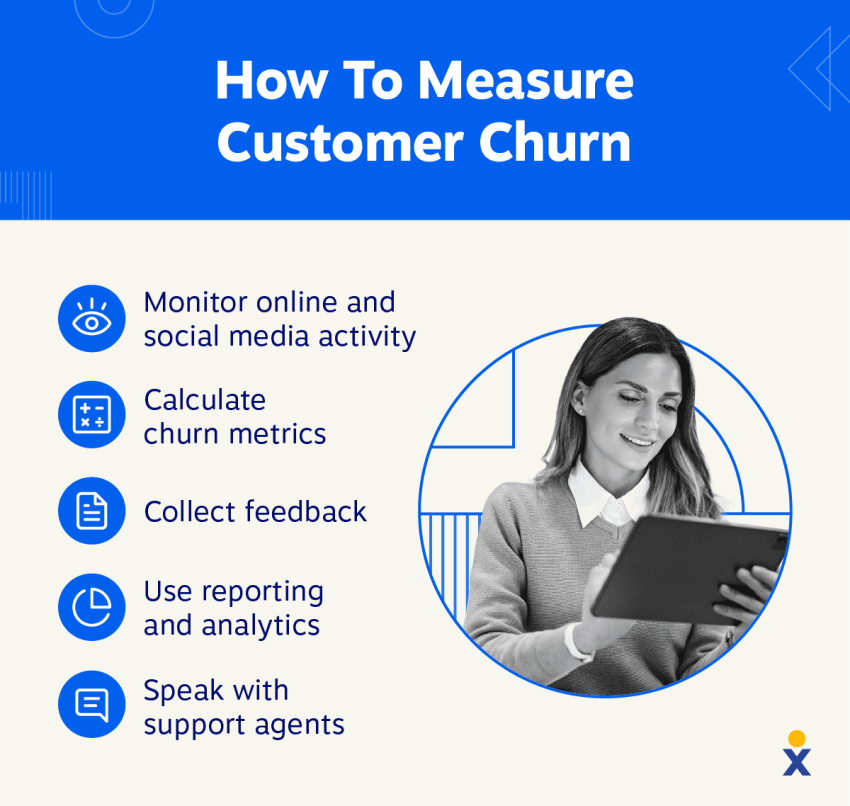
Track the number of customers who leave or cancel over a set period of time. Use it as an outcome metric, and then work backward to identify leading indicators.
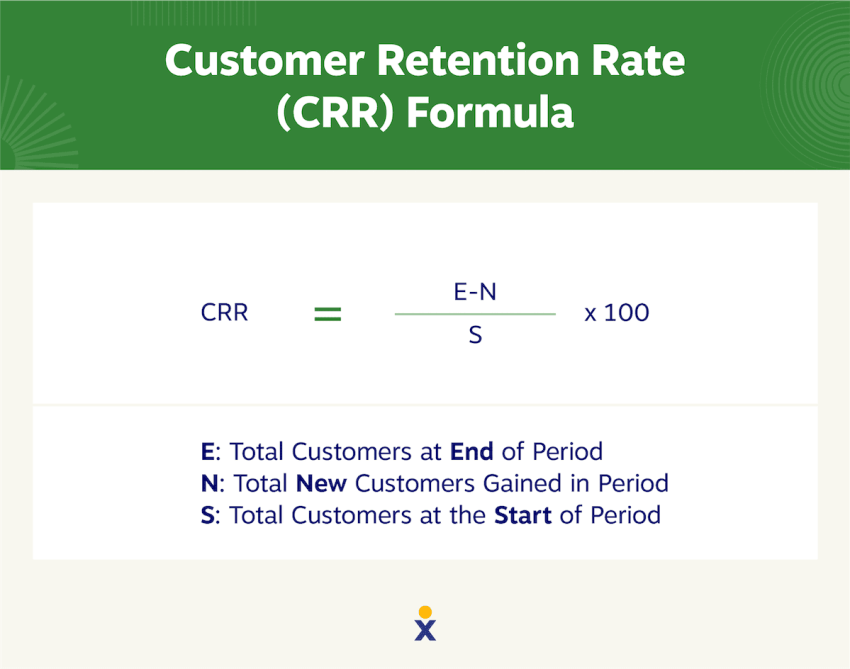
5. Retention rate
On the flip side, measure the number of users who stay active over time. Use your customer retention rate to benchmark cohorts by segment, acquisition source, plan, and onboarding path. You can identify which aspects of the customer experience positively contribute to customer loyalty.
6. Conversion rate
Track the percentage of customers who complete a desired action in your journey, such as a trial sign-up, demo request, or upgrade.
Use this data to optimize key funnel steps and prioritize fixes with the biggest revenue impact. This can help you convert more new customers and increase repeat purchases or contract renewals.
7. Feature adoption
Customer analytics help you measure which features are used and identify how consistently they’re used.
This can be critical to identifying your sticky value drivers and determining which features customers ignore or misunderstand.
8. Session frequency
Session frequency measures how often users return to use your product, which varies significantly depending on the type of product. Therefore, it is important to determine your customers’ standard baselines.
This is a health signal for habit formation and product market fit strength.
9. Session duration
Session duration helps you track how long users engage in each session on average.
This is a metric that should be used holistically with other data. Long session usage could mean that customers are getting value from your tool and spending a lot of time using it, but it could also mean they’re taking too long to complete simple tasks due to confusion.
Pair this metric with task-completion and feature-adoption data for the best results.
10. Engagement recency
This metric measures how recently someone engaged across different channels or within your product. You can use it for early churn detection, allowing you to intervene before a customer fully lapses.
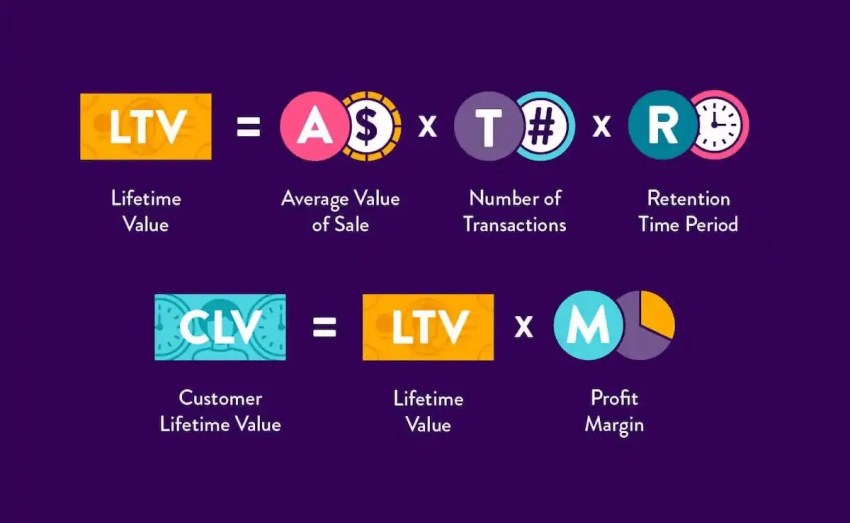
11. Customer lifetime value
Customer lifetime value measures the projected value over the duration of your average customer relationship. Use it to focus on retention and experience investments in the segments that impact your revenue.
How to Tell If Your Customer Engagement Analytics Is Working
There’s always room for improvement, but it helps to know when you’ve crossed the threshold into good. These are the signs you’re on the right track.
Data is connected across channels
Your engagement picture is only as complete as the data feeding it. If you’re tracking behavior in your product but not in your emails or support interactions, you’re working with blind spots. Connected data means a customer’s journey is visible end-to-end, so a drop in product usage can be read alongside a recent support ticket, not in isolation.
Metrics are tied to business goals
A reliable sign that your analytics are working: You can explain what each metric signals and what action it triggers. Engagement data shouldn’t exist for its own sake. When your metrics are tied to outcomes—conversion, expansion, retention—your team knows not just what’s happening, but why it matters and what to do about it.
Teams can see trends, not just raw numbers
Raw numbers tell you where you are. Trends tell you where you’re headed. When your analytics surface engagement patterns over time, for example rising adoption or seasonal drop-off, teams can detect warning signs early and respond quickly, rather than reacting after the damage is done.
Insights lead to specific actions
Good analytics close the loop between data and decisions. If a dashboard produces a report that no one acts on, something is broken. A strong signal that your system is working: engagement signals are connected to outcomes, and your team can identify what steps to take to influence a more positive result, whether that’s a CSM reaching out or a product fix.
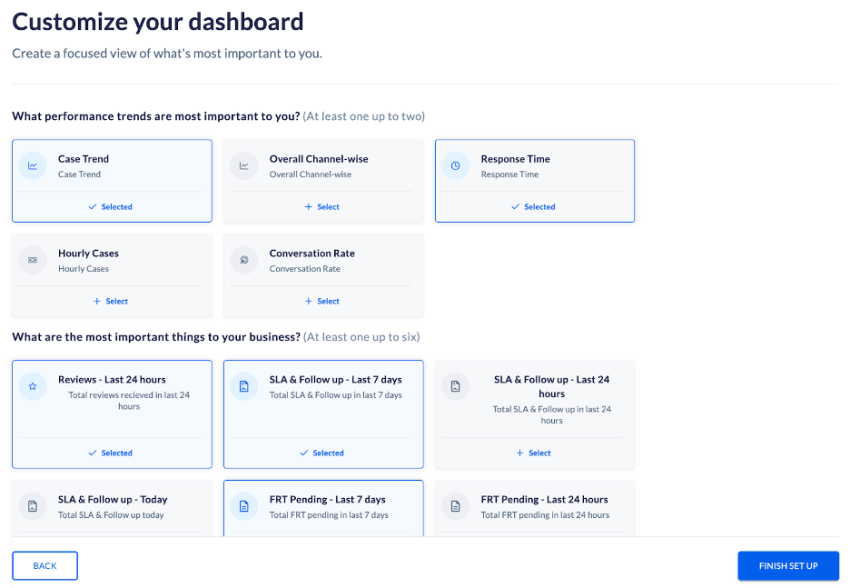
Dashboards are simple enough for non-analysts to use
If only your data team can interpret your engagement dashboards, the insights won’t travel far enough to matter. Effective analytics tools present information clearly enough that a customer success manager or a marketer can draw their own conclusions and act without waiting for a data pull.
Teams can segment by behavior, lifecycle stage, or customer value
You’ve likely identified which metrics matter most when you can go beyond aggregate trends and ask more specific questions, such as: How are enterprise customers engaging compared to SMBs? or What does behavior look like in the 30 days before churn? Segmentation by behavior, lifecycle stage, or customer value turns broad patterns into targeted, actionable intelligence.
Customer Engagement Data Sources and Set-Up Guidance
If you want to measure client engagement data and track user behavior, you need the right customer engagement platform and data sources.
Where engagement data usually lives
You can typically find customer engagement data in the following sources:
- Product analytics: Houses data about events, feature usage, and customer cohorts
- Web analytics: Holds information about traffic sources, pages per session, and conversions
- Messaging analytics: Provides context about email opens, SMS opens, push notification opens, clicks, and response timing
- Customer support and voice channels: Contains data such as call transcripts, customer sentiment, cancellation reasons, CSAT metrics, and support ticket data
- CRM: Stores information like customer segments, revenue, and lifecycle stage
How to make it usable
You can use customer engagement software to pull information from all your data sources and combine it into a single platform. For this to be possible, though, you need to do the following:
- Standardize event naming and definitions to provide a single source of truth.
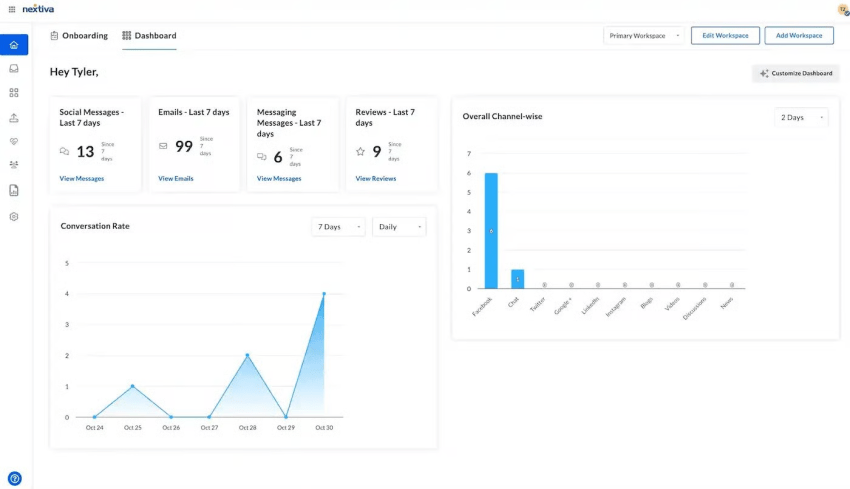
- Build a small engagement health dashboard in your customer engagement tool to identify leading indicators and outcomes.
- Use automation to create action loops, like alerts, segments, or triggers, so data can be used to alter customer behavior when needed.
These steps can help you improve the customer experience at every touchpoint, starting with an AI receptionist’s lead qualification and ending with your CSM’s contract renewal strategies.
How to Use Customer Engagement Analytics
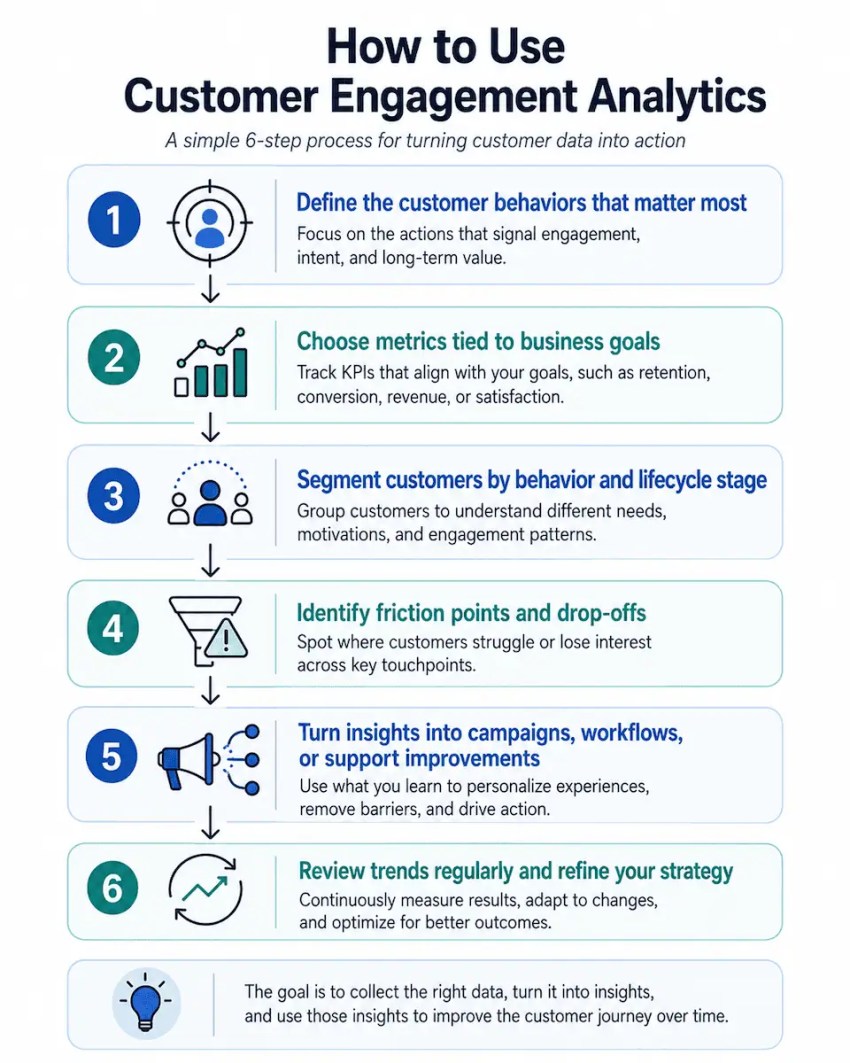
Measuring customer engagement data is only the first step. The value comes from building a system that turns that data into decisions. Here’s how to do it.
Define the customer behaviors that matter most
Start by identifying which behaviors actually signal progress—or risk. Not every action a customer takes is equally meaningful. Log-ins tell you someone showed up; adopting a core feature or sharing the product with a colleague tells you they’re finding value.
Work backwards from your business goals to determine which behaviors correlate with retention, expansion, and conversion. These become your anchor behaviors, the ones worth tracking consistently and responding to deliberately.
Choose metrics tied to business goals
Once you know which behaviors matter, translate them into a focused set of metrics. Resist the pull toward comprehensive dashboards that track everything. A small set of meaningful metrics, reviewed consistently, will outperform a sprawling list that no one owns.
Each metric should answer a specific question relevant to a specific business outcome. If you can’t draw a clear line between a metric and a decision your team might make, it’s probably not worth tracking.
Segment customers by behavior and lifecycle stage
Aggregate data hides as much as it reveals. Someone in their first two weeks has a different customer need than one approaching renewal, and a power user behaves nothing like someone who logs in once a month. Segmenting by behavior or lifecycle stage lets you ask sharper questions and give more relevant responses.
Useful segments might include: customers who haven’t adopted a key feature, accounts showing declining usage, or high-value customers who haven’t expanded. Each segment points toward a different intervention.
Identify friction points and drop-offs
Look for the places where customers disengage or stop altogether. Where do users abandon an onboarding flow? Which features see high trial but low adoption? At what point in the customer lifecycle does usage typically plateau?
These drop-off patterns are often more instructive than success metrics. They tell you where the experience is breaking down and where a targeted fix could have an outsized impact on retention and adoption.
Turn insights into campaigns, workflows, or support improvements
Insights that don’t lead to action have no business value. Build a clear path from what your analytics surface to what your team does next.
For instance, a drop in usage from a specific customer segment might trigger a CSM outreach sequence. A common friction point in onboarding might become a product fix or a new help article. A behavioral pattern that predicts expansion might inform how marketing targets upsell campaigns.
The goal is to make your engagement data operational and embedded in the workflows your teams already use, not siloed in a dashboard someone checks occasionally.
Review trends regularly and refine your strategy
Customer behavior changes and your analytics strategy should evolve with it. Set a regular cadence, like monthly or quarterly, to review trends and pressure-test your metrics, and then ask whether the behaviors you’re tracking still reflect what matters most to the business.
Pay particular attention to what’s changed: new drop-off patterns, segments that are growing or shrinking, etc. These changes often signal something worth investigating. Maybe it’s a product change that’s landing well, maybe it’s a support gap that’s quietly eroding retention.
Turn Customer Conversations into Engagment With Nextiva’s XBert
The goal of engagement metrics isn’t to track everything. That would be impossible and overwhelming. Instead, you need to track the signals that most directly predict retention, revenue, and major obstacles in the customer experience.
Start with a focused set of metrics, define what healthy user engagement looks like for your business, and establish one clear action for each signal. From there, you can expand into deeper segmentation and real-time triggers.
One channel that’s easy to overlook: phone and voice. If calls are a significant touchpoint, those conversations contain engagement data too, but only if you can capture and structure it. That’s where XBert, Nextiva’s AI receptionist, comes in.
XBert turns phone conversations into structured engagement signals by capturing call outcomes, identifying what callers needed, flagging whether issues were resolved, and noting when follow-up is required. That data feeds directly into your routing, reporting, and outreach workflows. Which your team can act on the same way they’d act on any other engagement signal, but without the administrative burden of manual logging.
Want to learn more? Check out how our AI receptionist works.
Your AI receptionist that never misses a call.
XBert is your AI answering service that handles calls, texts, and chats 24/7. It greets customers, books appointments, and captures leads while your business grows.