

 VoIP
VoIP  Blog
Blog  Business Communication
  Customer Experience
  Leadership
  Marketing & Sales
  Nextiva News
  Productivity


Forecasting is a strategic asset that drives efficiency, customer satisfaction, and business growth. If you’re responsible for keeping call center operations running smoothly without overstaffing or understaffing, you need a clear and repeatable forecasting process.
Accurate call center forecasting depends on strong data, the right tools, and a clear understanding of demand patterns. When you get it right, you deliver exceptional customer service, reduce costs, and create a better experience for both customers and agents.
What Is Call Center Forecasting?
Call center forecasting is the process of predicting future customer demand so you can schedule the right number of employees at the right time. It plays a primary role in workforce management, and the process focuses on three primary outcomes:
- Demand prediction: Estimates incoming call volume across voice, chat, email, and multiple channels using historical call volume data.
- Resource optimization: Determines staffing requirements needed to meet service level agreements (SLAs).
- Control operational costs: Reduces idle time from overstaffing and limits overtime caused by understaffing, improving operational efficiency.
Without forecasting, staffing decisions become reactive. With it, you plan ahead and stay in control of performance while maintaining service quality.
How Call Center Forecasting Works?
Call center forecasting works as a continuous cycle that connects historical data, statistical modeling, staffing calculations, and real-time adjustments. Each step feeds into the next, creating accurate forecasts over time rather than a one-time estimate.
1. Data collection and cleaning
The process begins with historical data. Call centers use 13 to 24 months of past interaction data to identify patterns such as seasonality, growth trends, and recurring spikes.
Teams clean the data to remove distortions. They identify anomalies caused by outages, system failures, or one-off events and adjust them to match typical conditions. This step keeps forecasts aligned with real demand instead of rare disruptions.
2. Forecasting method selection
Once the data is structured, statistical models turn past patterns into future demand estimates. The method used depends on how demand behaves in past periods.
Each method applies different forecasting techniques to produce more accurate forecasts, with the same goal of estimating future contact volume as accurately as possible. This strengthens the process of creating forecasts for complex demand patterns.
- Triple exponential smoothing (Holt-Winters): Accounts for both trend and seasonality, which makes it suitable for predictable peak periods such as retail cycles.
- Point-to-point comparison: Compares similar timeframes, such as the same day in a previous week, and works best in stable environments with steady patterns.
- Moving averages: Smooth short-term fluctuations by averaging recent data to reduce noise.
- AI-driven regression: Uses machine learning and auto regression to model complex and non-linear relationships that traditional statistical methods may miss.
- ARIMA (autoregressive integrated moving average): Models trends and autocorrelation in time series data, which supports more complex forecasting scenarios.
- Neural networks: Analyze large datasets and high-frequency data to identify complex patterns, and can improve accuracy when sufficient high-quality data is available.
- MTA (multiple temporal aggregation): Combines short-term and long-term data to improve overall forecast accuracy.
3. Staffing calculation
Forecasted call volume and average handle time (AHT) determine staffing requirements. The Erlang C model converts these inputs into the number of agents required and supports informed staffing choices.
This model calculates how many agents must remain available during specific intervals to meet service level targets, including average response time expectations and other key metrics. It analyzes queue behavior, wait times, and handling capacity, which directly links workload to staffing needs.
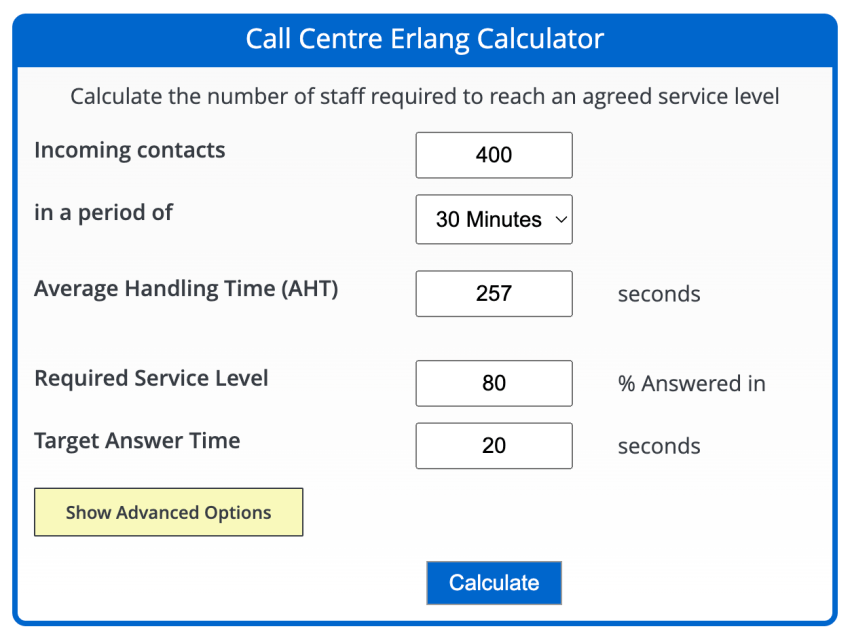
While Erlang C is the industry standard for converting call volume and AHT into staffing requirements, it has limits. Managers also use Erlang A (abandonment), which factors in average customer patience to produce more realistic staffing estimates with a significant impact on planning.
To simplify the process, you can use the Nextiva contact center staffing calculator. It applies these formulas automatically and provides instant, Erlang-based staffing recommendations, including a built-in buffer to help manage agent occupancy and reduce burnout.
4. Shrinkage and real-world adjustment
Operational reality affects staffing availability. Theoretical staffing numbers rarely match real-world conditions. Agents spend part of their time away from handling calls due to breaks, meetings, training sessions, unplanned absences, and other activities that reduce their availability.
Shrinkage represents the gap between the scheduled time and the actual availability. Adjusting for shrinkage increases the number of agents required on the schedule to ensure enough agents remain available to handle live demand. This step aligns staffing plans with actual working conditions.
5. Intraday management and feedback loop
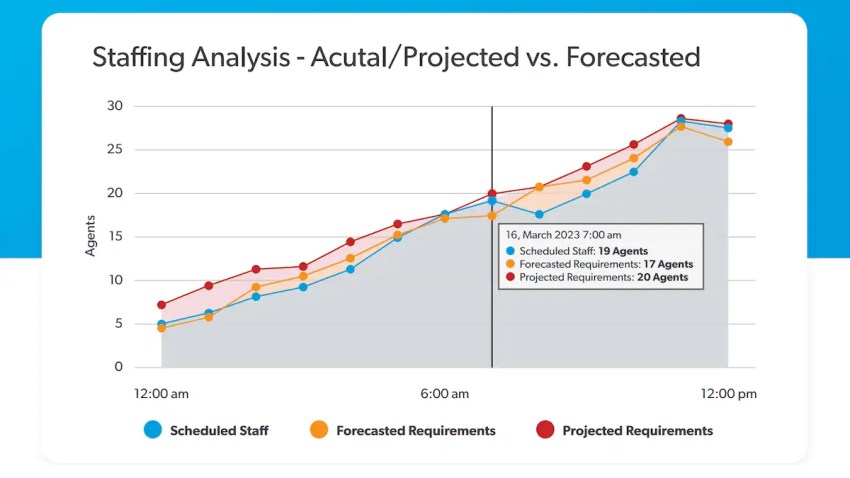
Forecasting does not end once schedules go live. Actual call volume often shifts throughout the day, requiring ongoing monitoring and adjustments. Intraday management tracks real-time performance against the forecast and monitors relevant metrics, highlighting gaps between expected and actual demand.
Over time, these differences form a variance pattern. Feeding this variance back into the forecasting model refines future predictions, making the entire process more accurate with each cycle.

Why Forecasting Is Helpful for Call Centers
Let’s look at three ways forecasting helps call centers.
1) Enhances customer experience
When your staffing levels are spot-on, you have enough call center agents to handle your incoming calls. Adequate staffing also reduces wait times. Customers hate waiting in line when they have an urgent inquiry.
If you can meet (or even exceed) your service levels, customers will remember how helpful and efficient you are compared with competitors who keep them on hold for long periods. By aligning resources with demand, you take the first step toward a great customer experience.
2) Optimizes resource allocation
When you know the right number of agents needed at any given time, you minimize operational costs by avoiding overstaffing during low-demand periods. Instead of keeping agents idle just in case, you know exactly how many full-time equivalents you need for specific shifts.
Not only does your balance sheet look healthier, but you also improve agent productivity and satisfaction. With enough agent resources to handle calls without burnout, you avoid understaffing and overworking.
With accurate forecasting, you ensure balanced workloads and more predictable schedules for agents. You save money, and agents are happier and healthier.
Aids in strategic planning
If you can dig into high-quality performance data, you can support long-term business planning with long-term forecasting. By understanding likely outcomes from upcoming trends and patterns, you can be proactive rather than reactive.
Forecasting also eases the headache of customer urgency by improving budgeting, reporting, and resource planning through accurate predictions of future call volumes.
When you get ahead of the planning curve, you can focus on the day-to-day when you need to the most.
What Needs to Be Forecast?
On the surface, the issue seems simple. How many call center representatives do you need at any one time?
And it is that simple, once you’ve cross-referenced your key metrics and key performance indicators. Only when you thoroughly understand these findings and how they affect how you manage customer interactions can you get a firm figure for how many agents are optimal.
Call volume
Without an expectation about the number of calls your agents will be handling, everything else is null and void. If you run an inbound call center, especially one with high volumes or complex queries, you need to get a handle on genuine call volumes.
Use historical data analysis to predict future inbound and outbound call volumes. If you know how many calls you receive on a typical Monday, Tuesday, and Friday, etc., you can plan for the norm. Dip into your call center analytics, and work your way back through the year to get your average call volumes on set days.
Once you’ve quantified a regular day/week/month, look for the impact of seasonality, marketing campaigns, and product launches. If you know the weeks after Christmas are extra busy because customers are processing returns and refunds, plan these in advance so you can operate your business as usual.
When you’ve got more staff (or more self-service options) available when you need them, everything continues to run smoothly, and you function at your target service level.
Service level targets
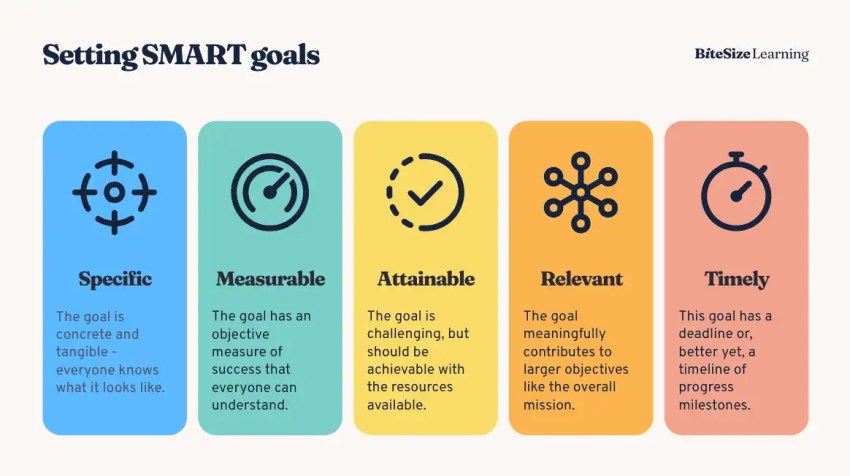
Speaking of service level targets, what do you communicate to customers, and what are your internal goals?
For example, you might define your service level as 80% of calls answered within 20 seconds. Armed with this information, you can determine required staffing levels. If you’re only hitting 70% of calls answered and your average handle time keeps spiking, it’s a clear sign that your forecasting is off.
Monitor and adjust service level goals based on past performance and business objectives. There’s no point in having a goal if you stand no chance of reaching it.
Average handle time
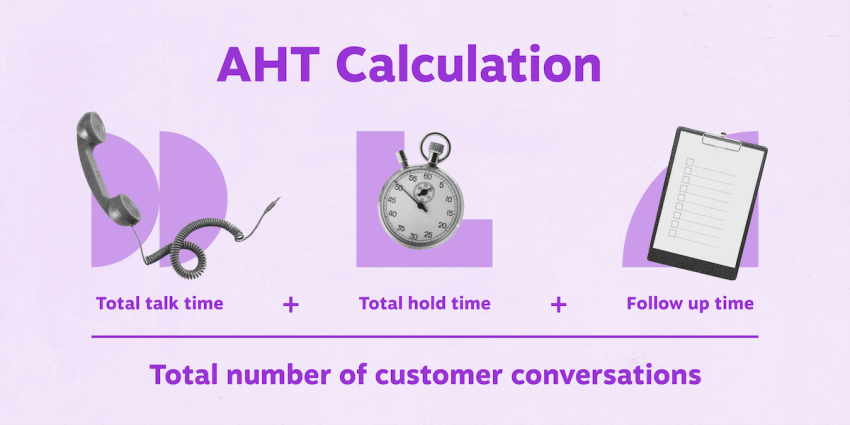
When you have a firm estimate of the average time agents spend on each call, including talk time, hold time, and after-call work, feed this into your forecasting plan. If you can say with confidence that the average length of an unexceptional call is 60 seconds, you can take that number and your number of agents and work out whether you’re understaffed or overstaffed.
Use historical average handle time data adjusted for changes in processes or agent training too. If you can see a clear pattern when you implement changes, factor this in for planned training and special events.
Agent availability
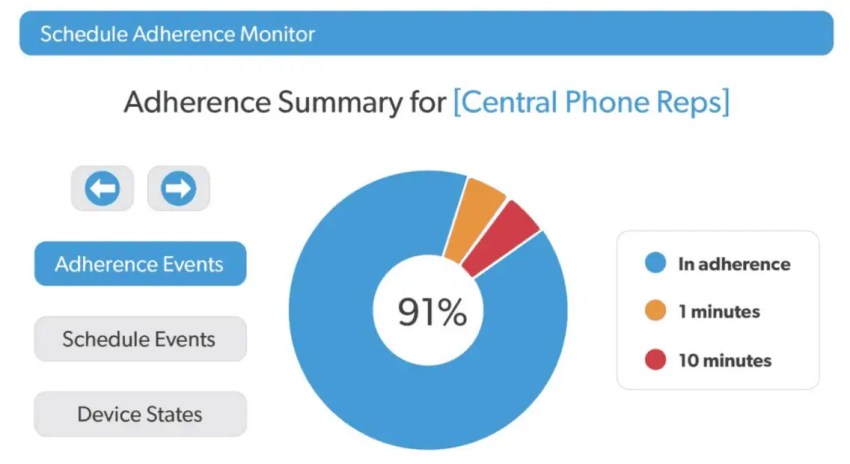
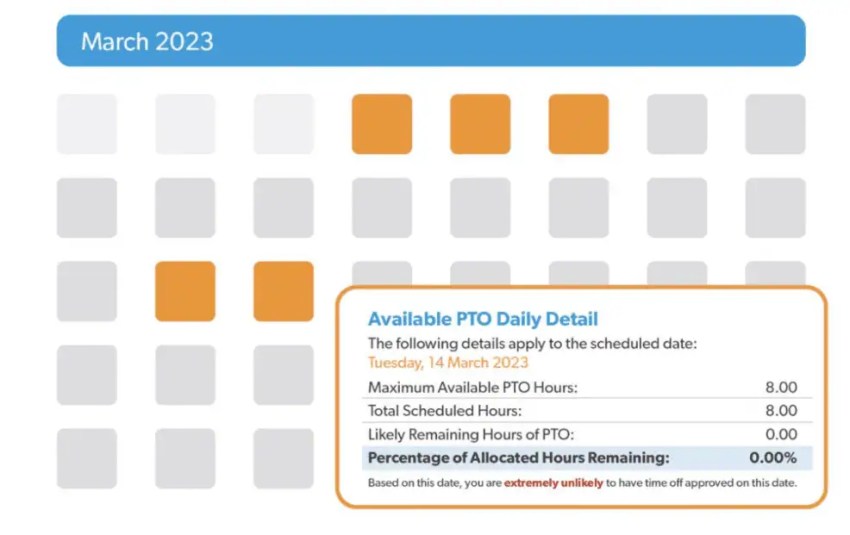
One crucial criterion to factor in is that agents aren’t available all day. They might be in the office from nine to five, but that doesn’t mean they have eight hours of available talk time. Consider real-world constraints and build a practical scheduling plan.
Don’t forget to subtract time for:
- Lunch
- Breaks
- Training
- Meetings
- Wrap-up work
On top of this, expect agent absenteeism and attrition. This includes things like:
- Illnesses (common cold, flu, etc.)
- Bereavement (parent, close friend, etc.)
- Injuries (broken leg, concussion, etc.)
- Household issues (leaks, break-ins, etc.)
While it’s hard to get a handle on figures here, having a solid baseline from the previous year will help. You can calculate your absenteeism rate using the following formula:

Special events or promotions
Predicting the impact of marketing campaigns, product launches, or special events will help you forecast better call center staffing levels.
You must liaise with your internal teams to gauge the level of interest anticipated by new pushes and initiatives. When you have a rough estimate, adjust forecasts using relevant data to accommodate spikes in demand during these time periods.
Failing to factor in these planned anomalies can lead to understaffing, long wait times, and low customer satisfaction.
Call Center Forecasting Formulas You Need
Accurate forecasting depends on structured calculations that transform historical volume data into actionable staffing insights. These formulas help you create reliable forecasts and move from raw call data to clear, better staffing decisions.
Use the table below as a quick reference when building or validating your forecasting model.
| Name | Formula | What does it tell you |
|---|---|---|
| Workload calculation | Total calls × Average handle time | Total time required to handle all incoming interactions |
| Basic staffing estimate | Workload ÷ Available agent time | Baseline number of agents needed before service level adjustments |
| Shrinkage | (Non-productive time ÷ Total paid time) × 100 | Percentage of time agents are unavailable for handling calls |
| Actual staffing | Base Staffing ÷ (1 – Shrinkage %) | The real number of agents you need to schedule. |
| Forecast accuracy | 1 – (|Actual – Forecast| / Actual) | How close your prediction was to reality. |
Each of these calculations builds on the others. When combined, they give you a realistic view of staffing needs and help you maintain service levels without overstaffing or understaffing.
To know whether your forecast performs well, track accuracy metrics:
- MAPE (Mean Absolute Percentage Error): Measures the average percentage difference between your forecast and actual results.
- WAPE (Weighted Absolute Percentage Error): Weights errors by volume, making it more reliable for smaller datasets.
These metrics help ensure accurate forecasts enable better operational outcomes. Aim to achieve at least 85% to 95% forecast accuracy to maintain strong operational performance.
Call center forecasting example
Let’s say your call center receives 1,000 calls per day, and your average handle time is 5 minutes.
- Total workload = 1,000 × 5 minutes = 5,000 minutes
- Convert to hours = 83 hours
If one agent provides 6 productive hours per day:
- Required agents = 83 ÷ 6 = 14 agents
Now factor in 30% shrinkage:
- Adjusted staffing = 20 agents
This simple example shows how small inputs affect staffing decisions and overall call center operations.
Factors That Can Impact Forecasting Accuracy
Now let’s look at four issues that may affect your forecasting accuracy.
Historical data quality
The quality of what you feed into forecasting systems greatly impacts the quality you get out. In fact, it’s the largest direct influence on forecasting accuracy.
To avoid poor data interpretation and inaccurate forecasting outputs, ensure clean, consistent data collection over time. If your data is bad, resist the more-is-better mentality and leave it aside.
It’s better to have fewer, clean data points than lots of volume-obscuring figures. Watch for unexplained anomalies and errors caused by formatting and data corruption.
Changes in business operations
When you introduce new products, services, or policies, they may affect call volumes or handling times. You should be able to spot these as dramatic spikes or fluctuations in your call center reports.
Adjusting forecasts for shifts in your business strategy or customer base is a good way to ensure your forecasting quality never declines.
Technological changes
When you introduce artificial intelligence (AI) chatbots or self-service tools, call volumes and agent workloads will change.
Note: This could be positive or negative. If you lack training or push new tools on customers without warning, they may not adopt them. You could experience above-average call volumes with complaints about new processes. Likewise, you could see a drop-off in call wait times. If implemented well, self-service can reduce the burden on agents and speed up customer transactions.
When planning for change, make sure you have plans for good and bad adoption.
Workforce management practices
Workforce management (WFM) is effective when you respond to demand and change, but only if you follow key best practices. It’s no good leaning on a tool if you don’t feed it the information it needs to perform optimally.
Effective forecasting depends on accurate inputs into workforce management systems. These systems support better workforce forecasting and decision-making for workforce managers.

For example, adding incomplete agent training details will only lead to incorrect staffing levels. Keeping records of training and achievements in your workforce management software increases your chances of maintaining accurate staffing levels.
When thinking specifically about call center workforce management, include details about retention programs and incentive schemes that reward productivity and availability. If agents respond well to gamification, consider adopting this on a larger scale and tracking its impact.

How to Ensure Accurate Forecasting
Keep these key points in mind to ensure accurate forecasting.
Use advanced forecasting tools
Say goodbye to Excel spreadsheets and manual call center forecasting methods, and use software that integrates historical data, real-time analytics, and algorithms with machine learning. This may be stand-alone or built into your contact center software.
Efficient Scheduling Solutions for Your Workforce – Nextiva
The scope of what can be achieved with automation and AI is vast. But you need the right data to get the most out of these tools.
Incorporate multiple data sources. Anything you traditionally display on a dashboard can be used:
- Historical call data
- CRM insights
- Call center data
- Marketing calendars
- External data sources
👉 Optimize your team’s productivity with Nextiva Contact Center’s efficient scheduling solutions.
Review and adjust forecasts regularly
Update and calibrate forecasting models regularly to reflect current trends and data. The more data you provide, and the more accurate it is, the larger the model will be and the more precise the analysis.
It’s common practice to conduct reviews quarterly and make adjustments as needed. However, you might find that call centers with high call volumes reveal clearer patterns in shorter time periods. Opt for monthly (or shorter-term) forecasting if you think a quarter is too long an interval between reviews to make short-term changes.
When you get into the habit of making changes, implement a continuous feedback loop to refine forecasting models based on actual call performance.
Plan for various scenarios
Advanced contact center forecasting leans on scenarios like best-case, worst-case, what if, and most likely, which allow you to prepare for uncertainty and have a backup to your standard forecasting plan.
For example, you might forecast that the best-case scenario for your seasonal uplift is one in which only 10% of customers call you to check stock levels because your website is up to date. At the same time, you might forecast a worst case where 35% of customers continue to check stock levels by phone because they’ve never logged into your portal.
When you run with a specific forecast, gather feedback from staff and analytics to see which was more accurate. Then, do two things:
- Work through why one was more accurate, and implement any business changes.
- Update your forecasting models with this fresh data.
Best Call Center Forecasting Tools
The right forecasting tool depends on how well it fits into the existing communication stack. Integration, data flow, and execution matter as much as features. Modern tools group into categories based on their technical design rather than feature lists.
Modern call center software and contact center forecasting solution platforms combine forecasting, data, planning, scheduling, and execution.
- Omnichannel forecasting supports voice, chat, SMS, and email together. It also recognizes concurrency, where agents handle multiple interactions at the same time.
- AI-driven look-ahead insights analyze recent patterns and highlight upcoming demand shifts before they occur.
- Scenario planning models different situations, such as sudden absenteeism or demand spikes, without affecting live schedules.
- Intraday automation monitors live performance and triggers actions like overtime requests or voluntary time off when demand changes.
Forecasting tools fall into distinct categories based on how they handle data and operations:
| Tool category | Best for | Technical advantage |
|---|---|---|
| Unified CX platforms | Scaling businesses | Combines communication systems and forecasting in one platform, which reduces data silos and keeps data flow immediate |
| Enterprise WFM suites | 1,000+ agent centers | Supports complex scheduling, long-term workforce planning, and labor compliance requirements |
| Specialized digital WFM | Chat-heavy teams | Optimizes for concurrent interactions where agents handle multiple conversations at once |
Forecasting tools drive decisions only when they connect insights with action. A system that highlights understaffing but lacks execution capabilities limits its impact.
Modern platforms close this gap by linking forecasts to real-time actions. They allow teams to adjust schedules, notify agents, and respond to demand changes without delay. End-to-end orchestration keeps forecasting aligned with daily operations and improves overall performance.
Get Your Call Center Ready for Anything With Nextiva
High-quality data and advanced forecasting systems help you improve staffing, reduce costs, and deliver a better customer experience.
As your operation grows, manual forecasting slows you down and limits visibility. A centralized platform simplifies forecasting and gives your team a clear view of performance across channels.
A unified platform connects call center services. With it, you can:
- Track demand trends in real time
- Align staffing with actual call volume
- Connect CRM data with customer interactions
- Manage voice and digital channels in one place
When your inbound and outbound calling, team chat, and workforce management systems live in one hub, you eliminate data latency that reduces forecasting accuracy.
A top-notch call center software platform, Nextiva not only identifies understaffing but also provides the metrics needed for precise forecasting and gives you the omnichannel tools and process automation to resolve issues in real time.
Unify your data and shift from reactive scheduling to proactive forecasting, process execution, and long-term growth.
Ready to nail your forecasting?
With all conversations in one platform, Nextiva’s top-ranked AI-powered contact center helps you satisfy more customers.