
 Customer Experience
  Blog
Blog  Business Communication
  Leadership
  Marketing & Sales
  Nextiva News
  Productivity
  VoIP
VoIP 

The phone starts to ring, but you’re busy with an important task. It rings three more times. Then, just as you’re about to answer, it stops. The caller has given up — most likely moving on to the next business that will pick up.
These missed calls are worth more than most companies realize. Over a month, unanswered calls can amount to thousands of dollars of missed revenue — simply because you were busy doing your job. Unfortunately, this is a reality for many businesses today.
An AI phone agent or an AI receptionist lets you alter that reality. It interacts with a buyer just as a human agent would and routes the conversation to a live agent when the caller needs a high-touch engagement (depending on your AI phone agent’s features).
This article looks into AI phone agent features in detail so you know what you’re shopping for.
Try the best AI answering service free for 14 days
XBert AI answers questions and captures leads. Add your 24/7 answering service in minutes.
What an AI Phone Agent Actually Does
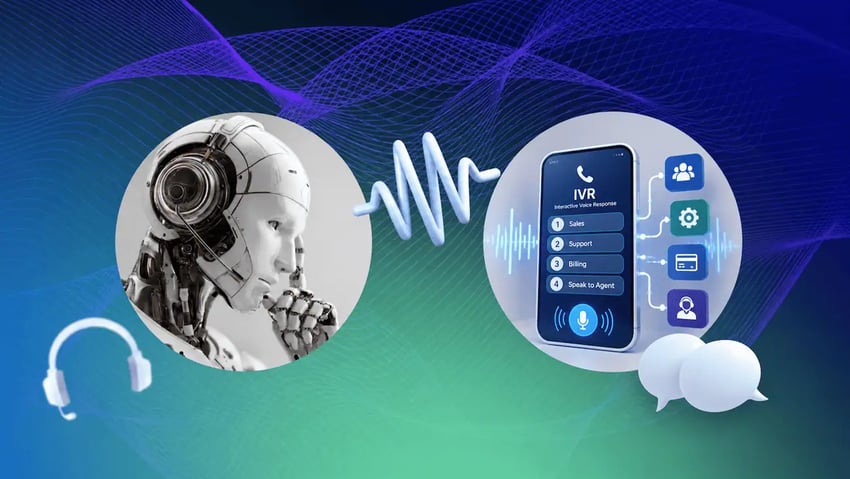
An AI phone agent picks up, works out what the caller wants in plain speech, and acts on it. There’s no keypad and no “Your call is important to us.” Just a back-and-forth that ends with a resolution or escalation as appropriate.
In short, AI phone agents solve the missed-call problem by turning a rigid menu into a natural conversation flow. The best voice AI agents behave less like a recording and more like an AI assistant that can schedule appointments and route calls on its own.
An AI phone agent converts speech to text, feeds the text to an LLM that serves as the agent’s brain, and transforms the reply into a voice format. The process is so fast that the caller doesn’t feel like there’s any human in the loop. The AI agent understands what you need and, instead of giving you a list of options, takes action to help you achieve your goal. When it can’t/won’t take the action independently, it routes the task to a live human agent, and you take care of the CX after the handoff.
Built on speech recognition, an AI phone agent manages real-time phone conversations and handles routine calls, such as password resets, order-status checks, and appointment scheduling, routing calls to a live agent only when a request truly needs one.
Unlike legacy phone systems, these AI voice agents handle high call volumes the moment they arrive, answering thousands of inbound calls at once with almost zero wait times, holding a real conversation instead of a phone tree.
Top 7 AI Phone Agent Features in 2026
Below are the top AI phone agent features that make it a reliable option for managing front-desk operations.
1. Conversational and natural language processing capabilities
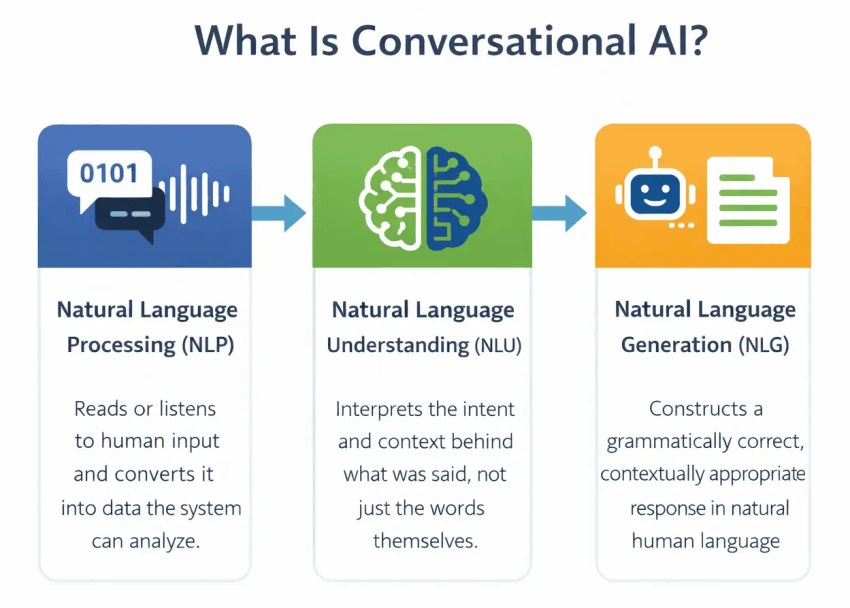
Everything rides on the conversation, and your callers rate it without mercy. Three things decide whether the conversation lands. Together, these key technical capabilities let the agent hold human-like, multi-turn conversations, respond naturally to caller input with intelligent responses, and use lifelike voice synthesis to match your brand voice and communication style.
- Natural language understanding (NLU) is the listening muscle. It takes a messy sentence and finds the intent buried inside it, plus the details that matter, e.g., “Thursday,” “Denver office,” and “reschedule.” Weak NLU stalls on “I didn’t catch that.” Strong NLU just books the slot.
- Bilingual auto-detection means the agent hears Spanish and answers in Spanish — no menu; no “Press 9 for Spanish” detour. For a clinic near the border or a contractor whose customers code-switch, that one feature turns a hang-up into a booking. Support for multiple languages also turns a local line into one that serves a global audience.
- Text-to-speech voices are so convincing that some vendors deliberately slow them down or add a little background noise to keep them from sounding too perfect. Your real test here isn’t the demo: it’s whether the voice still feels human 90 seconds into a live call.
2. Integration and workflow automation features
Here’s the secret the demo skips. The AI is the easy part. Wiring it into everything else is where the real work hides.
An AI agent that closes more than half of calls on its own pays for itself. The same agent feeding every call into your CRM, QA, and coaching tools pays off three to four times over because the integration layer is the multiplier. Skip it, and projects don’t just underperform: they implode.
One builder logged a $12.5 million failure that unraveled partly because nobody connected the call data to the CRM, so other teams ended up keying it in by hand. The pain it causes shows up everywhere, with a number attached.
Three connections earn their keep:
- Calendar booking: The agent reads live availability and books, moves, or cancels mid-call. Nextiva’s AI receptionist XBert plugs straight into Google Calendar, Calendly, Cal.com, and other similar software.
- CRM sync: Caller, intent, and outcome land in the record on their own. XBert offers Salesforce, HubSpot, and Pipedrive on request, while Nextiva Contact Center syncs to your CRM or its built-in contact database.
- Intake automation: Names, numbers, insurance, and the reason for the call are all captured and filed without additional human support.
Pushed further, the agent stops answering the phone and starts working the pipeline. Beyond pre-built connectors, AI phone agents fire webhooks for backend actions, syncing updates into your CRM systems, scheduling software, ticketing systems, and practice management systems.
It helps your sales team work from a single source of truth, with lead qualification and customer data captured automatically rather than scattered across disconnected business tools.
👉 Fill out the form and get a free demo of Nextiva XBert AI receptionist.
Hear why XBert AI is the best AI receptionist
XBert AI receptionist handles customer questions, captures leads, and books appointments. Try it free for 14 days.
3. Analytics and conversational intelligence
Up until recently, a phone call vanished the second it ended. You could record it, but mining thousands of recordings costs more than the insight is worth. That math has flipped. Modern tools can transcribe, score, and fold every call into the customer record while it’s still warm, and the last channel anyone could actually read has finally opened up.
The platform needs to deliver deep analytics on call metrics like call duration and agent performance. It must surface the customer pain points behind repeat support tickets, across thousands of customer interactions, so you can improve both service quality and customer satisfaction.
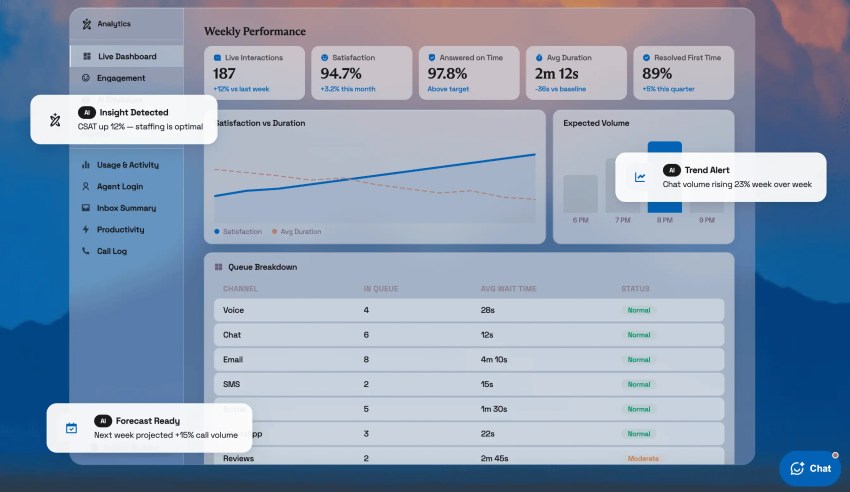
A reliable AI phone agent includes the following features to make conversational intelligence useful:
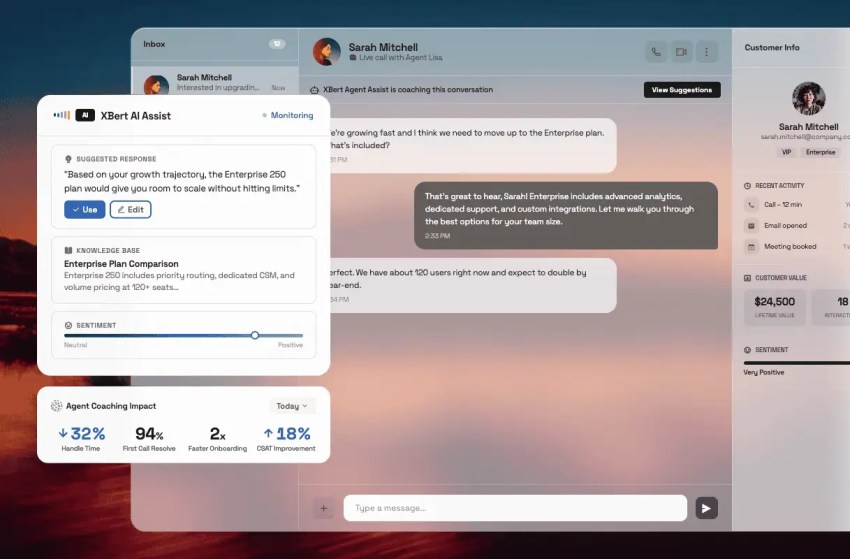
- Sentiment analysis: This reads the caller’s mood from tone and word choice and flags the moment it sours. The point isn’t that the AI “knows” someone is upset. It’s so that a supervisor sees the warning light and can step in on the call before it results in a one-star review.
- Transcription and instant summaries: Captures the conversation and spins up a summary the instant it ends.
- Supervisor dashboards: This puts the whole floor on a single screen, with the option to listen in, jump in, or coach in real time.
4. Intelligent routing and smart escalation of phone calls
No agent is perfect. What sets a good one apart is how gracefully it loses. The lazy version dumps the caller on a human and forces the customer to start their story from scratch. The good version hands off with the story intact: the transcript, the intent, and details of every step already taken.
Nextiva keeps that thread unbroken with stitched conversations that travel across voice, chat, and SMS, so the human agent inherits the full history the instant the call lands.
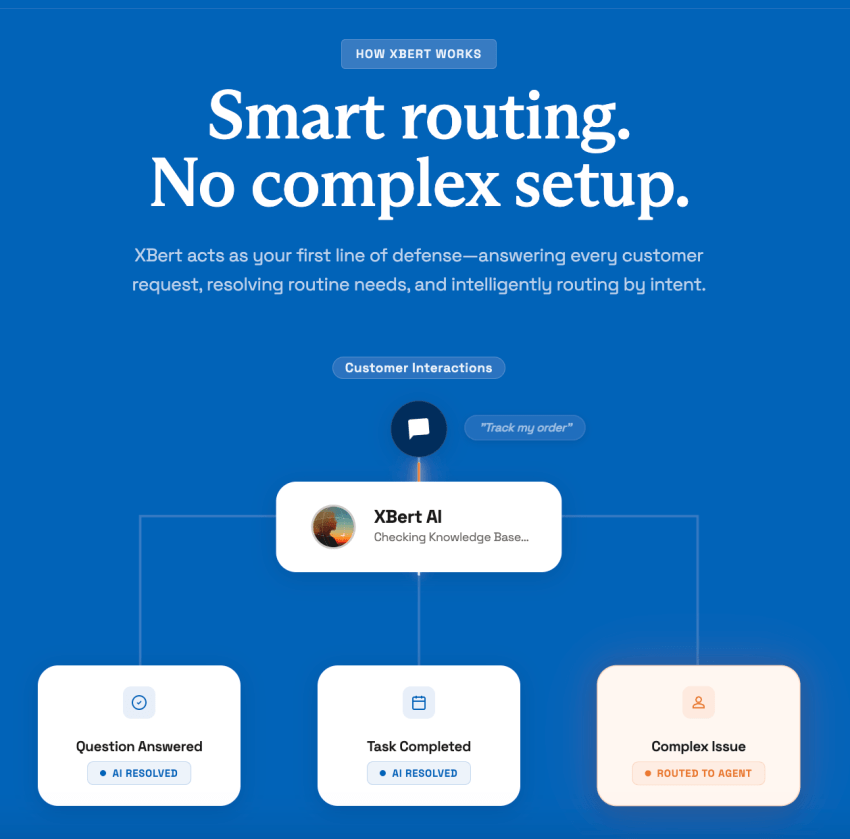
Two features keep the handoff human instead of bureaucratic:
- Callback option: When the queue is jammed, holding music is a slow insult. Nextiva’s Customer Patience Benchmark found that 75% of people would rather lock in a guaranteed callback than wait. (The underlying impatience is brutal: 54% hang up within eight minutes; 31% within five.)
- Priority routing: Skills-based routing matches each caller to the right agent by skill, language, or need, which lifts first-call resolution.
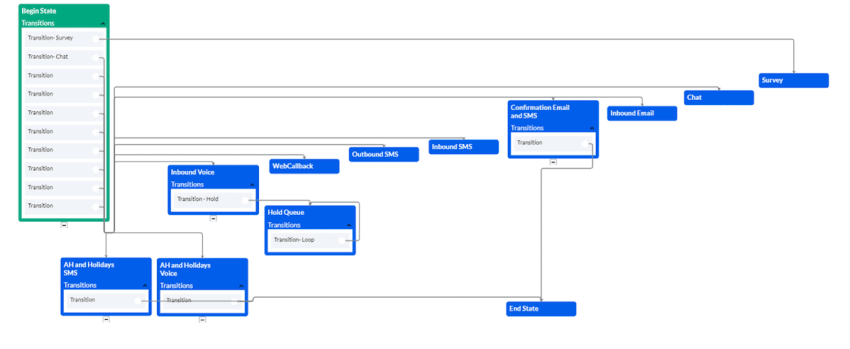
When everything clicks, the call runs itself. You set the escalation rules, so when the agent meets a complex scenario that it cannot resolve, it hands the full conversation history to a live agent without making the customer repeat a single word. Between inbound calls, the same agent can place outbound calls for appointment reminders and quick follow-ups.
5. Compliance and security features
Compliance rules are only getting stricter. If you work in healthcare or finance, or you take card payments over the phone, this is the part that can make or break a buying decision. Everything else is just the extras.
Voice AI keeps drifting into live transactions, while the PCI rulebook was written for a different era. The second a customer reads a card number aloud with the agent listening, your compliance scope changes, whether you meant it to or not. The way out is architectural. You can let voice AI run the experience while a secure IVR catches the card, tokenizes it, and hands control back, so the agent never sees the raw number.
There are three certifications you should seriously consider:
- HIPAA compliance: Insist on a signed Business Associate Agreement and PHI-safe defaults. Nextiva runs a dedicated HIPAA-compliant build with a full BAA while out-of-the-box Epic and eClinicalWorks sync underneath.
- PCI-DSS handling: Automated redaction should keep card numbers out of transcripts and recordings, full stop.
- SOC 2 and encryption: Nextiva brings SOC 2-certified operations, encrypted storage, and AI-driven PII redaction.
And the twist worth keeping in your back pocket: in tightly regulated fields, voice AI can out-comply a human agent because it reads the script the same way every time and leaves an auditable trail. At every step, you keep complete control over how your business captures, stores, and redacts customer data.
6. Agentic execution
A reactive agent answers and escalates. Though useful, its role is limited. An AI agent finishes the job: it verifies the caller, pulls the record, takes an action, and confirms it, without tapping a human on the shoulder.
This is where the market is heading. Gartner predicts agentic AI will autonomously resolve 80% of common customer service issues by 2029, cutting operational costs by up to 30%. By taking the repetitive volume off your team, AI-powered systems lift both customer satisfaction and agent job satisfaction, freeing human agents to handle more nuanced conversations.
That said, Nextiva’s XBert AI receptionist and contact center solution plays a crucial role in agentic execution. The former manages front-of-house answering, qualifying, and booking, while the latter handles agentic execution across different channels.
7. Reliability and carrier-grade infrastructure
Most feature lists wave at uptime and move on. That’s a mistake. An agent that’s unavailable at 2 a.m. is no different from no agent at all. And 2 a.m. is exactly when a 24/7 receptionist is supposed to be earning their keep.
Nextiva strives for 99.999% uptime across eight points of presence in carrier-grade data centers, which amounts to roughly six minutes of downtime per year. The uptime figure matters less than what holds it up: geographically spread data centers, automatic failover, round-the-clock monitoring, and a status page anyone can check. For a call center that runs on AI-powered systems around the clock, that reliability is what makes contact center automation dependable.
Practitioners rarely brag about uptime because you only notice it when it fails you. So when you shop, push on it. Ask for the SLA in writing. Ask where the redundancy actually lives. Ask to see the public status history.
A Buyer’s Evaluation Checklist for AI Voice Agent Features
Before you sign, separate the build from the deployment. The build is usually easy. Integration, QA, and change management are where deployments live or die. Vet the vendor on the hard part.
Two habits separate smooth rollouts from stalled ones. Define clear use cases before you buy, and train the AI agent on your historical data and real-world scenarios so it sounds like your team from day one.
Here’s a rubric you can use to guide you. Score each feature from one to five, and lean on the rows that map to your business.
| Evaluation area | What to ask | Why it matters |
|---|---|---|
| Conversation quality | Does it hold up over a three-minute call? | First-call trust |
| Integration depth | Does call data flow into your CRM natively? | The ROI multiplier |
| Compliance | Does it have HIPAA BAA, PCI redaction, and SOC 2 in writing? | Non-negotiable in regulated work |
| Reliability | What are the uptime SLA and failover plan? | After-hours coverage |
Where Nextiva Fits In: AI Voice Agent Comparisons
Consider the features above to evaluate the best fit. The tools that stumble are the ones that ace some parts of the features and clearly abandon the rest, leaving you to duct-tape the gaps yourself.
That’s the seam Nextiva is built to close. The XBert AI receptionist owns the front door for smaller teams, with always-on answering, calendar and CRM booking, and clean handoffs, all from $99 a month. For agentic execution at scale, Nextiva’s contact center solution plays its part while facilitating live transcription, sentiment analysis, skills-based routing, and supervisor tooling.
Its HIPAA-ready posture supports regulated work, and a single platform spans the entire spectrum instead of relying on disconnected tools.
See what Nextiva can do, and let the next thousand dollars stay on your side of the door.
XBert AI receptionist never misses a call, text or chat.
Greet customers, book appointments, and capture leads while you run your business. See why it’s the best AI receptionist.
AI Phone Agent Frequently Asked Questions
An AI phone agent is software that uses conversational AI, natural language processing, and speech-to-text to answer, route, and manage phone calls without human intervention. Unlike press-button IVR systems, callers speak naturally to describe what they need. In real-world examples, e-commerce teams use AI agents for order support and returns, while real estate firms use them to schedule property showings and field inquiries.
Yes. Advanced agents integrate with calendar and scheduling platforms. XBert connects with Google Calendar, Calendly, and Cal.com to book, reschedule, or cancel appointments over the phone, 24/7.
Bilingual agents use automatic language detection. When a caller starts speaking Spanish, the system analyzes the audio and language patterns, matches them to Spanish intent libraries, and responds in Spanish.
It runs a smart escalation. The agent routes the call to a human and passes the transcript and customer profile along. Nextiva Contact Center uses skills-based routing so that customers reach the right department without having to repeat their issue.
Yes, as long as they are on a platform with the right safeguards. Nextiva provides HIPAA-compliant voice options, SOC 2-certified operations, and AI-powered data redaction.
Pricing varies by size and scale. Small-business virtual receptionists like XBert start at $99 per month and include setup, calendar sync, and 24/7 answering. For larger organizations, conversational AI features are usually packaged within cloud contact center subscriptions.