
 Customer Experience
  Blog
Blog  Business Communication
  Leadership
  Marketing & Sales
  Nextiva News
  Productivity
  VoIP
VoIP 

Whenever someone calls your business, there’s revenue waiting to be captured. If no one answers, that money goes to a competitor.
The math is brutal: 82% of callers who hit voicemail won’t leave a message; they simply call the next business suggested to them by Google. For a professional services firm, one missed call can equal $700 in lost billable hours. For a restaurant, it’s an empty table on a Friday night. The cost of silence adds up faster than most business owners realize.
Hiring more staff is rarely the answer. It’s expensive, slow, and complicated to scale. This is why missed call solutions exist. They help you capture leads automatically using AI call handling, call forwarding, smart call queues, and detailed call logs — all without changing how your team works.
A missed call solution ensures every call is handled effectively.
What Counts as a “Missed Call”?
A missed call is any interaction in which a caller’s intent is not captured or acted on.
Most businesses define a missed call too narrowly. They think it only happens when no one answers the phone. This definition hides real revenue loss.
Here’s how missed calls happen in practice:
- Caller hangs up while the phone is ringing: This happens when no one is available, or lines are busy.
- Caller abandons the queue: Long hold times kill conversions. When callers have to wait too long, they hang up, even when they started with high intent. For paid call campaigns, this directly wastes marketing spend, contributing to up to 30% ROI loss in call-driven channels.
- Call goes to voicemail: Voicemail feels like a resolution, but it isn’t. The majority of callers never leave a message. For industries like home services or medical care, this means losing $100–$400+ per call without realizing it.
- Call is answered, but nothing gets captured (soft missed calls): These are the most dangerous misses because they look like success on a dashboard. A human answers, but they might be driving, distracted, or simply forget to write down the customer’s details. The phone was answered, but the opportunity was missed. From a revenue perspective, this is identical to a hang-up, yet traditional phone systems mark it as resolved.
When you look at missed calls this way, the problem becomes visible and solvable.
A cloud-based missed call solution needs to do more than simply send missed call alerts. Intent capture is critical for your team so they can act on it. Precise call tracking and fast follow-up help you turn initial curiosity or interest into a qualified lead.
How Much Do Missed Calls Cost You?
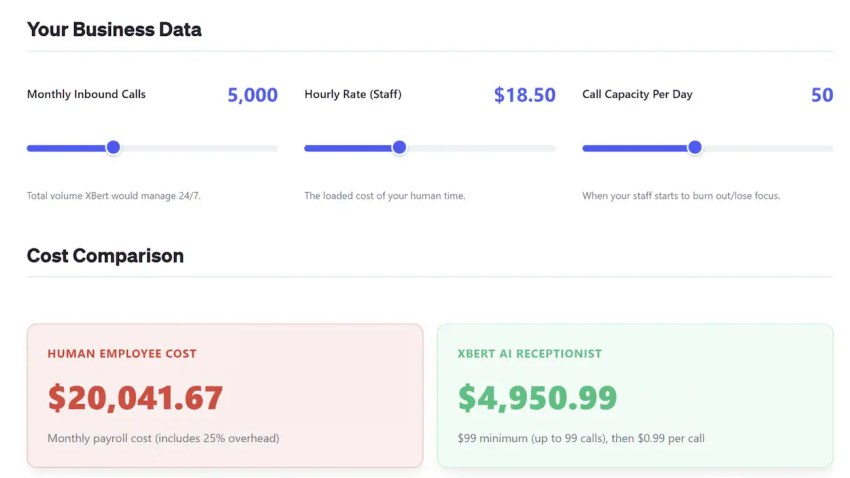
Try our missed calls calculator and see how much lost revenue you can reclaim with Nextiva XBert® AI answering service. Compare different scenarios to grow the bottom line.
What’s Inside a Reliable Missed Call Solution?
A reliable missed call service will approach missed calls as an operational problem instead of a staffing one. It should combine AI receptionist, call routing, and visibility into a single system to capture demand the moment it shows up.
Instead of treating missed calls as isolated events, a reliable solution for missed calls would fix the whole chain: coverage, capture, and follow-up. Nextiva does that effectively while being cost-effective. Here’s how Nextiva’s four-part stack works in the real world.
1. XBert AI answering service: Stop misses at the source
Nextiva’s XBert AI-powered phone systems answer calls instantly. This includes during peak hours, lunch rushes, and after-hours when most small businesses lose up to 30% of inbound calls. It ensures there’s no ringing into silence.
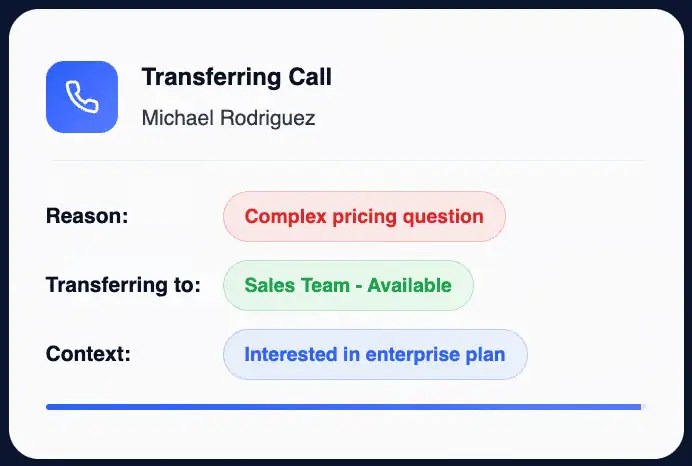
XBert AI handles common questions, books appointments, and captures lead details without friction. When a human is needed, it transfers the call with context rather than a cold handoff. The caller doesn’t have to repeat themselves, and your team doesn’t have to start from zero. This turns voicemails into booked jobs and captures leads instead of hang-ups. You’re able to deliver a faster response overall.
Generally, these solution for missed calls sync with CRM and customer experience (CX) platforms to preserve overall context.
Related: Check out what an automated AI receptionist is. Is it the same as a virtual receptionist or IVR?
2. Call logs: Find the leaks you can actually fix
Call logs are not just records. They are diagnostic tools that show:
- When missed calls happen (time of day, day of week, etc.)
- Which campaigns or channels drive calls (when tracked)
- Which teams or locations get overwhelmed
- How many times has a caller tried before giving up
Missed calls are rarely random; they tend to cluster. Capturing this data helps you see the missed call window and times of call spikes. Based on these patterns, you get to set the forwarding rules and queue thresholds. This way, you remove the guesswork. You fix the exact moments where money leaks out.
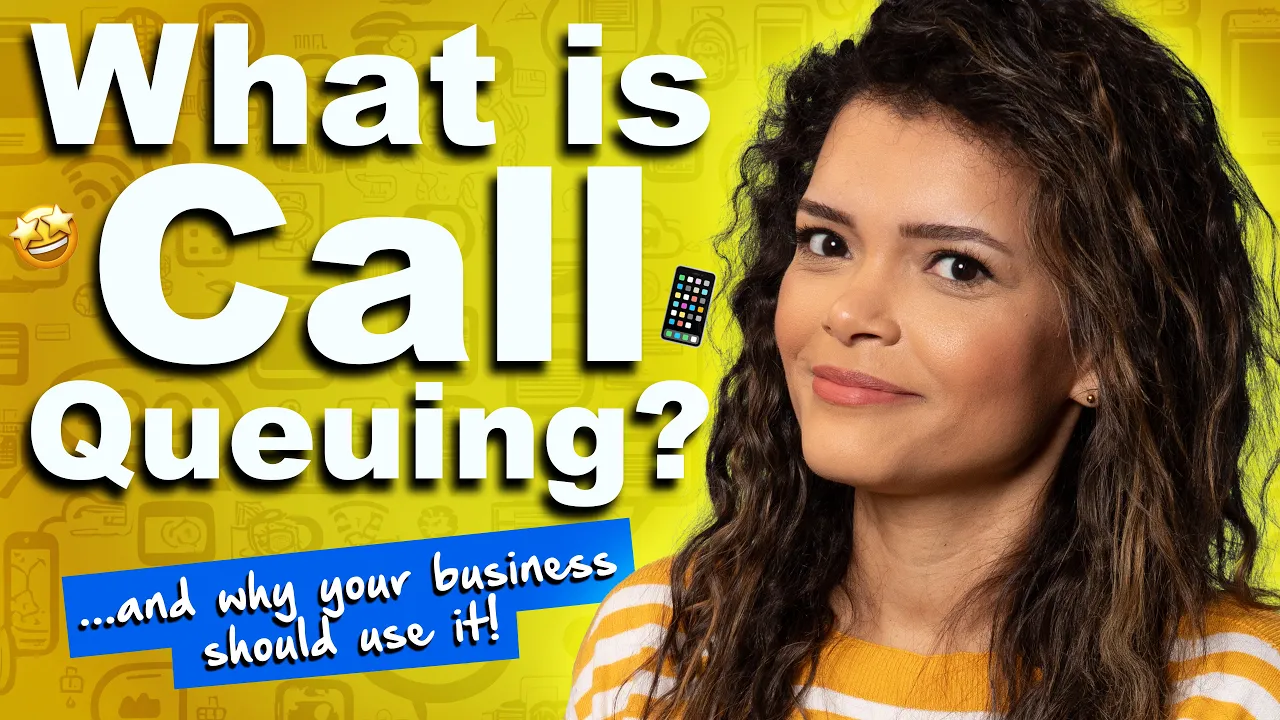
3. Call queuing: Stop hang-ups during peaks
Call queues exist for one reason: you are open but slammed. Without queues, callers hang up the moment they hear endless ringing. With queues, they know you are there and how long they will wait.
It’s best to share honest wait times so callers don’t feel trapped, and offer callbacks when call volume allows. You need to route these customer calls intelligently between sales, customer support, and the contact center or call center, and schedule them. The platform should allow you to use queue reports to identify where coverage breaks.
Queues do not solve staffing shortages. But they do buy you time, and time is often the difference between a booked appointment and a lost customer.
4. Call forwarding: Get calls to the right human — fast
Most missed calls happen when people are moving, not when they are idle. Call forwarding solves this by pushing calls to where work actually happens.
Common setups that reduce misses include:
- Forward to a manager during lunch breaks
- Route urgent after-hours calls to on-call staff
- Apply overflow rules when one line goes unanswered
- Set follow-me routing for technicians and distributed teams
The key is automation. Rule-based forwarding removes human error. Pair it with call logs, and you can prove that business communication is reaching real people instead of disappearing.
In this stack, each layer solves a different failure point. An AI answering service prevents silence, while logs expose patterns of missed calls. Queues avoid abandonment, and forwarding closes mobility gaps per business needs.
On their own, these tools help. Together, they turn the number of missed calls from a hidden problem into a controlled system.
How to Prevent Missed Calls: A Simple Playbook That Works
Missed calls are not a mystery; they follow patterns. When you treat them as a system problem rather than a people problem, you can reduce them fast. This playbook focuses on prevention rather than damage control.
1. Measure missed calls first
You cannot fix what you do not measure. Start with call logs and look at:
- How many calls go unanswered
- When mistakes happen most often
- How many callers try more than once before giving up
Most SMBs discover their miss rate is higher than expected, especially during after-hours and peak periods. This gives you clarity on what to solve for with an after-hours answering service.
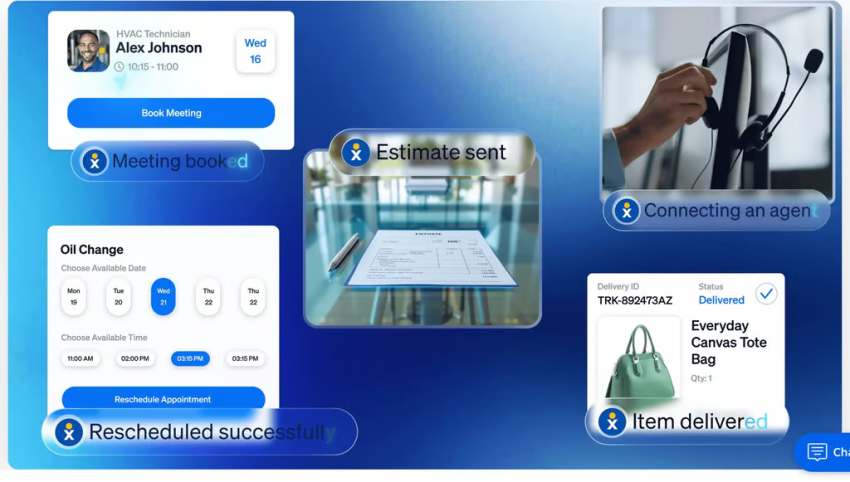
2. Add coverage where misses actually happen
Instead of trying to cover everything, cover what matters. Use real-time call data to identify missed windows — for example, after-hours, lunch breaks, or high-volume peak times. Add targeted coverage here first. That alone can recover a meaningful chunk of lost revenue without changing your call center staffing model.
3. Use call queues for predictable spikes
Some misses happen because you are busy rather than unavailable. When there are ad-driven surges or seasonal demand spikes, call queues help. They buy you time, giving your team a fair chance to answer the call.
Here’s an example of a call flow that you can tailor to your needs:

4. Set call forwarding rules
Set rule-based forwarding so calls reach the right people when the intended recipient isn’t available. Keep an on-call staff and drive all urgent after-hours calls to them. Here’s how you can configure these rules on Nextiva:
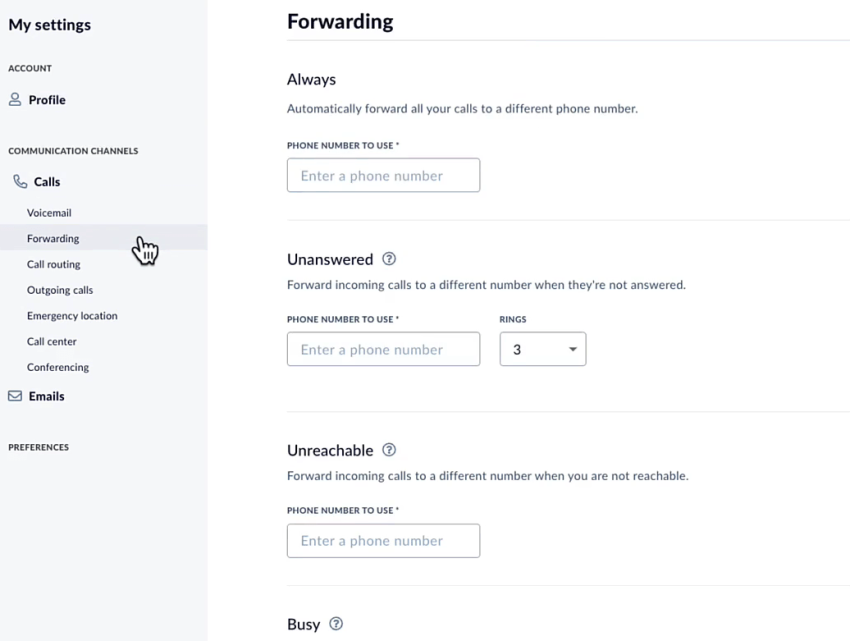
Effective forwarding relies on hunt groups. You can set up a Sequential Ring (Ring Reception first > then Ring the Sales Manager > then Ring the On-Call Mobile) or a Simultaneous Ring (Ring Everyone at once — first to pick up gets the lead).
Pro Tip: Set a “No Answer” condition. If a call isn’t answered within 20 seconds, automatically push it to the XBert AI agent rather than a passive voicemail box. This ensures capture happens even when the forwarding chain fails.
5. Add AI answering to stop misses at the source
Even the best routing has limits. An AI answering layer ensures:
- Incoming calls are answered instantly
- Lead details are captured from customer interactions
- Appointments get booked
- Urgent calls reach a human (and provide context)
Instant answers are the only way to save opportunities when people are unwilling to leave a voice message or other notification.
Related: Check out the AI voice agent service providers for businesses that ensure high customer satisfaction even when human agents aren’t available.
6. Review weekly and adjust
Once you set these rules up, you’ll notice patterns and customer engagement trends as you move toward being more responsive. It’s important that you review these trends periodically to improve and optimize forwarding rules.
This will also help tighten the queue and expand AI coverage, which would compound quickly.
Use Cases of a Missed Call Solution in Different Sectors
Below are practical examples that show how businesses use AI to reduce missed calls and capture intent, without adding staff.
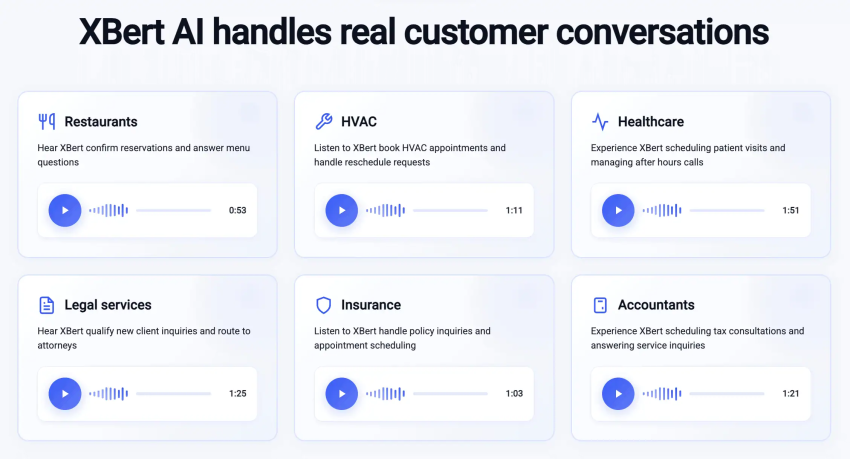
Restaurants
Restaurants lose the most calls when they are busiest. Lunch and dinner rushes create predictable miss windows, even for well-run teams. AI handles the high-volume basics automatically, such as opening hours, location, menu, takeout options, and table reservations during peak times.
With AI answering instantly, restaurants stop losing $25–$30 per call simply because staff are busy serving guests.
Home services
Home services calls often carry urgency and high value. Missing one call can mean losing $300–$400 or more. When an AI virtual receptionist takes these calls, it automatically routes emergency calls to the on-call technician.
XBert handles calls, captures job details, address, and urgency, and logs appointments. During events like storms or seasonal surges, call queues handle sudden spikes without callers hanging up. Instead of chaos, the business captures demand and fills schedules faster.
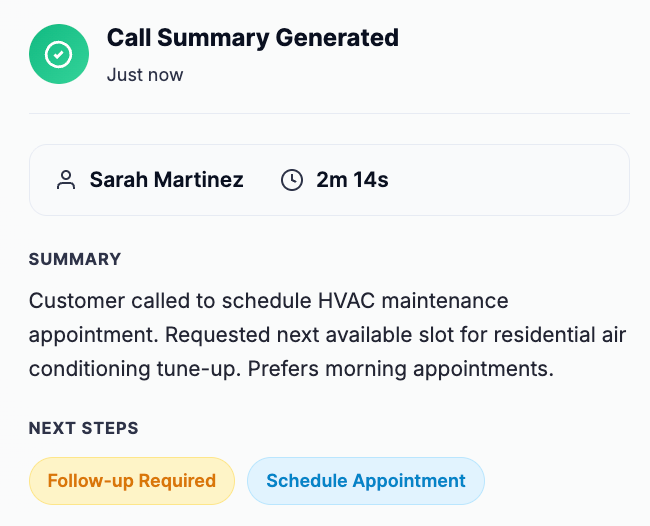
Healthcare
Front desks handle a constant stream of calls, including appointments, insurance questions, directions, and basic FAQs. Missed calls here cost $100–$200 per inquiry and frustrate patients.
AI takes pressure off the desk by:
- Handling appointment scheduling and rescheduling
- Answering common questions
- Routing urgent needs appropriately
Healthcare practices use this solution to staff smarter and extend AI coverage where it matters most.
Professional services
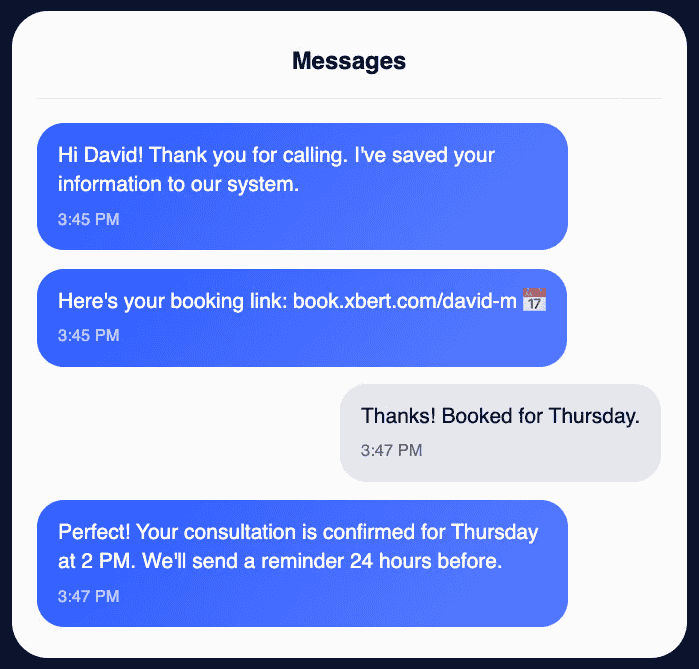
Professional services calls often signal high intent. A missed call here can cost $300–$700 in lost opportunity. When AI is the first filter, it assesses the caller’s needs and automatically books a consultation. This way, the contact and context are captured upfront.
Forwarding rules ensure high-value inquiries reach someone quickly. When a human joins the call, they already know why the caller reached out. This shortens response time and increases close rates.
Turn Missed Calls into New Customers With XBert
Most small businesses lose calls quietly. There are no alerts or complaints — just fewer bookings at the end of the week. It usually happens when you are already stretched. Calls come in while your team is with potential customers. After-hours inquiries hit when no one is watching. By the time you notice, the caller has moved on.
This is where Nextiva’s XBert changes the experience. Instead of letting calls slip through the cracks, XBert answers instantly and captures what the caller needs. Call logs show you exactly where calls drop off. Queues protect busy periods, and smart forwarding makes sure urgent calls reach a real person.
This increases leads captured, providing context around intent. With this insight, you’re well-equipped to turn these callers into customers.
Try Nextiva XBert and never miss a chance to assist your potential or existing customers.
Your AI receptionist that never misses a call.
XBert is your AI answering service that handles calls, texts, and chats 24/7. It greets customers, books appointments, and captures leads while your business grows.