
 Business Communication
  Blog
Blog  Customer Experience
  Leadership
  Marketing & Sales
  Nextiva News
  Productivity
  VoIP
VoIP 

When it comes to answering service sales calls, the pitch is almost always the same. They promise that you’ll never miss a call again. And that may be true, but what nobody mentions is that with some providers, the billing increment quietly doubles your invoice or there’s a compliance gap that puts your patient data at risk.
Still, the cost of missed calls is real. When a call goes unanswered, roughly 80% to 82% of callers will take their business to a competitor rather than leave a voicemail, a trend consistently backed by recent surveys from Forbes, Invoca, and historical call center research.
Those aren’t calls you can get back. An answering service is a way to keep customers, and choosing the right one involves five decisions. Here’s how to make each one.
Try the best AI answering service free for 14 days
XBert AI answers questions and captures leads. Add your 24/7 answering service in minutes.
Define Your Call-Handling Needs First
You can’t price what you haven’t measured, so before you talk to a single provider, you need a clear picture of your actual call volume, your coverage gaps, and whether you need full outsourcing or just a safety net.
Pull your numbers
Open your phone system’s call log and pull the last three months. Then, multiply your average daily inbound calls by your average call duration to get a monthly minutes estimate.
This is the number that many answering service providers will quote against, and getting it wrong in either direction will cost you. Overestimate, and you’re paying for minutes you’ll never use, but if you underestimate, you’ll likely hit overage rates that can run double the base price.
Define the coverage window
If you don’t nail down the exact hours you need covered, the provider decides what counts as after-hours vs. standard rate, and that’s usually where surcharges start.
Decide exactly when you need coverage. Popular options include:
- Business hours only
- Evenings and weekends
- Full 24/7 support
Most small teams don’t need full outsourcing on day one, so that may be overkill for your team. What you may be more likely to need is overflow routing, which catches the calls your staff misses at peak times and sends everything else to your team. This is a smaller commitment, a lower cost, and a better place to learn what you need before signing a bigger contract.
Nextiva’s business phone system handles daytime overflow with flexible routing rules, so you can cover the gaps without handing off every call.
Want to learn more about the different coverage options? Check out our guide to after-hours answering services. 👇

Compare the Types of Answering Services
Answering services come in three forms: live human operators, AI receptionists, and hybrids that use AI for routing and hand complex calls to a person. Picking the wrong one is the most expensive mistake in this process because switching later means retraining scripts, reporting numbers, and rebuilding workflows.
Here’s a quick breakdown between live answering service providers and an AI receptionist:
| Factor | Live human service | AI receptionist |
|---|---|---|
| Typical cost | $0.75–$1.50/min, plus base fee; can reach $2,500+/mo at volume | Flat monthly rate: XBert is $99/mo for 100 conversations |
| Availability | Staffed hours; can queue at peak | 24/7 and answers in under two seconds |
| Concurrent calls | Limited by headcount; overflow goes to hold or voicemail | Handles many at once with no overflow |
| Resolves without a human | Varies by staffing and script complexity | Handles most routine calls like scheduling, FAQs, and hours inquiries |
| Best for | Complex intake, empathy-heavy conversations, and high-stakes calls | Booking, FAQs, after-hours, overflow, and high-volume routing |
Live phone answering services bring empathy and judgment for complex intake, but they cost more per minute, can queue at peak times, and bill in ways that add up fast (more on that in the next section). They can offer human empathy, similar to an in-house receptionist.
AI receptionists answer instantly, run around the clock, and handle multiple calls simultaneously with no overflow. They’re strongest on routine calls like scheduling, FAQs, and message-taking. However, AI answering services can fall short, especially when nuance is important. A caller who’s upset about a delayed surgery or frustrated with a billing error needs a human.
The hybrid approach uses AI for initial routing or after-hours support and hands complex calls to a person. For most small businesses, this is the model that fits because the majority of inbound calls are routine, and the ones that aren’t are precisely the ones where human judgment matters most.
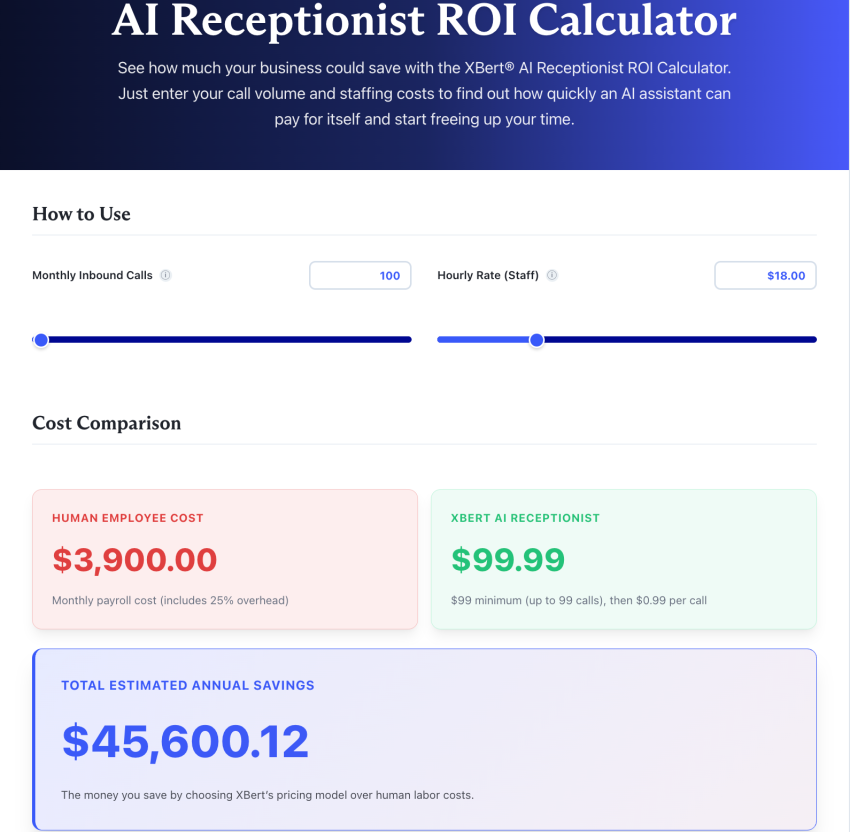
Nextiva’s XBert can help businesses looking for an answering service with a hybrid approach. Our AI receptionist answers 24/7, starting at just $99 per month. It can book directly into multiple calendar tools and route complex calls to your team with a full transcript.
Hear why XBert AI is the best AI receptionist
XBert AI receptionist handles customer questions, captures leads, and books appointments. Try it free for 14 days.
Understand the Pricing Models and Billing Traps
Answering service pricing looks simple until you get your first real invoice. The quoted per-minute rate is only one part of the bill. Rounding, wrap-up time, and surcharges can push the actual cost significantly higher than what you were sold.
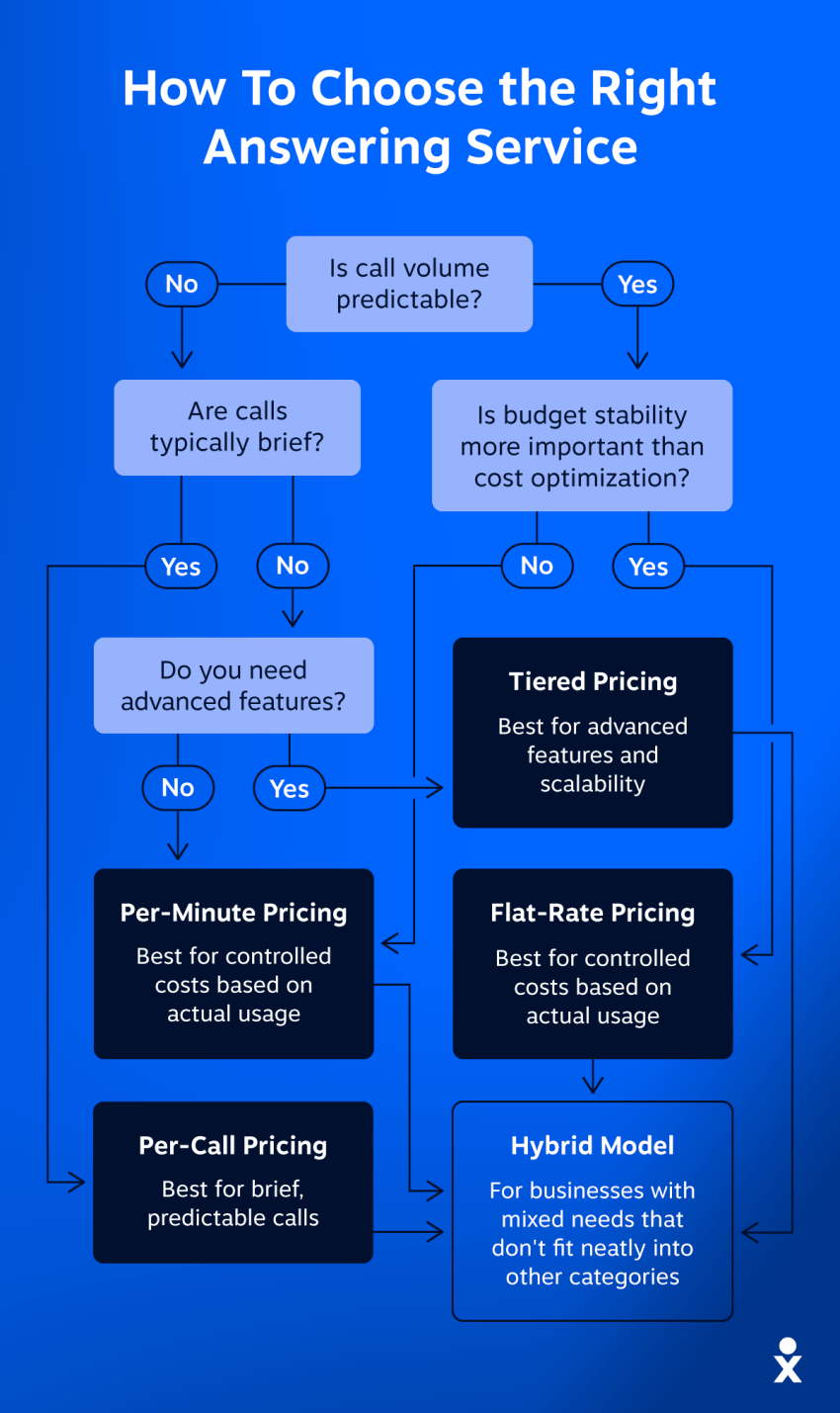
Per-minute vs. per-call
The billing model determines whether a busy month costs you predictably more or unpredictably more. Picking the wrong one for your call mix is how a $150/month service turns into a $400 invoice.
Most live services bill per minute, typically $0.75 to $1.50 for domestic operators, with overages running up to $3.50 per minute. Per-call billing charges a flat fee per answered call regardless of length, usually $1 to $11.
Per-call works better when your calls vary in duration, and per-minute works better when they’re consistently short.
The billing increment trap
In my experience, billing increments are the single biggest hidden cost in answering service pricing.
If a provider rounds up to the nearest 30 or 60 seconds, a 15-second confirmation call gets billed as a half-minute or full minute. That rounding alone can add up to 50% to your actual cost across a few hundred calls a month.
Ask for the exact billing increment in writing before you sign. Per-second or six-second increments are what you want to see.
Other hidden costs to ask about
Beyond billing increments, three line items regularly show up on the first invoice without ever appearing in the sales conversation.
- Wrap-up time: Some operators bill for the minutes they spend writing notes after a call ends. If it’s not disclosed, you’re paying for it without knowing.
- Setup fees: These are one-time charges that can range anywhere from $50 to $500 depending on your provider. Reputable providers often waive these, but you need to ask.
- Weekend and holiday surcharges: Some services charge 1.5x to 2x their normal rate for off-hours coverage. If after-hours calls are the reason you’re buying the service, this surcharge changes the math significantly.
Evaluate Compliance and Security Requirements
Compliance isn’t a feature to compare. It’s a filter. If a provider can’t meet your regulatory requirements, nothing else about their offer matters.
Healthcare: HIPAA and the BAA
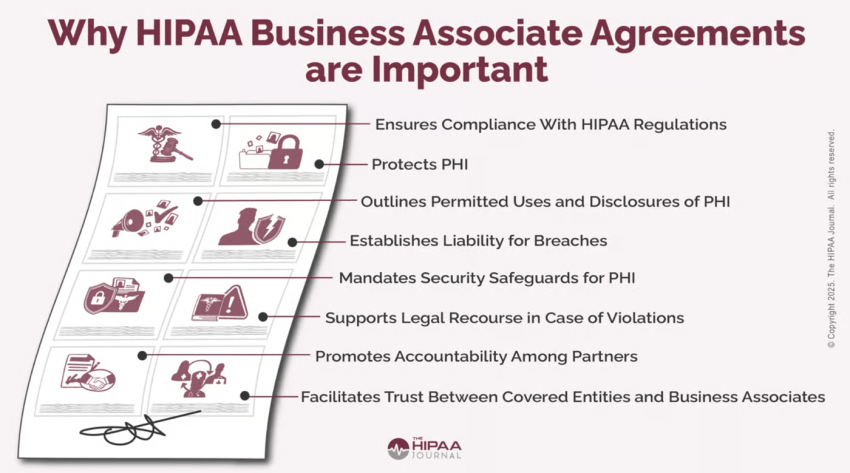
If you’re a healthcare practice, the answering service handles protected health information the moment a patient says their name and why they’re calling. That means the provider must be HIPAA-compliant, encrypt patient data in transit and at rest, and sign a Business Associate Agreement (BAA).
One major warning sign is providers who won’t sign a BAA. I repeat: No BAA means walk away. There’s no workaround or “we’re working on it” that protects you if there’s a breach.
Payments: PCI DSS
If the business takes credit card payments over the phone, the provider must meet PCI DSS standards to protect that card data. Ask whether cardholder data is stored, transmitted, or processed and how each step is secured.
The baseline: SOC 2
SOC 2 Type II certification is the baseline signal that a provider handles data responsibly, and this is something you need to double-check.
Don’t accept the claim on a sales page. Ask for the actual audit report, or at a minimum, the summary letter. A provider who can’t produce it either doesn’t have it or doesn’t understand why you’re asking, and both are problems.
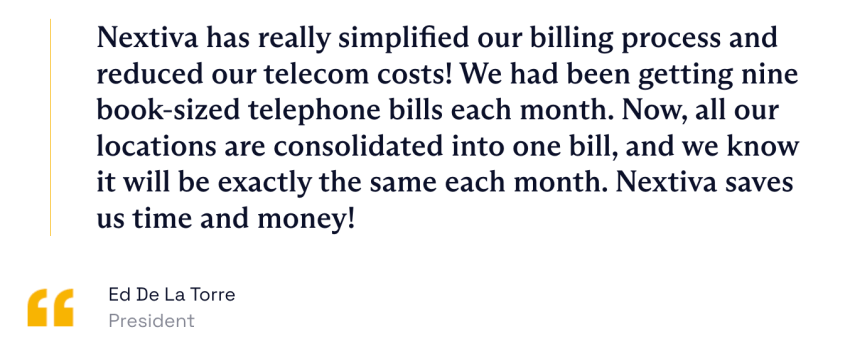
Nextiva is HIPAA-compliant, SOC 2-certified, and PCI DSS-compliant, striving for 99.999% uptime. We help clients like De La Torre Orthotics and Prosthetics, which runs HIPAA-compliant communications across a lab and eight clinical offices treating over 30,000 patients a year on Nextiva, provide a real-world picture of what secure, multi-office patient call handling looks like on the platform.
Test the Provider Before You Sign
Even the best answering service can check every box on paper and still fail in practice if it doesn’t connect to your CRM and calendar or if you never get to test it with real calls before signing.
Check integrations first
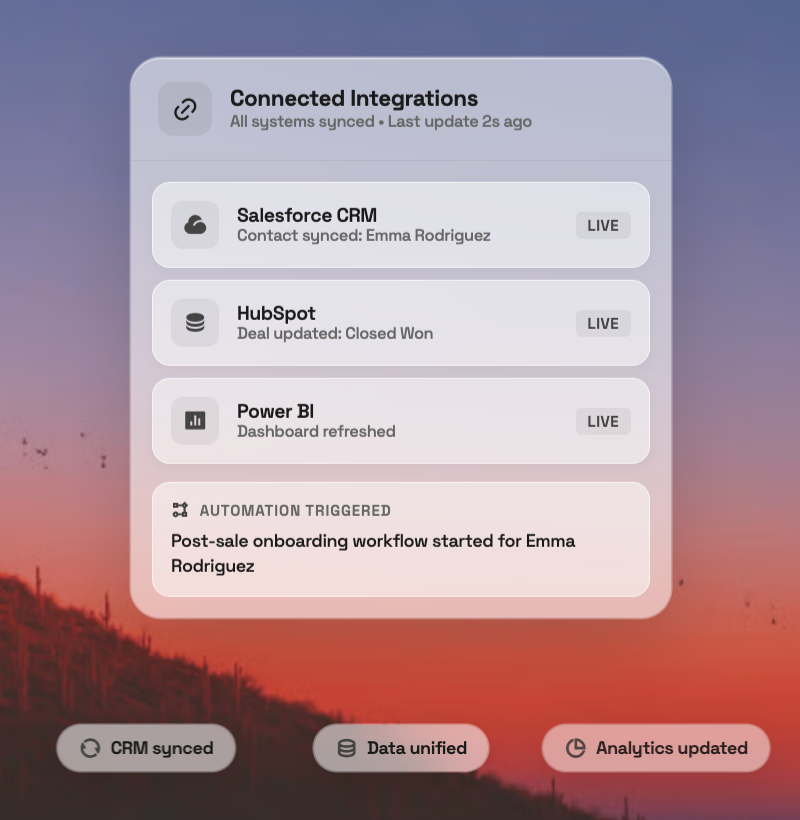
An answering service that doesn’t sync with your CRM and calendar creates a data silo and forces manual rekeying. This means your staff spends time copying information instead of using it, which can impact the results you get from even the top answering services.
Confirm real, direct integration with your specific tools before anything else. XBert connects natively with Google Calendar, Calendly, Cal.com, Zoho, Housecall Pro, Jobber, and ServiceTitan.
Run a real trial
A sales demo shows you the best version of the service in an ideal environment. A trial shows you the Tuesday-at-4-p.m. version, which is the one your customers will experience.
Insist on a trial period. During it, run your own mystery-shopper calls at different times of day, and test for pickup speed, script accuracy, tone, and how the agent or AI handles a request it can’t resolve. Time the pickup. Check whether the call details actually landed in your CRM. Try an edge case and see whether it escalates cleanly or drops the ball.
A provider that won’t offer a trial either knows the experience won’t hold up under scrutiny or locks you into a contract before you’ve even heard a single call. XBert includes a 30-day money-back guarantee, which gives you a real window to test before committing.
Your Answering Service Vetting Checklist
Not all answering services have transparent practices, and that goes for both live professional answering services and those offering AI support.
This checklist will help, so bring it to your next sales call. These questions are essential for vetting answering service providers, so if they can’t answer or don’t offer an answer you like, keep looking.
| Ask the provider | What a strong answer sounds like |
|---|---|
| What are your billing increments? | Per-second or six-second billing, not rounded up to the minute |
| Do you bill for wrap-up time? | No, or it is disclosed and capped up front |
| What are the set-up, weekend, and holiday fees? | Stated in writing, with no surprise surcharges |
| Will you sign a BAA? (healthcare) | Yes, as standard, with encryption. A no is a dealbreaker |
| Are you PCI DSS compliant? (if you take payments) | Yes, for any card data handled over the line |
| Are you SOC 2 certified? | Yes, and they will share the audit report |
| What do you integrate with? | Your CRM and calendar directly, in real time |
| Is there a trial or test period? | Yes, long enough to mystery-shop before committing |
Choose a Partner That Answers Every Call
The framework for choosing the right answering service provider is simple:
- Define your call volume.
- Compare live options against AI providers.
- Decode the pricing.
- Verify compliance.
- Test the provider.
- Run the checklist.
If a provider can’t tell you their billing increment, won’t sign a BAA, or won’t let you trial before committing, that’s your answer. You’re looking for both the features you need and the red flags that the service won’t live up to its marketing.
Here at Nextiva, we stand behind what our marketing promises, prioritizing reliability and customer satisfaction. XBert answers incoming calls 24/7 starting at $99 per month for 100 conversations, books into your calendar and CRM, and routes the complex calls to a person to improve the customer experience. This is true whether you need 24/7 coverage during business hours or you only need after-hours support.
And the best part? When you’re ready to scale, we can scale with you. Nextiva’s business phone service and contact center are built on the same platform, so you won’t outgrow the system.
Ready to streamline customer service and improve your CX? See how XBert works.
Eliminate busywork with the XBert AI assistant.
XBert answers calls, handles chats, books appointments, and resolves issues — all on its own. An AI employee trained on your business, so your team can focus on what actually moves the needle.