

 Customer Experience
  Blog
Blog  Business Communication
  Leadership
  Marketing & Sales
  Nextiva News
  Productivity
  VoIP
VoIP 

Many organizations believe they have a feedback problem. In practice, the issue is usually follow-through.
Customer feedback is everywhere, from customer support tickets to survey responses and customer complaints. Yet teams that could actually fix what’s broken never see the signal through the noise.
Organizations focusing on customer experience (CX) see higher returns on investment and better customer retention than those that treat it as an afterthought. But most feedback never translates into action because it lives in the wrong place or reaches the wrong people. The gap between listening and improving has become the defining challenge for CX operations.
What Customer Feedback Tools Are
Customer feedback tools are platforms that help businesses collect, analyze, and act on customer input across touchpoints like customized surveys, digital channels, support interactions, and reviews.
Unlike spreadsheets and email threads that can’t handle the volume or complexity of modern feedback streams, these platforms go beyond basic survey distribution. They:
- Centralize feedback instead of leaving it scattered across systems
- Automate analysis that would otherwise require entire teams
- Support ongoing Voice of the Customer (VoC) programs rather than one-off surveys

The strongest tools connect feedback directly to the systems teams use daily, like customer relationship management (CRM) platforms, ticketing queues, and agent dashboards.
The best customer feedback tools exist to protect customer retention by surfacing friction points early and preventing churn.
Why Customer Feedback Tools Matter More in 2026
Here are some key reasons why you need customer feedback tools in your tech stack:
Feedback volume has exploded
Customers share opinions across more channels than ever. Every interaction, whether it’s a social media comment or review, generates a signal.
Manual analysis no longer scales and isn’t sufficient because customers want frictionless experiences. Teams that still rely on spreadsheets or misaligned tools risk missing patterns, introducing bias, and creating data ownership silos and gaps that slow action on customer feedback.
According to Gartner, while 93% of customer service organizations deploy surveys, leaders see them as less valuable than other VoC collection methods due to low response rates. What’s more, surveys capture only what’s asked, creating knowledge gaps between CX and customer expectations.
Then there’s survey fatigue, which affects response rates. According to Sue Duris, a strategic CX and business transformation leader, organizations only get response rates of up to 15%. Yet they use that small volume of feedback to make decisions that impact customers.
Aggregation driven by artificial intelligence (AI) is now essential infrastructure, giving teams the functionality to surface signals and trends and act sooner.
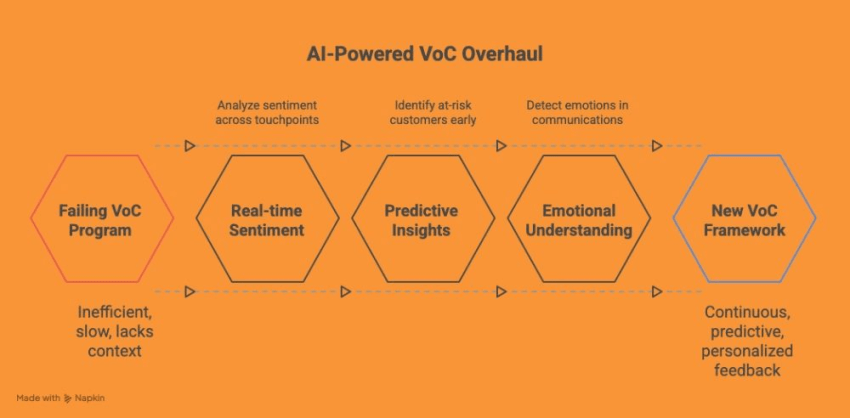
Customer experience is directly tied to retention and revenue
Around 32% of customers will stop doing business with a brand, even if they love said brand, after just one bad user experience.
Poor onboarding and customer service drive churn faster than pricing changes. Feedback highlights friction long before it appears in revenue reports.
The link between CX and growth has only intensified in recent years. Foundational research from Forrester established that customer-obsessed organizations report 2.5 times greater revenue growth than their peers. In the AI era, this gap is widening.
Successful businesses now recognize that protecting lifetime value depends on agentic feedback loops, where AI doesn’t just report the complaint but also drafts the solution or apology for the human agent to review.
Leadership expects proof, not anecdotes
Executives want data tied to outcomes. Sentiment scores mean little without a clear connection to Net Promoter Score (NPS) movement or churn reduction. Feedback tools that can’t link what customers say to what actually happens get ignored.
Trend reporting helps justify CX investments because it answers the question every Chief Financial Officer asks: what changed, and did it matter?
Key Capabilities to Look For
Below are some key capabilities to look for in customer feedback tools:
Omnichannel feedback collection
Effective platforms ingest input from sources like email surveys, in-app widgets, SMS prompts, post-ticket surveys, and third-party review sites. They meet customers where conversations already happen instead of forcing them into separate feedback portals.
The best tools make collection seamless, automatically triggering surveys at the right moments or embedding them directly into the product. If feedback feels like extra work for customers or teams, adoption could fail.
AI-powered analysis
A 2024 Gartner survey revealed that 85% of customer service leaders are looking to explore conversational GenAI, with 11% already piloting customer-facing Gen AI technology.
Meanwhile, Zendesk CEO Tom Eggemeier wrote that AI adoption will continue to gain traction, paving the way for 100% of customer interactions involving AI, and that 80% of inquiries will be solved without human intervention.
Sentiment detection across open text identifies patterns that human analysts would take weeks to surface. Automatic tagging and theme discovery turn thousands of comments into prioritized insights.
Trend detection catches shifts in customer mood before they become full-blown issues. For instance, AI summaries reduce manual reporting effort to give teams more time to fix the issues that feedback reveals.
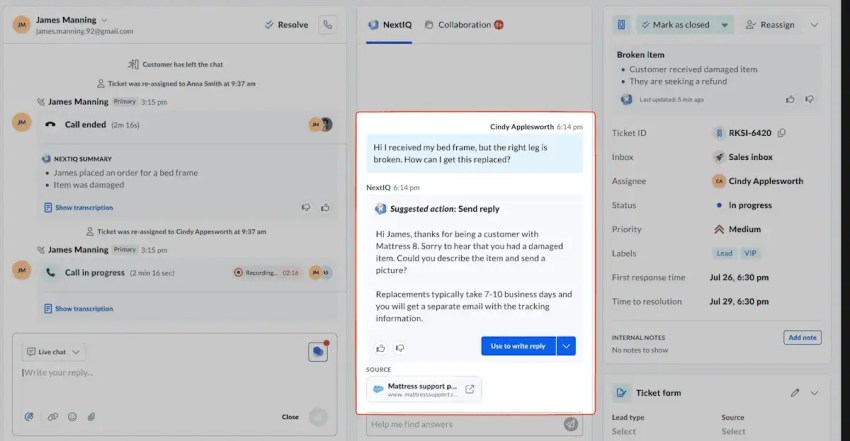
Natural language processing analyzes what your customers are saying and detects recurring issues. This allows you to accurately capture each issue and surface the reasons behind, say, a rating given by a customer.
The problem is that teams often struggle with using AI effectively because of barriers to adoption, which, in turn, are fueled by privacy concerns and restrictive corporate environments.
This creates a disconnect that prevents teams from utilizing customer data to gain actionable insights. By adopting the right AI-powered customer feedback software, you can analyze data like transcripts to identify patterns and recurring pain points. It can also frame problems and generate ideas based on data input, such as market research or customer feedback.
But while AI tools can summarize feedback across multiple channels, they might still gloss over important insights, making human oversight essential. Use AI-powered customer feedback tools not as a replacement for human judgment but to bridge knowledge or analysis gaps, especially in areas your team finds challenging.
Closed-loop workflows
Collecting customer feedback accomplishes nothing if it never triggers action.
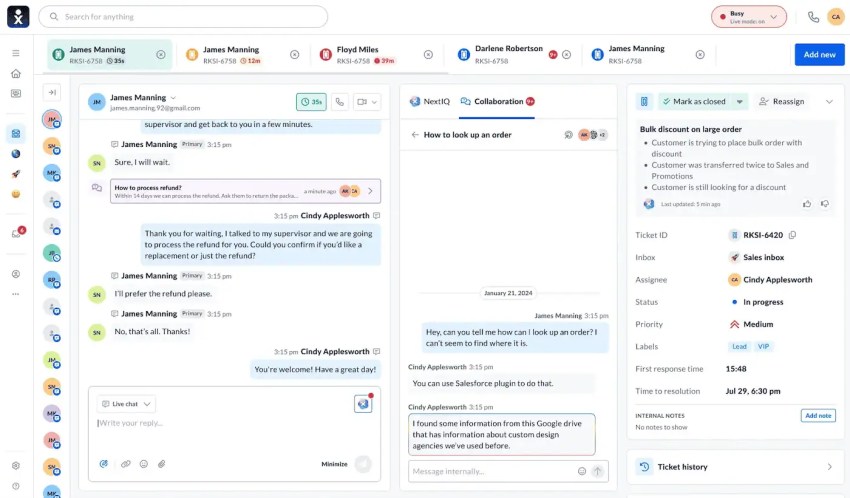
Alerts for negative or urgent feedback ensure the right people respond in real time. Task assignment and ownership turn insights into accountable work, while CRM and ticketing system integrations keep feedback connected to the customer record.
Follow-up tracking and resolution visibility close the feedback loop by confirming issues are resolved. This capability separates systems that drive change from those that merely collect data.
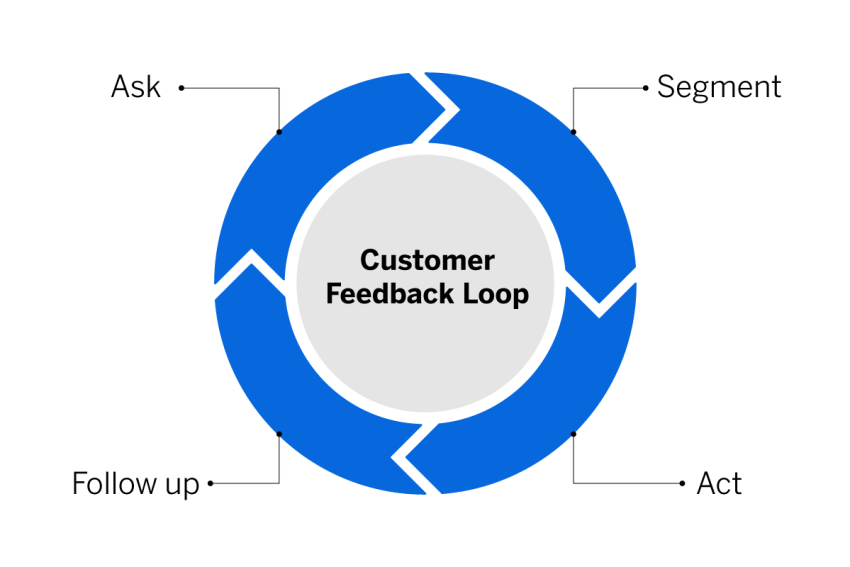
Crucially, the best customer feedback tools write this data back to your system of record. Instead of feedback dying in a survey dashboard, the tool should update the customer’s profile in your CRM (like Salesforce or HubSpot). This provides the next salesperson or support agent who speaks to the client with full context on their recent sentiment.

Reporting and dashboards
Real-time visibility matters for teams and leaders alike because it creates the clarity needed to act and adjust approaches accordingly. It reveals emerging risks and opportunities so teams can pivot strategy quickly.
Segmentation by product, location, channel, or customer type reveals patterns or hidden issues that aggregate scores hide. Historical trends and benchmarks show whether initiatives are driving real progress or just sustaining current outcomes.
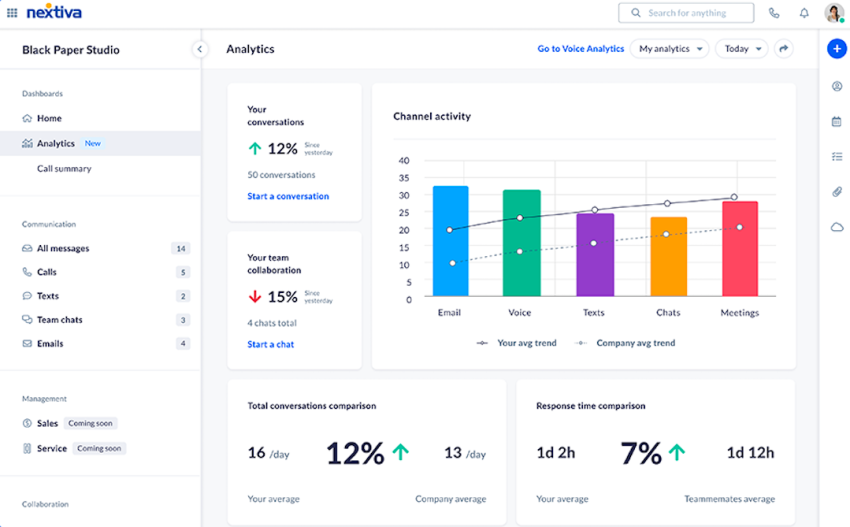
Export and sharing options ensure all stakeholders see what matters. Your customer experience dashboards should answer executive questions quickly: What changed? Why? Who’s affected? What are we doing about it?
Top 7 Customer Feedback Tools
Here are the top customer feedback tools you need to try:
Nextiva
Best for: Teams that want feedback connected directly to customer conversations and CX operations.
Why it stands out:
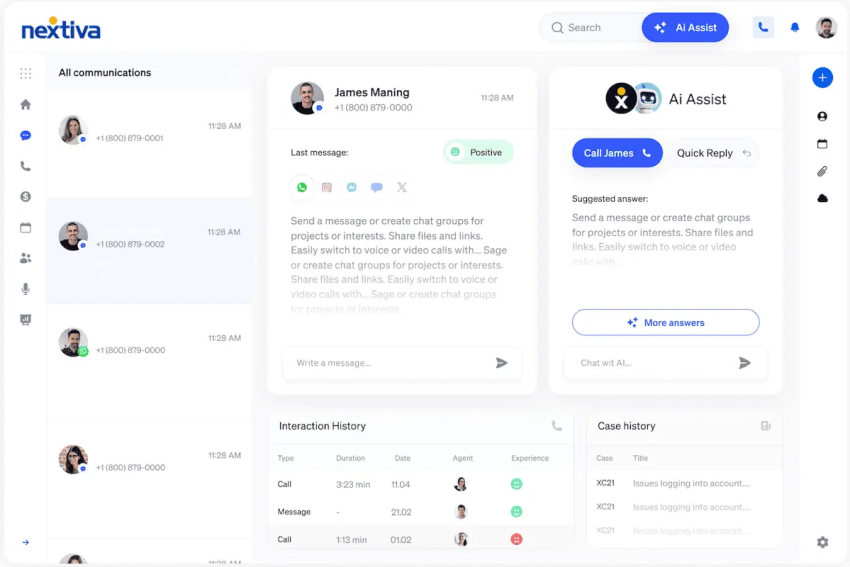
Most customer feedback tools rely on active feedback, waiting for a customer to fill out a survey. Nextiva unlocks passive feedback by analyzing the conversations already happening across voice and digital channels.
Nextiva uses AI to analyze sentiment in call recordings and chat transcripts, turning every customer interaction into a key data point. This single source of truth connects what customers say (sentiment) with what agents do (resolution), showing the root causes of churn that standard surveys often miss.
G2’s 2025 Winter Reports recognized Nextiva as number one across 13 reports spanning five categories, including contact center and unified communications as a service platforms.
Key strengths:
- Feedback collection embedded into customer interactions, not isolated surveys
- AI-powered insights layered on real customer conversations
- Unified dashboards that connect sentiment to call data, agent performance, and resolution outcomes
- Native workflows that help teams respond faster across departments
Ideal use cases:
- Support and CX teams measuring post-interaction satisfaction
- Businesses consolidating communication and feedback systems
- Organizations that need feedback data tied to actual service delivery
Zonka Feedback
Best for: AI-driven feedback management and closed-loop programs
Why it stands out:
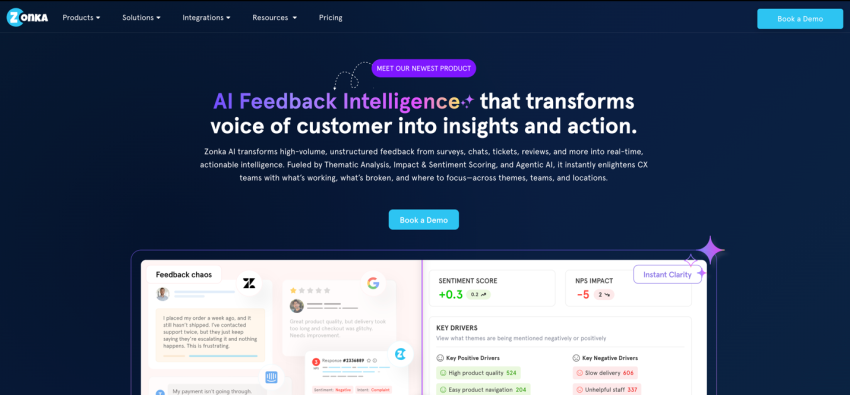
Zonka transforms raw feedback into prioritized actions through automation and AI analysis. The platform’s thematic analysis uses AI and machine learning to automatically group unstructured feedback, identify patterns across locations and products, analyze context, and surface key insights.
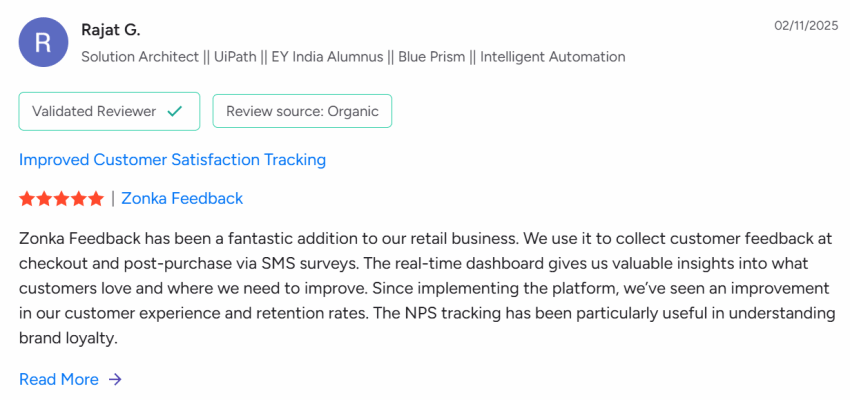
The centralized inbox consolidates structured and unstructured data. Meanwhile, its reputation management capabilities let you monitor and address negative feedback automatically. It lets you assign reviews to specific teams, set real-time alerts, and track resolution.
Key strengths:
- Omnichannel survey distribution, including email, web, SMS, WhatsApp, and kiosks
- AI-based sentiment, emotion, and theme detection
- Centralized inbox for assigning and tracking follow-up actions
- Strong reporting for NPS, customer satisfaction score, and customer effort score
Ideal use cases:
- CX teams running structured VoC programs across multiple channels
- Retail, health care, and service organizations with distributed locations needing location-level insights
Qualtrics
Best for: Large-scale enterprise VoC and research programs
Why it stands out:
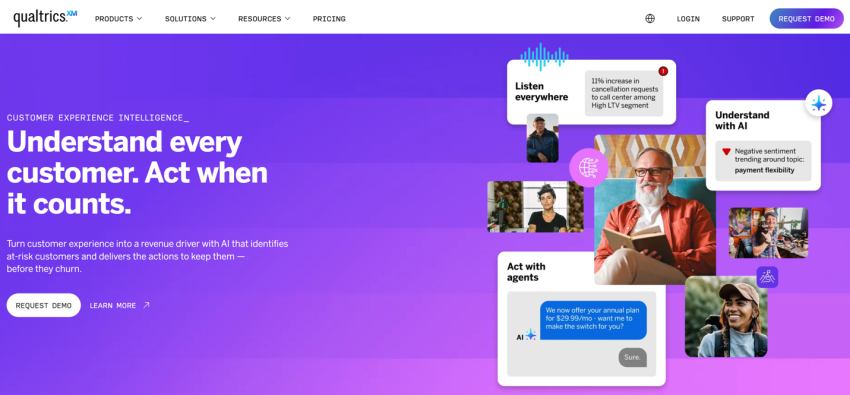
Qualtrics is built for depth and complexity, making it a great tool for complex surveys and feedback systems that need advanced analytics.
The platform supports advanced survey logic, statistical analysis through Stats iQ, sophisticated text analysis via Text iQ, and predictive modeling based on sentiment trends. Processing over 3.5 billion interactions annually means its AI models train on diverse data, allowing it to deliver more accurate predictions.
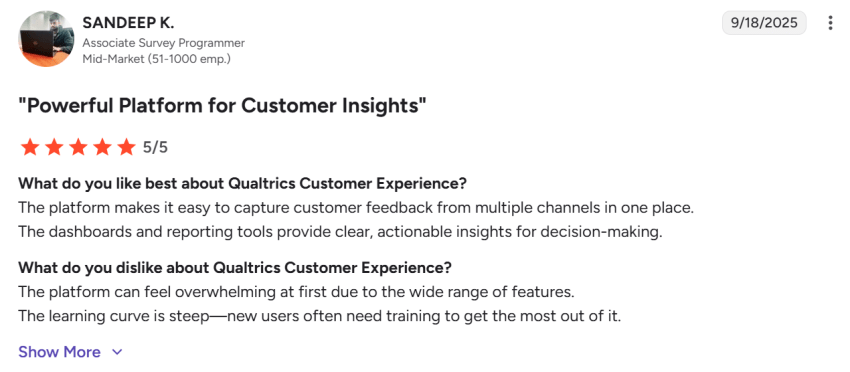
Qualtrics’ robust capabilities are best for organizations with dedicated CX analysts. The platform offers immense power, but extracting its full value requires a team comfortable with complex statistical modeling and logic.
Key strengths:
- Powerful text analytics and driver analysis
- Broad channel coverage and role-based dashboards
- Enterprise-grade governance and security
Ideal use cases:
- Global enterprises with dedicated CX teams
- Organizations running formal research alongside CX measurement
InMoment
Best for: Advanced CX analytics and journey insights
Why it stands out:
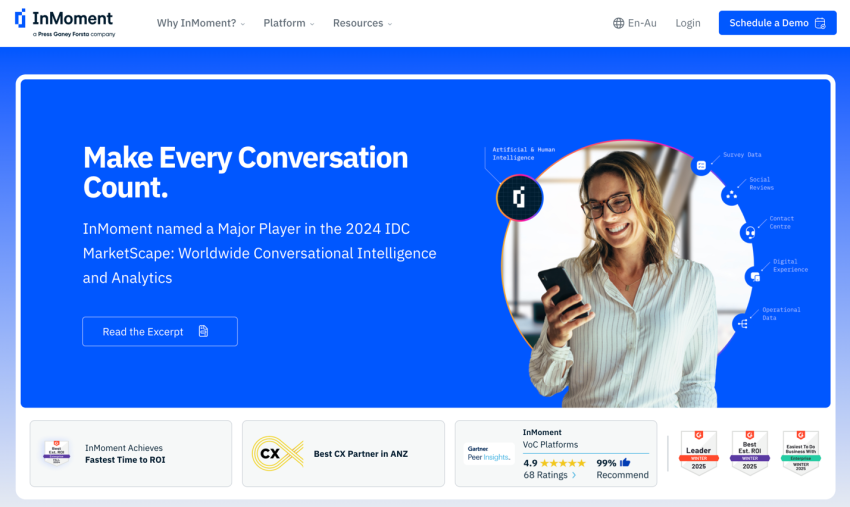
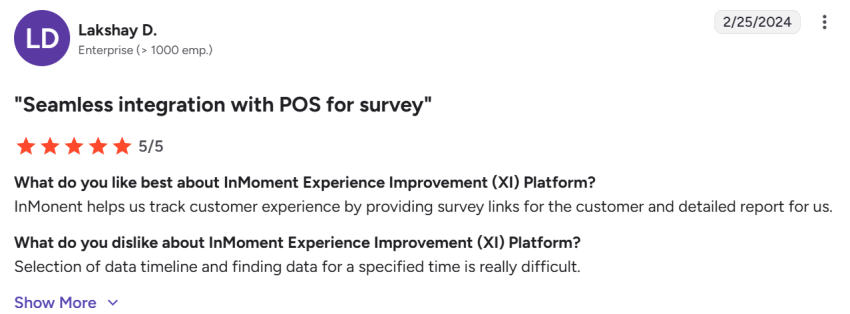
InMoment connects feedback to customer journeys and predictive insights. The platform integrates structured and unstructured experience data across every customer interaction, allowing you to generate rich customer insights that survey responses alone miss.
The Active Listening feature adapts questions in real time based on responses. Its text analytics capabilities process unstructured data from calls, emails, chats, and help desk tickets to help teams create integrated CX analytics and improve customer experiences.
Key strengths:
- AI-powered text and intent analysis
- Omnichannel ingestion, including surveys, reviews, and interactions
- Case management and alerting for frontline teams
Ideal use cases:
- Enterprises optimizing experiences across entire journeys
- Brands with complex service ecosystems
SurveyMonkey
Best for: Simple, scalable feedback and survey programs
Why it stands out:
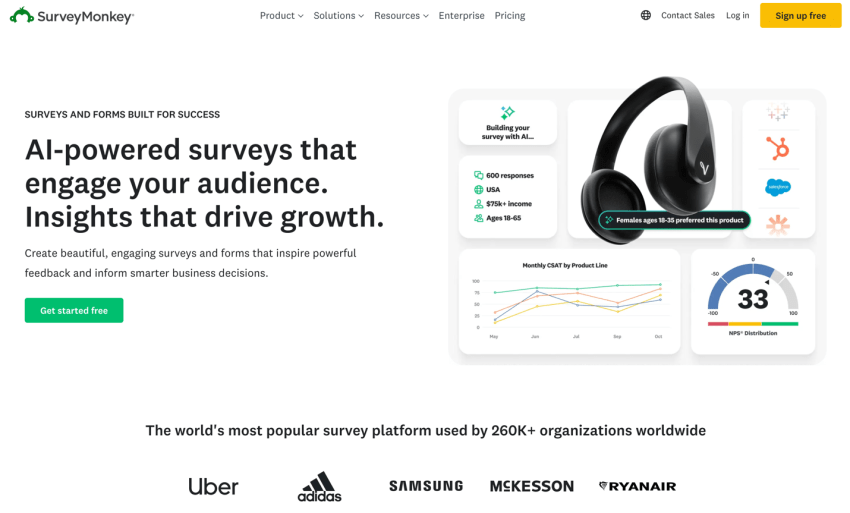
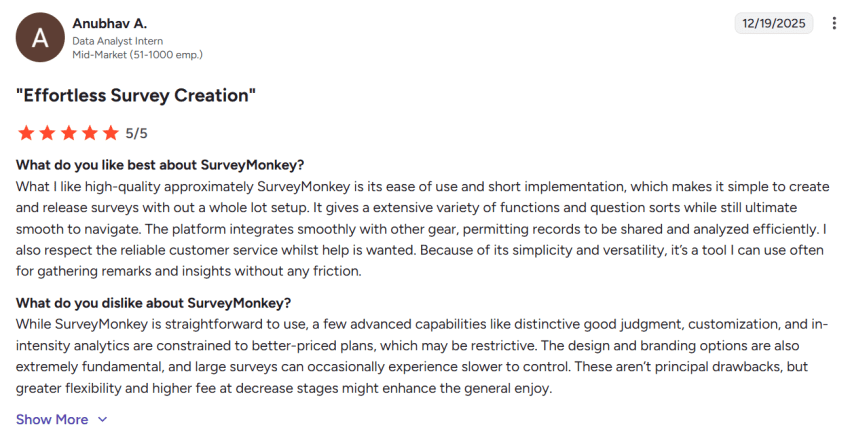
SurveyMonkey prioritizes ease of use when it comes to data collection. The user-friendly interface, extensive template library, automation features, and quick, beginner-friendly setup make this survey tool accessible for nontechnical users. This explains its popularity as a starting point for building feedback programs.
Advanced features include AI-assisted customizable survey creation and sentiment analysis. While the platform’s strength remains its simplicity and ease of use, it lacks the deep, predictive behavioral analytics found in enterprise-grade platforms like Qualtrics or InMoment.
Key strengths:
- Large template library for common survey types
- Basic AI-assisted survey creation and analysis
- Familiar interface with a quick learning curve
Ideal use cases:
- Small and medium-sized businesses and teams running lightweight project-based feedback programs
- Organizations prioritizing deployment speed over deep automation
Typeform
Best for: Conversational and visually engaging feedback collection
Why it stands out:
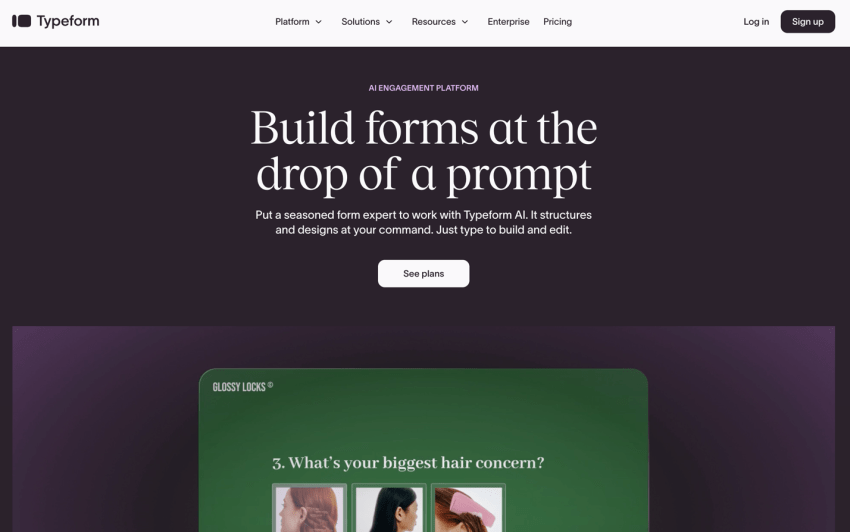
Typeform lets you create engaging and interactive targeted surveys designed to facilitate conversations, helping you generate higher completion rates compared to traditional multi-question forms.
The conversational flow adapts based on the respondent’s answers, and the visual editor enables extensive customization. Integration with over 120 applications makes it easier to trigger follow-ups, score leads, and sync responses to other CRMs.
Key strengths:
- Conversational survey flows
- Strong personalization and logic
- Wide integration ecosystem
Ideal use cases:
- Marketing and product teams that are prioritizing digital engagement and brand consistency
- Website and in-app feedback
- Startups validating customer pain points and product-market fit
AskNicely
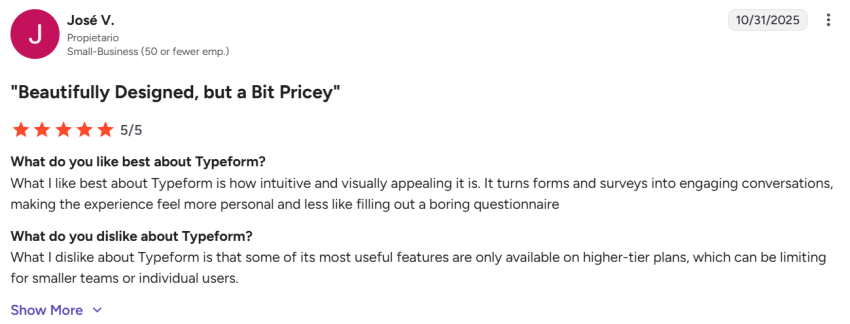
Best for: Always-on NPS programs tied to team performance
Why it stands out:
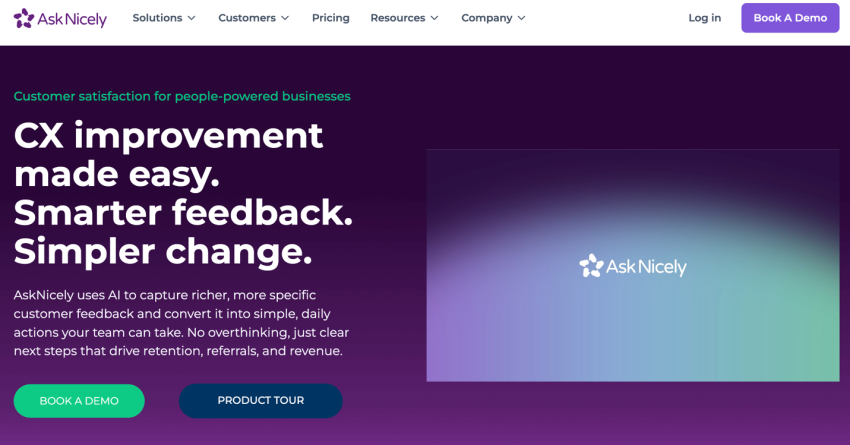
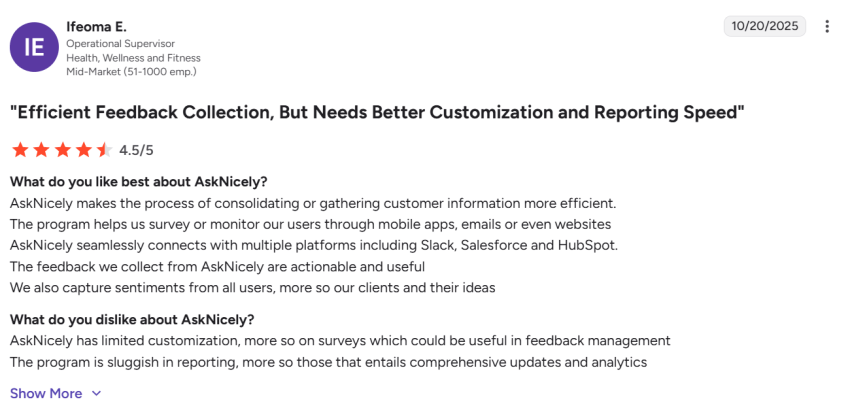
AskNicely leverages the NPS framework, allowing you to capture richer user feedback and create tailored, flexible activations for frontline teams. The system automatically collects feedback, analyzes NPS data, and surfaces results based on real-time information.
The platform enables performance visibility at individual and team levels. Real-time feedback alerts notify team members when scores change.
AskNicely also has integrations that let you share survey results with your team in real time. For instance, integrations with Salesforce and Slack help streamline sharing.
Key strengths:
- Automated NPS workflows
- Real-time alerts and follow-ups
- Team-level reporting and benchmarking
Ideal use cases:
- Service and frontline-driven organizations
- Businesses prioritizing loyalty measurement
Explore other key customer feedback tools and decide which one your business truly needs today.

High-Growth CX Teams Trust Nextiva
Customer feedback tools are no longer nice-to-haves. They’re now central to helping you understand customers, act faster, and protect long-term value.
They’ve become operational engines that determine whether you retain customers or lose them. The strongest solutions connect customer feedback directly to real interactions and workflows. They can surface patterns you’d otherwise miss, helping turn valuable insights into action.
Choosing a customer feedback tool comes down to one question: Does it turn insights into measurable experience improvements that protect revenue and drive business growth?
Nextiva treats feedback as inseparable from customer conversations. When collection, analysis, and operational data live in the same platform, your team goes beyond just collecting data and instead transforms customer feedback into real, measurable experience gains across the entire customer journey.
Build Amazing Customer Experiences
Transform customer experience on a Unified Customer Experience Management platform designed to help you acquire, retain, and grow your customers.