

 Business Communication
  Blog
Blog  Customer Experience
  Leadership
  Marketing & Sales
  Nextiva News
  Productivity
  VoIP
VoIP 
Many people who work remotely seek out “third places” outside their home offices to work, socialize, and enjoy a different setting, as remote work is becoming more the norm. And with the rise of reliable business communication systems, remote employees can stay connected anywhere, as studies show that nearly 36 million Americans in 2025 worked remotely in some capacity.
One of the most popular places for workers to do so is coffee shops and cafés. Coffee shops and cafés fulfill all three desires, as many provide efficient internet, plenty of space, and much more for people to take business calls, open emails, and crunch numbers—all while enjoying a much-needed caffeine boost at the same time.
Through an analysis of the 200 most populous U.S. cities, we’ve uncovered the best and worst “third place” destinations across America based on factors such as the number of coffee shops per capita, each shop’s Wi-Fi availability, average price of a latte, pastry, and more.
Nextiva also surveyed 600 American workers to uncover the habits and preferences of a remote workforce when they decide to turn cafés and coffee shops into their office.
Here are the findings from our research on America’s top third places to work.
20 Best ‘Third Place’ Cities in the U.S. for Remote Work in 2026
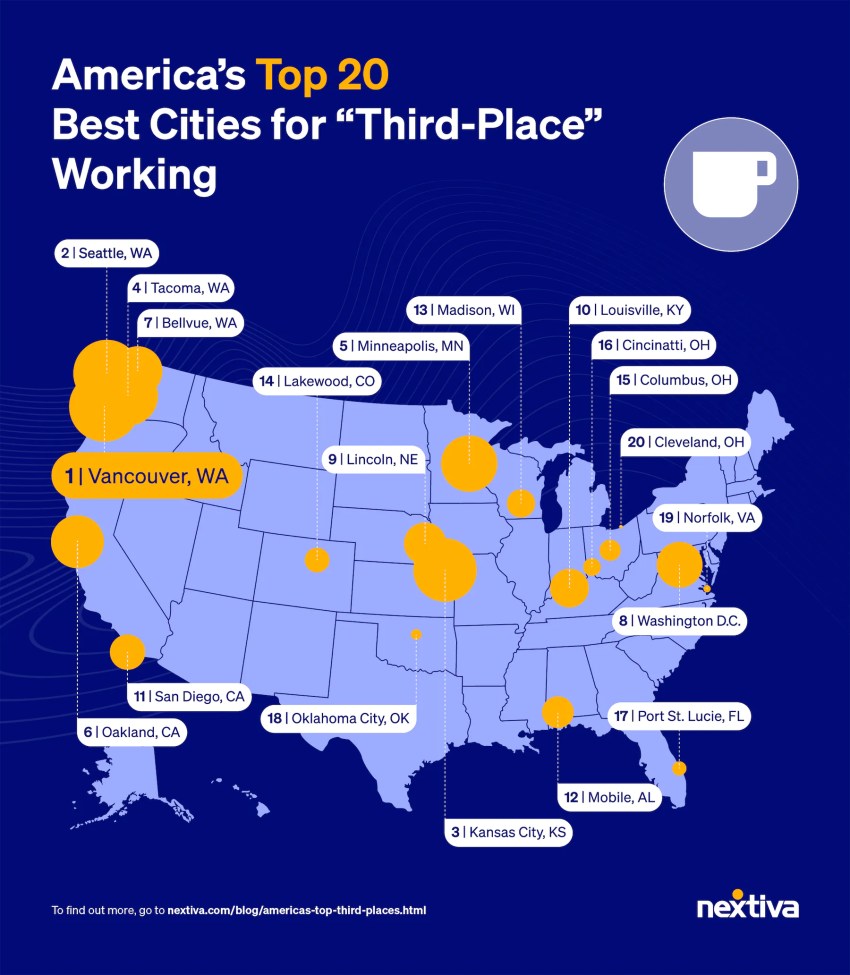
Vancouver, WA, ranks as the #1 “third place” city for remote workers
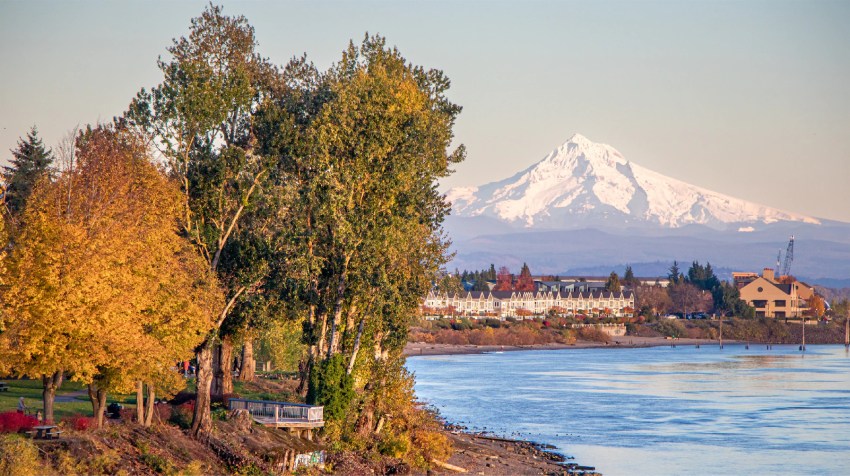
Vancouver, Washington, takes the top spot as the best “third place” city for remote work. Washington state has pioneered modern coffee culture in the U.S., particularly the concept of the coffee shop as a community space, and Vancouver has become one of the leading cities in this category.
With about 35 coffee shops per 10,000 residents, Vancouver offers many options for people to sit down and get work done outside the home office. Vancouver coffee shops and cafes, on average, charge visitors $5.35 for a latte and $4.75 for a pastry. Vancouver also has 23 of its 25 highest-rated coffee shops rated four stars or more, and most provide free, reliable Wi-Fi alongside adequate seating and outlets to keep remote workers charged up, connected, and caffeinated enough to get through the workday.
Seattle, WA, ranks as the #2 best “third place” city for remote workers
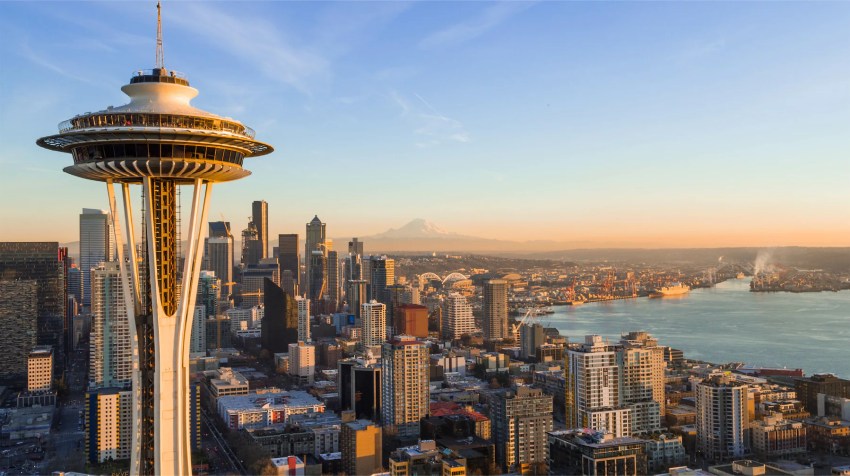
Seattle, Washington, is the second-best “third place” city for remote work. As the birthplace of Starbucks, Seattle is host to 760 big-name and local coffee shops – roughly 10 per 10,000 Seattle residents, giving remote workers in the area plenty of “third place” options.
On average, patrons spend $6.33 on a latte and $5.46 on a pastry while working. On top of that, Seattle’s best coffee shops provide nothing but high-quality food and drinks for a remote work setting, with all top 25 rated coffee shops having four or more stars, alongside reliable Wi-Fi and charging access–making the city an ideal environment for productivity outside the home office.
Kansas City, KS ranks as the #3 “third place” city for remote workers
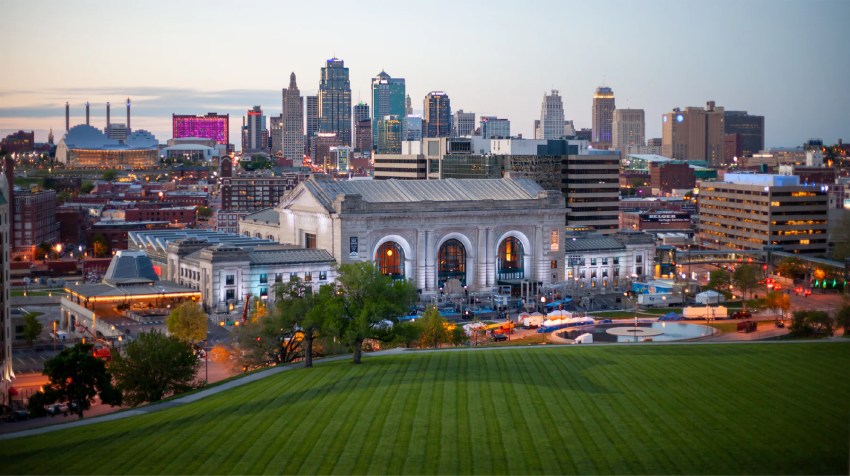
With around eight coffee shops per 10,000 residents, Kansas City, Kansas, rounds off the top three ranked “third place” city for remote work. While it might not be the first city to come to mind, Kansas City’s coffee shops and cafés consistently provide fast Wi-Fi, multiple outlets, and more than enough seating.
Each of the city’s top 25 shops also holds a four-star rating or better–reinforcing their presence as reliable remote work destinations. The city, on average, prices its lattes for a little more than five bucks ($5.50) and around $4.75 for a pastry.
Tacoma, WA, ranks as the #4 “third place” city for remote workers
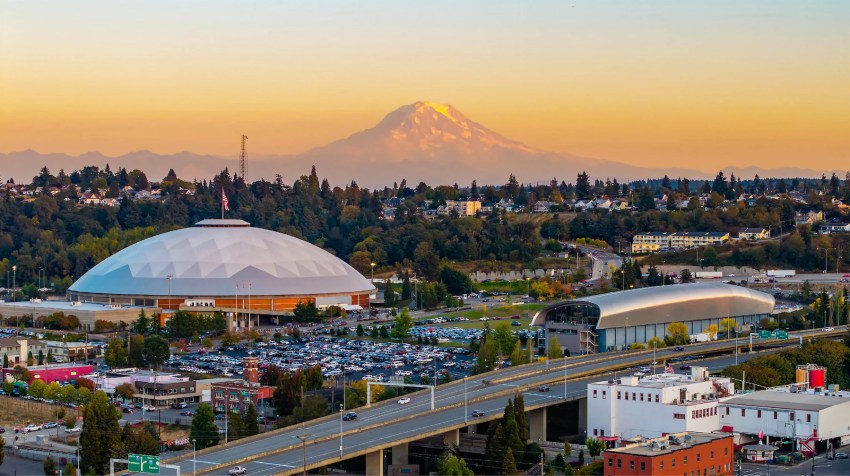
With nearly five coffee shops per 10,000 people, Tacoma, Washington, ranks fourth among “third place” cities for remote workers. Tacoma’s 25 best shops hold a rating of four stars or more, showcasing a highly satisfied customer base.
Beyond quality, Tacoma coffee shops stand out as among the most affordable, with an average latte price of $4.95 and a pastry at $4.50 – offering remote workers an inexpensive alternative workspace with stable Wi-Fi, accessible outlets, and ample seating.
Minneapolis, MN, ranks as the #5 “third place” city for remote workers
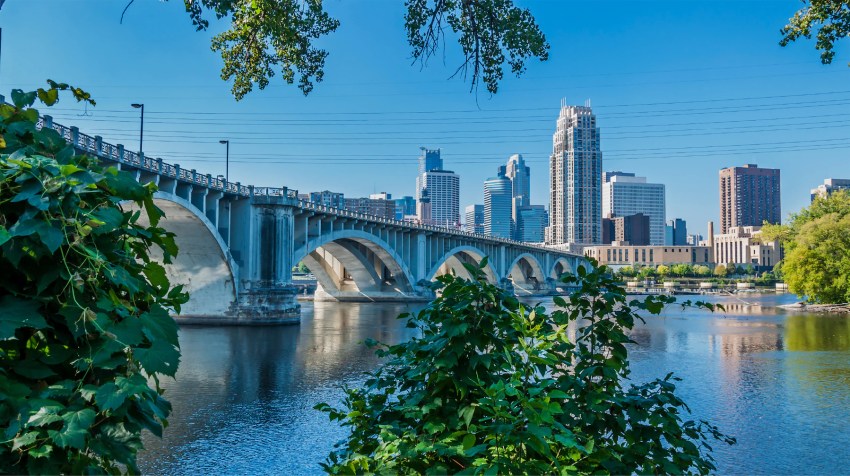
Minneapolis, Minnesota, finishes fifth amongst the top “third place” cities for remote workers. With around four coffee shops and cafés per 10,000 people, Minneapolis prioritizes convenience, comfort, and affordability.
The majority of their shops provide visitors with free Wi-Fi, multiple outlets, decent space, and one of the 20 most affordable prices for a latte at $5.10 and a pastry at $4.43, which is great for remote workers who want a new space and environment to work from without feeling inclined to burn a hole in their pockets for a caffeinated beverage.
Oakland, CA, ranks as the #6 “third place” city for remote workers
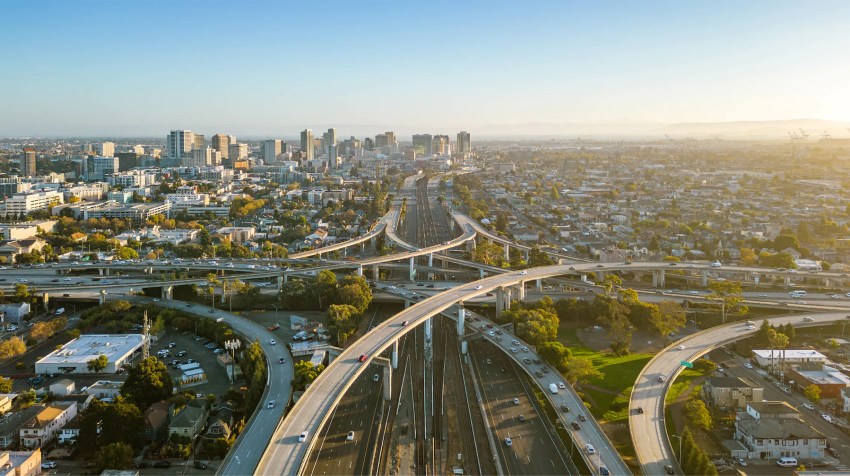
Boasting around five coffee shops and cafés per 10,000 residents, Oakland is the top destination in California, and the sixth “third place” city for remote workers. All but one of Oakland’s top 25 coffee shops have a rating of 4 stars or more, which is extremely important for remote workers when choosing a quality coffee shop to hunker down and work for the day.
Oakland’s coffee shops and cafes, on average, price their lattes at $5.20 and $4.50 for a pastry. The majority of the coffee shops and cafés in Oakland also provide free, fast Wi-Fi, along with charging stations, ensuring visitors can stay connected and charged while sending a message, email, or taking a business call.
Bellevue, WA, ranks as the #7 “third place” city for remote workers
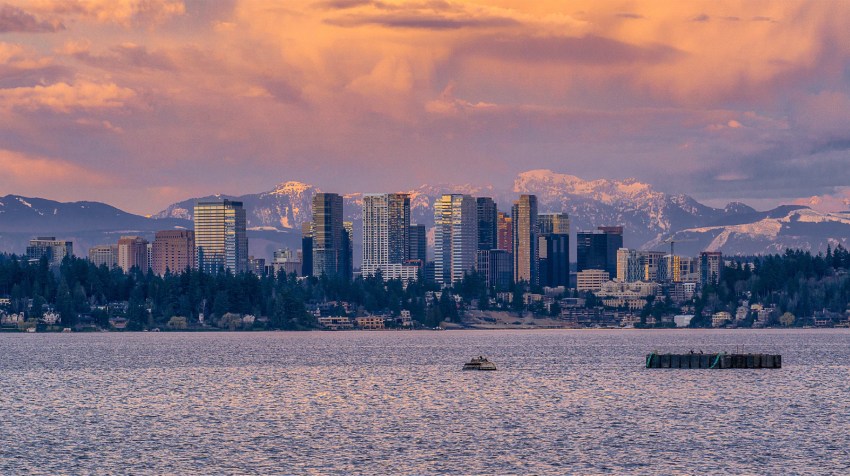
With almost eight coffee shops per 10,000 people, Bellevue, Washington, ranks as the seventh best “third place” city for remote workers in 2026. Bellevue coffee shops and cafes charge on average $5.23 for a latte and $4.85 for a pastry. The city’s café scene combines high visitor ratings with dependable workspace amenities like stable Wi-Fi, accessible outlets, comfortable seating, and 24 of its 25 best shops have four-star ratings or better.
Bellevue mimics its neighboring city, Seattle, providing a mix of quality and convenience — positioning it as a reliable alternative workspace city for remote workers.
Washington, D.C., ranks as the #8 “third place” city for remote workers
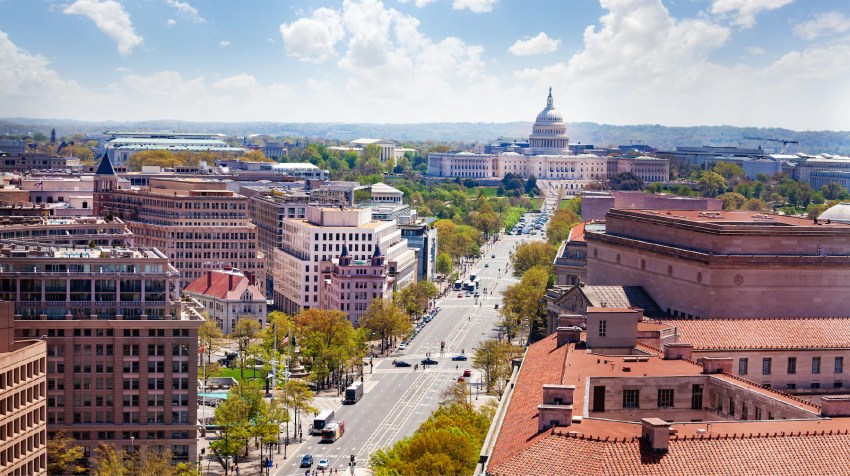
As the eighth best “third place” city for remote workers, Washington, D.C., has a balance of well-rated and affordable coffee shops throughout the city that remote workers can benefit from.
Alongside a $5.20 latte, stable Wi-Fi, and accessible seating, 24 out of D.C.’s 25 best shops are rated four stars or more, while having the fourth lowest average price for a pastry at $4.38 – making the capital’s coffee scene ideal for sweet treats and productivity beyond the typical co-working space for remote workers.
Lincoln, NE, ranks as the #9 “third place” city for remote workers
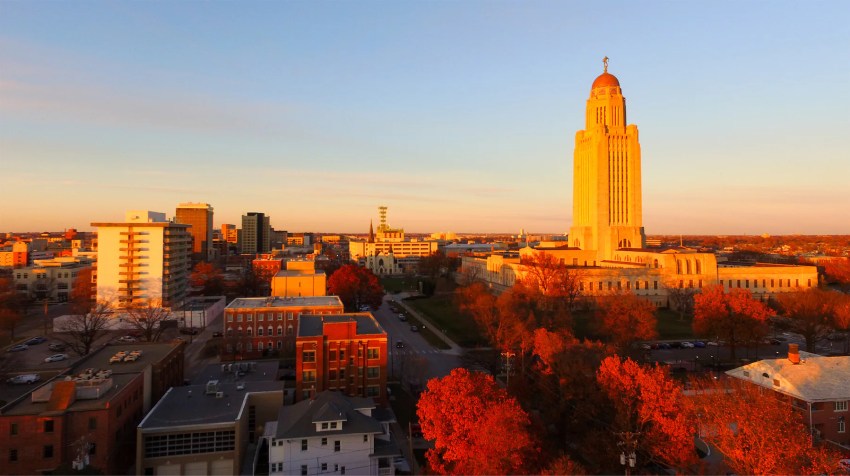
Lincoln, Nebraska, ranks as the ninth-best “third place” city for remote workers in 2026. Like Kansas City, it has a smaller population than other top-ranked cities but offers a strong café network with highly rated establishments and reliable amenities.
On average, coffee shops and cafes price lattes at $5.38 and pastries at $4.75. Strong Wi-Fi, accessible outlets, and comfortable seating across top-rated shops make Lincoln a competitive and cost-effective remote work environment.
Louisville, KY, ranks as the #10 “third place” city for remote workers
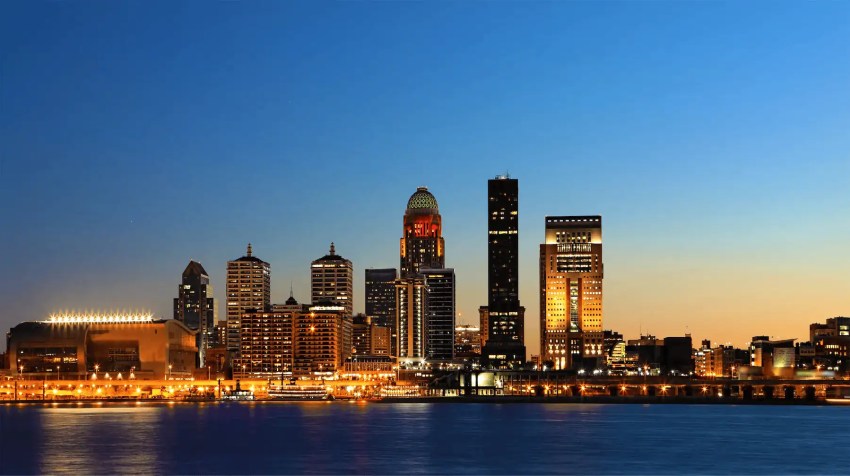
Rounding out the top 10 is Louisville, Kentucky, the 10th-best “third place” city for remote workers. With all of its top 25 shops rated four stars or better, Louisville’s café scene combines strong customer ratings with workspace features, making it ideal for remote professionals seeking to maintain productivity outside the home office.
The city’s coffee shops and cafés also balance quality and accessibility with affordability, as Louisville’s average prices for a latte and a pastry are among the 10 most affordable in the country at $5.05 and $4.33, respectively.
Data: Top ‘third place’ cities for working remotely

The Habits of Remote Workers in Cafés
Cafés and coffee shops are steadily becoming the new “work from home” area for many remote workers across the country. The previous remote work norm was to work solely from home, and now working virtually from coffee shops, cafés, and other locations is becoming mainstream.
Not everyone in the U.S. who works remotely will have the same experiences, nor will they have the same preferences when working from a cafe. Some people love working from a coffee shop because they feel more energized and creatively stimulated by the background buzz and change of scenery compared to the quiet focus of working from home—others simply love that it makes them feel like they have a community.

Attitudes and Preferences for Non-Home WFH Locations
To get a better sense of the habits and preferences of remote employees, Nextiva surveyed 600 workers from across the country who head to coffee shops in search of the perfect mix of caffeine, social energy, and productivity. Here are the findings from our study.
3 in 5 American workers work from coffee shops/cafés throughout the week
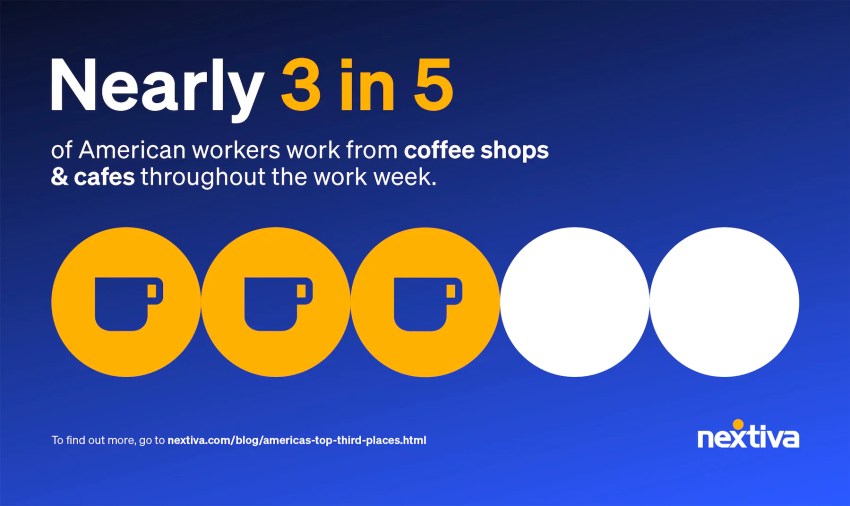
A large portion of American adults (60%) enjoy working remotely from coffee shops and cafés throughout their work week. A majority of adults (31%) work from a coffee shop at least once or twice a week, with the most frequent visitors among Gen Z and Millennials, who work from coffee shops 3-4 days a week (29%). The older demographic, however, particularly Gen X and Baby Boomers, is less likely to work from a coffee shop, with nearly 150 older participants (63.2%) stating they never work from a café.
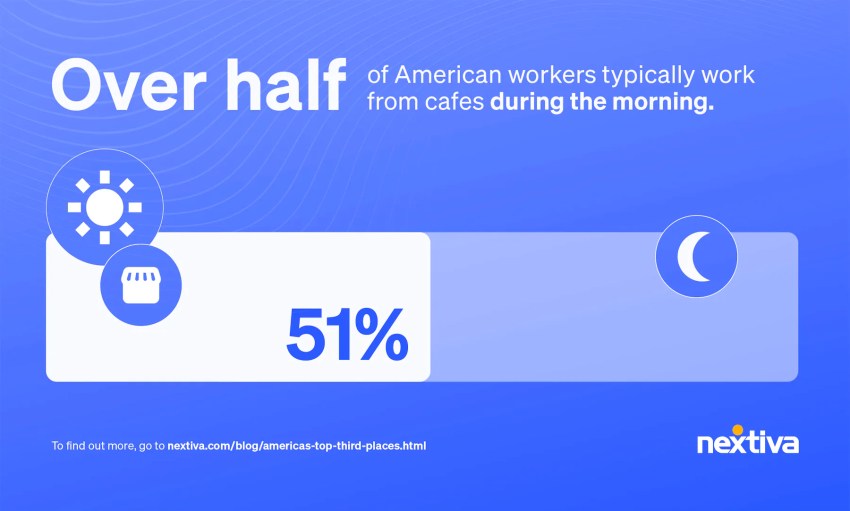
While many remote workers visit coffee shops and cafés throughout the week, the timing of those visits varies and also showcases a pattern in remote work routines. Mornings are the preferred time for the majority of remote workers, with 51.41% typically choosing to work from a café at the start of the day. Afternoons (18.9%) and evenings (8.0%) aren’t as popular, while nearly a quarter (21.7%) report that their timing isn’t as consistent.
Coffee & food quality, seating options, and access to power outlets are major features influencing remote workers’ café choice and visits
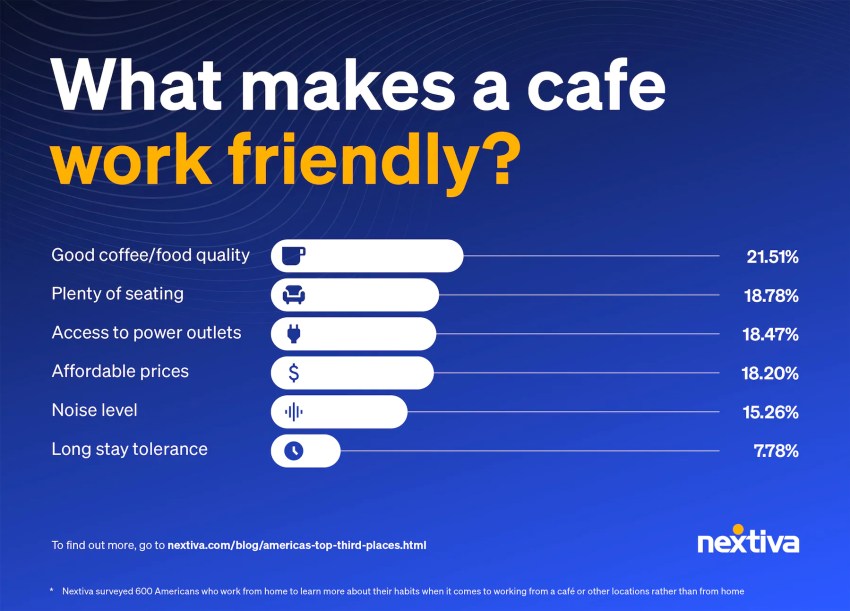
Remote workers are filing into coffee shops and cafés around the country, but it’s the great qualities of these establishments that keep them comfortable and coming back as repeat visitors. Our survey discovered that:
- Good coffee and food quality were the most important factors, with 21.5% of respondents identifying it as a key attribute of a work-friendly café.
- 18.8% of respondents said ample seating was nearly as important to remote workers, underscoring the need for comfortable seating and accommodations that are highly valued.
- Access to power outlets was also a key factor, with 18.47% of respondents indicating it as a top priority.
38% of American workers often feel pressure to keep buying items to stay and work at a café
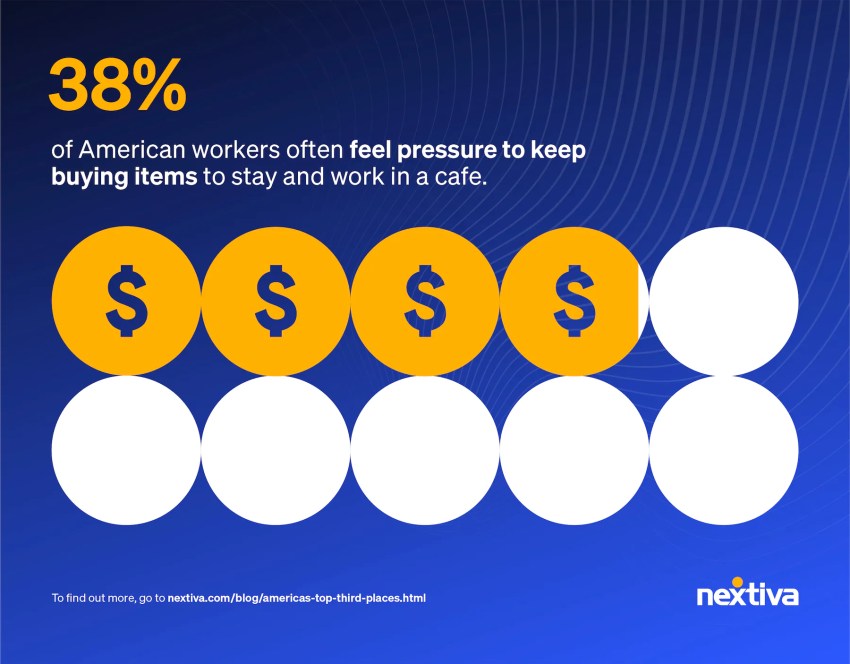
Providing quality coffee, food, and the right amenities is great for retaining remote workers who are looking for a different place to catch up on work calls, messages, and more. However, many remote workers feel financial pressure when working in a coffee shop.
Nearly two in five remote workers (37.96%) sometimes feel pressure to purchase something, while nearly one in every six remote workers (15.09%) always feel pressure to make a purchase when working at a coffee shop or café.
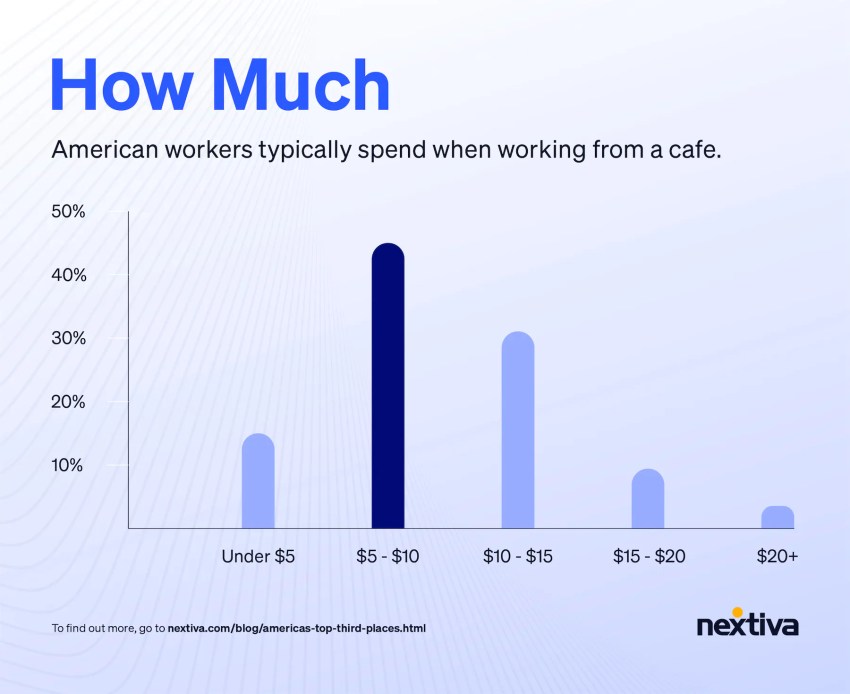
The financial pressures are more evident in the spending patterns of remote workers, as most reported spending between $5 and $15 per visit: 44.65% fell in the $5–$10 range and 30.33% in the $10–$15 range. Only a small minority reported spending less than $5 (14.4%) or more than $20 (2.07%) per visit.
These spending habits are consistent across age, gender, and income, indicating that the presumed need to make purchases is not limited to any particular group.
Nearly 50% of people spend one to two hours working at a café
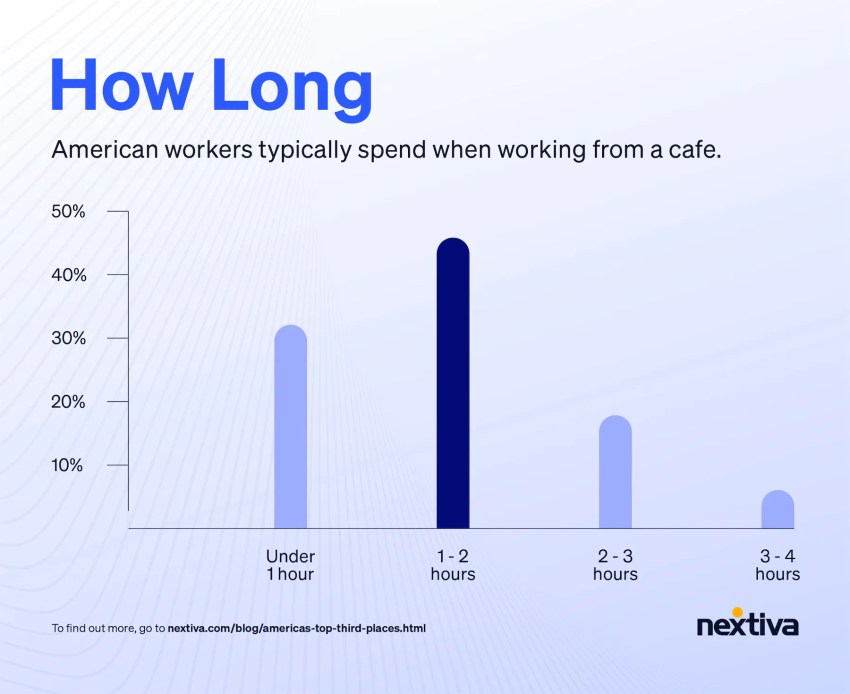
When it comes to the amount of time spent working in a café or coffee shop, the majority (45.76%) typically spend 1–2 hours.
Spending more than a couple of hours isn’t common, as only 22.9% of participants reported spending more than two hours working from a café or coffee shop throughout the week. Beyond productivity, good coffee, and convenience, social connection stands out as a key contributor for remote workers choosing to spend time in coffee shops and cafés.
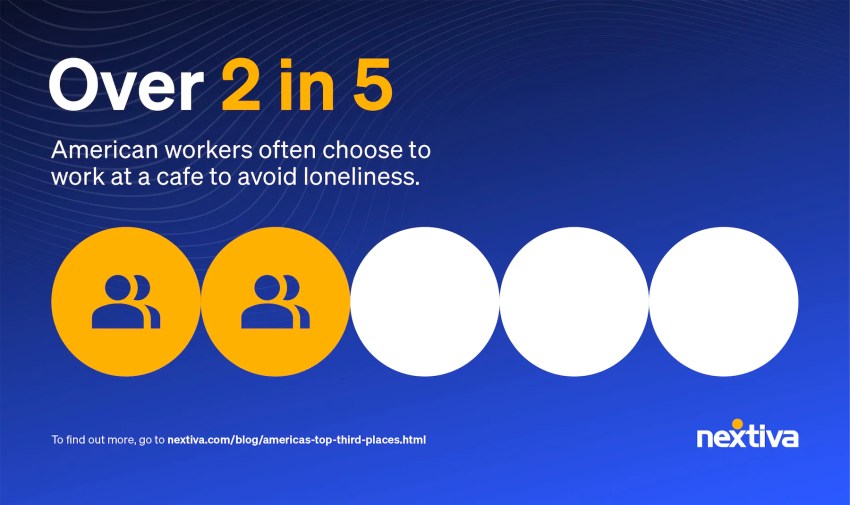
According to the survey, 40.72% of respondents have intentionally chosen a café or coffee shop as their remote work location solely to avoid loneliness. This trend is even more evident among younger adults and individuals expecting children, as most may live alone or have a partner who isn’t a remote worker.
The social aspect of a café provides a more comfortable alternative to the isolation that can be in working from home, although the desire for a more social environment isn’t always about talking to people. Many remote workers simply find comfort in being surrounded by others, even without active conversation, which helps discourage the negative thoughts of working alone.
Over 60% of American workers feel more productive when working from a café compared to at home
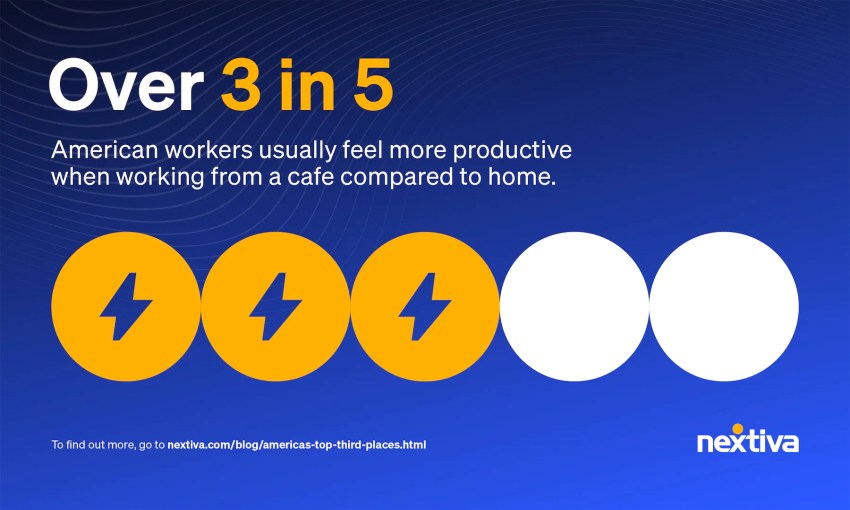
Working from a coffee shop or café offers more than just a different setting, as our survey data show that a little over 3 in 5 (60.55%) of remote workers usually feel more productive when working there. Specifically, 18.38% of respondents report always feeling more productive in cafés, while only a small portion reported rarely or never feeling more productive in these settings.
Overall, many remote workers feel quite positive about working remotely from third places. Here are some of the open responses we received in our study:
- “I feel comfortable, and seeing other people working hard, it gives me a boost in motivation. I love the smell and the atmosphere the most. It’s very soothing and always relaxing.”
- “It makes me feel a sense of belonging because there are other people just like me there doing the same thing.”
- “It makes me feel like I’m part of the community.”
- Working from a coffee shop often feels more inspiring, energizing, and I feel more focused compared to the comfort, but potential stagnation, of working from home.”
- It’s more exciting and thrilling to be around other people, especially given the atmosphere and busy hustle and bustle.”
45% of workers believe their city has enough work-friendly cafés
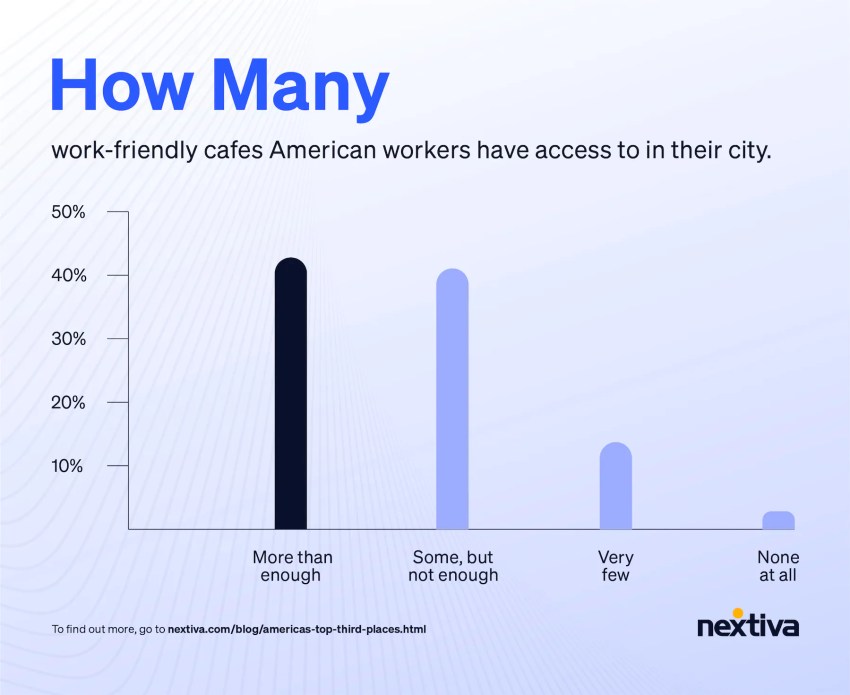
Despite the popularity of remote work from cafés, the availability of work-friendly venues varies across regions and different demographics.
Our survey reveals that while 45% of respondents believe their city has more than enough work-friendly coffee shops and cafés, a combined 55% feel that there are some coffee shops spread throughout their city, while others say there are none at all.
Where American workers have worked remotely in the past
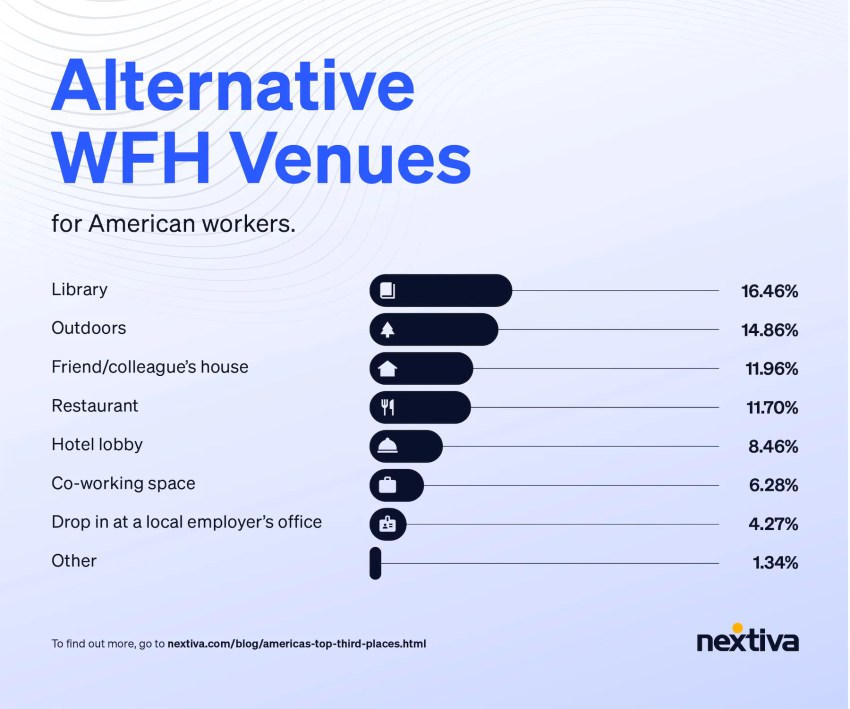
Remote work preferences regarding location and the resources workers use have also become more varied than before.
According to our survey, coffee shops remain the most favored, with nearly one in every four respondents stating they’ve worked from one. However, remote workers also use other areas, with 16.4% having worked from a library, nearly 15% from an outdoor setting, and almost one in every eight from restaurants or a friend or colleague’s house. Other facilities like co-working spaces (17.3%), hotel lobbies (24.3%), and local employer offices (11.3%) also feature in the mix, reflecting the different preferences of remote workers.
Whether feeling stuck at home or wanting a change of scenery, remote workers are now, more than ever, turning to cafés and coffee shops as alternative workspaces. But not all cafés and coffee shops are the same.
From efficient Wi-Fi and accessible power outlets to comfortable seating and high-quality, affordable coffee, the most work-friendly cafés and coffee shops help remote workers stay productive, connected, and determined throughout the day. Understanding what motivates their preferences reveals not only how remote workers choose their “third place” but also where cafés have the best opportunities to serve this ever-growing audience.

Methodology
To rank the top “third places” for remote work, Nextiva analyzed 200 of the most populous U.S. cities based on the number of coffee shops per 10,000 residents in each city, the number of top 25 Yelp-recommended cafés with ratings of 4 stars or higher, and the average local cost of a latte and croissant. We further evaluated the two most-reviewed cafés in each city to assess whether they have adequate seating and reliable Wi-Fi, helping determine the top “third place” in the U.S. for remote work.
Additionally, Nextiva surveyed 600 Americans who work from home to learn more about their habits when working from cafés or other locations rather than from home. Data accurate as of February 18, 2026.

Start calling for just $15/mo.
See why over 100,000 businesses switched to Nextiva. Now you can get it all for $15/month per user.