

 Customer Experience
  Blog
Blog  Business Communication
  Leadership
  Marketing & Sales
  Nextiva News
  Productivity
  VoIP
VoIP 

Restaurant margins have never been tighter. Between rising food costs, labor shortages, and the demand for instant service, operators are being squeezed from both sides.
In 2026, artificial intelligence (AI) has become a survival mechanism. Precedence Research data notes that, in 2026, the global value of AI in marketing is expected to hit $32.73 billion. For restaurants, this will mean increased use of AI to fix the invisible friction, including the missed phone calls during dinner rush, the over-staffed Tuesday lunches, and the ingredients that spoil before they can be used. AI is the difference between a chaotic shift and a profitable one.
In this article, we’ll explore how AI is being thoughtfully deployed in the restaurant world, where meaningful ROI is emerging, and how communication platforms like Nextiva can play a pivotal role in enabling restaurants to harness AI not just for efficiency but for deeper, more personalized engagement with guests.
Try the best AI answering service free for 14 days
XBert AI answers questions and captures leads. Add your 24/7 answering service in minutes.
What AI in Restaurants Really Means
AI is emerging as a tool for both front-of-house and back-of-house operations for restaurants. Restaurant teams can use intelligent software to automate routine tasks, analyze patterns and anticipate demand, and keep service quality consistent.
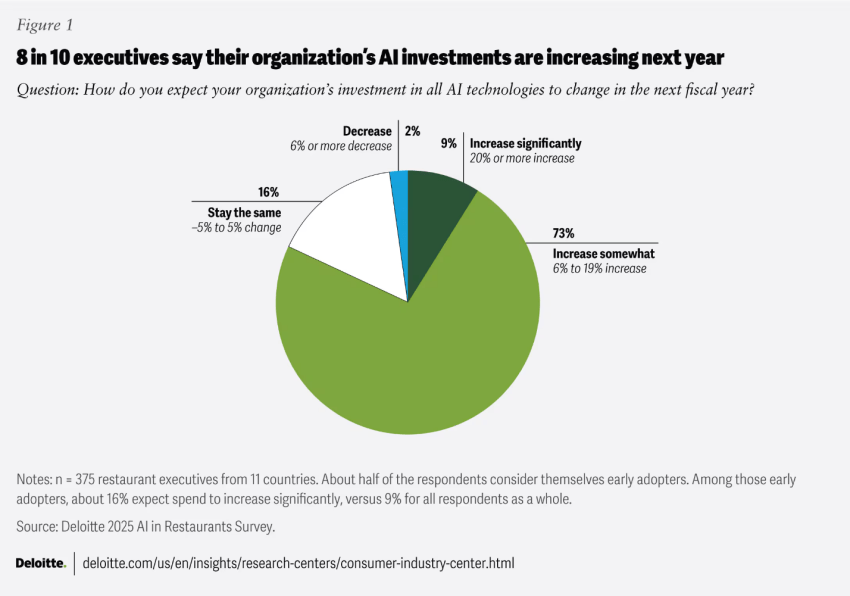
During peak hours, a missed or delayed call means more than just a lost reservation — it affects the guest experience. An automated, AI-powered answering service allows restaurants to keep up with demand spikes so frontline teams can stay focused on core operations. According to Deloitte’s 2025 survey of restaurant leaders, 8 in 10 executives plan to increase investments in AI, with many expecting the technology to enhance overall customer experience.
It’s important to remember that the real value of AI isn’t to replace human interaction. Its role is to remove friction and amplify operational impact, automating functions like scheduling, inventory forecasting, and marketing personalization. It handles the repetitive, time-consuming tasks that often pull staff away from service-oriented moments that drive loyalty and revenue.
In fact, the adoption of AI for restaurants is most successful when it’s used to support human service rather than replace it. Automating repetitive tasks gives your team room to streamline operations and focus on delivering quality of service, executing food well, and building genuine guest relationships.
Where AI Is Already Making an Impact in Restaurants
Real-world deployments are showing measurable gains in efficiency, guest satisfaction, and profitability for independent operators and multi-unit groups alike. Here are some of the most tangible areas where AI is already delivering results in modern restaurant technology.
Guest communication and ordering
Modern AI-powered voice and chat systems answer phones, take reservations, and handle basic ordering around the clock, ensuring restaurants never miss a call — even during peak dinner rushes.
One case study from Hostie showed a 141% increase in over-the-phone covers after deploying an AI assistant to automatically handle reservations and guest calls. This kind of automation reduces abandoned calls, shortens wait times, and ensures guests get immediate responses without stretching your staff thin. For restaurant leaders, this creates a service model that captures demand consistently before guests ever arrive.
Reservations and table management
AI-enhanced reservation tools are helping restaurants optimize seating and reduce empty tables by analyzing historic booking patterns, party sizes, and dining durations. Tools like Eat App use AI to balance reservations with walk-ins, smoothing host stand operations. In some cases, restaurants have seen up to 20% increases in seat utilization during peak hours, thanks to smarter table assignment and predictive booking logic.

Staffing and scheduling
Labor continues to be one of the biggest challenges for a restaurant business, with many operators citing staffing as a top pain point. AI-driven scheduling tools analyze historical sales trends, seasonality, weather, and local events to forecast demand and recommend optimal staffing levels. This leads to better profitability and more stable schedules for frontline teams by minimizing chaotic shifts and burnout without overspending on labor.
Inventory and food waste reduction
Controlling food costs and waste has always been a headache for operators. AI-powered inventory systems forecast ingredient demand more accurately by learning from sales data and external factors, flagging over-ordering or potential spoilage before it happens. Research published by ScienceDirect suggests that restaurants using AI inventory forecasting tools can achieve significant reductions in food waste, which is a pressing concern all over the world.
Marketing, loyalty, and personalization
AI is also transforming how restaurants engage and retain guests. Systems that analyze guest order history, visit frequency, and preferences can generate personalized marketing across SMS, email, or app notifications, delivering offers tailored to individual tastes rather than generic promotions. AI chatbots can even follow up automatically after a visit to solicit feedback or promote timely offers, deepening a restaurant’s relationship with its customers.
Top AI Use Cases for Restaurants Today
AI in restaurants shapes how teams stay responsive under pressure and how the guest experience holds up at scale. Operators are now using intelligent systems to simplify repetitive processes, manage unpredictable demand, and strengthen the overall guest experience. Here’s how restaurants are using AI.
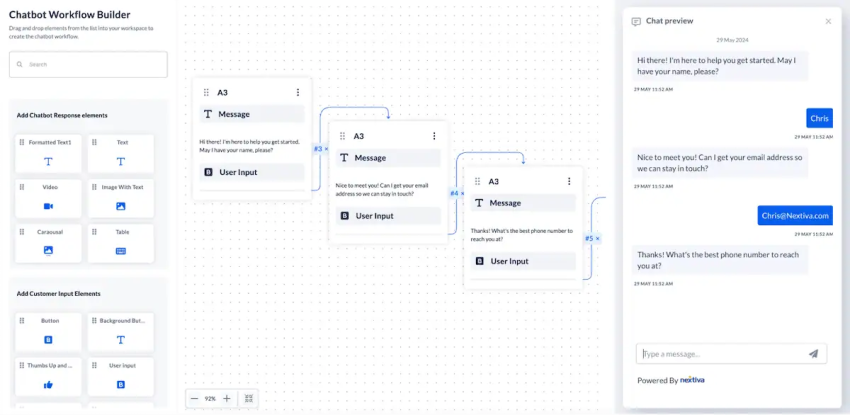
- AI phone answering for reservations, hours, directions, and order status: Picture a popular bistro during a dinner rush. While servers are focused on guests, an AI phone answering service like Nextiva automatically handles incoming calls. Instead of losing a potential reservation to voicemail, the restaurant instantly captures every inquiry at any time of the day.
- Voice-based ordering for pickup and drive-through: As detailed by Technology Magazine, McDonald’s has implemented AI voice assistants at its drive-through lanes. Guests place orders conversationally, and the system confirms details in real time. The result is faster service, an easier ordering process, fewer order errors, and happier customers who get their correct orders.
- Smart scheduling based on predicted traffic and staffing needs: Domino’s has long been known for using AI and machine learning to optimize scheduling and improve the online ordering process.Its approach shows how to build efficient schedules that prevent both burnout and overstaffing.
- Predictive inventory and automated reordering: In a busy steakhouse, AI can track ingredient use throughout the week. When predictive analytics flags that the filet mignon stock will dip below demand by Saturday night, it triggers an automatic reorder from the supplier.
- Personalized promotions and loyalty incentives: A restaurant’s customer relationship management system begins implementing AI to analyze purchase history. Guests who frequently order brunch receive personalized offers for new weekend specials, while regular take-out customers get mid-week delivery discounts. Through timely, relevant outreach, the restaurant can drive repeat visits.
- Review monitoring and sentiment analysis: Imagine local food kiosks using AI tools to monitor Google and Yelp reviews, flagging keywords that signal dissatisfaction (like “cold,” “slow,” and “overcooked”). With this information, managers can respond faster, fix recurring issues, and identify which menu items consistently delight customers.
- Demand forecasting for specials and menu planning: A fine-dining spot uses AI to analyze customer data for seasonal demand, ingredient availability, and local trends. Insights from the system help leadership align menu offerings with peak interest periods.
- Automated guest follow-ups and feedback collection: After a guest finishes dinner, the restaurant’s AI assistant automatically sends a thank-you message with a short feedback survey. Positive responses trigger loyalty rewards, while critical feedback alerts the manager for personal follow-up.
Essentially, AI is meant to amplify human strengths. It ensures that no call, order, or opportunity slips through the cracks.
Hear why XBert AI is the best AI receptionist
XBert AI receptionist handles customer questions, captures leads, and books appointments. Try it free for 14 days.
Benefits of AI for Restaurants
From better guest experiences to sharper financial control, intelligent automation lets teams focus on experiences that drive both guest satisfaction and sustainable profitability.
Better guest experience
AI for restaurant makes service faster and more reliable. Picture a diner where customers can text, call, or use chat to make a reservation, inquire about the menu or pricing, or ask if there’s parking. AI tools handle these interactions instantly, meaning no more waiting on hold or repeating details.

Improved operational efficiency
With AI, daily management becomes easier. Tasks like answering calls, adjusting schedules, or responding to basic inquiries are handled automatically. A restaurant manager who once spent hours juggling spreadsheets and messages now has more time to lead the team, check presentation standards, and make small talk with customers.
Cost control and margin protection
Margins in food service are tight, so waste and poor labor planning can directly erode profitability. AI helps forecast busy times, track food use, and cut unnecessary spending in the supply chain. For example, an AI system might notice that salads sell 40% more on hot days and adjust ordering patterns automatically.
Data-driven decision-making
Instead of guessing what works, artificial intelligence turns everyday data into insights. It can highlight which dishes are most profitable, which nights need more staff, or which promotions drive the most orders. Instead of relying on instinct alone, restaurant owners can make decisions with confidence, backed by evidence.
Limitations and Cautions Restaurants Should Know
While AI is powerful, it’s only as effective as the strategy and systems that support it. AI can’t fix disconnected systems, and it won’t do its job if it’s integrated poorly. Restaurants need to strike a balance between upgrading their efficiency and maintaining a human touch. Without due care, they could experience:
- Automating without clear human handoff paths: Imagine a guest calling about a severe allergy or a last-minute catering request. If your virtual assistant doesn’t know when to transfer that call to a real person, it can lead to confusion, lost sales, or even safety risks. Every AI process should have a defined point where humans take over.
- Fragmented systems that don’t share guest data: A loyalty app might know a regular customer’s favorite meal, but if the reservation system doesn’t have this data, the dining experience can feel disconnected. When restaurant communication solutions don’t communicate, staff lose valuable context that will derail personalization efforts.
- Over-personalization that feels intrusive: Personalization — like reminding a guest about their favorite dessert — enhances the guest experience, but it’s uncomfortable when a restaurant seems to know too much. Balance personalization with respect for privacy to make sure AI interactions strengthen trust while meeting customers’ needs.
- Failure to invest in staff training and change management: Even the smartest system fails if the team doesn’t understand how to use it. Before rolling out new AI tools, train staff on what’s changing, why it matters, and how it helps them. This turns hesitation into buy-in and ensures smooth adoption.
AI should amplify hospitality — not overshadow it. The restaurants that get it right use technology to enhance performance, while human teammates concentrate on high-impact activities.
How Restaurants Should Get Started With AI
Getting started with AI doesn’t require a complete tech overhaul. The smartest restaurants begin small — like using an AI-enabled phone system designed for restaurants — test carefully, and scale what works. Here’s a simple roadmap for introducing AI into restaurant operations.
1. Start with guest communication
Begin where the payoff is immediate, namely, phone calls, reservations, and basic questions. These are repetitive, time-consuming tasks that AI handles with ease. For instance, an AI assistant can automatically answer after-hours calls, take reservations, or provide directions. This frees up staff to focus on greeting customers and managing service instead of juggling phones.

2. Layer in operational intelligence
Once guest interactions run smoothly, expand into the back office. AI can analyze historical data to forecast sales, suggest staffing adjustments, and manage inventory. For example, a pizza shop might use artificial intelligence to predict how many orders will come in on a rainy Friday, streamline tasks, and schedule staff accordingly.

3. Connect the experience
The real value of AI emerges when systems talk to each other. When your reservation tool, marketing software, and inventory management all share guest and demand data, operations run like clockwork. A connected system might recognize a returning guest, note their favorite dish, and ensure the ingredients are stocked ahead of their visit.
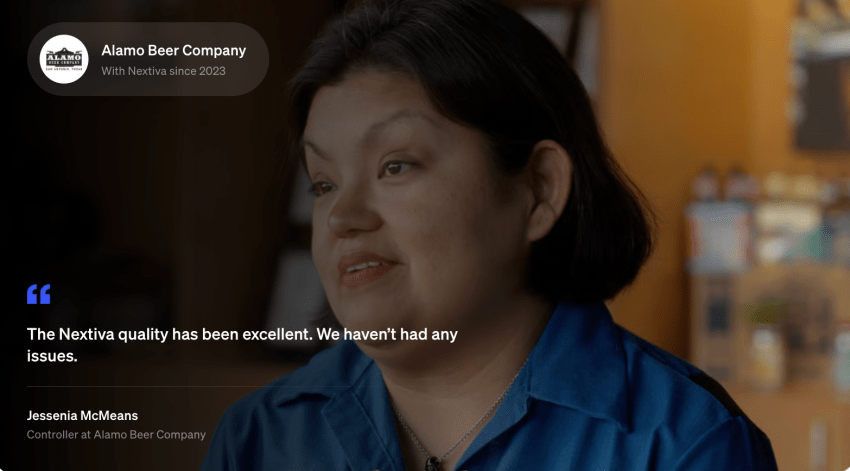
Restaurants and hospitality groups already using Nextiva highlight how the platform helped streamline communications and elevate guest care. For example, Northland Investments (a multi-location restaurant operator) turned to Nextiva to standardize and improve communication across its sites, creating a more reliable system for guests and staff, even during peak times.

Growing Restaurants Love Nextiva
The biggest risk with restaurant AI is tool fatigue — having one app for reservations, another for reviews, and a third for phones.
Nextiva solves this by unifying customer communication. It connects the dots between the phone call, the reservation, and the guest’s history. With Nextiva, you get an AI voice agent that captures every missed call during peak hours, intelligent routing for catering inquiries, and a single view of the guest.
It allows independent operators to wield the same tech power as major chains, protecting margins without sacrificing the hospitality that makes them unique.
Nextiva’s XBert AI handles real customer conversations. Check out how it sounds! 👇
Never miss another call with XBert.
XBert is your AI answering service that handles calls, texts, and chats 24/7. It greets customers, books appointments and reservations, and captures leads while your business grows.