
 VoIP
VoIP  Blog
Blog  Business Communication
  Customer Experience
  Leadership
  Marketing & Sales
  Nextiva News
  Productivity
Computer Telephony Integration (CTI) connects a business phone system with computer applications such as customer relationship management (CRM) software, helpdesk platforms, and contact center tools. When a CRM-connected phone system receives a call, CTI can identify the caller, display the customer record, log the interaction, and route the call based on available data.
What Is CTI?
Computer Telephony Integration (CTI) connects a business phone system with computer applications like customer relationship management (CRM) software, helpdesk platforms, and other contact center tools. Instead of forcing agents to switch between multiple screens, CTI brings phone controls and customer context together in a single interface.
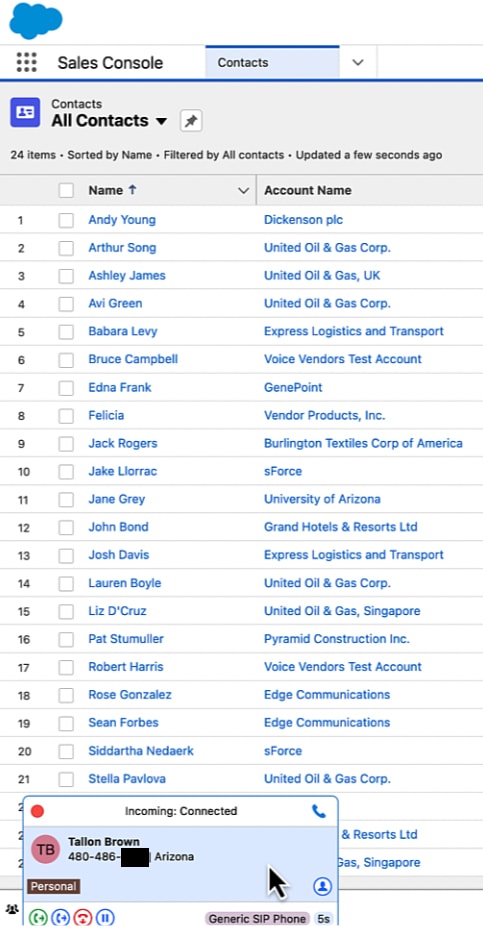
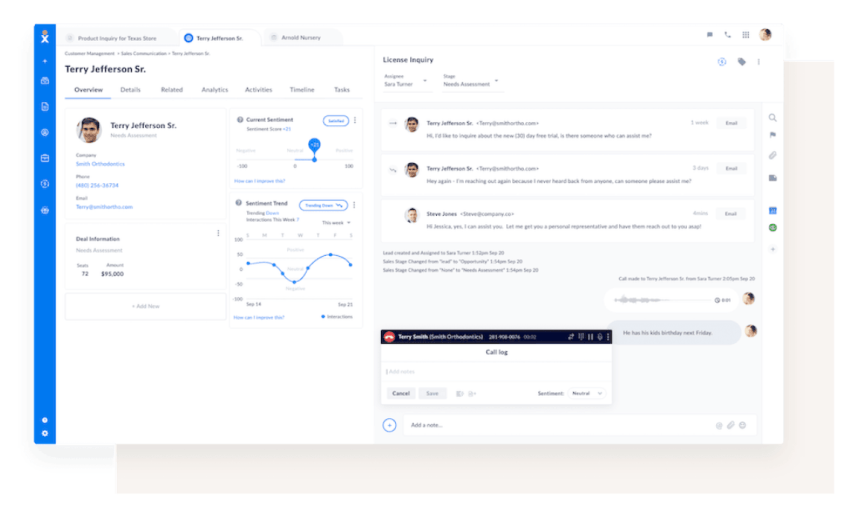
When a customer calls, the phone system sends their number to the CTI software, which instantly matches it to a CRM record. This triggers a “screen pop,” displaying the caller’s name, account details, purchase history, and previous interactions on the agent’s screen. This immediate access to data allows agents to greet customers personally and continue conversations with relevant context.
Beyond just identifying callers, CTI supports click-to-call functionality, automatic contact creation, call logging, transcription, and intelligent routing. For example, by connecting a phone system to Salesforce, an inbound sales team can handle all inbound calls, reduce manual errors like misdialing, and seamlessly trigger follow-up workflows—all without leaving their CRM.
How Does CTI Work?
CTI bridges a business application and a phone system, whether the phone system is cloud-based or traditional.
A typical CTI workflow follows these steps:
- A customer calls a business number.
- The phone system receives the call and identifies the caller’s number.
- CTI sends the number to the CRM or helpdesk.
- The application searches for a matching customer record.
- The agent sees a screen pop with customer information.
- The CTI platform logs the call and applies the configured routing or follow-up workflow.
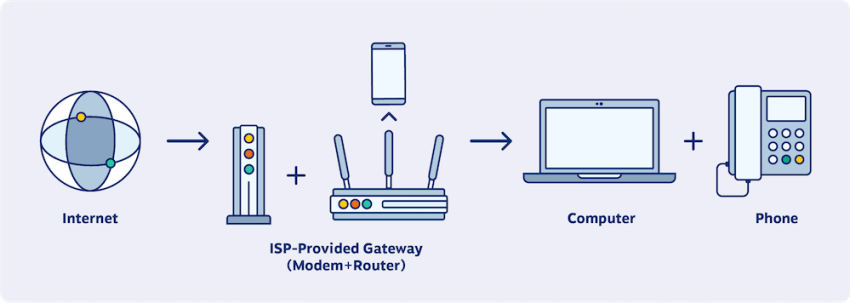
VoIP, or Voice over Internet Protocol, supports many modern CTI deployments. VoIP turns a computer or other connected device into a virtual phone extension and allows call data to move between the phone system and business applications.
CTI can connect the following data:
- Phone numbers
- Customer names
- Email addresses
- Support ticket details
- Customer account information
- Previous interaction history
- Call notes and dispositions
CTI can also automate outbound calls for sales teams or route incoming calls to the most qualified agent based on the caller’s needs.
CTI goes beyond basic call control. It fosters a more connected and efficient communication environment, benefiting both businesses and their customers.
Benefits of CTI
When you start using CTI, you can expect a raft of benefits that aid various areas of your business.
- Better customer experience: Agents can resolve calls faster and provide more personalized service.
- Higher agent productivity: Screen pops, click-to-call, call controls, and routing reduce manual work.
- Improved call center management: Call data and analytics help managers review performance and identify training needs.
- Lower operating costs: Shorter hold times, improved first-call resolution rates, and more efficient workflows can reduce the cost of customer support.
- More accurate records: Automatic call logging and CRM data matching reduce manual entry.
- Better follow-up: Call outcomes can trigger tasks, notes, contact creation, or sales workflows.
Types of CTI Technologies
CTI has developed beyond replicating phone functions on a computer. Modern CTI connects phone systems and contact centers with business applications.
Softphone CTI
Softphone CTI is common in cloud-based contact centers, where agents use software-based phones instead of traditional desk phones.
It allows agents to:
- Log in to call queues
- Set call availability
- Access call details
- Use screen pops
- Make calls with click-to-call functionality
- Transfer, hold, mute, and end calls from a computer
Hardware-based CTI
Hardware-based CTI connects desk phones with CRM systems. An agent can click a phone number in a CRM record to start a call through the connected desk phone.
Some professional headsets also support hardware-based CTI. Built-in controls can let agents mute, accept, reject, or end calls without using the phone application.
Cloud-based CTI
Cloud-based CTI connects cloud applications without requiring an on-premises phone system or PBX.
A common setup connects a CRM platform with a cloud phone system. Cloud-based CTI can support:
- CRM screen pops when a call arrives
- Skills-based routing
- Contact and lead creation
- Automatic call logging
- Call recording and transcription
- Follow-up task creation
- Natural Language Processing (NLP) for call notes and workflows
CTI Features That Connect Phone Systems and CRMs
Businesses should match CTI features to their customer service and sales workflows. Some capabilities may already be included with call center software.
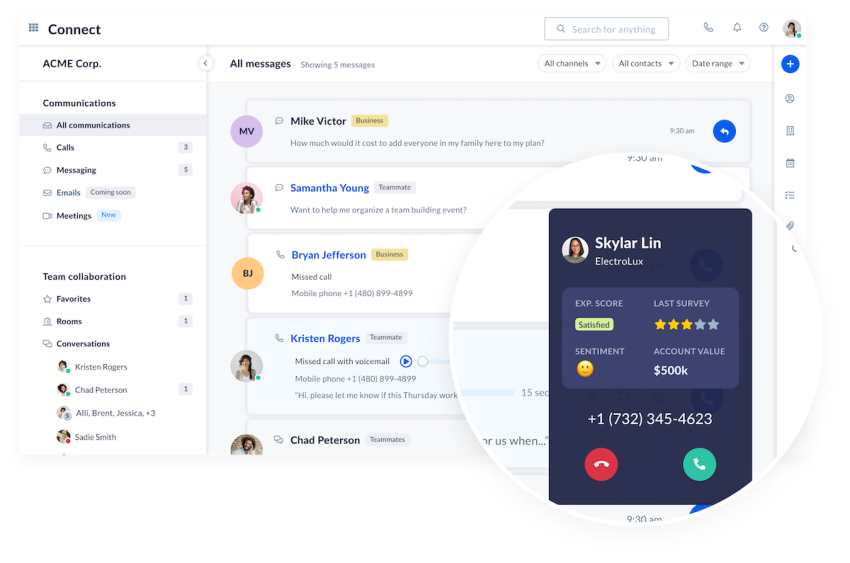
Screen pops
Screen pops display customer information when a call connects. The information may include a name, purchase history, account details, or previous support tickets.
Screen pops reduce the time agents spend searching through multiple systems.
Click-to-call
Click-to-call lets agents start a call by selecting a phone number in a CRM, helpdesk, website, or other connected application. The feature reduces manual dialing and can improve number accuracy.
Automated dialers
Sales and marketing teams can use automated dialers for outbound calling. CTI can dial predefined lists, reduce manual dialing, and connect agents with live prospects.
Interactive voice response
Interactive Voice Response (IVR) systems let callers use prerecorded prompts to find information or reach the right department.
A CRM-connected IVR can use customer data to support personalized routing and self-service workflows.
Call routing
Intelligent call routing sends calls to the right agent, queue, or department. CTI can use:
- Caller location
- Caller history
- Agent expertise
- Customer needs
- Account status
- Queue availability
Routing rules can reduce wait times and help agents receive calls that match their skills.
Call monitoring and analytics
CTI provides data about call performance. Businesses can track:
- Average call duration
- First-call resolution rate
- Agent performance
- Call volume
- Customer satisfaction
- Transfer rates
- Abandoned calls
- Call outcomes
Managers can use these insights to review operations, improve routing, and identify coaching needs.
Call recording and transcription
Call recording preserves conversations for quality reviews, training, compliance processes, and dispute resolution. Transcription can make conversations searchable and help create summaries or follow-up tasks.
Businesses should confirm applicable consent, privacy, retention, and access requirements before recording calls. Call recording is available in some phone and contact center platforms.
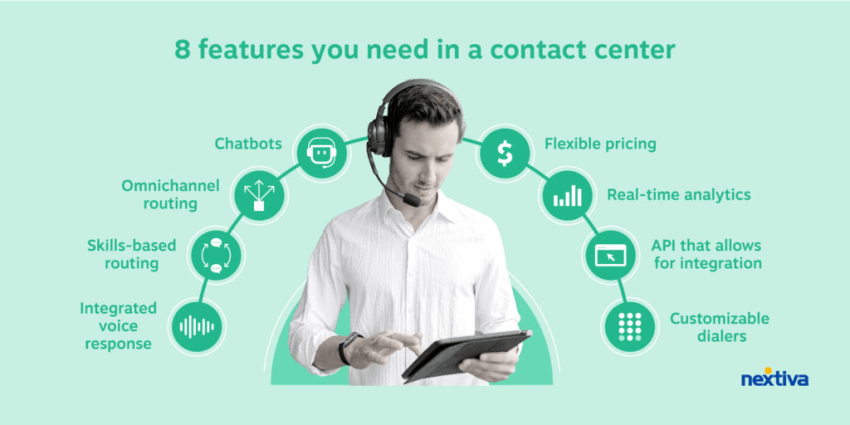
CRM integrations
CRM integrations allow agents to access customer profiles within the phone interface. Depending on the integration, the system may support screen pops, click-to-call, automatic call logging, contact creation, call disposition, routing, and reporting.
Contact center and CRM integration
A contact center that integrates with CRM software can combine voice, digital channels, customer data, and agent workflows in one interface. Nextiva Contact Center supports integrations with CRM, helpdesk, and collaboration tools, including Salesforce and HubSpot. Nextiva states that its contact center supports more than 30 out-of-the-box integrations and API and SDK options for custom connections.
Other contact center platforms also support CRM connections.
Phone systems that integrate with Salesforce
A phone system that integrates with Salesforce can display Salesforce records during calls, log activities, enable click-to-call, and pass call outcomes back to the CRM.
Nextiva supports Salesforce integrations through its business phone and contact center services. Salesforce-based deployments can also use native telephony, partner telephony, or bring-your-own-telephony models.
Phone systems that integrate with HubSpot
A phone system that integrates with HubSpot can support calling, call logging, contact records, activity history, and follow-up workflows inside HubSpot.
Nextiva supports HubSpot integrations through its integrations ecosystem. HubSpot also supports third-party calling providers through its App Marketplace and Calling Extension SDK.
VoIP services with built-in CRM features
VoIP services with built-in CRM features typically include screen pops, click-to-call, contact synchronization, automatic logging, call notes, and customer interaction history. Nextiva’s VoIP service connects with CRM, email, Google, Microsoft, and support tools. Its platform can synchronize CRM IDs with phone numbers to help identify the correct customer record.
A business should confirm whether these features are included in the base service or require a separate license, integration, or custom setup.
Native integrations, CTI widgets, and API connections
“CRM integration” can describe several different technical models:
| Integration model | How it works | Typical capabilities |
|---|---|---|
| Native integration | The phone or contact center provider maintains a prebuilt connection with the CRM. | Screen pops, click-to-call, call logging, contact synchronization, and standard reporting |
| CTI widget | A phone panel appears inside the CRM or business application. | Agent call controls, caller identification, notes, transfers, and disposition |
| API or custom integration | Developers connect the phone system to the CRM through APIs, SDKs, webhooks, or middleware. | Custom objects, specialized workflows, unique routing logic, and custom data mapping |
Native integrations usually require less development work. CTI widgets can keep agents inside the CRM. API and custom integrations provide more control when a business uses custom objects, multiple applications, or specialized workflows.
Nextiva supports prebuilt CRM connections and API and SDK-based customization. Businesses should confirm whether the integration supports custom objects, data synchronization, permissions, and the workflows they need.
Unified communications and CRM
Unified communications platforms with CRM integrations combine voice, messaging, meetings, team communication, and customer data. Nextiva connects phone, email, live chat, and other communication channels through its customer experience platform.
A unified communications platform can help agents and employees access customer context without moving between separate applications. Businesses should confirm whether the CRM connection covers every channel or only voice calls.
There is no universal answer to what phone system has the best CRM integration. The right choice depends on the CRM, required channels, data model, reporting needs, security requirements, and administrative resources.
Omnichannel communication
Customers may contact a business through voice, email, chat, SMS, or social media. CTI can connect these channels with CRM records so agents can manage customer interactions from a common workspace.
When evaluating an omnichannel CTI solution, confirm that each channel supports:
- Customer identification
- Interaction history
- Routing rules
- Agent availability
- Call or message logging
- Reporting
- Data retention and access controls
Some integrations require third-party middleware. Others are built into modern cloud contact center solutions.

How to Compare CRM Integrations
A feature list does not show how well a phone system will work with a business’s CRM. Compare the integration across the following areas:
| Evaluation area | What to check |
|---|---|
| CRM availability | Confirm that the provider supports the required CRM, edition, and user roles. |
| Data matching | Check how the system matches phone numbers, CRM IDs, duplicate records, and shared accounts. |
| Screen pops | Confirm which fields appear when a call arrives. |
| Click-to-call | Check whether agents can dial from contact, lead, ticket, and account records. |
| Automatic logging | Confirm whether calls, dispositions, recordings, notes, and timestamps sync automatically. |
| Contact creation | Check whether agents can create contacts, leads, tickets, or custom objects during a call. |
| Routing | Review support for skills, account status, caller history, and CRM-based routing. |
| Recording and transcription | Confirm availability, retention settings, search, permissions, and consent controls. |
| Reporting | Check whether CRM and phone data appear in shared reports or dashboards. |
| Integration model | Determine whether the connection is native, widget-based, API-based, or dependent on middleware. |
| Channel coverage | Confirm whether the integration includes voice, SMS, email, chat, and social channels. |
| Administration | Review setup time, testing requirements, user management, and ongoing maintenance. |
| Security | Evaluate encryption, permissions, audit logs, data residency, and compliance controls. |
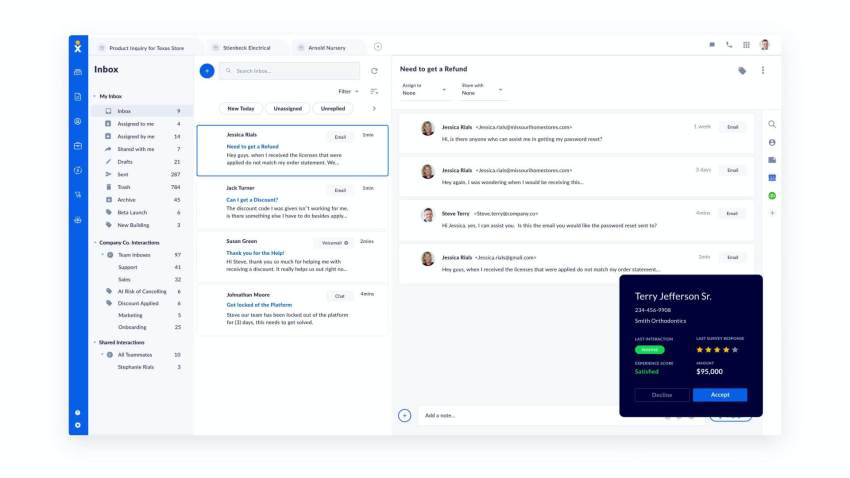
The best phone system for CRM integration is the one that supports the required workflows with acceptable administrative effort and data controls.
Implementing CTI in a Call Center
A successful CTI implementation requires planning, testing, and agent training.
1. Assess business needs
Review the current call center setup, including:
- Existing phone system
- CRM software
- Helpdesk systems
- Other business applications
- Call-routing processes
- Call-management processes
- Reporting requirements
Identify problems such as slow routing, limited customer data, duplicate records, or manual call logging.
Then define measurable goals, such as:
- Improve agent productivity
- Increase first-call resolution
- Reduce operating costs
- Improve customer satisfaction
- Increase reporting accuracy
- Reduce manual data entry
2. Review data matching and permissions
Before implementation, determine how CTI will match phone numbers to CRM records. Check how the system handles:
- Multiple phone numbers
- Shared business numbers
- International number formats
- Duplicate contacts
- CRM IDs
- Custom objects
- Accounts with multiple locations
- Unknown callers
Set permissions for agents, supervisors, administrators, recordings, transcripts, and customer data. Limit access to the information each role requires.
3. Choose the right CTI solution
The main deployment decision is whether to choose an on-premises or cloud-based system:
- On-premises systems provide more control but require IT infrastructure and technical expertise.
- Cloud-based systems usually provide simpler maintenance and easier scaling, with fewer hardware requirements.
Evaluate providers based on:
- Pricing: Request an itemized breakdown that includes licenses, setup, integrations, recording, and support.
- Integrations: Confirm compatibility with the phone system, CRM, helpdesk, and business applications.
- Integration model: Determine whether the provider offers a native connection, CTI widget, API, SDK, or middleware.
- Data handling: Review synchronization, custom objects, duplicate records, and data retention.
- Security: Check encryption, access controls, audit logs, compliance support, and administrator permissions.
- Customer support: Review implementation services, documentation, training, and response times.
- Free trial or proof of concept: Test screen pops, call routing, call logging, and reporting before deployment.
Also consider screen pops, call recording, skills-based routing, transcription, and advanced analytics.
4. Plan and implement the system
Create an implementation plan that covers:
- Installation
- Data migration
- Number formatting and data matching
- System configuration
- Integration requirements
- User permissions
- Agent training
- Testing
- Deployment
- Ongoing support
A contact center software provider can help with technical guidance, implementation, and support.
Test the integration before full deployment. Ask agents to verify screen pops, call controls, routing, logging, contact creation, recordings, and reports. Review failed matches and duplicate records before expanding the rollout.
5. Monitor results after launch
After implementation:
- Train agents: Show agents how to use screen-pop information, call controls, notes, and dispositions.
- Review workflows: Remove unnecessary steps and connect CTI with other call center tools.
- Track performance: Monitor call metrics such as handling time, customer satisfaction, first-call resolution, and agent productivity.
- Audit access: Review permissions for customer records, recordings, and transcripts.
- Improve data quality: Correct duplicate records and unresolved phone-number matches.
- Test updates: Recheck the integration after CRM, phone system, browser, or API changes.

Top CTI Software
CTI software connects business phone systems with computer applications. Many call center software and contact center platforms include CTI functionality.
When comparing solutions, review pricing, features, scalability, integrations, deployment model, and intended users. Prices and packaging can change, so businesses should verify current terms with each provider.
| Software | Starting price reference | Key features | Best suited for |
|---|---|---|---|
| Nextiva Contact Center | $75/user/month | Cloud-based service, intelligent call routing, call forwarding, omnichannel communication, workforce optimization, AI-powered automation, automatic call distributor (ACD), and advanced IVR | Businesses of different sizes seeking a cloud contact center with CRM connections, AI, and automation |
| Five9 | $159/user/month | Cloud-based inbound and outbound routing, omnichannel support, workforce management, reporting and analytics, and AI-powered features | Large enterprises with complex contact center requirements |
| Talkdesk | $85/user/month | Cloud-based calling, routing, recording, analytics, and integrations with CRMs and help desks | Businesses seeking a scalable platform with CRM integrations |
| Genesys Cloud | $75/user/month | Cloud-based omnichannel support, AI, machine learning, workforce engagement, and reporting and analytics | Large enterprises requiring automation and self-service capabilities |
| Zendesk | $83/user/month | Cloud-based calling, routing, recording, voicemail transcription, Zendesk Suite integration, ticketing, and helpdesk functionality | Businesses already using Zendesk Suite |
| Zoho | $74/user/month | Cloud-based omnichannel communication, IVR, call queues, call monitoring, a power dialer, call disposition, and analytics | Small businesses and startups seeking an omnichannel platform |
The Future of CTI Technology
Cloud-based phone systems and cloud applications have made CTI a standard part of modern business communications. CTI is shifting from basic call control toward customer context, automation, and cross-channel continuity.
Customer experience management
Call center teams increasingly use CTI data to improve customer journeys. CRM history can guide routing, give agents relevant context, and connect follow-up work to the original interaction.
Generative AI
Generative AI can support:
- Automatic call summaries
- Task creation
- Real-time call monitoring
- Automated agent assignment
- Suggested follow-up actions
- Searchable transcripts
These capabilities can reduce administrative work and help agents focus on complex customer issues.
Automation
Automation can create concise summaries and follow-up tasks after a call. Agents and supervisors can use those records without listening to a complete recording for every interaction.
Open standards for omnichannel communication
Open standards such as WebRTC and SIP support communication across voice, messaging, and other channels. They can also help businesses connect modern applications with existing phone infrastructure.
Improved continuity
CTI can preserve customer context when a call transfers or drops. The next agent can review previous interactions and continue the conversation without requiring the customer to repeat the same information.
Thinking about upgrading your contact center?
Nextiva Contact Center unlocks a new level of growth. It’s easy to use, fast to set up.
Computer Telephony Integration FAQs
There is no single “best” phone system, as the ideal choice depends on your specific workflows, required communication channels, and security needs. However, modern platforms with robust APIs and broad native integration ecosystems, like Nextiva, are often the strongest choices for businesses needing flexible setups with minimal administrative effort.
Many cloud-based phone systems integrate with Salesforce using native telephony or partner models. These integrations typically power features like screen pops, automatic logging, and click-to-call directly within the CRM. Providers such as Nextiva offer seamless Salesforce integration across both their standard business phone and advanced contact center services.
Any phone system that leverages HubSpot’s App Marketplace or Calling Extension SDK can integrate directly with the platform. This allows teams to manage calls, track activity history, and automate workflows right inside HubSpot, a capability supported by leading unified communication providers like Nextiva.
Most modern cloud contact centers offer out-of-the-box CRM integrations to unify voice, digital channels, and customer data into a single dashboard. Platforms built for omnichannel support generally excel here; for example, the Nextiva Contact Center features over 30 native integrations alongside customizable APIs.
Unified communications platforms that merge voice, chat, email, and meetings frequently include CRM integrations to maintain customer context across all channels. Comprehensive platforms, such as Nextiva’s customer experience suite, ensure that agents have access to full customer profiles whether they are on a call, answering a live chat, or sending an email.
VoIP services equipped with built-in CRM features typically offer out-of-the-box functionality like automatic call logging, click-to-call, and screen pops. Premium VoIP providers—such as Nextiva, RingCentral, Dialpad, 8×8, and Vonage—seamlessly synchronize these features with major CRMs, helpdesks, and email clients to streamline daily operations and keep customer data in one centralized place.